It sounds like something out of a sci-fi disaster movie: some mysterious cosmic force showing up out of nowhere and tearing our planet to shreds.
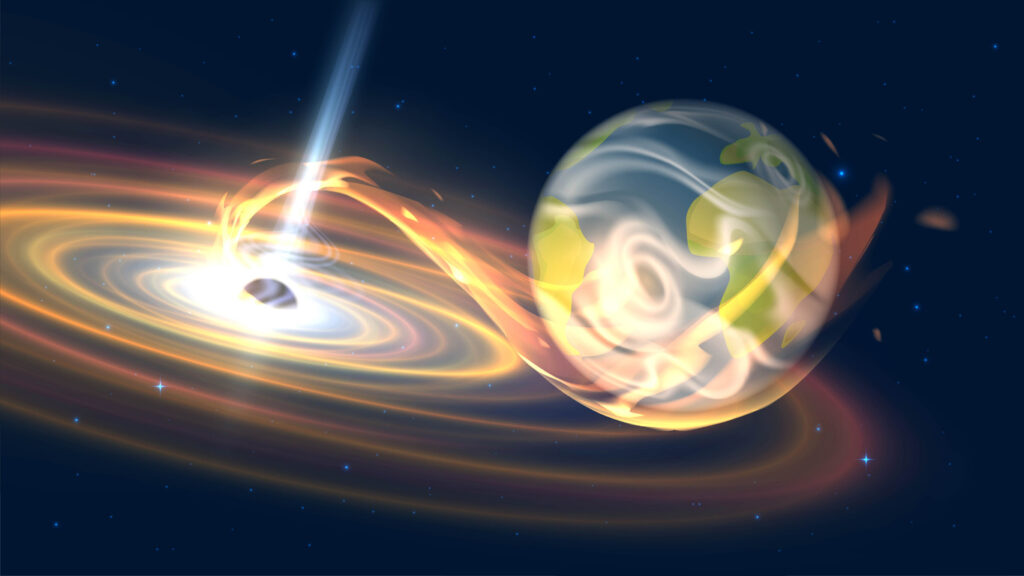
However, when it comes to things like dark matter and black holes, the theories aren’t completely far-fetched. These forces are real, they’re out there, and they’re powerful beyond imagination. But should you actually worry about them turning Earth into space dust? These facts will help you unpack the chances of that happening, and knowing what science really has to say about it might put your mind at ease a little.
1. Dark matter is everywhere, but it’s not dangerous.
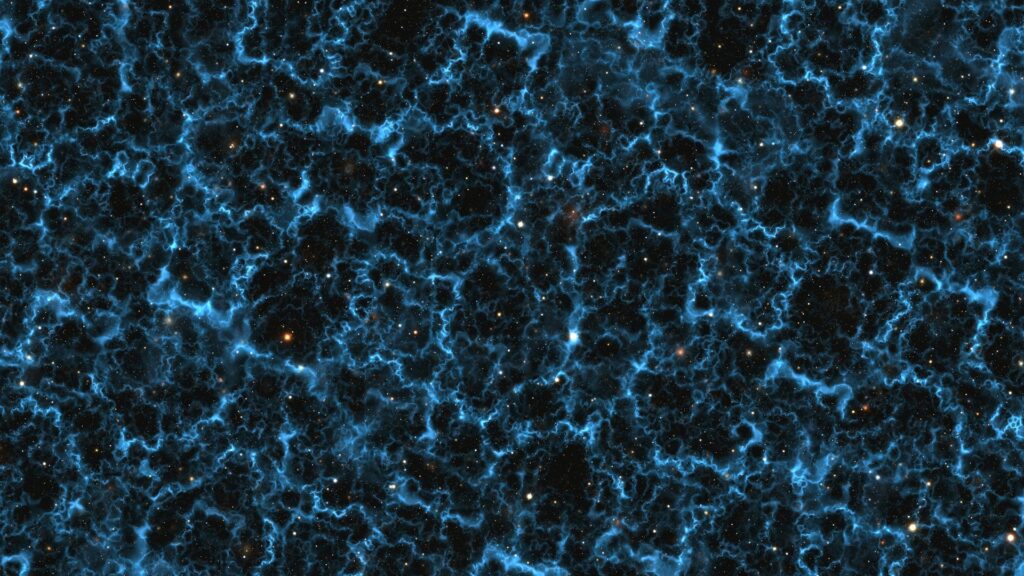
Dark matter makes up most of the universe’s mass, yet we can’t see it, touch it, or fully understand how it works. That alone sounds threatening, but despite being all around us, dark matter doesn’t interact with regular matter in ways that would cause damage or destruction.
It doesn’t clump, collide, or emit energy like the stuff we’re used to. So even though you’re technically swimming in it right now, there’s no known mechanism for it to start “ripping things apart.” It’s mysterious, yes, but not an immediate threat.
2. Rogue black holes do exist, but they’re rare.
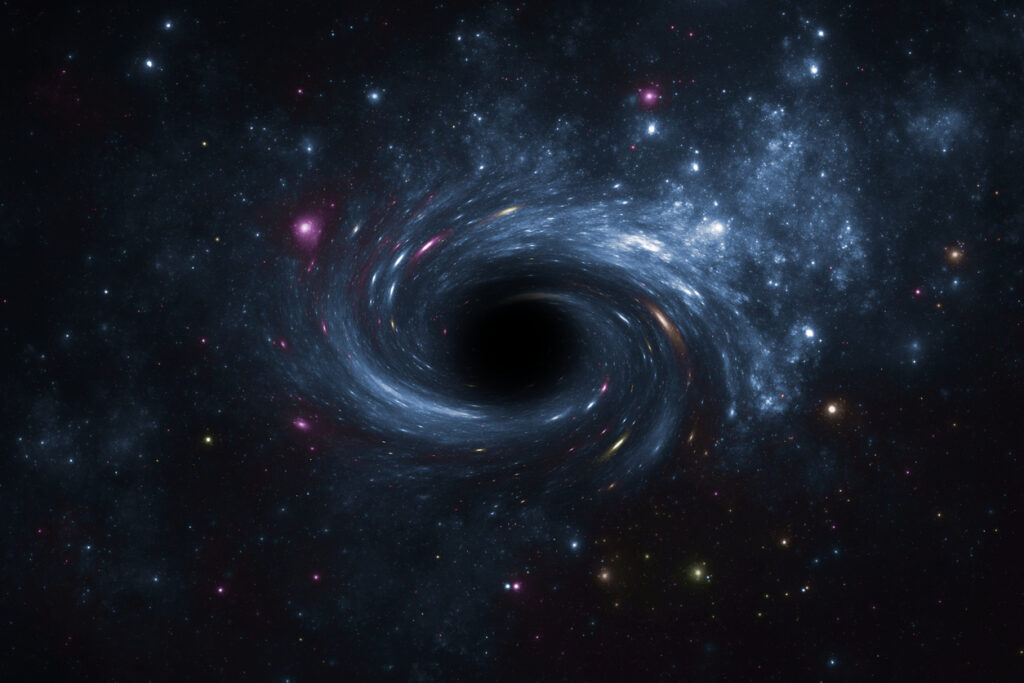
Black holes aren’t just stuck in the middle of galaxies; they can also go wandering. A “rogue” black hole is one that’s been flung into space, moving freely and unpredictably. The idea of one heading toward Earth sounds terrifying, but the odds are astronomically low.
Space is massive, and the distances between stars are mind-blowing. Even with hundreds of millions of black holes in our galaxy, the chance of one crossing paths with Earth is practically zero during the planet’s lifetime. It’s not impossible, but you’ll win the lottery a few million times before that happens.
3. If a black hole came close, we’d know.
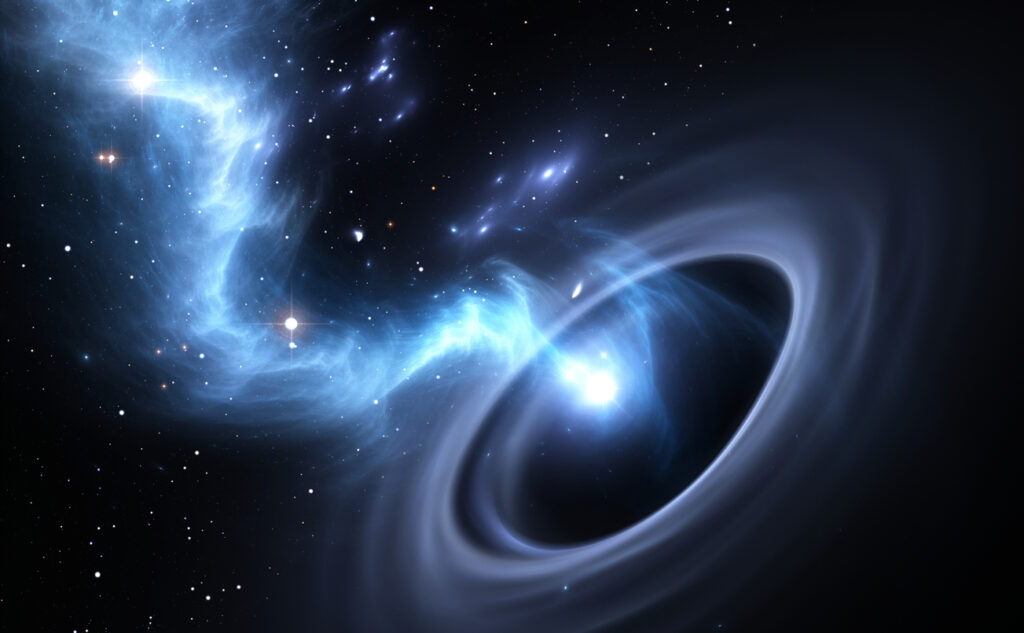
A black hole sneaking up on Earth unnoticed isn’t going to happen. Even though they don’t emit light, black holes cause noticeable distortions in the space around them, bending light, pulling on nearby objects, and affecting the motion of stars. We’d spot these clues well before anything catastrophic happened. Telescopes and observatories like Gaia and LIGO are already monitoring the sky for gravitational oddities, so if something weird was heading our way, we’d see it coming.
4. Getting “sucked in” is mostly a myth.
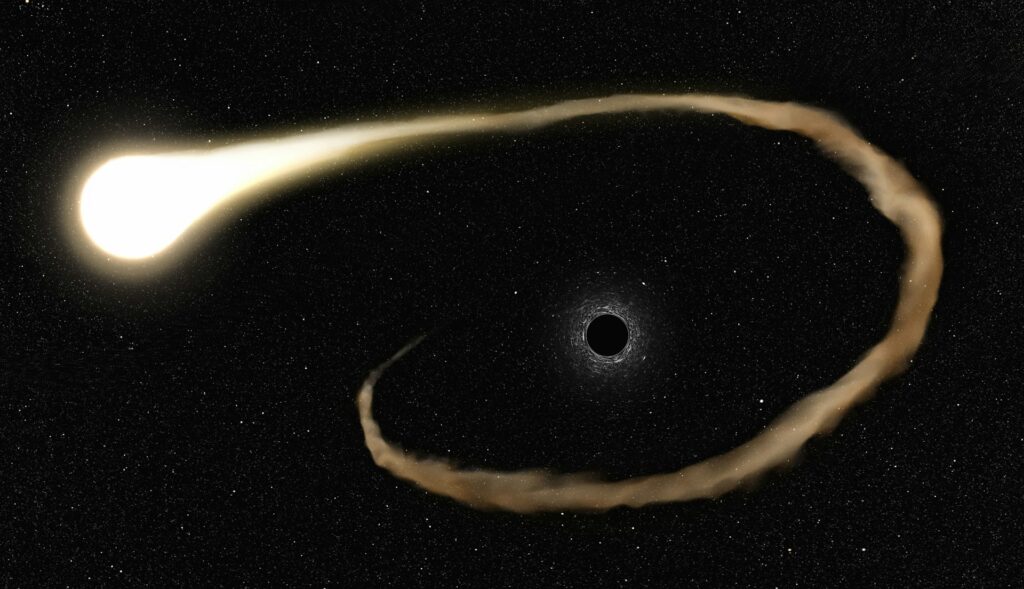
People imagine black holes as cosmic vacuum cleaners, sucking up everything in their path. In reality, though, they’re just incredibly dense objects with strong gravity, which is no different from a star of the same mass, unless you get very close.
If the Sun was replaced with a black hole of equal mass, Earth’s orbit wouldn’t change. We’d keep spinning around it, just in eternal darkness and cold. So unless a black hole passes extremely close, it’s not going to yank Earth out of its orbit or tear it apart.
5. Dark matter doesn’t form clumps.
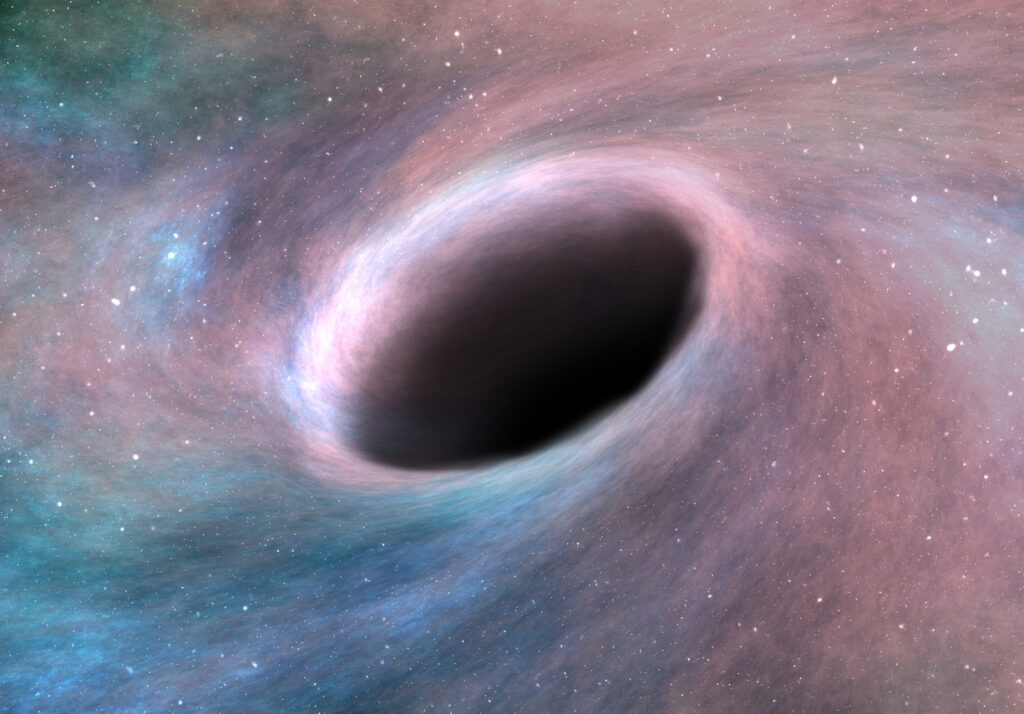
One of the big differences between dark matter and normal matter is that it doesn’t clump into dense objects. It seems to pass right through us, and itself, without sticking. That means you’re not going to wake up one day and find a chunk of dark matter growing in your garden.
Since dark matter doesn’t gather into concentrated balls or cores, it doesn’t behave like black holes or stars. It can’t collapse into anything that would trigger a gravitational catastrophe. It’s strange stuff, but it plays by very different rules.
6. Earth has survived billions of years in a busy galaxy.
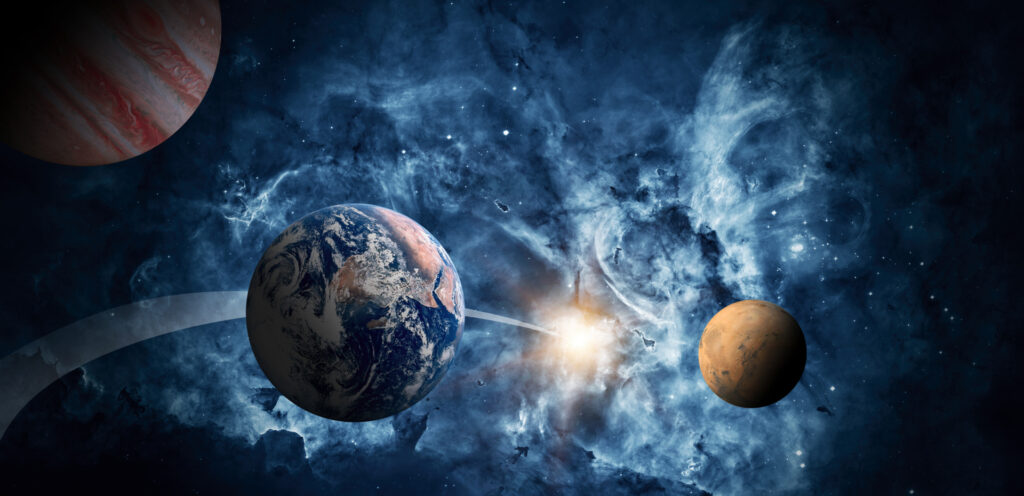
The Milky Way is full of drama: think supernovae, black holes, and all kinds of gravitational chaos. And yet, Earth has been here for over four billion years, still intact and spinning. That’s not luck; it’s because the chances of a cosmic disaster hitting a small, specific target like us are very low.
We’re in a relatively calm part of the galaxy, away from the violent core, and nothing nearby looks threatening. The fact that we’ve made it this far suggests that black holes and dark matter haven’t been much of a problem, and likely won’t be any time soon.
7. A black hole would affect other planets first.
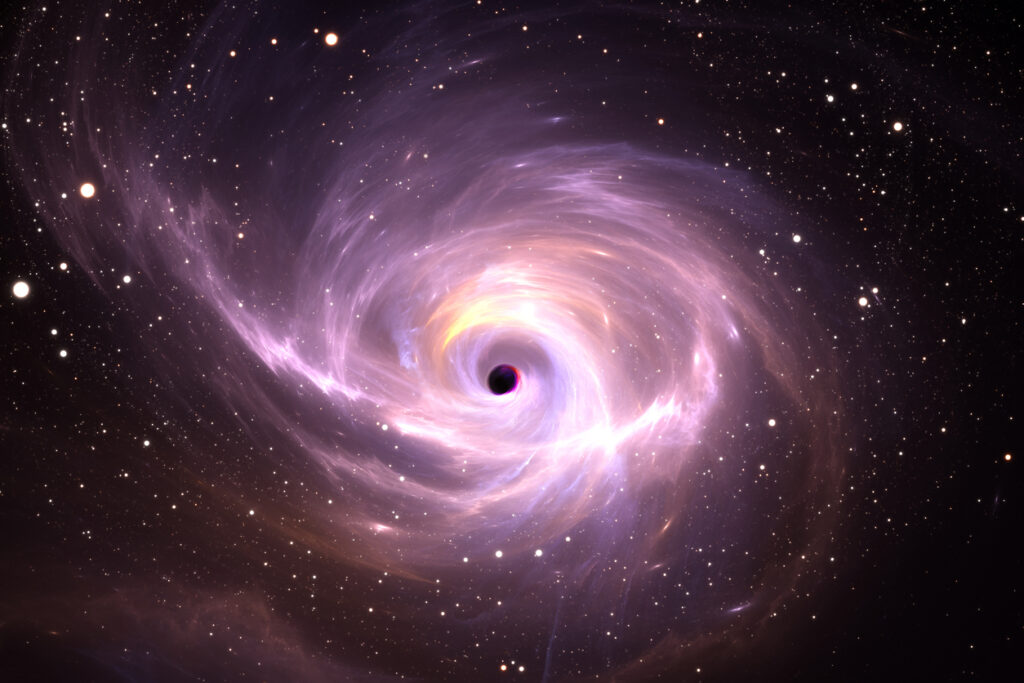
If a rogue black hole were approaching, it wouldn’t just sneak up on Earth. It would start messing with the orbits of other planets long before it got close to us. Things would go wonky in the outer solar system first, and we’d notice. Planets like Neptune and Uranus would show signs of orbital drift, or moons would start behaving strangely. In short, we’d get a cosmic heads-up. And with decades (or centuries) of warning, there’d be time to freak out scientifically.
8. We pass through dark matter all the time.
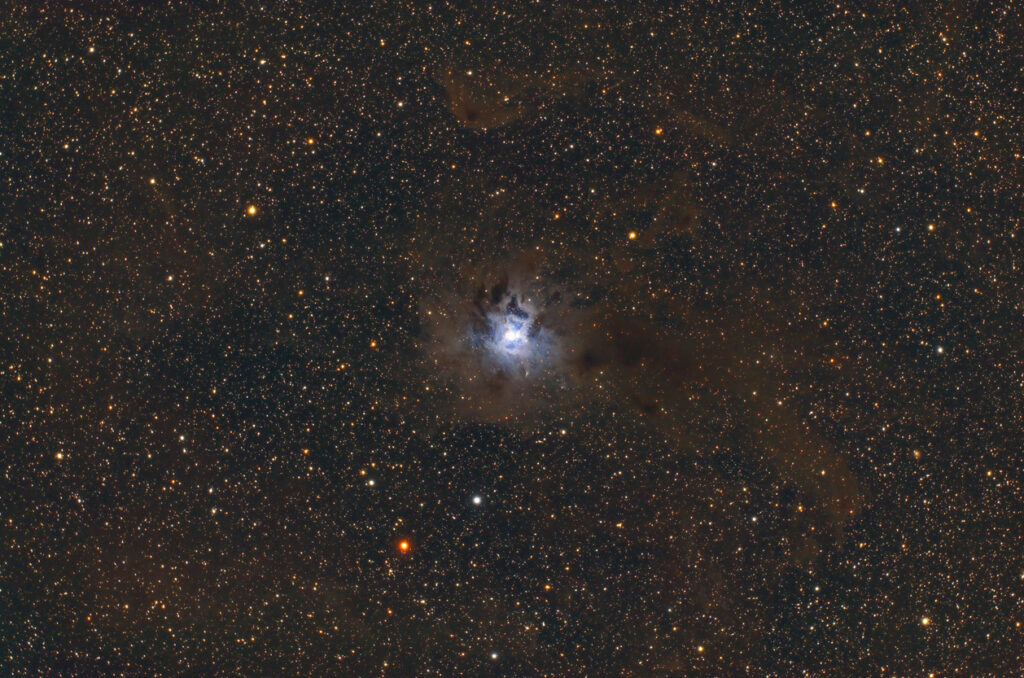
As Earth orbits the galaxy, it passes through clouds of dark matter. It’s not a rare event, it’s constant. And yet, nothing happens. No explosions, no rips in the sky, no Earth-shattering effects. That’s a strong clue that dark matter isn’t a hazard to planets like ours. It might influence the motion of galaxies or explain some gravitational puzzles, but on a human scale, it behaves more like a ghost—present, but harmless. It’s like cosmic background noise we haven’t learned to fully understand yet.
9. Even tiny black holes are theoretical at this point.
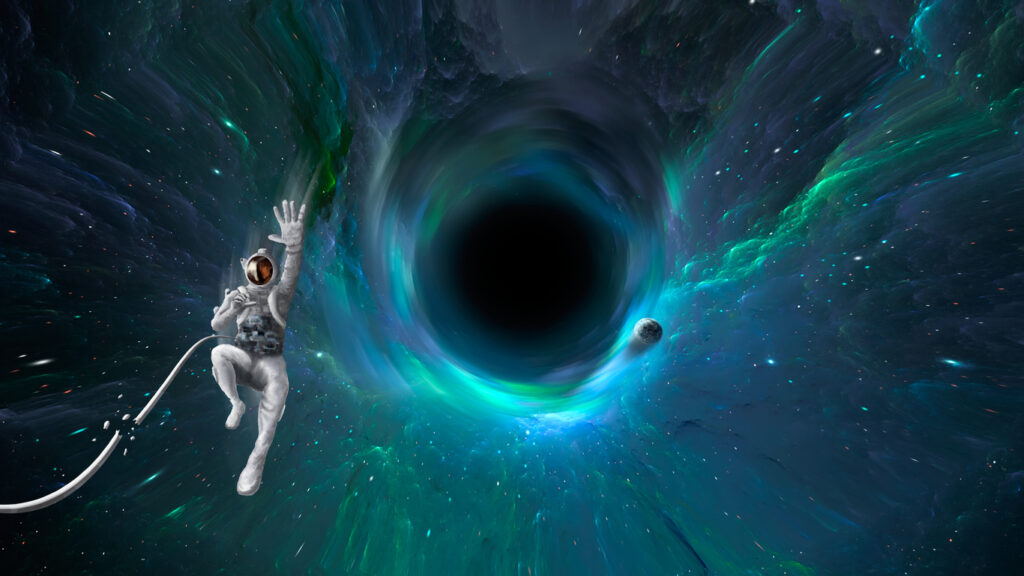
There’s been speculation about micro black holes, which are tiny versions that could exist after high-energy events, like what happens in particle colliders. The thing is, we’ve never found one. And even if we did, they’d evaporate almost instantly thanks to Hawking radiation.
In other words, the idea of a black hole the size of a marble suddenly appearing and devouring everything is more comic book than reality. Physics says they’d burn out before they could do any damage. No need to prep your “black hole bunker” just yet.
10. Gravitational waves don’t rip planets apart.
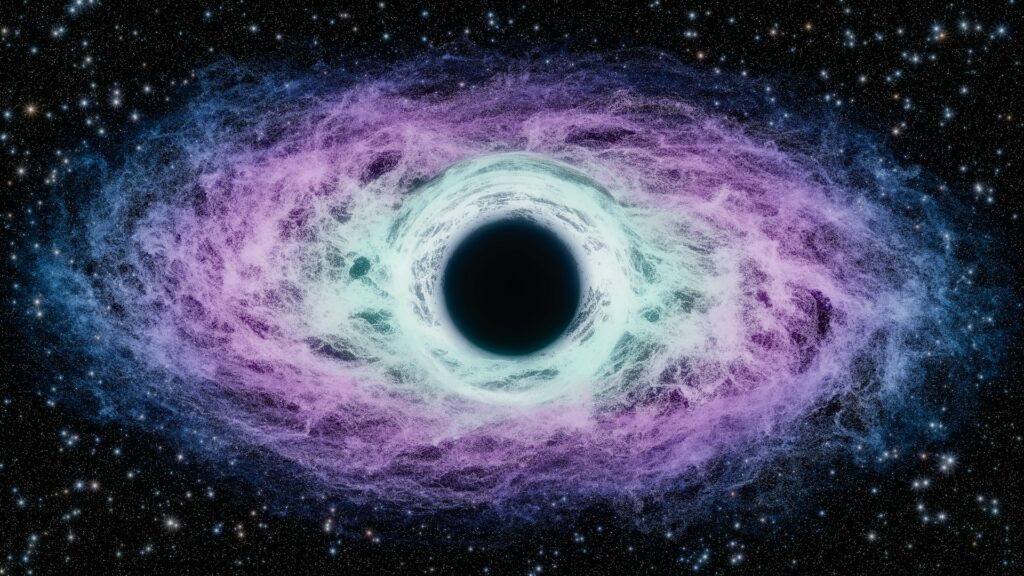
Black holes do collide, and when they do, they send out ripples in spacetime called gravitational waves. However, by the time those waves reach Earth, they’re so faint that only the most sensitive instruments can detect them.
We’ve measured these waves multiple times, and the planet didn’t shake or split. They’re fascinating for scientists, but to the rest of us, they’re completely harmless. The waves don’t cause destruction. They just confirm that something wild happened a long way off.
11. You’re more likely to be hit by a large asteroid.
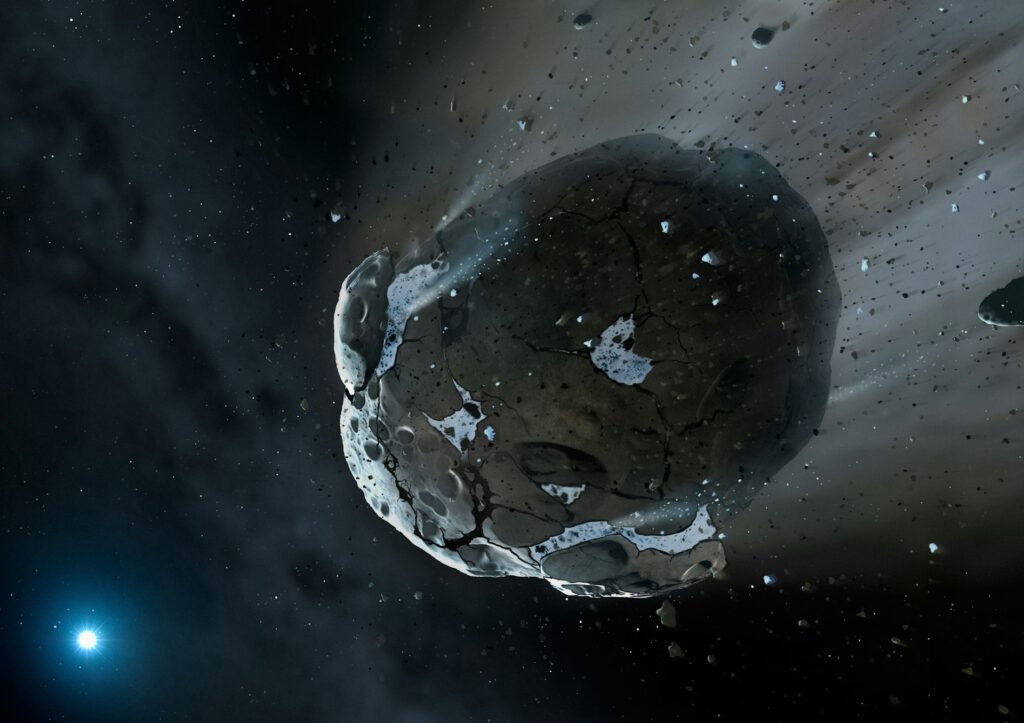
If you’re going to worry about a cosmic threat, go with something more grounded. Large asteroids and comets are far more likely to affect Earth than a black hole or a dark matter event. They’ve hit before, and they’ll likely hit again. Luckily, we’ve got teams around the world scanning the skies to catch anything big heading our way. It’s not a perfect system yet, but it’s far more urgent than worrying about invisible forces tearing us to bits.
12. The universe is mostly empty space.
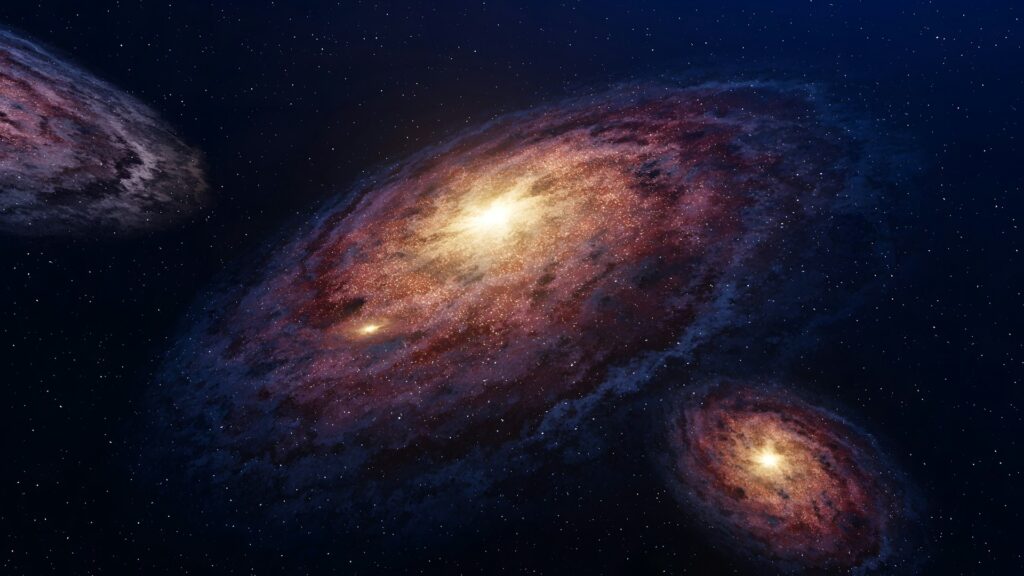
Even though it’s filled with trillions of stars and all kinds of mysterious matter, space is mostly just… space. The distances between objects are so vast that the odds of anything slamming into us by chance are ridiculously small. It’s kind of comforting to realise that in cosmic terms, we’re tucked away in a fairly quiet corner of a vast, mostly empty universe. It may be chaotic out there, but most of it never comes close.
13. If it ever did happen, it would be fast.
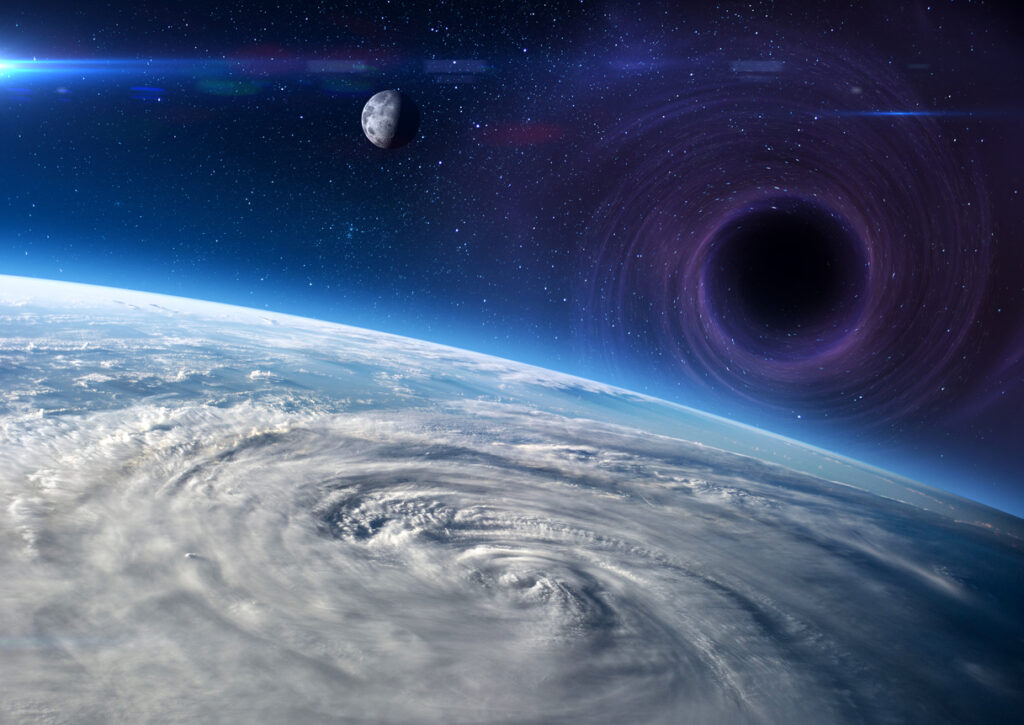
Let’s say the worst happened and something truly massive, like a black hole, did get close enough to Earth. You wouldn’t suffer through weeks of suspense. It would be fast, and probably painless, at least by cosmic standards. Whether it ripped the planet apart, stretched it into spaghetti, or just swallowed it whole, it wouldn’t be a long, drawn-out thing. It’s a dark comfort, but a comfort all the same: if the universe ever does go full horror show, we won’t have to wait around for the ending.