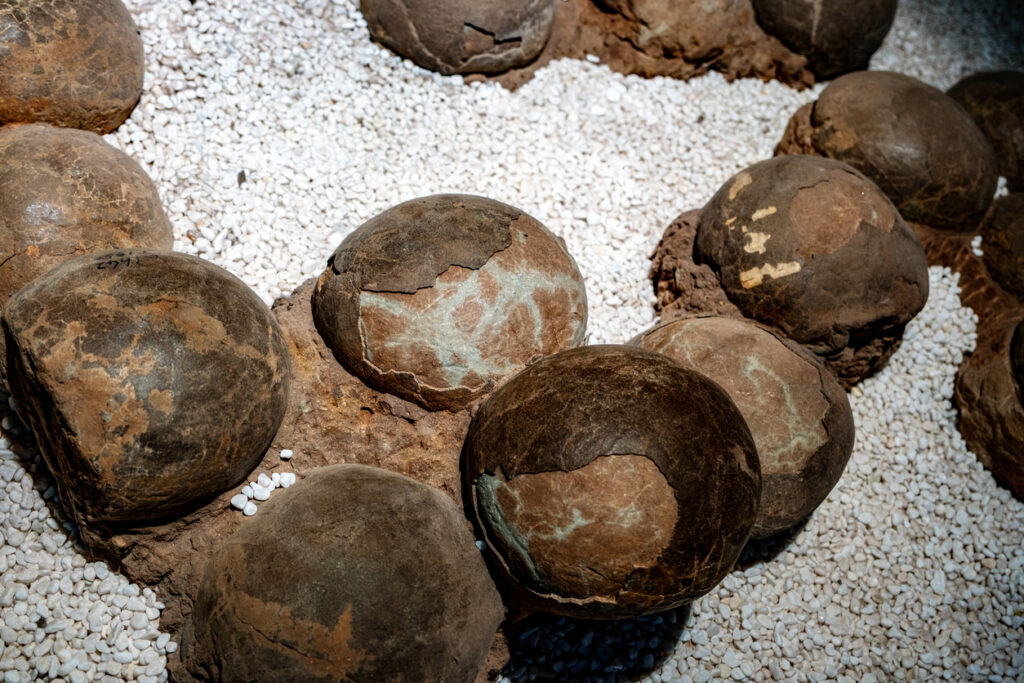
When most people picture dinosaur eggs, they imagine something the size of a beanbag chair, or even bigger. After all, dinosaurs were massive, right? But in reality, their eggs didn’t always match the scale of the creatures laying them. In fact, some of the biggest dinosaurs laid eggs that might surprise you with their size (or lack of it). Here’s what the fossil record actually shows about how big dinosaur eggs really were, and why they weren’t always the whoppers we might assume.
The largest dinosaur eggs ever found were only about the size of a rugby ball.
Even the biggest confirmed dinosaur eggs, like those from sauropods, tend to max out around 30 centimetres long, roughly the size of a rugby ball or a loaf of bread. That’s still big, sure, but not as cartoonishly massive as many people expect.
Considering some of the dinosaurs laying these eggs were over 30 metres long, the size difference seems odd. But nature has a good reason for keeping things moderate—gigantic eggs come with problems of their own, and evolution tends to find a balance.
Bigger eggs mean thicker shells, and that’s not always ideal.
To support a larger egg, the shell has to be thicker. But thicker shells make it harder for the baby dinosaur inside to breathe and eventually hatch. There’s only so much oxygen that can pass through the shell, no matter how much size you pack into it.
This biological limitation puts an upper limit on how large eggs can get. So instead of laying one huge egg, larger dinosaurs likely laid many smaller ones in a single nesting period to boost survival odds without running into respiratory issues.
Some of the smallest dinosaur eggs are about the size of a quail’s.
Fossil discoveries from places like China have shown dinosaur eggs that are only a few centimetres long—closer to a quail egg than anything prehistoric-looking. These likely belonged to small theropods or early birdlike species. These eggs were often laid in carefully arranged nests and sometimes even buried or incubated, showing that even the smallest species had strategies for protecting their young. So no, not all dino eggs were hefty. Some were downright dainty.
Egg size didn’t always match the adult dinosaur’s size.
There’s not a direct correlation between the size of the dinosaur and the size of the egg. Some mid-sized dinosaurs laid eggs just as large as those from bigger species. The relationship was more about reproduction strategy than body mass. For example, hadrosaurs—duck-billed dinosaurs—laid eggs similar in size to smaller theropods. It was more about what the offspring needed at birth and how quickly they needed to grow than about the adult size of the parent.
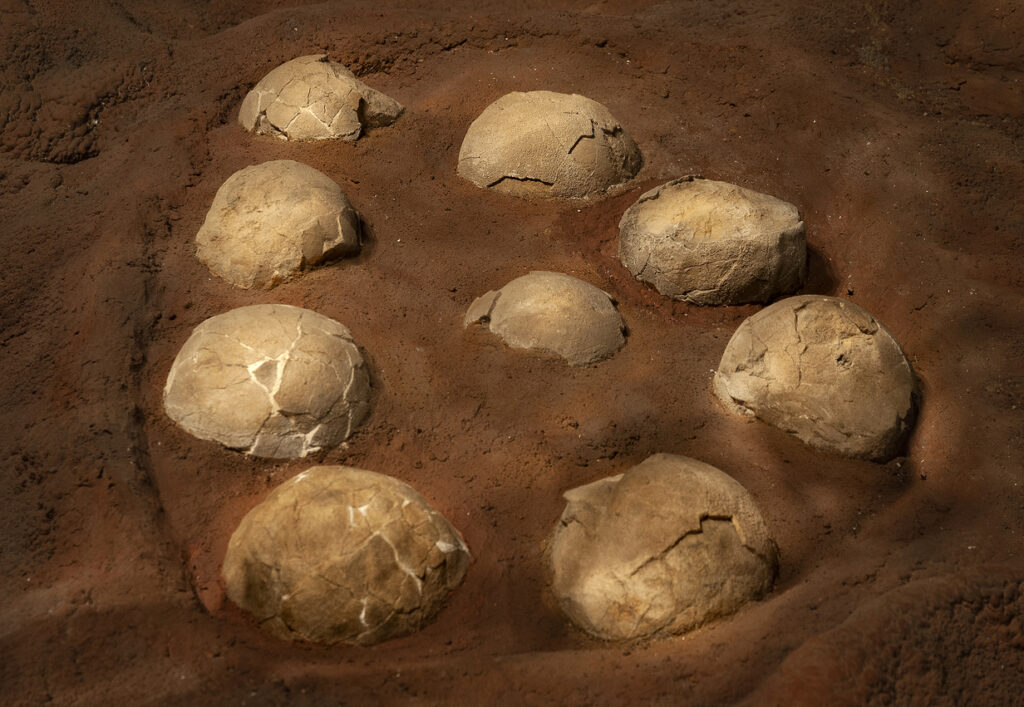
Many species laid eggs in groups or clutches.
Rather than relying on one giant egg, many dinosaurs laid a dozen or more eggs at once. Some fossil nests show 20 or even 30 eggs grouped together. This “clutch” strategy boosted the odds that at least a few hatchlings would survive predators and the elements. It’s a common strategy even today in reptiles and birds—lay many, lose a few, and keep the species going. For dinosaurs, egg size didn’t need to be huge if you could play the numbers game instead.
Sauropods laid surprisingly small eggs for their size.
Sauropods were the largest land animals ever to live, but their eggs were relatively modest. Some of their eggs are barely larger than those of an ostrich. When you compare that to the size of a full-grown sauropod, it’s almost comical. One reason is simple mechanics. A mother sauropod laying a small egg has less physical strain, and smaller eggs can be laid more frequently and in greater numbers. It’s a classic case of less being more when it comes to evolutionary success.
Some eggs may have been soft-shelled.
We tend to picture all dinosaur eggs as hard-shelled like bird or reptile eggs today, but some species, especially early dinosaurs, likely laid leathery, soft-shelled eggs. These would have been more vulnerable but easier to lay and hide.
This changes how we think about size, too. Soft-shelled eggs don’t fossilise as well, so the ones we’ve found might only represent part of the picture. There could have been species with even more variation in egg size that simply didn’t leave fossil evidence behind.
Dinosaurs shared nesting behaviours with modern birds.
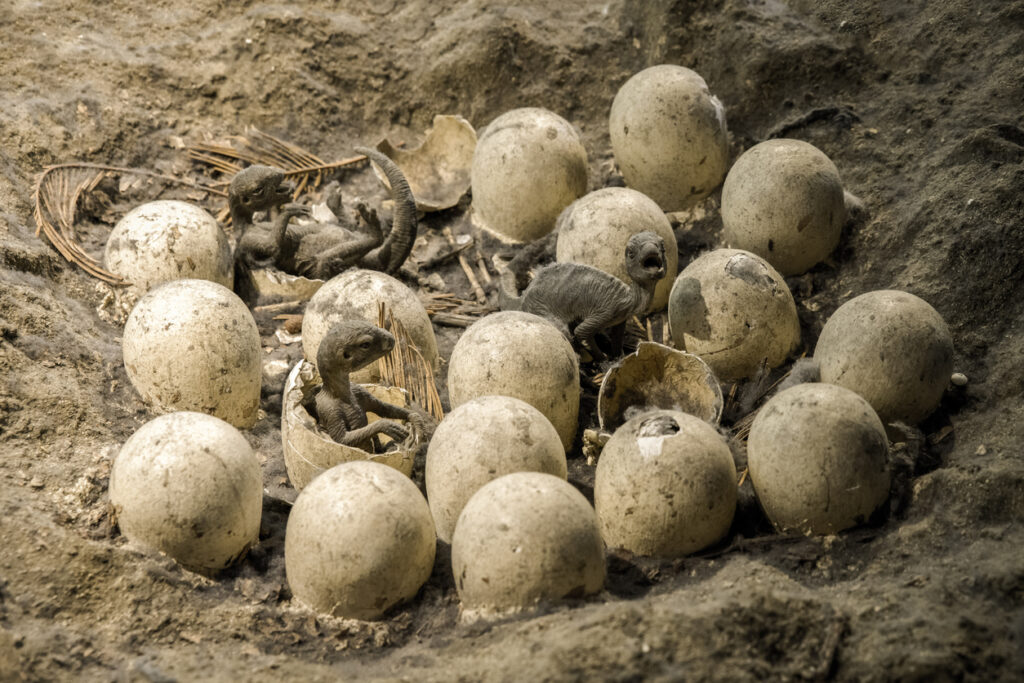
Some dinosaurs built nests, guarded them, and even sat on their eggs like today’s birds. The famous Oviraptor fossils show adults crouched protectively over clutches, implying a nurturing behaviour that didn’t rely on egg size for survival. This suggests that the size of the egg wasn’t the only survival factor. It was also about parenting. A dinosaur could lay smaller eggs and still ensure hatchlings made it if it was willing to defend or warm them, bird-style.
The fossil record skews what we think about size.
The eggs that survive and fossilise tend to be the ones that were big, tough, and buried in ideal sediment. That means our image of dinosaur eggs is biased by what’s preserved, not necessarily by what was common. We’re missing a big chunk of the picture. Some species may have laid much smaller or softer eggs that just didn’t fossilise well. So when we assume all dinosaurs laid hefty, rugby-ball-sized eggs, we’re only seeing the highlights reel.
Some fossil eggs are still a mystery.
Not all dinosaur eggs have been matched to a known species. Palaeontologists sometimes find eggs with no confirmed adult to go with them, or vice versa. These “orphan” fossils add to the confusion around egg size and what laid what. In some cases, species once thought to lay small eggs turned out to be associated with much larger adults than expected. Until we connect more dots between nests and skeletons, the story of dinosaur eggs is still being written.
Eggs got larger over evolutionary time, but only slightly.
Over time, some lineages of dinosaurs did begin to produce slightly larger eggs. This mirrors what we see in other evolving species: as animals get more specialised, so do their reproductive strategies. But there was never a massive leap in size. Evolution rarely pushes egg size to extremes, even in giants like sauropods. The risks of oversized eggs—difficulty laying, vulnerability to damage, and hatching complications—kept things fairly balanced.
Egg shape matters just as much as size.
Some dinosaur eggs were long and oval, others round and squat. The shape helped with stability, nesting, and sometimes even embryo positioning. Certain shapes made it easier for oxygen to reach the developing dinosaur inside. So even when the eggs weren’t particularly big, their design was smart. A well-shaped egg could make up for its size by increasing survival odds. It’s another way dinosaurs found the sweet spot between size, function, and evolutionary practicality.