
Tyrannosaurus rex might be the biggest celebrity in the dinosaur world, but fame doesn’t always equal fact. For decades, it’s been painted as the ultimate predator—king of the Cretaceous, terror of the ancient Earth. But with more discoveries popping up all the time, scientists are starting to ask: was T. rex truly the fiercest, or just the best known? Here’s what we know—and why some other dinosaurs might deserve a bit more credit than they get.
T. rex had one of the strongest bite forces ever recorded.
There’s no doubt about this one—T. rex’s bite was monstrous. Estimates suggest it could exert over 6 tonnes of pressure with its jaws, enough to crush bone like a dry twig. That kind of force puts modern predators like lions or alligators to shame. It also tells us that T. rex probably didn’t need to be all that subtle when it came to hunting. Whether it was chomping through prey or scavenging leftovers, it had the hardware to dominate the dinner table.
However, it might not have been the fastest hunter.
Despite its terrifying teeth, T-Rex probably wasn’t built for speed. Its massive size—up to 40 feet long and 9 tonnes—meant it likely topped out around 12 to 20 mph, which is slower than many of the dinosaurs it supposedly hunted. That doesn’t mean it wasn’t dangerous, but it raises the possibility that it may have relied more on ambush or scavenging than epic chases. Some scientists think it was just as happy cleaning up kills as it was making them.
Other predators were just as terrifying, if not more.
Spinosaurus, for example, was longer and possibly heavier than T. rex. It had massive claws, a crocodile-like snout, and may have been semiaquatic, making it a nightmare in the water. Giganotosaurus was another heavyweight that lived earlier and may have hunted in packs. Both lacked T. rex’s bone-crushing bite, sure, but they made up for it in size and versatility. If the fight for “fiercest” came down to pure stats, it’s not a clear win for the king.
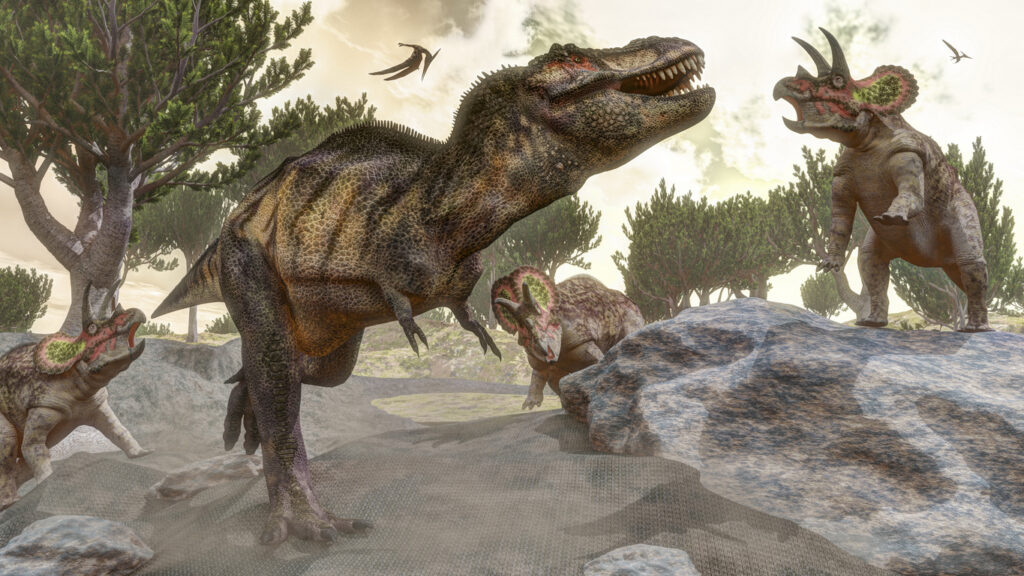
T. rex’s arms were tiny, but they weren’t useless.
Everyone jokes about the little arms, but T. rex’s forelimbs were still strong and muscular, possibly used to hold onto prey or push itself off the ground. They weren’t decorative. They just looked a bit ridiculous next to the rest of its body. They also had massive claws and were likely quite tough. Not great for a wrestling match, but probably helpful in certain close-up scenarios where leverage mattered more than length.
It had surprisingly good vision and smell.
T. rex had forward-facing eyes and stereoscopic vision, which were great for judging distance. Its optic nerves suggest strong eyesight, while its olfactory bulbs (used for smelling) were massive, possibly bigger than any other known dinosaur’s. That combo would have made it a formidable tracker, whether it was trailing prey or sniffing out a carcass miles away. It wasn’t just a brute; it had the senses to back it up.
T. rex lived in a tough neighbourhood.
It didn’t rule the world alone. T. rex shared its environment with other fierce creatures, including heavily armoured herbivores like Ankylosaurus and fast, agile prey like Edmontosaurus. It had to be both powerful and adaptable to survive. Some of these dinosaurs could fight back hard. One tail swipe from an Ankylosaurus might’ve broken bones. So while T. rex was a top predator, it wasn’t always guaranteed a win.
It may have been part scavenger, part hunter.
The idea that T-Rex was purely a scavenger has mostly been put to bed. It had too many features that scream “hunter.” But that doesn’t mean it turned down a free meal if the opportunity came up. Modern predators like lions and hyenas hunt and scavenge depending on the situation, and T. rex likely did the same. The fierceness isn’t in how the food was acquired. It’s in surviving long enough to keep eating.
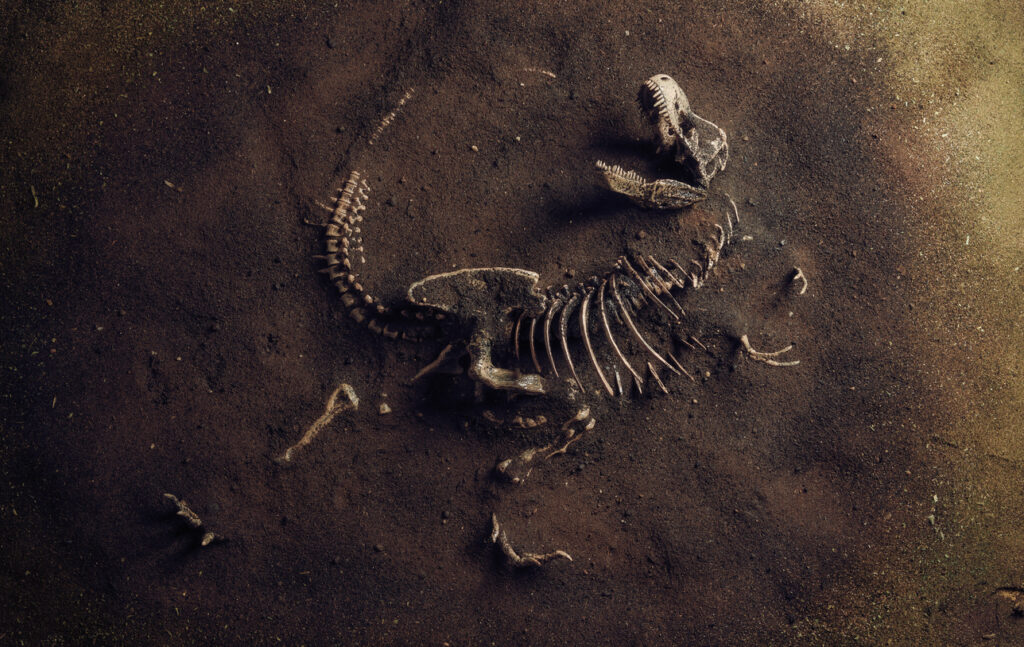
Its bones show signs of brutal survival.
Fossil records of T. rex skeletons often show healed injuries—broken bones, bite marks, and infections. That tells us these dinosaurs weren’t just dangerous; they lived hard, violent lives and kept going through it. Some T-Rexes even have bite marks from other T-Rexes, suggesting territorial fights or scavenging squabbles. Being king of the Cretaceous clearly didn’t mean living an easy life.
Its fame started with a perfect storm of discovery and media.
Part of what made T. rex such a superstar wasn’t just its biology, it was timing. The first skeleton was discovered in 1902 and named in 1905, right when the world was becoming obsessed with dinosaurs and museums were racing to show off the biggest bones. Add in a memorable name, some iconic skeletons, and a few starring film roles, and suddenly T. rex became the dinosaur everyone grew up knowing. Other contenders just didn’t get the same PR boost.
It still holds a unique place in dinosaur evolution.
T. rex wasn’t just a big meat-eater—it was the end product of millions of years of theropod evolution. It represents one of the last and most specialised forms of land predators before the mass extinction hit. Its massive head, strong legs, and tiny arms were all the result of a very specific evolutionary strategy. Whether or not it was the fiercest, it was one of the most advanced predators of its time.
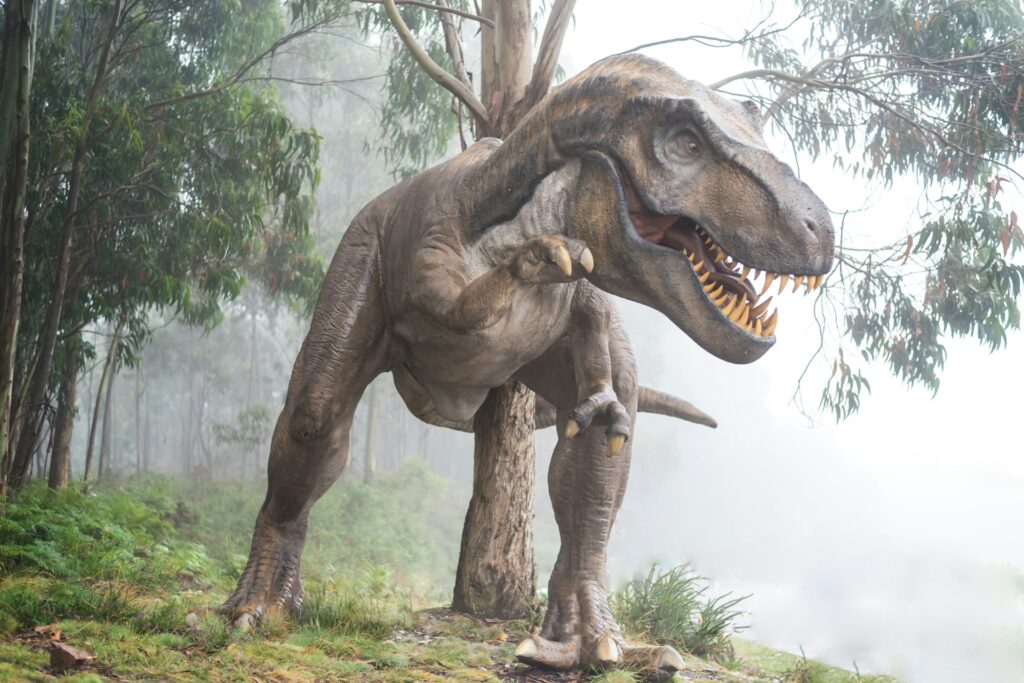
It wasn’t the biggest, but it was well-balanced.
Some dinosaurs were longer or heavier, but T. rex had a well-balanced build that made it an efficient apex predator. Its powerful legs, muscular tail, and keen senses gave it an edge over slower, less agile rivals. It didn’t need to be the biggest brute in the room. It just needed to be smart, dangerous, and built to last, which, by all accounts, it was.
In the end, “fierce” is a bit of a blurred line.
Is fierce about strength? Speed? Hunting success? Survival? T. rex ticks a lot of boxes, but so do other contenders depending on how you define the term. Some were more agile, some better at ambush, some with more varied diets. T. rex might not win every category, but it was a serious all-rounder. And when you throw in its iconic status, there’s a reason it’s still top of the dinosaur food chain in our imaginations, even if the science says the crown isn’t totally undisputed.