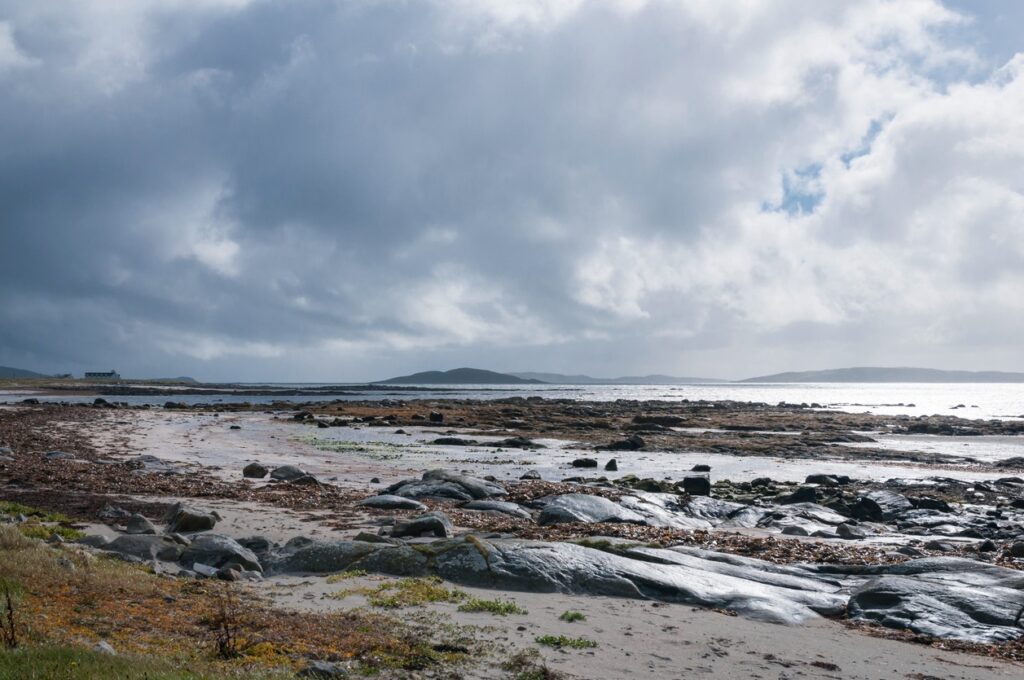
On a summer afternoon in the Outer Hebrides, holidaymaker Neil Roberts was rockpooling on the island of South Uist when he spotted something so unlikely it felt like a trick of the tide. Anchored to a rock, swaying in the shallow water, was a tiny stalked jellyfish that looked exactly like the kind Victorian naturalists once sketched in field guides. The species, Depastrum cyathiforme, hadn’t been recorded alive in Britain since 1954 and was last seen anywhere in the world in 1976. Many scientists had written it off as extinct.
Roberts wasn’t looking for anything so rare. He’d simply been turning over stones to see what was living beneath them when he noticed four of the tiny, thistle-like animals, each less than five centimetres tall. Unsure of what he was looking at, he took photos and compared them with online resources. Nothing matched—at least, nothing recent. The only thing that came close were century-old illustrations by naturalist Philip Henry Gosse.
When Roberts shared the images with marine experts, the response was instant. As The Guardian later reported, his photos showed Depastrum cyathiforme alive and well, a creature thought gone for nearly half a century.
From ghost to living species
The news spread quickly through the small but dedicated community of stalked jellyfish specialists. Guy Freeman, editor of British Wildlife magazine, travelled to South Uist soon after and found another specimen. He later said that seeing Roberts’ first images was “like spotting a ghost,” a creature known only from history suddenly made real again.
The rediscovery drew international interest too. Allen Collins of the Smithsonian National Museum of Natural History called it “a remarkable find” and said he hoped it would spark a fresh search for the species in other likely habitats. Christine Johnson from the Outer Hebrides Biological Recording project highlighted that it was yet another example of how much value there is in careful, local observation.
The last British sighting had been off Lundy, Devon, in the mid-1950s, and the last confirmed global record was from Roscoff in northern France in 1976. Since then, Depastrum cyathiforme had vanished from surveys and field records. Its reappearance in the Hebrides proves that the species has either hung on in isolated pockets or recolonised after being pushed out decades ago. Either way, it’s an extraordinary survival story.
1️⃣ Jellyfish species spotted for first time in almost 50 years
The Depastrum cyathiforme, which looks like a thistle, was last recorded off northern France in 1976 and in UK waters in 1954.https://t.co/ucZj6S5WY5 pic.twitter.com/5eIVQhOmzI
— Marine Conservation Society (@mcsuk) August 28, 2025
Stalked jellyfish are a peculiar branch of the jellyfish family. Rather than drifting through open water, they spend their lives attached to rocks or seaweed, using a stalk to anchor themselves in place and a ring of tentacles to catch prey. They’re small, delicate, and blend easily into their surroundings. That makes them easy to miss, especially in places where few people take the time to look closely.
Britain and Ireland are home to around ten species of stalked jellyfish, several of which are found nowhere else on Earth. The loss of one would be a real blow to biodiversity. Its rediscovery in a clean, sheltered Hebridean tide pool is more than just a curiosity. It hints at the health of the local marine environment. As British Wildlife’s follow-up coverage pointed out, the find also highlights the importance of preserving intertidal habitats where these animals thrive.
For conservationists, knowing where Depastrum cyathiforme still exists is the first step towards ensuring it isn’t lost for good. The next challenge will be to search other sites, confirm how widespread the species is, and assess whether its population is stable. Those answers could feed into decisions on Marine Protected Areas or targeted surveys of lesser-known invertebrates.
The role of chance, and citizen science
It’s tempting to chalk this rediscovery up to luck, but there’s more to it than that. Roberts knew enough about marine life to recognise that what he’d seen was unusual, and he took the time to document it clearly. Without those photographs, it’s likely the sighting would have remained a personal curiosity rather than a record that could be verified and shared.
This is exactly why scientists emphasise the role of “citizen science” in biodiversity work. Whether it’s photographing an unfamiliar insect in a garden or logging a strange plant on a hiking trail, these records can reveal species that are rare, new, or, like Depastrum cyathiforme, assumed extinct. The Hebrides jellyfish story is proof that even the smallest observation can change what we think we know about the natural world.
It also underlines the richness of places like South Uist, where fewer people and relatively undisturbed coastlines create refuges for species that may have disappeared from busier parts of the UK. The challenge now is to keep them that way, balancing tourism and development with the quiet conditions that allow such creatures to survive.
We should keep looking
There’s a romance to the idea that something thought gone forever might still be out there, waiting to be noticed. That’s what gives this story its appeal beyond marine biology circles. It’s not just about science; it’s about the thrill of discovery, the reminder that nature can still surprise us.
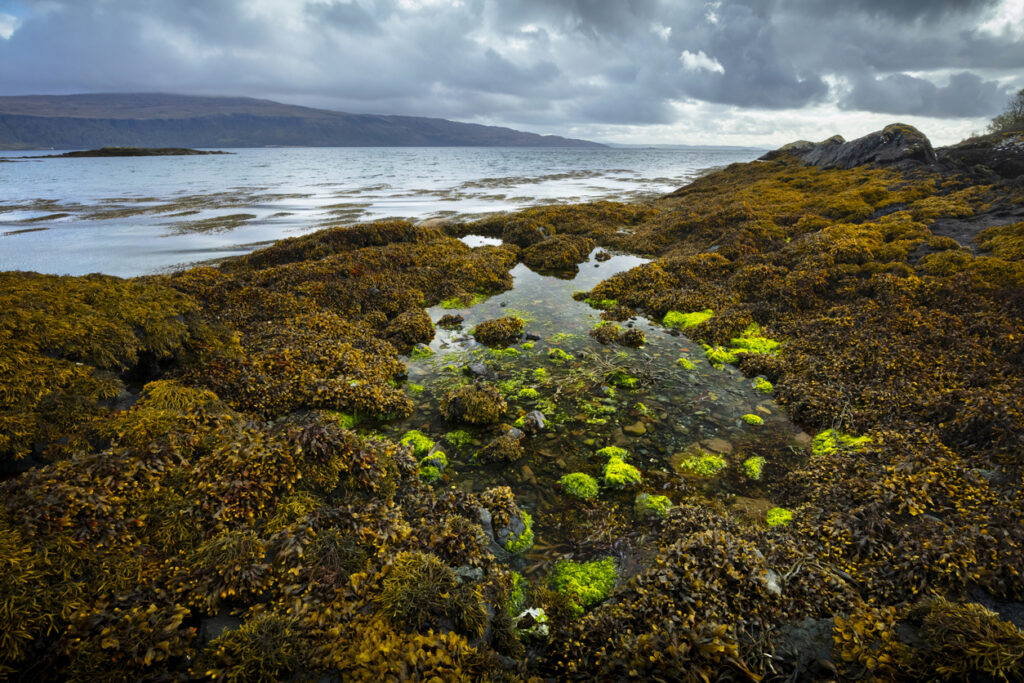
For those living in or visiting the Hebrides, it’s an encouragement to take a closer look at the tide pools and kelp beds. For the rest of us, it’s a reminder that extinction can sometimes be less final than it appears, at least for species small and elusive enough to hide in plain sight.
As Collins of the Smithsonian put it, the find is a “remarkable” reminder of how incomplete our understanding of marine life still is. And as Freeman’s trip back to South Uist proved, once you know where to look, the odds of finding more improve dramatically. That’s why the search is already expanding, with eyes trained on similar habitats up and down the west coast.
If Depastrum cyathiforme can turn up again after fifty years, what else might be lying low, waiting for someone curious enough to turn over the right rock? The answer could be anywhere along Britain’s coasts, and perhaps that’s the most exciting part.