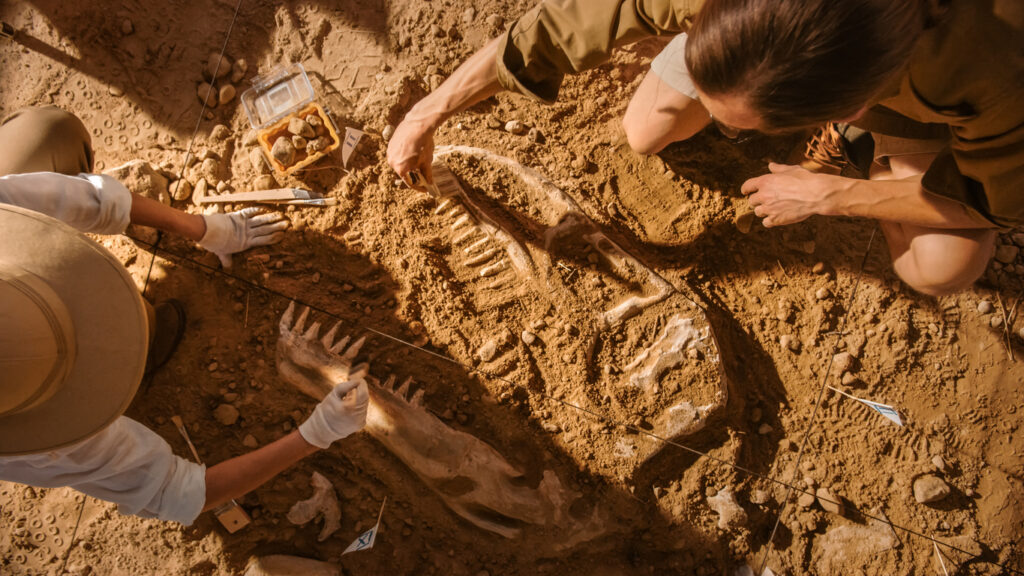
Dinosaur fossils have been dug up for well over a century, but every so often something turns up inside them that throws everyone a bit. You expect bones, maybe teeth, maybe the odd imprint. In other words, not the weird surprises that sometimes show up when researchers look more closely. It’s the kind of stuff that makes you stop and think about what life must have actually been like back then.
Some of these discoveries are oddly funny. Others are slightly grim. Then there are the ones that are just downright unexpected. They give you a clearer picture of these creatures in a way you wouldn’t get from skeletons alone. Here are some of the strangest things scientists have uncovered hiding inside dinosaur fossils.
1. A perfectly preserved dinosaur’s last meal still in its stomach
Most fossils are just bones and maybe teeth if you’re lucky, with all the soft tissue rotting away millions of years ago. People imagine fossils as basically stone skeletons with nothing left of the actual living animal beyond the hard bits.
Scientists found a dinosaur fossil with its stomach contents still intact, showing exactly what it ate for its final meal. One fossil had a whole lizard preserved inside, complete and recognisable, like finding someone’s lunch still in their belly after 120 million years. It’s absolutely mental that something as delicate as a half-digested meal could survive that long when most soft tissue disappears almost immediately.
2. Gastroliths that dinosaurs swallowed on purpose
When people think about what’s inside dinosaurs, they probably imagine organs, bones, and maybe food. They don’t really consider that some dinosaurs deliberately ate rocks as part of their normal digestive process.
Loads of dinosaur fossils contain these smooth, polished stones called gastroliths that the animals swallowed to help grind up tough plant material in their stomachs. It’s the same thing modern birds do, using rocks like internal millstones to break down food they can’t chew properly. Finding these stomach stones is actually quite common, and they’re often beautifully smooth from tumbling around inside a dinosaur’s guts for ages.
3. Baby dinosaurs still inside their mothers
Fossil discoveries are usually of individual animals that died and got buried, each one a separate find. People don’t really think about finding multiple generations of dinosaurs literally connected to each other in one fossil.
Scientists have found pregnant dinosaur fossils with tiny baby skeletons still inside where they were developing when the mother died. One discovery showed a marine reptile with babies positioned exactly as they would be before birth, proving these creatures gave live birth rather than laying eggs. It’s like a snapshot of something that never got to happen, frozen in time right before those babies would have been born.
4. Completely intact blood vessels and proteins
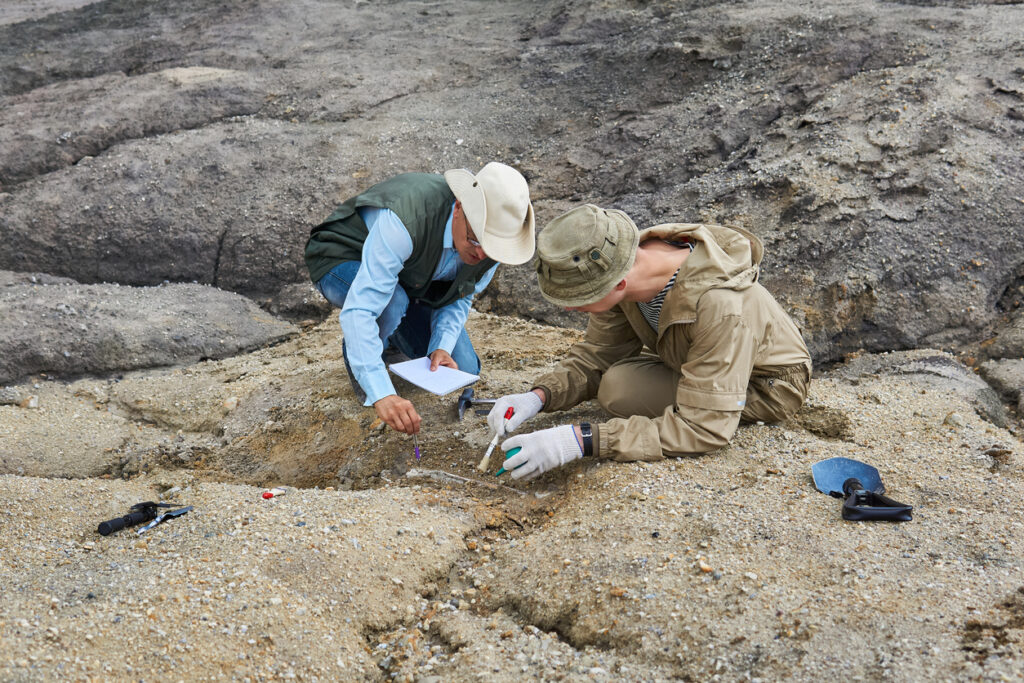
Everyone assumes that soft tissue completely disappears after millions of years, leaving only hard mineralised bone behind. The idea that anything squishy or organic could survive that long seems completely impossible, given how quickly bodies normally decompose.
Researchers have found actual preserved blood vessels and proteins inside T. rex bones that are 68 million years old. When they dissolved away the mineral part of the fossil, these stretchy, flexible blood vessels remained, looking shockingly like fresh tissue. It completely changed what scientists thought was possible for fossil preservation and caused massive arguments in the palaeontology world about whether it could really be original tissue.
5. Parasites that were feeding on them when they died
Fossils show the dramatic stuff like teeth and claws, making dinosaurs seem like these powerful, dramatic creatures. People don’t really think about the mundane reality that dinosaurs probably dealt with irritating parasites just like every other animal.
Scientists have found fossilised parasites literally attached to dinosaur bones, showing where these tiny creatures were feeding on blood or burrowing into flesh when everything got fossilised together. One discovery showed bite marks on bones that match modern tick feeding patterns, proving dinosaurs absolutely had to deal with bloodsucking parasites. It’s weirdly humanising to know that mighty dinosaurs were probably itchy and annoyed by bugs, just like we are.
6. Bizarre stomach contents that shouldn’t be there
When scientists find stomach contents, they usually expect to see the animal’s normal food, like plants for herbivores or prey animals for carnivores. The discoveries generally match up with what teeth and body structure suggest the dinosaur should have been eating.
Some fossils have revealed completely unexpected last meals that don’t match what that type of dinosaur was supposedly designed to eat. One bird-like dinosaur that should have eaten plants had lizard bones in its stomach, while a supposed fish-eater had pterosaur remains inside. These surprise meals suggest dinosaurs were more opportunistic and less specialised than we thought, basically eating whatever they could catch regardless of what their teeth looked like.
7. Actual preserved skin texture and scales
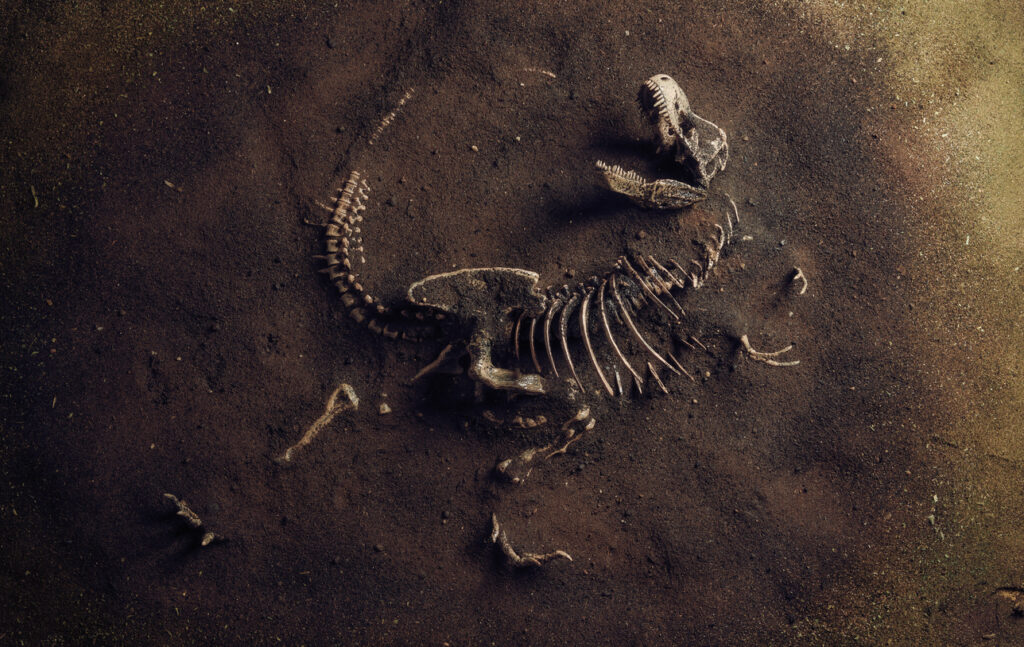
Most people picture dinosaur fossils as just bones arranged in museum poses, maybe with some artistic interpretation of what they looked like. The actual texture and appearance of dinosaur skin seems like something we’d never know because soft tissue doesn’t fossilise.
Some incredibly lucky fossils have preserved skin impressions in such detail that you can see individual scales and the texture of their hide. A few specimens show skin still attached to the bones with pigment cells intact, letting scientists work out what colours they actually were. It’s the difference between knowing dinosaurs existed and actually being able to see what they looked like, down to wrinkles and scale patterns.
8. Evidence of the tumours and diseases they suffered
Dinosaurs in popular imagination are these healthy, powerful creatures that were either fine or dead, with nothing in between. People don’t really consider that dinosaurs probably got sick, developed cancer, and suffered from painful medical conditions just like modern animals do.
Fossils have shown tumours growing on bones, arthritis damage, and even evidence of gout in dinosaur joints. One poor dinosaur had a massive infected jaw that must have been absolutely agonising, while another had bone cancer that would have made movement difficult. These discoveries show dinosaurs weren’t invincible monsters, but actual living creatures that dealt with pain, illness, and old age.
9. Preserved gut bacteria from their digestive systems
When animals die, bacteria is usually one of the first things to decompose and disappear completely. People assume that microscopic life forms would never fossilise because they’re too small and delicate to survive the fossilisation process millions of years later.
Scientists have found fossilised bacteria inside dinosaur remains that were living in their guts when they died. These ancient microbes got preserved along with everything else, giving us insight into dinosaur digestive systems and what kind of bacterial colonies lived inside them. It’s absolutely wild that something as tiny and delicate as bacteria could fossilise at all, let alone still be identifiable after such ridiculous amounts of time.
10. Unborn eggs still developing inside egg-laying dinosaurs
Most dinosaur egg discoveries are separate from adult fossils, found in nests or clutches where they were laid. People imagine eggs and adults as separate finds that you have to match up based on location and detective work, rather than being literally connected.
Some fossils show eggs with developing embryos still inside the mother dinosaur’s body cavity, caught in the process of forming before they would have been laid. One spectacular find showed multiple eggs at different stages of development, proving that some dinosaurs produced eggs continuously rather than all at once. It’s like opening a time capsule showing reproduction in progress, frozen at exactly the moment before those eggs would have been laid in a nest somewhere.