While most of us are tethered to a 5G signal and a global supply chain, there are still pockets of the map where the modern world hasn’t managed to get a foot in the door.
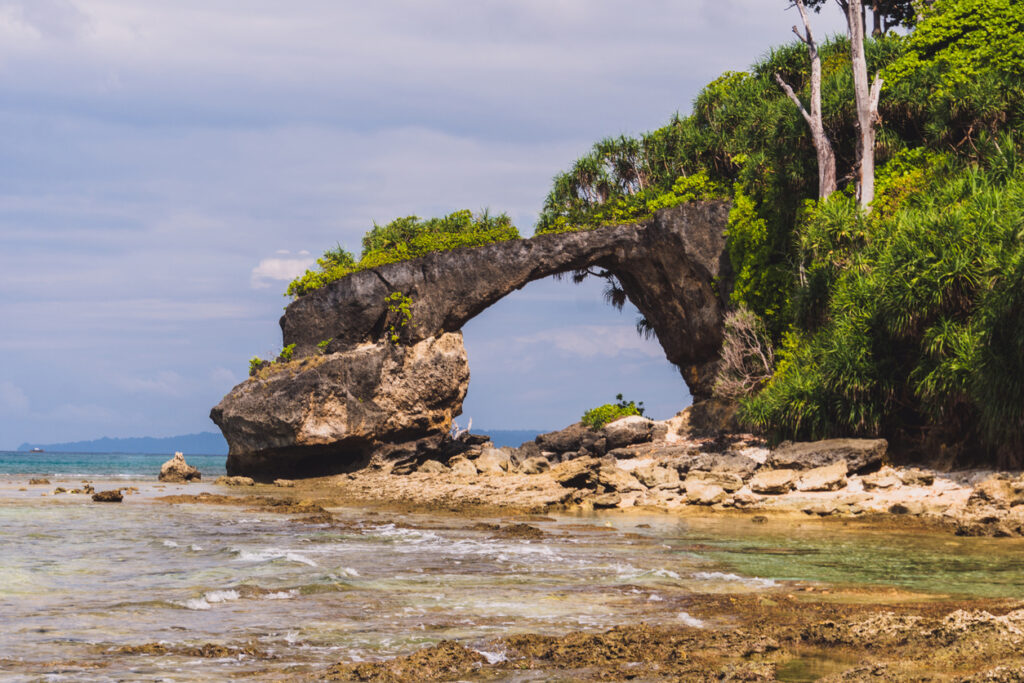
These communities aren’t just “surviving” in the wild; they’ve spent thousands of years mastering a way of life that makes our version of sustainability look like a hobby. From the deep, impenetrable sections of the Amazon to the spear-guarded shores of North Sentinel Island, these groups have made a conscious choice to keep the rest of us at arm’s length. They exist in a world where the forest or the sea provides every single thing they need, proving that it’s entirely possible to thrive without ever touching a piece of plastic or a touchscreen.
The Sentinelese, Andaman Islands
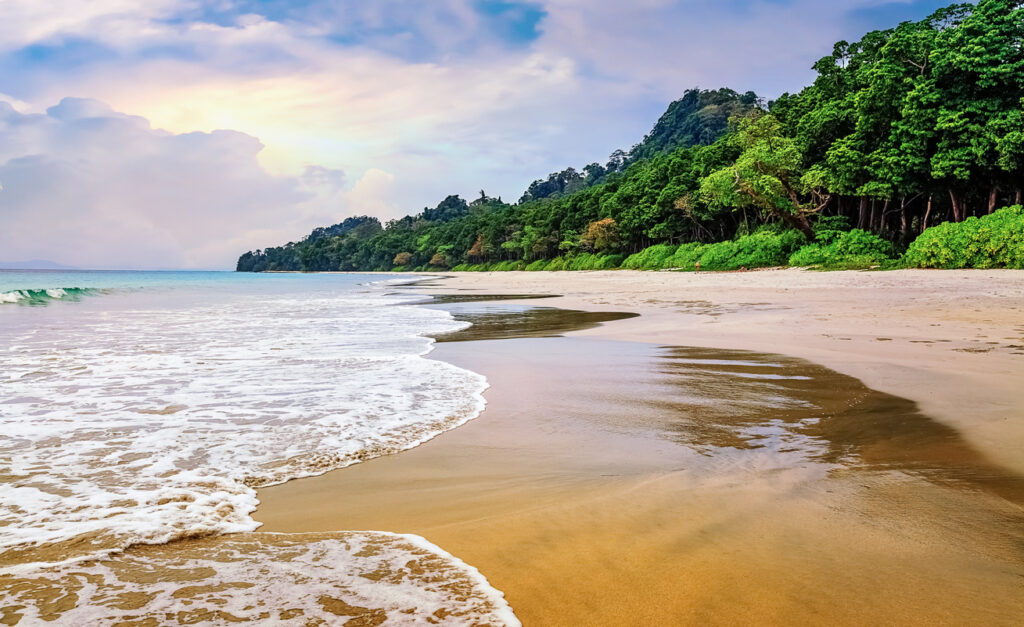
The Sentinelese live on North Sentinel Island in the Bay of Bengal and have actively resisted all contact with the outside world for as long as recorded history goes back. The Indian government now enforces a three-mile exclusion zone around the island, partly to protect outsiders and partly to protect the Sentinelese from diseases their immune systems have never encountered.
Estimates of their population range from a few dozen to a few hundred people, and almost nothing is known about their language, beliefs, or social structure. What is clear is that the island’s ecosystem is intact, its forests are dense, and they’ve managed both entirely without outside intervention.
The Pirahã, Amazon Basin

The Pirahã people of the Brazilian Amazon live along the Maici River and have a relationship with their environment that linguists and anthropologists have found genuinely difficult to categorise. Their language has no numbers, no fixed terms for colour, and no creation myths. Instead, concepts are tied directly to present experience rather than abstraction.
They fish, hunt, and gather with an efficiency built over generations of intimate knowledge of one specific stretch of river and forest. Several missionaries and researchers who spent years attempting to change their way of life eventually concluded that the Pirahã weren’t missing anything they actually wanted.
The Korowai, Papua

The Korowai of West Papua build their homes in the canopy of the rainforest, some as high as thirty-five metres above the ground, in structures that have to withstand both tropical weather and the particular demands of daily life at height. Their forest knowledge is extraordinarily detailed; they cultivate sago palms, hunt with bows, and understand the behaviour of the forest around them with a precision that took generations to develop. Some Korowai communities have had limited contact with the outside world since the 1970s, while others remain almost entirely unknown, and the forest they inhabit is among the most biodiverse in the world.
The Hadza, Tanzania

The Hadza of northern Tanzania are one of the last hunter-gatherer populations on Earth living substantially as their ancestors did, and their relationship with the landscape around Lake Eyasi is one of the most studied examples of sustainable human ecology in existence.
They take what the land offers—berries, tubers, game, honey—and move with the seasons rather than trying to fix themselves to one spot. Their diet is diverse, their health by most measures is good, and their environmental footprint is genuinely minimal. The land they’ve lived on for tens of thousands of years is still recognisably the same land.
The Bajau, Southeast Asia

The Bajau people of Malaysia, Indonesia, and the Philippines have lived on the sea rather than the land for so long that they’ve physically adapted to it. Studies have found that Bajau divers have spleens significantly larger than those of neighbouring land-dwelling populations, which allows them to store more oxygenated red blood cells and dive deeper and longer.
They can free-dive to twenty metres and hold their breath for several minutes while hunting fish and shellfish. Many live on houseboats or in stilt villages over shallow water and spend more of their lives at sea than on dry land, navigating by stars, currents, and an understanding of the ocean that no instrument replicates.
The Tsaatan, Mongolia

The Tsaatan, whose name translates roughly as reindeer people, live in the remote taiga forests of northern Mongolia close to the Russian border, following their reindeer herds through terrain that most people would find completely inhospitable.
There are only a few hundred Tsaatan remaining, and their entire way of life is structured around the reindeer. They drink their milk, use them for transport, and depend on them for their survival in an environment where winters regularly reach minus fifty degrees Celsius. They live in traditional teepee-like structures called ortz and move camp several times a year as the herds need fresh grazing.
The Jarawa, Andaman Islands

The Jarawa of South and Middle Andaman Island maintained complete isolation until the late 1990s, resisting all contact with the same determination as their Sentinelese neighbours. In the years since, some limited and cautious contact has occurred, but the Jarawa have largely chosen to maintain their own boundaries and continue living as they always have in the forests of the Andaman reserve.
Their hunting and foraging knowledge of the forest is considered exceptional by the anthropologists who have observed them from a distance, and the territory they occupy has remained ecologically intact in a way that the surrounding developed areas have not.
The Mursi, Ethiopia

The Mursi live in the remote Omo Valley of southwest Ethiopia, a region of extreme heat and seasonal flooding that most outside groups have found difficult to inhabit. They practise agropastoralism, moving their cattle herds between seasonal grazing areas in a pattern carefully calibrated to the rhythms of the Omo River.
Their ecological understanding of flood timing, soil fertility, and pasture recovery has allowed them to sustain a way of life in a challenging environment for centuries. Contact with the outside world has increased in recent decades, largely through tourism, which has brought pressure and disruption that the Mursi themselves have had mixed responses to.
The Ayoreo, Gran Chaco

The Ayoreo of the Gran Chaco region, spanning parts of Paraguay and Bolivia, include some of the last uncontacted people living outside the Amazon Basin. Some Ayoreo communities made contact with missionaries in the twentieth century, but others have chosen to remain in the dense dry forests of the Chaco, moving to avoid the outside world rather than engage with it.
The forests they inhabit are among the most threatened in South America due to agricultural expansion, which makes their continued existence there an act of remarkable adaptation as much as isolation. Those who have had contact have spoken of deliberately withdrawing deeper into the forest when they detected outside presence.
The Onge, Little Andaman

The Onge of Little Andaman Island are one of the most ancient populations on Earth in terms of genetic continuity, with DNA studies suggesting their ancestors were among the earliest humans to leave Africa. Their population has declined dramatically since sustained contact with the Indian government began in the twentieth century, and they now number fewer than a hundred people.
Before contact, their knowledge of the island’s forest and marine resources was comprehensive enough to sustain them entirely. The story of the Onge is a sobering counterpoint to the others on this list—a reminder that isolation, for many of these communities, isn’t backwardness. It’s often what kept them whole.