At first glance, the mandarin duck looks less like a real animal and more like something dreamed up by a bored artist with a box of paints.
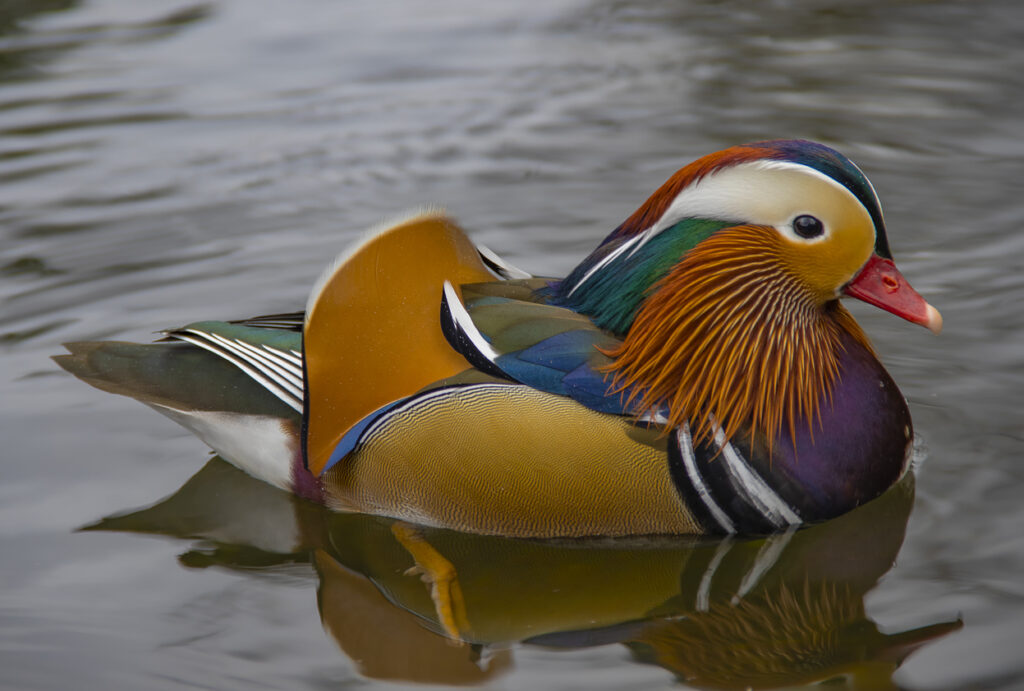
It’s all bright oranges, deep purples, sharp whites, glossy greens, and patterns that seem almost too deliberate to be natural all sit on one small bird, somehow without tipping into chaos. It’s the kind of creature that makes people stop mid-walk and stare, wondering how something that bold exists outside a zoo or a picture book.
What makes its colours so fascinating isn’t just how striking they are, but how specific they seem. Every stripe, patch, and flash of colour has a reason for being there, and it’s not random decoration. The mandarin duck’s look is the result of evolution getting very particular about visibility, attraction, and timing. Once you understand what those colours are actually doing, the duck stops looking flashy for the sake of it and starts looking incredibly clever.
The colours come from light, not dye.
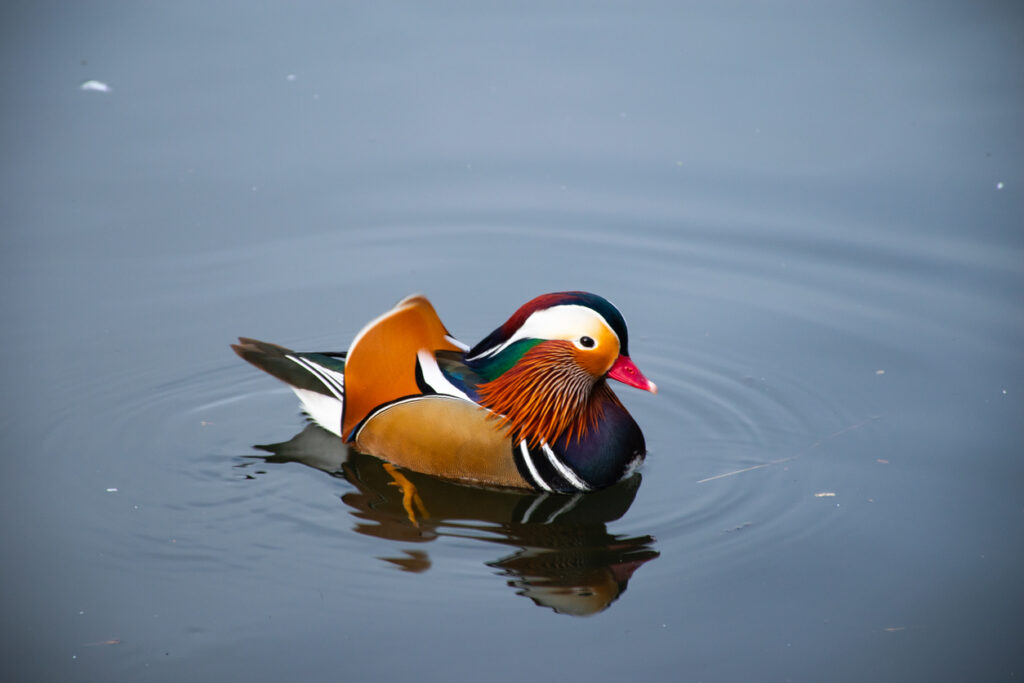
Many of the mandarin duck’s brightest colours aren’t made by pigments at all. Instead, tiny structures in the feathers bend and reflect light in specific ways, which creates those intense greens and blues. That means the bird isn’t “painted” in colour, it’s shining because of how the feathers interact with sunlight. These structural colours don’t fade as easily as pigment-based ones, which is why the duck maintains its vibrant look through the season. It’s nature using physics to create something that looks almost magical without relying on dyes or chemicals.
Males change dramatically depending on the season.
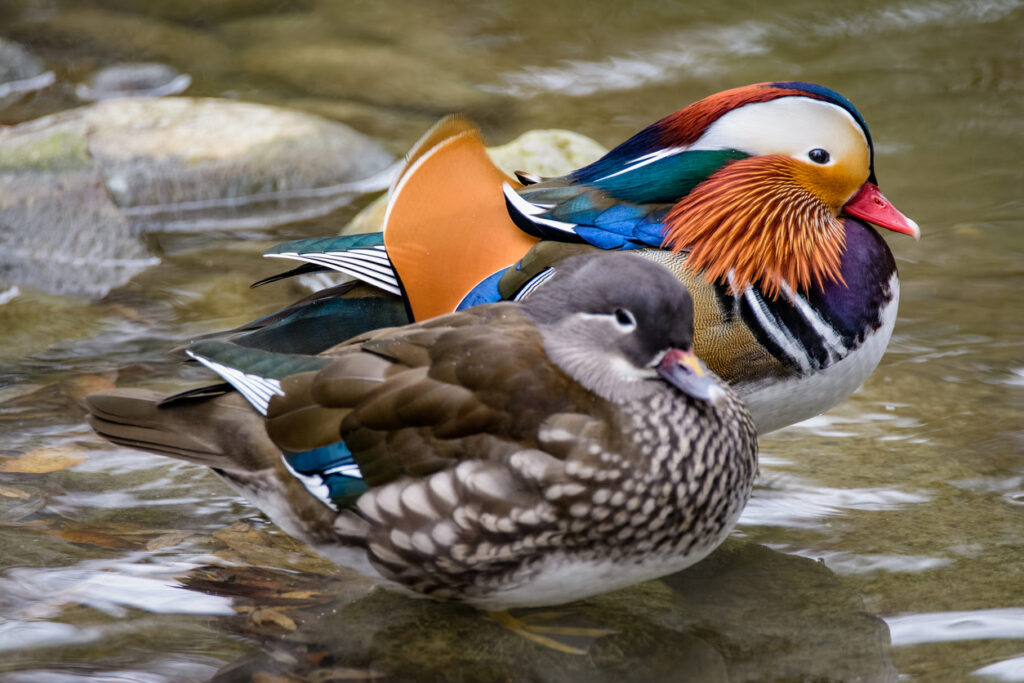
People often don’t realise how different male mandarin ducks look outside the breeding season. They lose most of their bold colours and patterns, blending into browns and greys that look far more ordinary. This change helps protect them from predators when they’re moulting and unable to fly well. When breeding season returns, the colours come back in full force. The sudden shift from dull to dazzling is part of what makes the species so famous because it shows how much their appearance is tied to survival and reproduction.
Females stay muted for a very good reason.
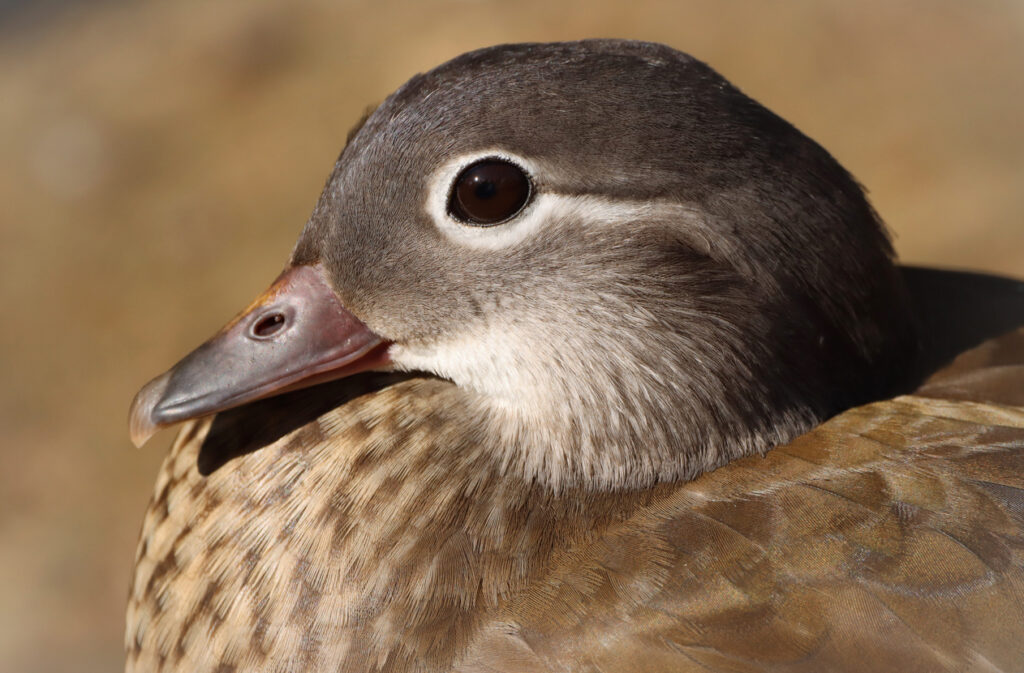
While males are colourful, female mandarins stay brown and subtle, which helps them stay hidden while nesting. Their muted feathers match tree trunks and riverbanks, making it harder for predators to spot them while they’re protecting eggs or young ducklings. The contrast between the genders highlights how nature prioritises protection for mothers. Their softer colours aren’t boring, they’re essential, and they allow the species to thrive in areas with many threats.
The orange “sails” are shaped feathers, not decorations.
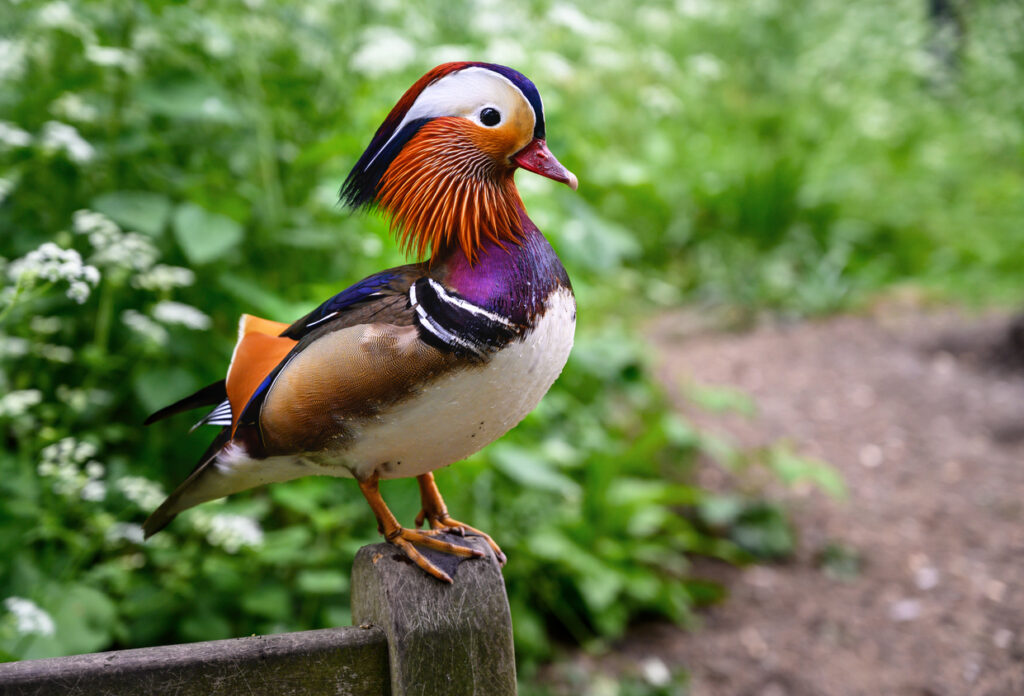
The tall orange feathers that stick up on each side of the male’s body look like fans or sails, but they’re just highly specialised wing feathers. Their shape helps catch the sunlight and show off strong colour during courtship displays, which makes the male more noticeable to females. The angle and shine of these sails change as the duck moves. Its shifting colour helps signal confidence and health, which plays a role in how mates are chosen during breeding season.
Blues and greens come from microscopic structures.
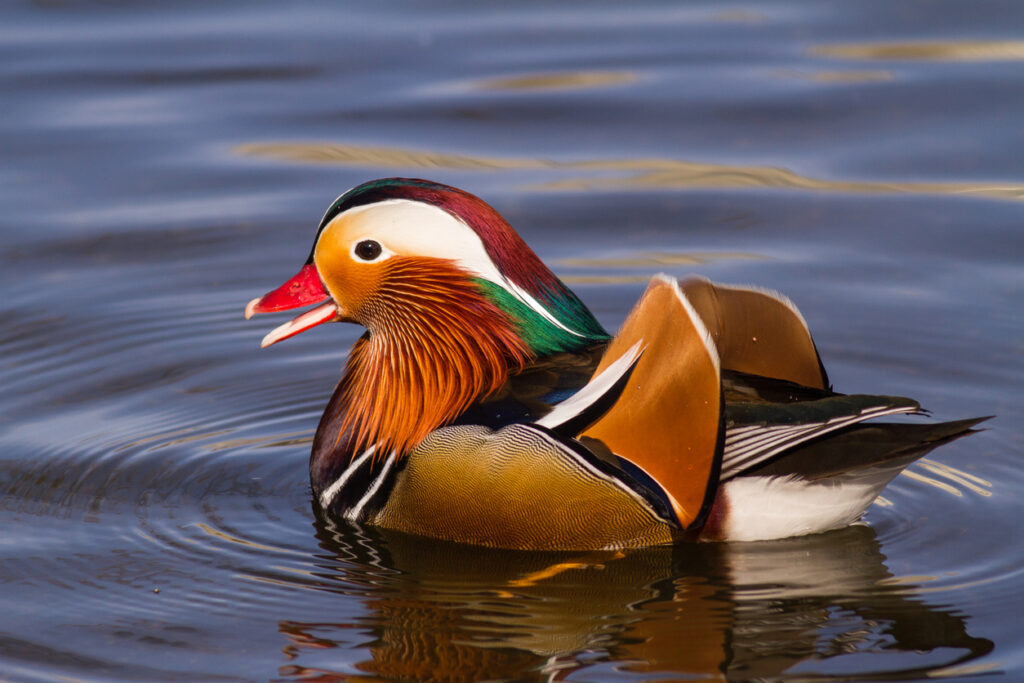
The mandarin’s blues and greens look painted on, but they’re created by light bouncing through microscopic layers in the feathers. These layers reflect only certain wavelengths of light, which creates the shimmering effect people find so eye-catching. Structural colour like this appears in many birds, but mandarins use it in a more concentrated and dramatic way. It’s one of the reasons they seem unreal when sunlight hits them at the right angle.
Their colours act as a sign of health.
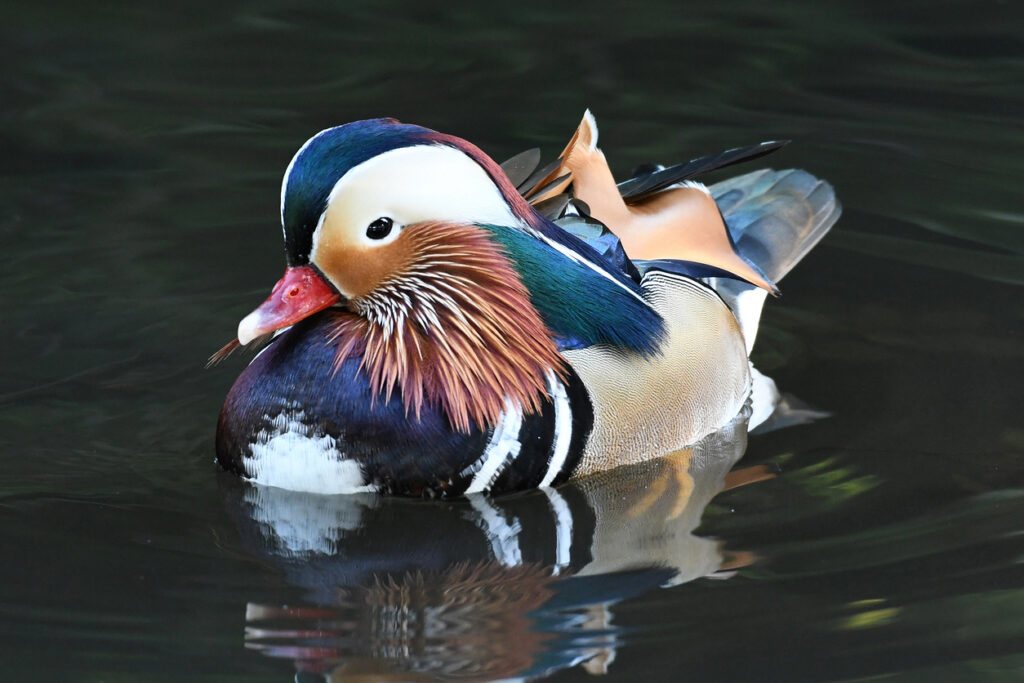
Bright, crisp feathers tell females that a male is healthy enough to grow and maintain them. If the colours look patchy or dull, females often see that as a sign of stress, illness or poor diet. The appearance works like a visual health check. Because of this, only the strongest males develop the most impressive colours each season. It’s a built-in way for the species to improve survival and pass on strong genes.
The white lines highlight movement.
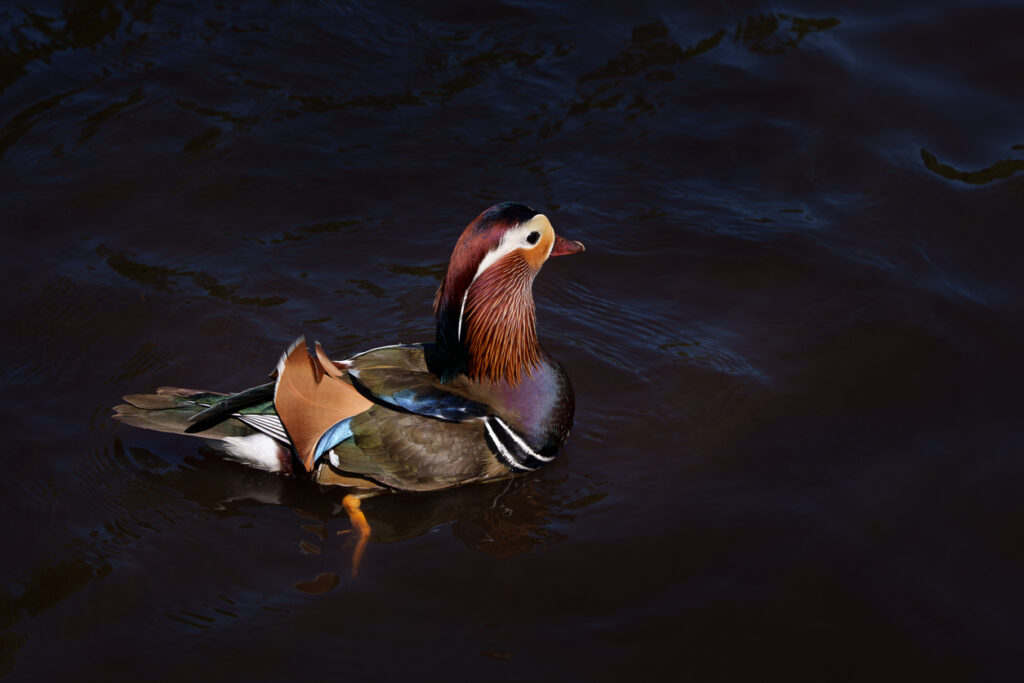
The white stripes on the face and body aren’t random. They help draw attention to the duck’s head movements during courtship displays, especially when the bird is shaking or tilting its head to catch the light on its colourful feathers. The contrast makes the display more dramatic. Movement mixed with bright colour is a combination that catches the eye quickly, which is important when several males are competing for attention at once.
Their colours help them stand out in dark forests.
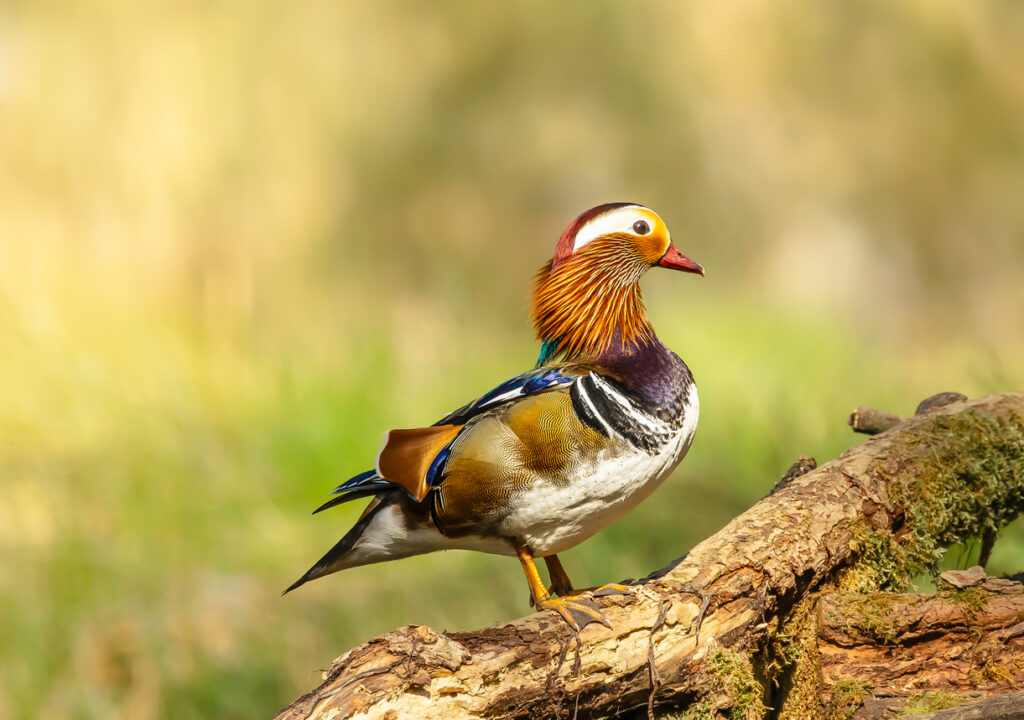
Mandarin ducks originally lived in forested rivers across East Asia, where sunlight filters through branches in bright streaks. Their bold colours reflect these flashes of light, helping them communicate and recognise each other across busy or shaded landscapes. While the colours seem dangerous from a predator’s perspective, mandarins rely on speed, tree-nesting and their environment to stay safe. Their colours tell a story about the world they evolved in, where visibility mattered more than camouflage for males.
Diet plays a small but noticeable role.
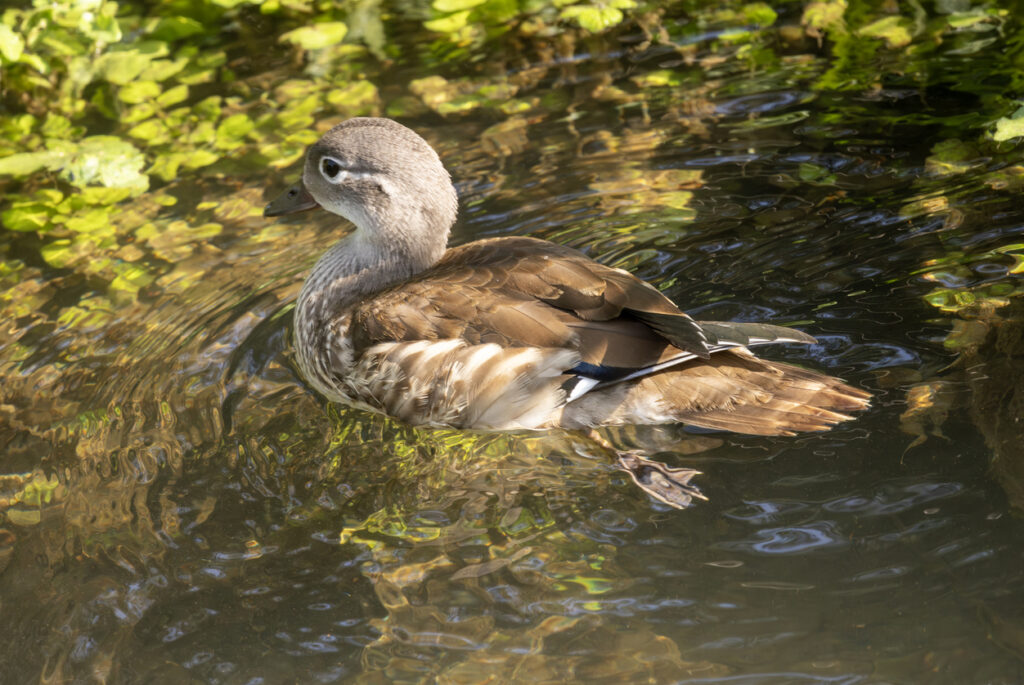
While structural colours dominate, pigments from the diet still influence some of the mandarin’s shades. Foods rich in carotenoids support strong oranges and yellows, giving them a deeper, warmer glow during the breeding season. In the wild, ducks with access to better-quality food tend to look brighter. In captivity, this is why responsible keepers make sure mandarins eat a varied diet to maintain their natural brilliance.
Their patterns are designed to look good in courtship rituals.
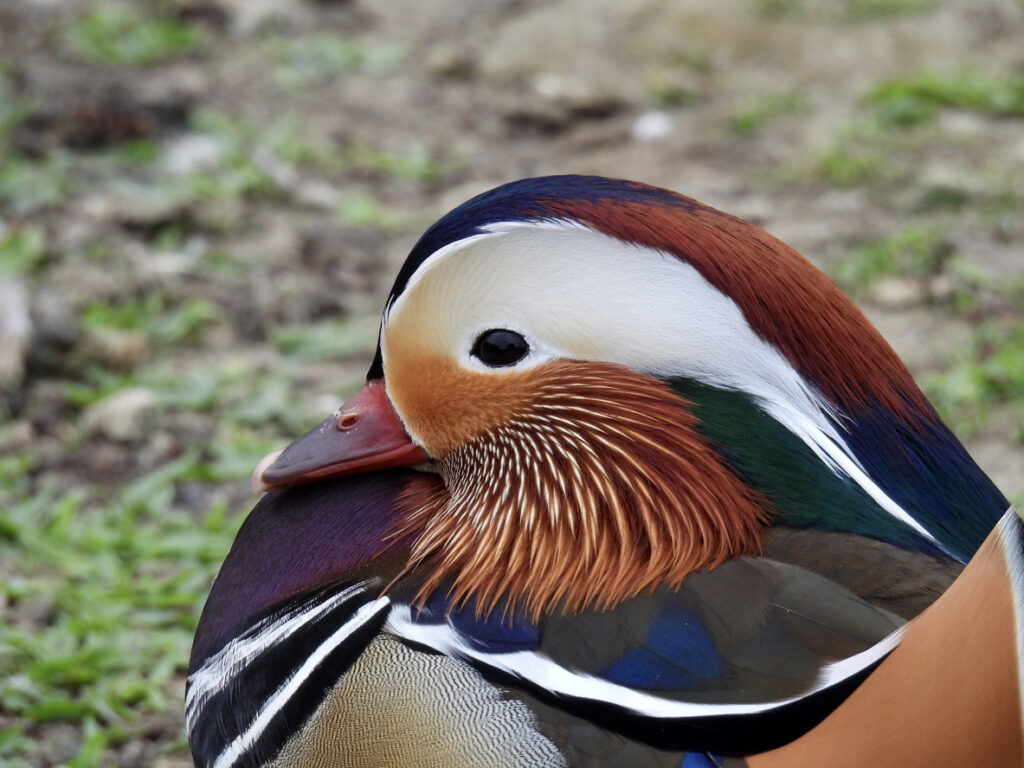
The arrangement of colours and shapes isn’t random. Every stripe, patch, and mark plays a part in courtship behaviour, helping the male perform displays that highlight different sections of his plumage. The patterns work together as a full-body signal. These displays aren’t just about looking pretty. They help females assess confidence, health, and strength quickly, which speeds up the mating process and ensures strong pair bonds.
Their colouring once made them symbols of love and loyalty.
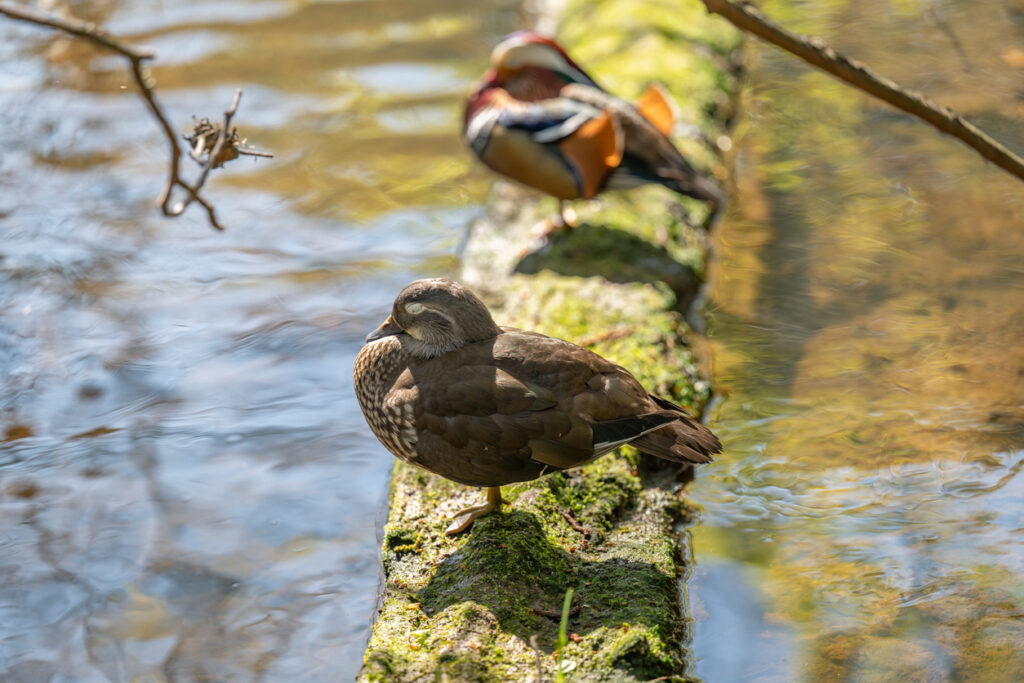
In parts of East Asia, mandarin ducks were traditionally linked to long-lasting relationships because they’re known for forming strong pair bonds. Their bright colours became a symbol of commitment, and they still appear in art and wedding imagery today. Their beauty helped shape cultural traditions that continue far beyond their natural habitats. The symbolism comes directly from how striking the birds look when swimming side by side.
Their colours look different depending on the light.
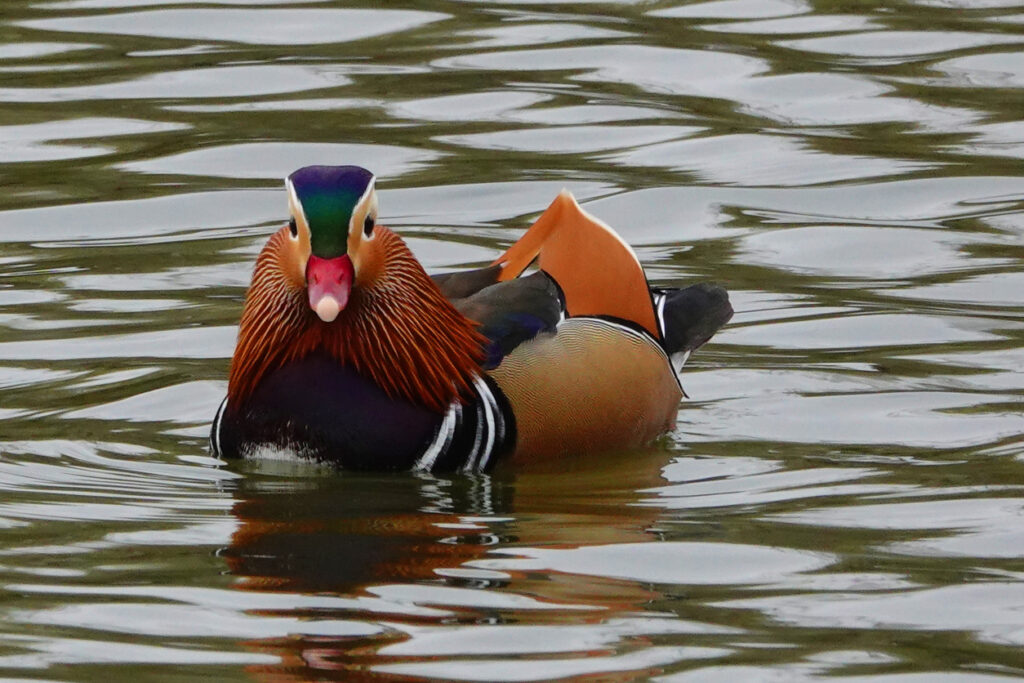
The mandarin duck’s appearance can change dramatically from shadow to sunlight. In bright light, the structural colours glow with intense vibrancy, while in softer light they look richer and more textured. This versatility helps them stand out in many environments. It also explains why photos of mandarins vary so much. They react to light in ways similar to gemstones, with each angle revealing a slightly different version of the same incredible bird.