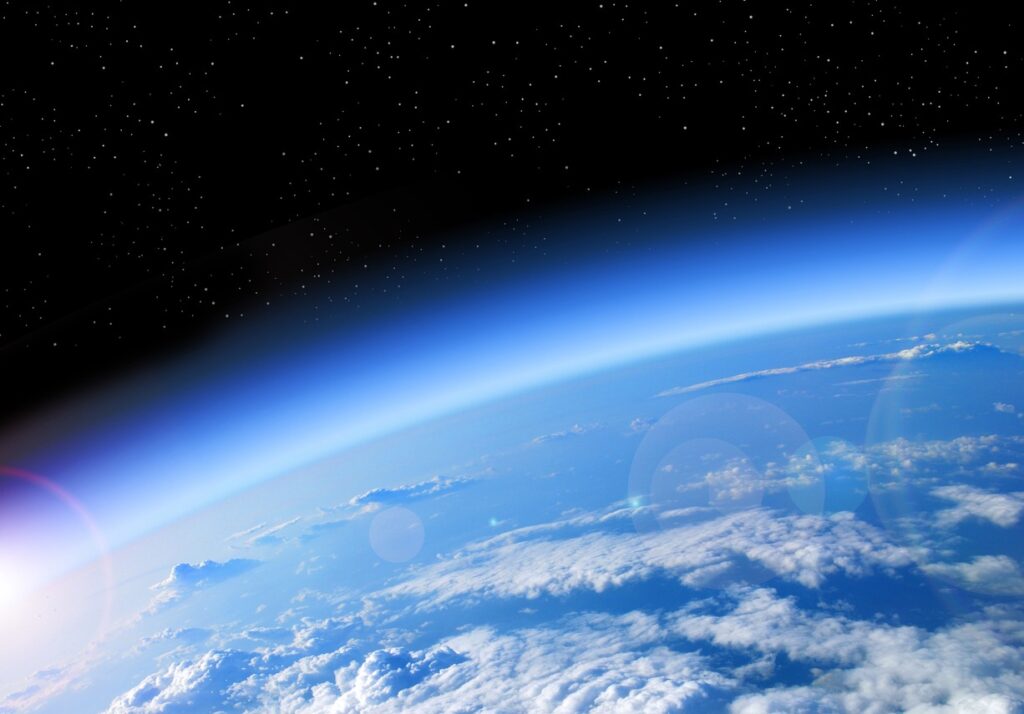
The UN has delivered rare environmental good news: the Earth’s ozone layer is on the mend, and the vast hole over Antarctica could disappear within decades. This turnaround is the direct result of international action to phase out ozone-depleting chemicals, most notably through the 1987 Montreal Protocol. Recent findings, outlined in a France24 report, show that concentrations of chlorine and bromine in the atmosphere have continued to decline, allowing the fragile shield of gas high in the stratosphere to strengthen year by year.
The ozone layer plays a crucial role in protecting life on Earth by filtering out harmful ultraviolet radiation. When scientists first confirmed the hole over Antarctica in the mid-1980s, fears were widespread: higher rates of skin cancer, cataracts, and damage to crops and marine life were predicted if the loss continued unchecked. The Montreal Protocol marked a turning point, banning many of the chemicals used in refrigerants, aerosols, and solvents that were eating away at ozone. Decades later, the benefits of that collective action are finally being measured.
Why the recovery is happening now
Repairing the ozone layer has been a slow process. Once released, ozone-destroying substances remain in the stratosphere for years, breaking down only gradually. That means even after production was banned, the chemicals already in circulation continued to cause damage. What’s different now is that their concentrations have dropped enough for natural atmospheric processes, like the creation of ozone from oxygen under sunlight, to start outpacing the destruction.
Scientists tracking the ozone hole say the changes are visible. In some recent years, the Antarctic hole has been smaller and has closed earlier in the season than was the case in the 1990s and early 2000s. Forecasts suggest that if current trends continue, the ozone layer in mid-latitude regions could return to pre-1980 levels by around 2040, with the Antarctic following by roughly 2066. That might still sound distant, but it is an encouraging timeline given how bleak the projections once were.
There are other factors at play too. Variability in polar weather patterns, volcanic eruptions, and even climate change itself can affect how ozone forms and depletes. That means recovery will not be perfectly smooth, but the overall trajectory is now upward.
So, what’s next?

For people, a healthier ozone layer means fewer cases of skin cancer and cataracts, particularly in regions exposed to strong sunlight. Farmers may also see benefits, since UV radiation can reduce crop yields and harm livestock. In oceans and lakes, stronger ozone helps protect plankton and other microscopic organisms that form the base of food chains. The environmental impact is therefore broad and lasting.
Politically, the ozone story is often cited as proof that international cooperation can work. Countries came together, agreed on science-based rules, and stuck to them. The Montreal Protocol is still in force today, with later amendments tightening controls and addressing substitute chemicals that also posed risks. At a time when climate negotiations often feel sluggish, the success of ozone recovery provides a model: global agreements can change behaviour and reverse damage when the commitment is serious.
That doesn’t mean the job is done. Monitoring must remain rigorous to ensure banned substances don’t re-enter the market illegally, as happened briefly a few years ago when rogue emissions of CFC-11 were detected in East Asia. Researchers also warn that emerging chemicals, if unregulated, could present new threats. Meanwhile, climate change itself interacts with ozone: changing circulation patterns and rising greenhouse gases can influence how quickly or slowly the layer recovers.
Even with those caveats, the direction of travel is hopeful. What once looked like an unstoppable environmental disaster is being brought under control. The lesson is clear: with science, regulation and international cooperation, even global problems that seemed overwhelming can start to heal.