
Gutters are one of those jobs everyone puts off until water starts pouring down the side of the house, and you realise the problem is bigger than you thought. Leaves, moss, and general winter debris don’t just look messy. They block the flow of water, which can lead to damp patches, leaks and expensive repairs if they’re ignored.
The good news is that cleaning gutters isn’t as complicated as people expect. With the right approach, you can make it quick, safe and far less miserable than balancing on a ladder in the cold for half an hour. Here’s how to get it done without turning it into an ordeal.
Pick the right day for the job.
Wait for a dry, calm day with no frost or heavy wind. Working on ladders in slippery conditions is risky, so always plan around the weather forecast rather than rushing to get it done. Cold air makes debris harder to shift and can freeze your hands quickly. A clear, mild morning gives you better grip, visibility, and safety while you work.
Gather everything before you start.
You’ll need a sturdy ladder, thick gloves, a small scoop or trowel and a bucket. Having everything ready means fewer trips up and down and less chance of losing focus or balance. If your gutters are high, consider a stabiliser or a friend to hold the ladder. Preparation takes minutes but keeps the whole job safer and smoother.
Start near a downpipe.
Begin at the point where water should drain away. That’s usually where blockages form, and clearing it first lets trapped water flow out as you work along the gutter. This approach helps you spot any stubborn build-up quickly. Once the outlet is open, you’ll know that whatever you remove from the rest of the line will wash through properly.
Use a scoop or your hands, not a pressure hose.
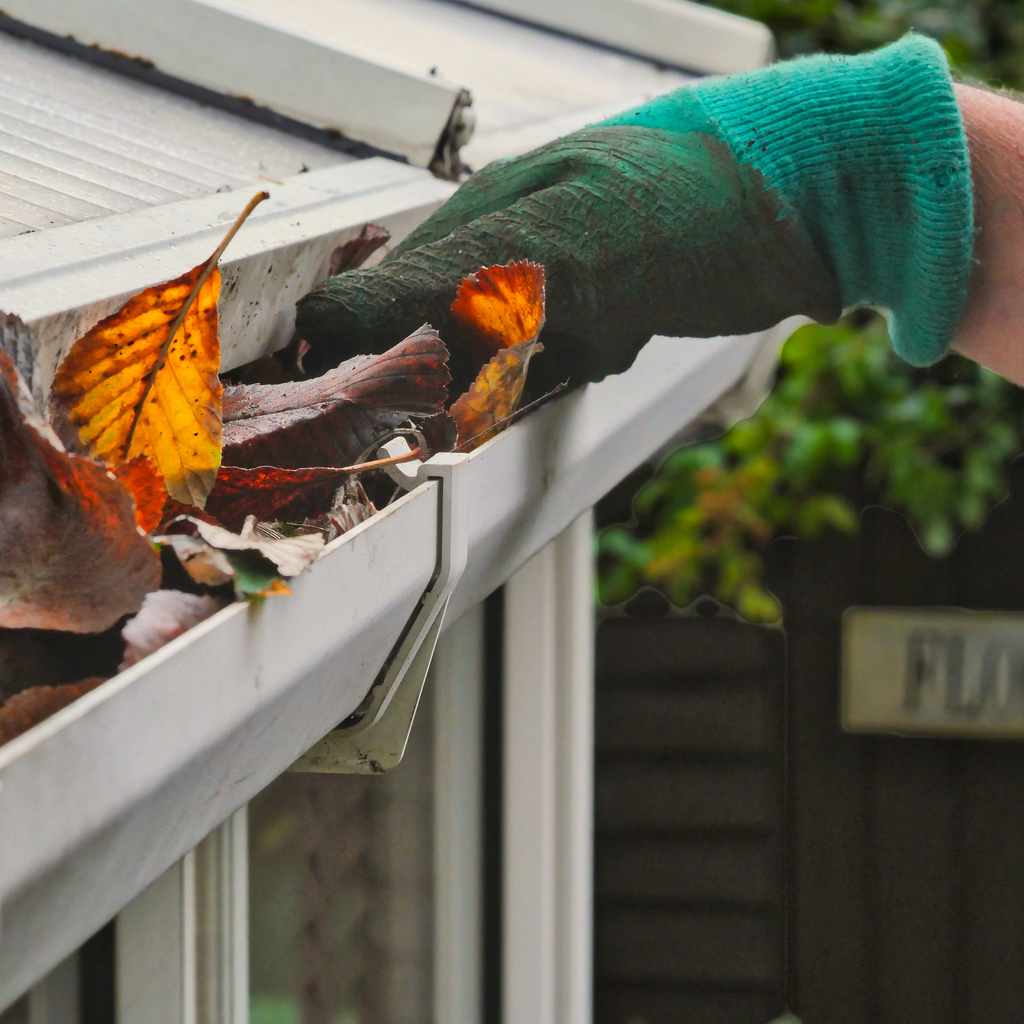
It’s tempting to blast debris away, but high-pressure water can loosen joints or send muck down the pipe where it clogs again. Manual removal is slower but safer for your system. Once the worst is gone, rinse gently with a low hose setting to check flow. This avoids forcing blockages deeper or splashing dirt onto walls and windows.
Check the joints and brackets as you go.
While cleaning, look for cracks, rust, or sagging. Winter rain puts extra weight on gutters, so weak points often show themselves once the debris is gone. Tightening loose screws or replacing a small section now prevents more expensive repairs later. Even a minor gap can lead to leaks and damp patches in your walls.
Don’t forget the downpipes.
Downpipes collect everything your gutters can’t hold. Push a long stick or flexible rod gently through to clear any trapped leaves or sludge that could freeze and block the flow. If water still pools at the top, the blockage might be lower down. You can remove the pipe base or use a drain snake to clear it safely without dismantling the whole thing.
Watch for signs of moss and algae.

Moss holds water and creates slippery buildup that can freeze into solid clumps. Removing it early stops ice forming and reduces the risk of gutter overflows during heavy rain. Use a stiff brush and scoop rather than chemicals, which can harm nearby plants. Moss control granules on the roof can also slow regrowth through the colder months.
Rinse through with warm, not hot, water.
Pouring very hot water onto cold metal or plastic can cause cracks. A gentle rinse with warm water helps clear the remaining dirt and shows whether water flows freely to the downpipe. This final step also highlights any leaks you missed earlier. Catching small drips before temperatures drop can save you a lot of hassle later in winter.
Add guards or leaf strainers if you can.
Mesh guards or wire strainers fit neatly over gutters and downpipes, keeping leaves out without blocking water. They’re inexpensive and cut your cleaning time in half next season. Check them once or twice a year to make sure they’re not trapping debris. A few minutes of maintenance now prevents another full clear-out later.
Stay on top of it with small checks.
Even after cleaning, keep an eye on your gutters through winter. Heavy rain or snow can shift debris or loosen fittings again, especially after a storm. A quick visual check every few weeks keeps problems from building up. Consistency beats effort; a few minutes’ attention saves a weekend of repairs once things freeze over.
Winter gutter care doesn’t have to be complicated. With a little planning and steady maintenance, you can protect your roof, walls, and foundation from months of damp and frost damage, all by staying one step ahead of the weather.