Our planet is home to some truly surreal displays of colour, but most of them aren’t exactly hanging out in your back garden or at the local park.
From the deepest parts of the ocean to the middle of the most remote rainforests, there are animals that look like they’ve been designed by someone with a massive budget and a very vivid imagination. They carry patterns and hues that feel almost impossible in the natural world, ranging from neon blues that seem to glow in the dark to iridescent scales that move through every colour of the rainbow.
Unless you happen to be a professional deep-sea diver or someone who spends their life trekking through the most inaccessible parts of the tropics, you’re unlikely to cross paths with these creatures in the flesh. They exist in the corners of the world that we rarely visit, tucked away in habitats that are as fragile as they are beautiful. Seeing them on a screen is one thing, but understanding the sheer scale of the palettes they carry gives you a whole new perspective on just how varied and vibrant life can get when it’s left to its own devices.
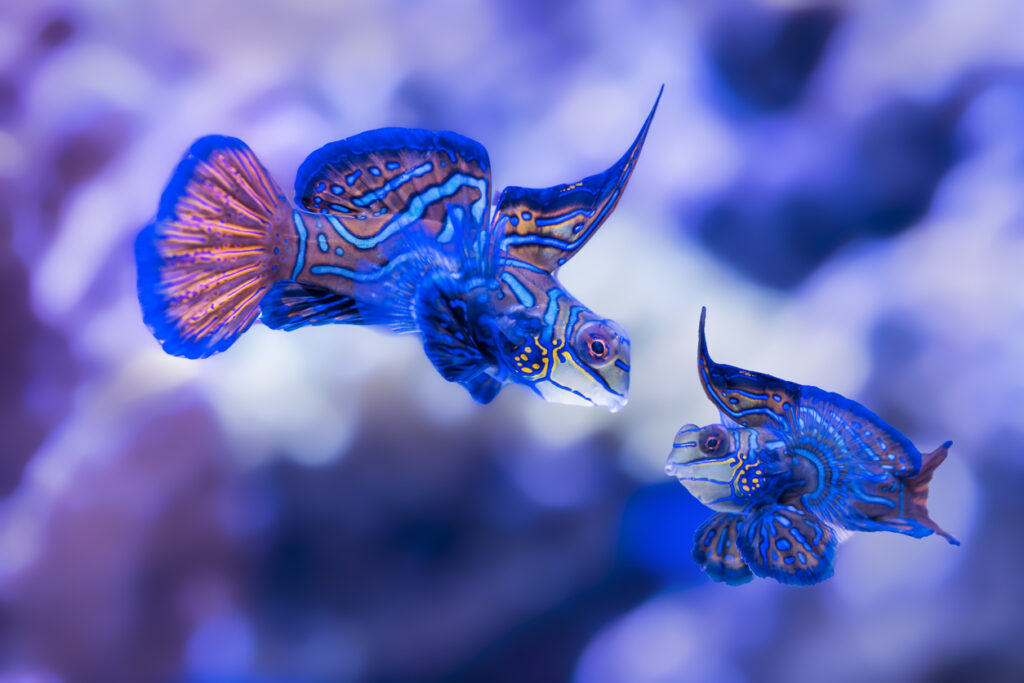
Mandarin fish
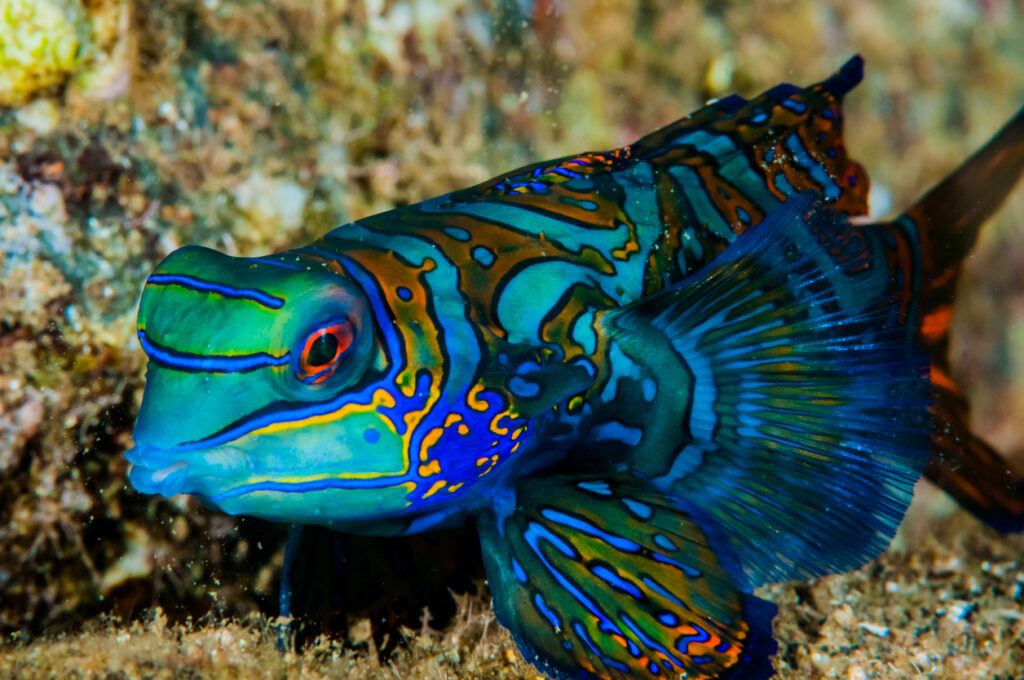
This small reef fish from the Pacific is covered in swirling patterns of electric blue, orange and green that look almost too vivid to be real. It doesn’t have scales like most fish; instead, its colour comes from pigment cells in its skin, which is actually quite rare in the animal kingdom. You’d need to go diving in the coral reefs of the western Pacific to find one, and even then, they tend to hide in rubble and branching coral during the day, only emerging at dusk.
Peacock mantis shrimp
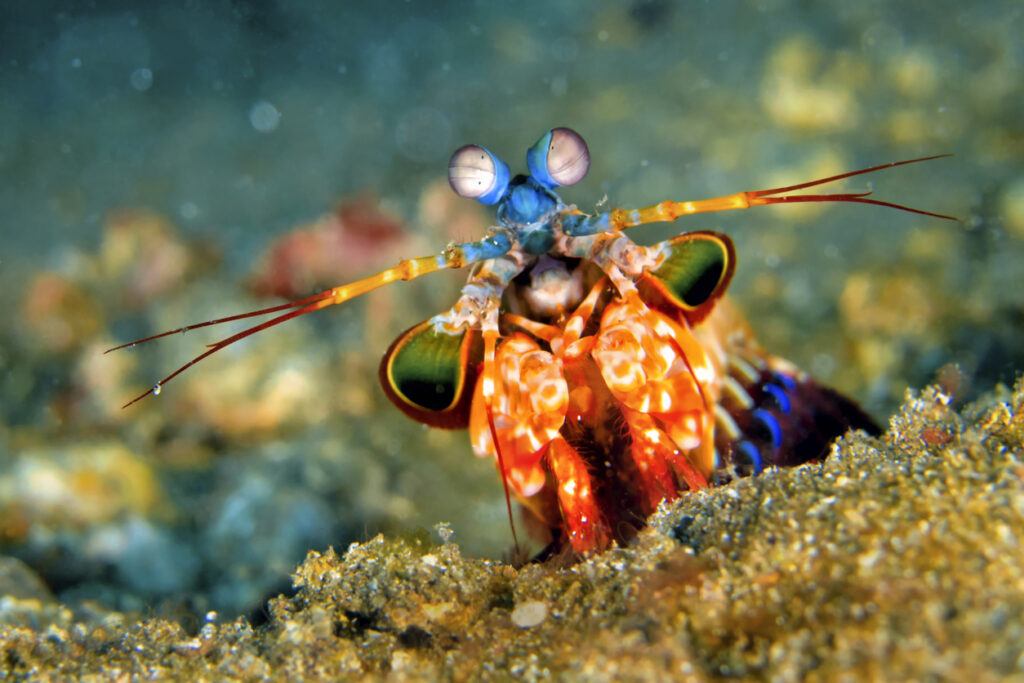
Found in shallow tropical waters across the Indian and Pacific Oceans, this creature has a shell that changes between hot pink, green, and orange depending on the light hitting it. What makes it even more remarkable is that it can see colours humans can’t. Its eyes contain up to 16 types of colour receptor, compared to our three. It’s genuinely one of the most visually striking things in the ocean, and most people have no idea it exists.
Panther chameleon
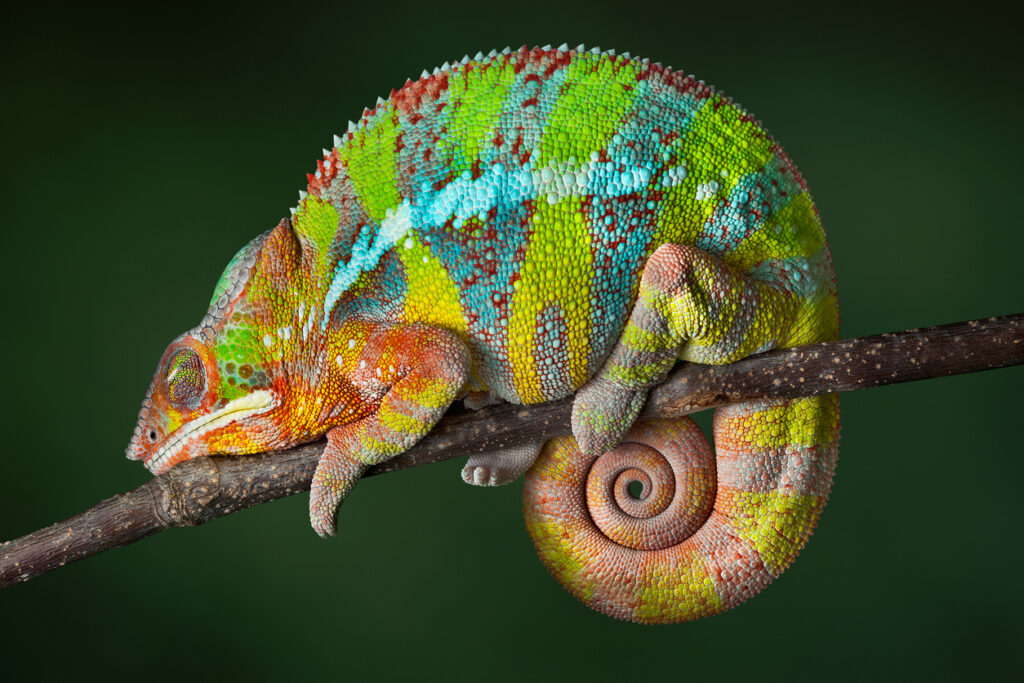
Native to Madagascar, male panther chameleons display an almost cartoonish range of colours including turquoise, red, orange, and yellow that change and intensify depending on their mood and the temperature around them. Different populations across the island have developed their own distinct colour variations, so a chameleon from one part of Madagascar can look totally different to one from another region. They’re kept as pets in some parts of the world, but in the wild they’re confined to the humid forests of northern and eastern Madagascar.
Lilac-breasted roller
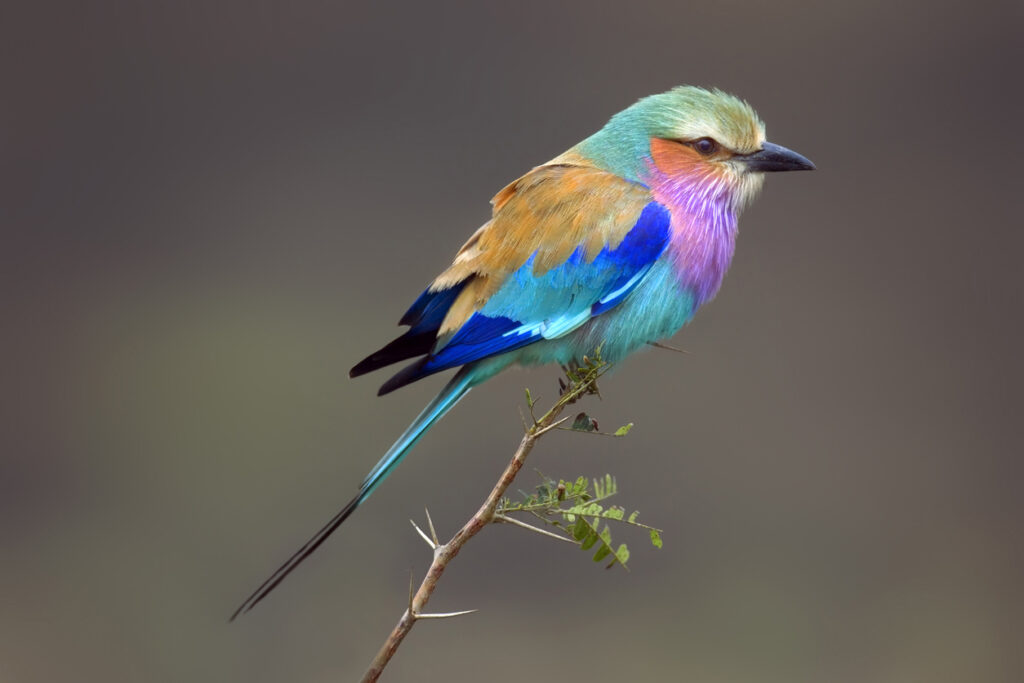
This bird is common across sub-Saharan Africa and is one of those creatures that almost doesn’t look believable when you see it for the first time. It has a chest washed in soft lilac blue, wings that flash vivid turquoise in flight, a back the colour of rich cinnamon and a stripe of bright teal running through its eye. It tends to perch in open areas on tall trees or telephone wires, which at least makes it easier to spot than some of the others on this list.
Gouldian finch
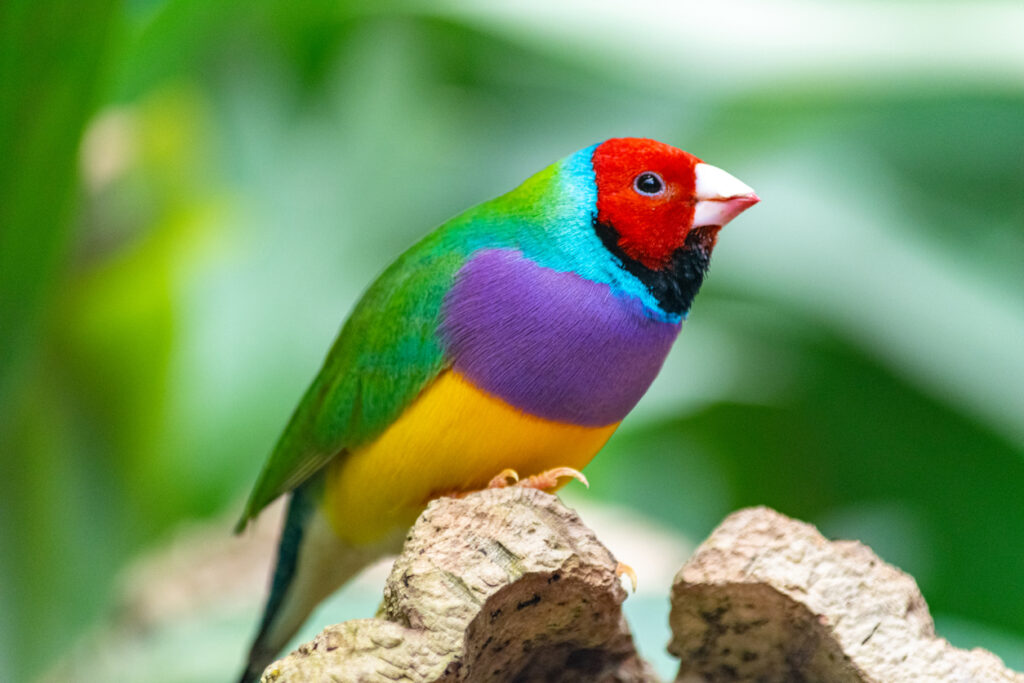
Native to northern Australia, this small bird comes in red, yellow, green, purple, and black all at once, which makes it look more like an illustration than an actual living animal. Wild populations have declined sharply due to habitat loss and disease, so while they’re bred widely in captivity, seeing one in the wild is increasingly rare even in Australia. They nest in tree hollows in tropical savanna woodland, and in the dry season they gather in large flocks at waterholes.
Blue glaucus sea slug

This tiny sea slug drifts on the surface of warm oceans across the world, floating upside down on the surface tension with a pale silver belly facing upward and vivid blue and white stripes running along its underside. It feeds on Portuguese man o’ war, which is impressive given its size, and it can store the stinging cells from its prey and use them for its own defence. Most people will never see one unless it washes up on a beach after a strong wind.
Satanic leaf-tailed gecko
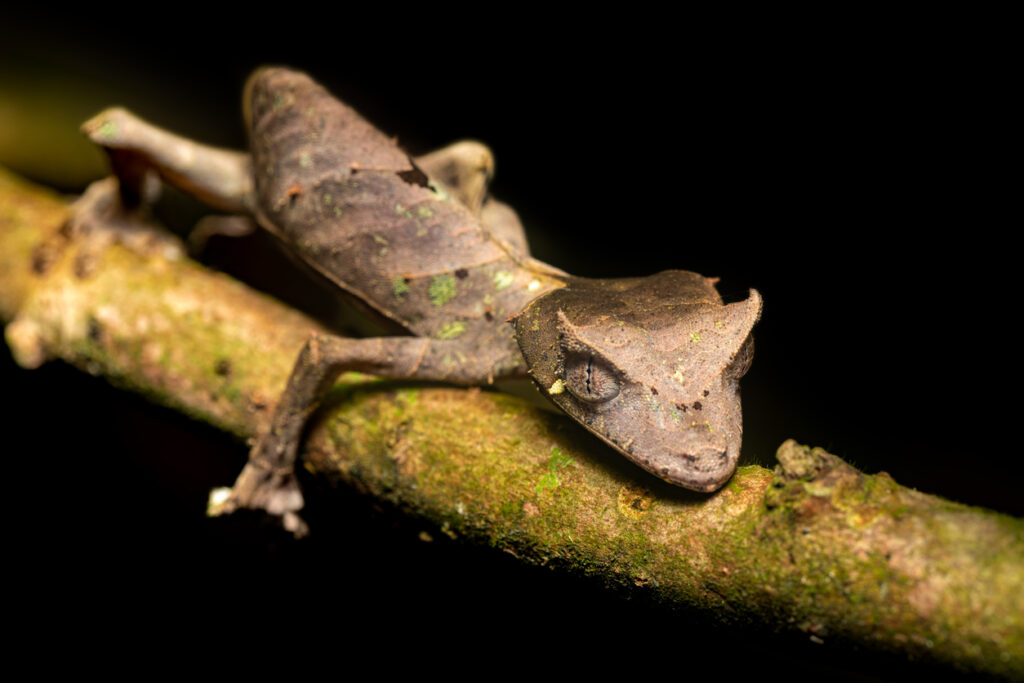
Found only in the rainforests of Madagascar, this gecko doesn’t stand out through bright colour. Instead, it mimics dead leaves so convincingly, right down to the veining and the ragged edges, that it’s almost impossible to see even when it’s sitting right in front of you. Some individuals are a mottled brown, others lean more towards rust and orange, and they flatten themselves against branches to eliminate any shadow that might give them away. It’s a different kind of remarkable to the others here, but no less extraordinary.
Poison dart frog
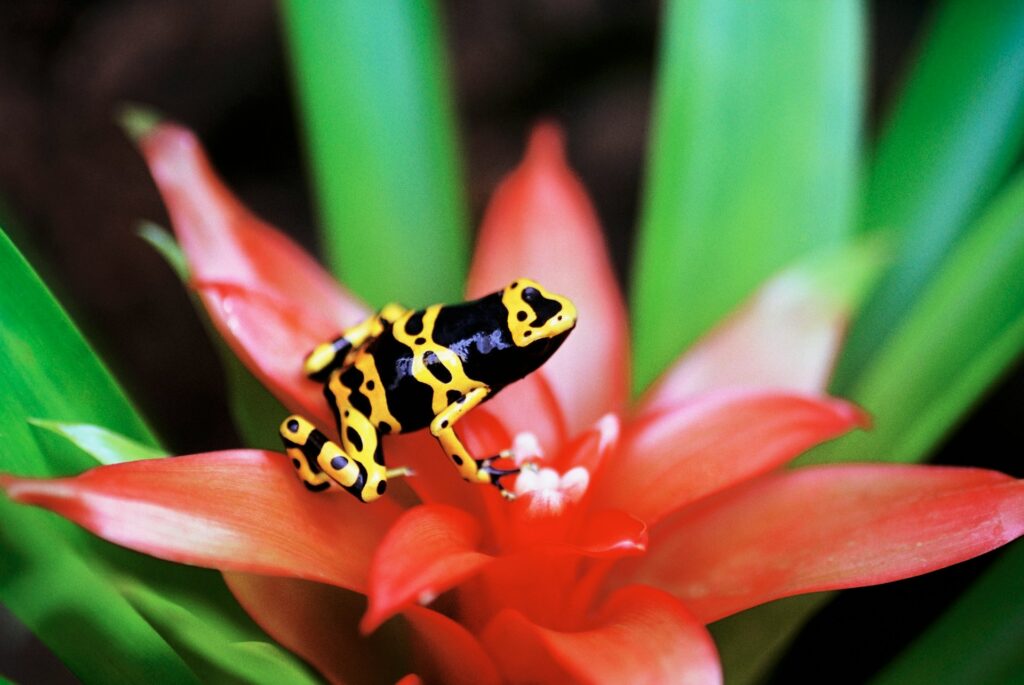
Scattered across the rainforests of Central and South America, these tiny frogs come in combinations of yellow and black, red and blue, and bright orange that exist specifically to warn predators that they’re toxic. The most brightly coloured species are generally the most poisonous, and the colours act as a very effective advertisement to anything that might otherwise try to eat them. They’re small enough to sit on a thumbnail, but vivid enough to spot from several feet away on the forest floor.
Splendid fairy-wren
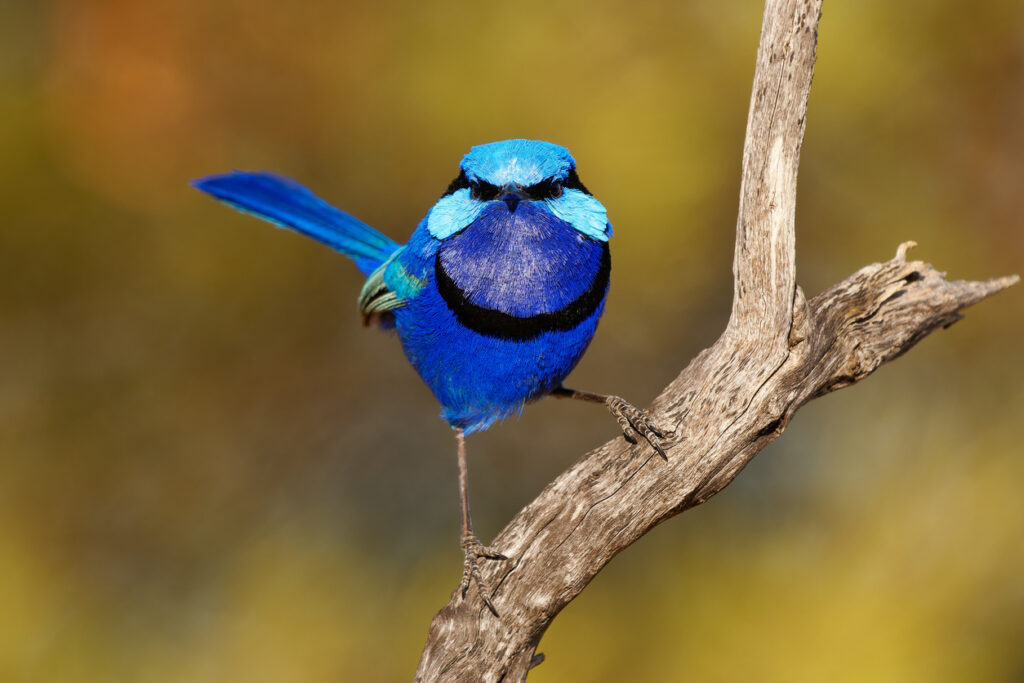
The male of this small Australian species has a head and back of such brilliant cobalt blue that it seems almost fluorescent against the dry scrubland where it lives. Outside of breeding season the males moult into a duller brownish plumage, but during breeding season that blue is extraordinary. It reflects ultraviolet light that other birds can see, but humans can’t, so even what we see is only part of the picture. They live in small social groups and are found across much of southern and western Australia.
Nudibranchs
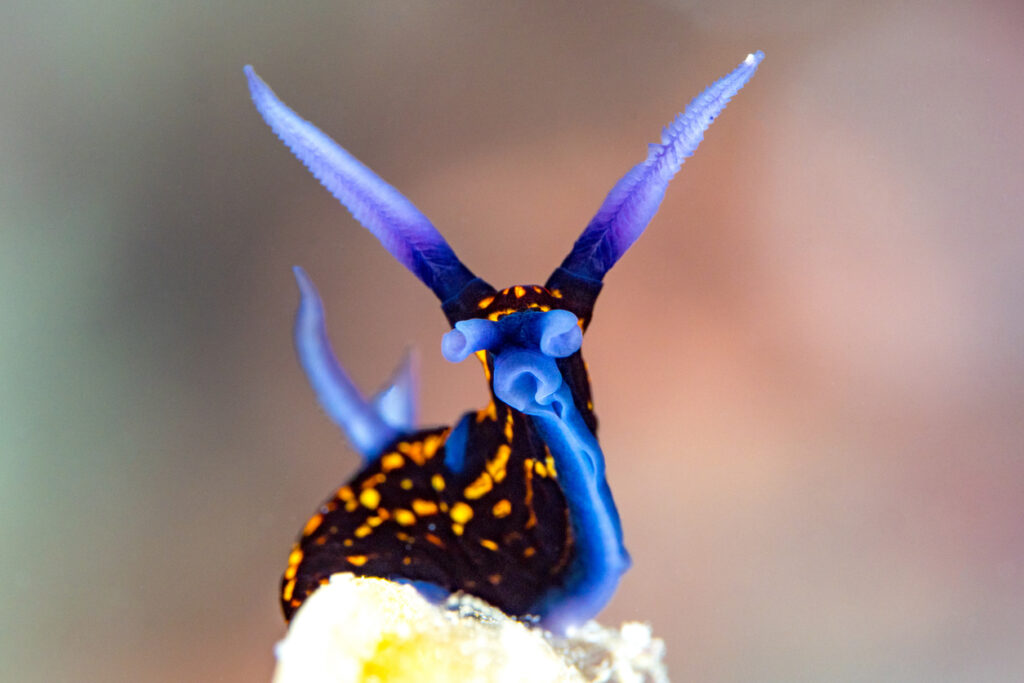
These soft-bodied sea slugs are found in oceans all over the world but are almost never seen by anyone who isn’t actively diving or snorkelling. They come in every colour combination you can think of—neon orange, deep red, hot pink, electric purple—and many of them are so small that you’d easily miss them on a reef unless you knew what you were looking for. There are more than 3,000 known species, and new ones are still being discovered regularly.
Resplendent quetzal
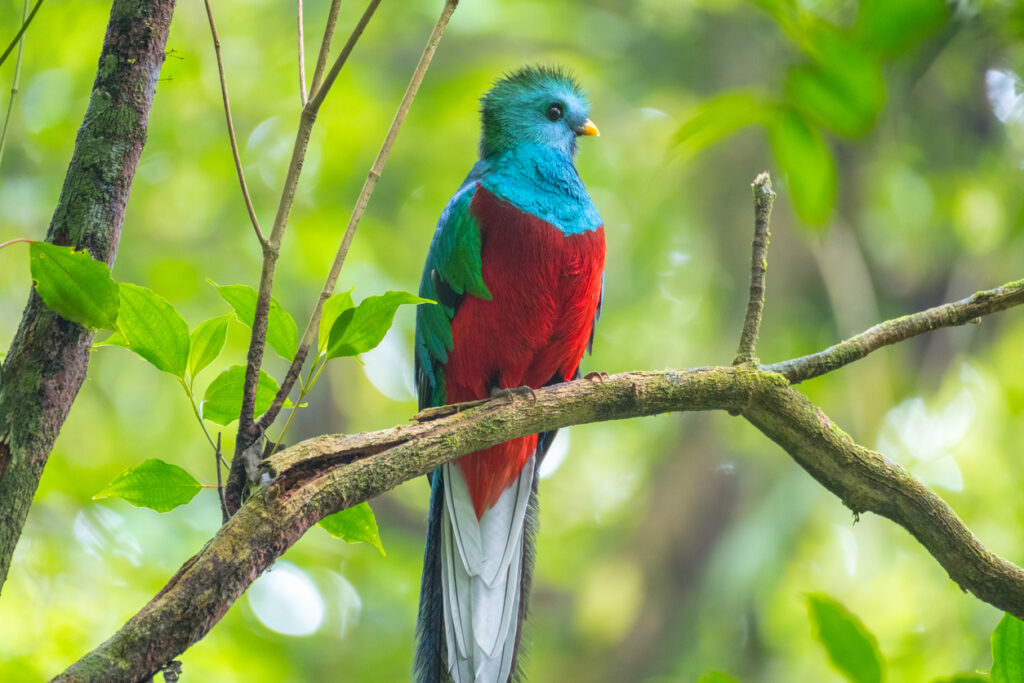
This bird from the cloud forests of Central America has iridescent green feathers that shift in the light, a crimson chest and tail feathers that can grow significantly longer than its own body. It was considered sacred by the ancient Maya and Aztec civilisations, and it’s still the national bird of Guatemala today. It lives at altitude in dense forest, which makes spotting one genuinely difficult even for experienced birdwatchers who travel specifically to find them.
Cuttlefish
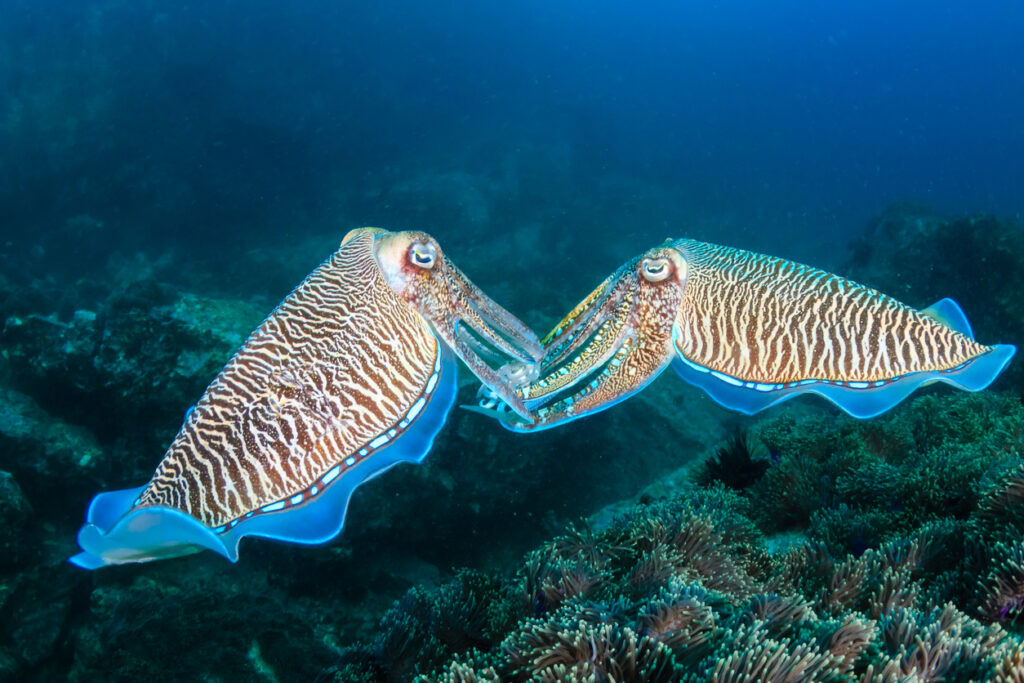
Cuttlefish can change the colour and pattern of their skin in real time, shifting from striped to spotted to rippling waves of colour within seconds. They use this ability to communicate, to camouflage themselves and to put on elaborate displays during courtship that are unlike anything else in the animal kingdom. They’re found in seas around the world but tend to live close to the seabed, so most people only ever encounter them on a fishmonger’s slab rather than in the wild.
Flame scallop
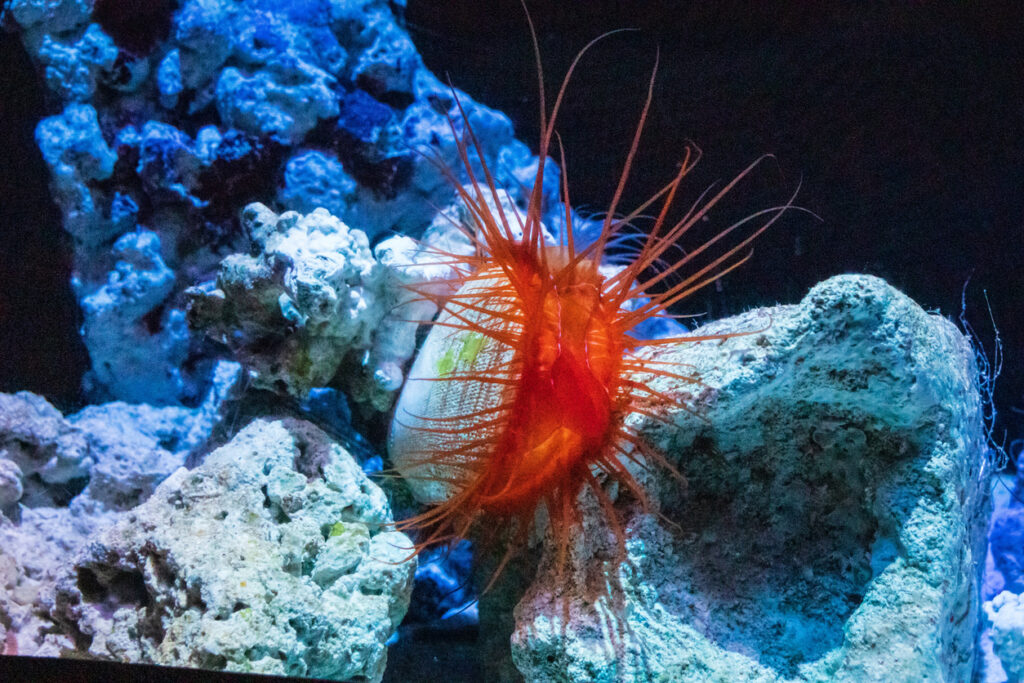
Found in the Caribbean and along the Atlantic coast of the Americas, this bivalve has a vivid red mantle fringed with dozens of small tentacles that it flickers constantly, creating an effect that genuinely looks like a flickering flame. It lives in shallow reef environments tucked into crevices, and it can swim in short bursts by clapping its shell together if it feels threatened. It’s the kind of creature that stops divers in their tracks the first time they see one.