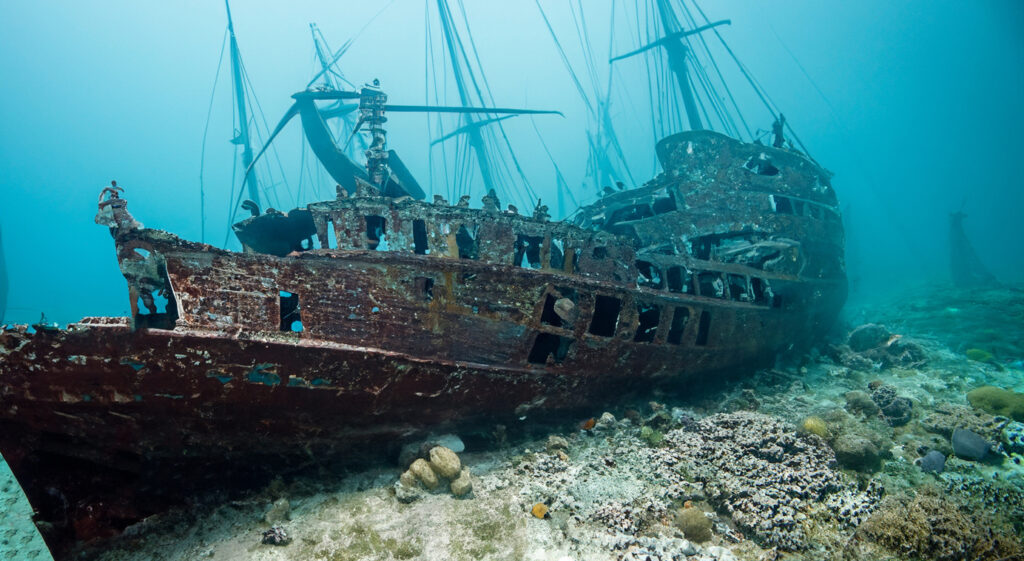
When most people picture a shipwreck, they imagine rusting metal, tragedy, or something eerie resting on the seabed. What they don’t picture is colour, movement, and entire ecosystems growing out of the remains. Yet across the world, old shipwrecks are turning into some of the richest marine habitats in their regions.
Steel hulls, wooden beams and broken decks are being reclaimed by life in ways that surprise even marine scientists. In some places, divers now visit wrecks not for the history alone, but because the marine life there rivals or even exceeds nearby natural reefs. Here are 10 reasons old shipwrecks are becoming some of the best reefs in the world.
They create instant hard structure where none existed.
Many parts of the ocean floor are sandy or muddy and fairly flat. While those areas still support life, they don’t offer much vertical structure. When a ship sinks, it instantly changes that. A once empty seabed now has walls, ledges, staircases, railings, and overhangs.
That structure matters more than most people realise. Fish and invertebrates rely on physical surfaces to attach to, hide within, or hunt around. A wreck becomes an underwater high rise compared to the surrounding open ground. In environments that lacked complexity before, a single vessel can transform the ecological layout of an entire patch of seabed.
@trip.com @Andy takes us to a place that feels out of this world! The Tangalooma Wrecks on Moreton Island are a unique spot—15 sunken ships have created an artificial reef, now home to vibrant marine life. Hard to believe it’s so close to Brisbane! Definitely worth a day trip, and if you’re up for it, you can even feed wild dolphins on the island. Would you visit? #travel #australia #brisbane #vlog #cinematic #tripcom ♬ original sound – Trip.com
Corals and sponges need surfaces to attach to.
Coral larvae drift in the water column before settling on solid surfaces. Without something firm to grip onto, they can’t establish new colonies. The metal and wood of old shipwrecks provide ideal anchor points, especially once roughened by saltwater and marine growth.
As time goes on, those first small colonies grow and expand. Sponges, sea fans and soft corals join them. Within years, what was once a hull can be completely covered in living organisms. The wreck stops looking industrial and starts looking organic, layered with colour and texture.
Wrecks add vertical relief that attracts bigger predators.
Height in the ocean changes how currents move and how fish gather. A shipwreck rises off the seabed, interrupting water flow and creating nutrient rich eddies. Plankton and small organisms concentrate around these areas, which attracts small fish.
Where smaller fish gather, larger predators follow. Sharks, groupers, amberjacks, and barracudas are often found circling established wreck reefs. The structure supports the entire food chain, not just the small creatures clinging to it. In some regions, these sites become reliable feeding grounds for apex predators.
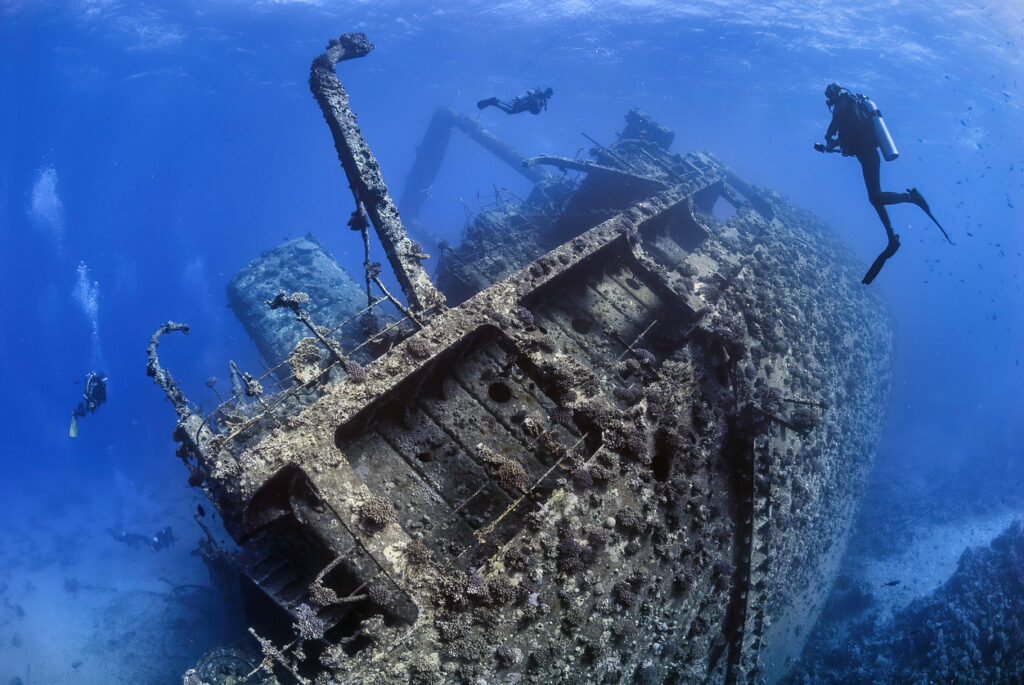
They act as safe nurseries for juvenile fish.
The cracks, compartments and broken sections of a wreck provide countless hiding places. For juvenile fish, survival depends on shelter from predators. A flat sandy bottom offers very little protection, especially in clear tropical waters.
Inside a wreck, young fish can grow with reduced risk. They dart between beams, hide in portholes and shelter under collapsed decks. That nursery function strengthens fish populations in surrounding waters as they mature and move outward into open sea.
They reduce pressure on natural coral reefs.
In popular diving areas, heavy tourism can damage fragile natural reefs through accidental contact and anchor drops. Shipwreck sites often absorb some of that pressure by offering alternative dive locations that are already artificial structures.
Divers still get dramatic scenery and abundant marine life, but the impact shifts away from delicate coral gardens. In places where reef damage has already occurred, wrecks help spread tourism activity more evenly.
They become biodiversity hotspots over time.
As years pass, more species settle in. Barnacles attach first, then algae, then small invertebrates, followed by fish, crustaceans and larger predators. The longer a wreck sits, the more complex the ecosystem becomes.
Marine surveys in long submerged wrecks have recorded hundreds of species using a single structure. Some species even show higher densities around wrecks than nearby natural reef systems, particularly in areas where natural rock is limited.
@sambentley Why were old subway cars dropped into the ocean? At the end of their life, subway cars are usually scrapped and recycled, but New York City had a different idea. Inspired by how shipwrecks become homes to new reefs, they decided to try this with retired subway cars instead! So they cleaned over 2,500 cars, removing things like seats and petroleum products like oil that could pollute the ocean, transported them by barges, and dropped them into the Atlantic ocean to create artificial reefs! And here’s why this actually works. Coral and plants can grow on the hard surfaces of the car, and because invertebrates like blue mussels can latch onto this surface too, these cars can provide 400x more food for nearby fish than a sandy ocean floor alone. Meaning that quiet empty seabeds are transformed into underwater neighborhoods for marine life! Even as the metal rusts away, which is safe for the ocean, the coral remains, helping to kickstart these important ecosystems. What do you think of this idea? Let me know in the comments! #goodnews #conservation #coralreef #ocean #subway #reuse ♬ original sound – Sam Bentley
They can restore life to damaged areas.
In some regions, reefs have been destroyed by storms, coral bleaching, pollution or destructive fishing practices. Old shipwrecks and carefully prepared artificial reefs have helped kick-start recovery in certain zones. While they don’t replace natural coral systems, they do provide a new base layer for marine life to rebuild around. In areas where hard substrate is scarce, even one large wreck can significantly increase local biodiversity.
They influence local fishing patterns.
Wreck reefs often attract commercially valuable fish species. Because fish congregate there, they become important zones for local fisheries. In some coastal communities, known wreck sites are carefully monitored because of their productivity. When managed properly, these sites can support sustainable fishing by concentrating stocks in predictable areas. Their productivity highlights just how biologically rich these structures can become.
They create microhabitats within one structure.
A single wreck offers different conditions depending on depth, shade, and exposure to currents. The top may host sun loving corals and algae, while darker interior spaces support species that prefer low light conditions. The range of microhabitats increases overall biodiversity. Instead of one uniform environment, you get stacked layers of ecological niches, from open water predators above to small crustaceans hiding deep inside.
Over time, nature almost completely reclaims them.
What begins as a man-made object slowly becomes part of the natural seascape. Coral growth can obscure railings and decks. Fish move through corridors that once held cargo. Sea turtles rest beneath beams that once crossed oceans. Eventually, the ship’s identity fades beneath marine growth. To a passing diver decades later, it can look like a natural reef that simply happens to have unusual shapes.
Shipwreck reefs don’t erase the history tied to the vessels, but they do show something hopeful. In oceans where natural reefs face rising temperatures, acidification and human pressure, structure still matters. Life looks for surfaces, shelter, and stability. When it finds them, even in something artificial, it adapts.