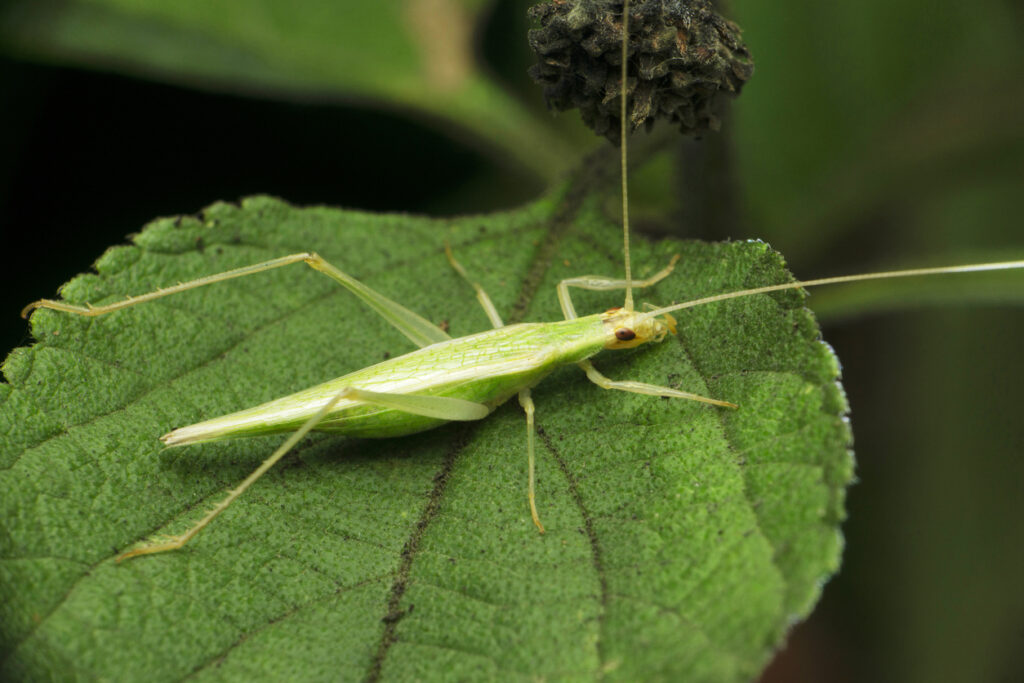
Most people only really notice crickets when they start chirping on warm summer evenings. The steady sound drifting through gardens, hedgerows, and fields is so familiar that many people barely think about the insect making it. However, crickets are far more interesting than their reputation suggests. These small insects have a collection of unusual abilities and behaviours that make them stand out in the insect world. From strange hearing organs to surprisingly complex communication, crickets are packed with quirks that most people never realise exist.
1. Their famous chirping comes from rubbing their wings together.
Many people assume the cricket sound comes from their legs or mouth, but the noise is actually produced by their wings. Male crickets rub a rough edge on one wing against a ridged section on the other wing. As those two surfaces scrape against each other, they create the sharp chirping sound people recognise on summer evenings.
This process works a bit like running a fingernail along the teeth of a comb. The vibration produced by that friction travels through the wings and into the air as sound. Each cricket species produces its own pattern and rhythm, which helps female crickets recognise the right mate among dozens of similar calls happening at the same time.
2. Crickets can hear using their front legs.
Unlike humans and most animals, crickets don’t have ears on their heads. Their hearing organs sit on their front legs, just below the knee joint. These tiny openings are connected to delicate membranes that detect sound vibrations in the air.
This unusual arrangement actually works surprisingly well. Because the ears sit on the legs, crickets can sense subtle differences in sound direction. That helps them quickly locate the source of another cricket’s call or detect predators moving through grass nearby.
@ourworldsfacts Discover the fascinating world of crickets in today’s video! Learn how these incredible insects hear through their legs, making them unique listeners in the animal kingdom. Uncover the surprising relationship between cricket chirps and temperature, and see how you can become a natural thermometrist. Dive into the romantic side of male crickets serenading females with their melodious chirps. Be amazed by their athletic prowess as they jump up to 20 times their body length. Finally, explore the culinary side of crickets and their status as a nutritious snack across various cultures. Don’t forget to like and share the video with fellow insect enthusiasts! #crickets #facts #creepy #fyp #naturelover #wildlife #insects #nature ♬ original sound – OurWorldsFacts
3. The temperature changes how fast they chirp.
Cricket chirping speeds up when the weather is warm and slows down as temperatures drop. Naturalists noticed this pattern centuries ago, and scientists later confirmed that counting chirps can give a rough estimate of the air temperature.
The reason comes down to how cold-blooded animals work. Crickets rely on outside temperatures to regulate their body processes. When the air warms up, their muscles move faster, which makes their wings vibrate more quickly and increases the rate of their chirping.
4. They can jump incredibly far for their size.
Crickets are built for sudden movement. Their large back legs contain powerful muscles that allow them to launch themselves many times their own body length in a single jump.
This ability gives them a major advantage when escaping predators. A bird or frog may strike where the cricket was standing a moment earlier, only to find the insect has already bounced away into thick grass or under a nearby leaf.
5. Some crickets dig underground homes.
While many crickets roam across soil and plants, some species prefer to live underground. They dig narrow burrows that provide shelter from predators and harsh weather conditions.
These burrows often serve more than one purpose. A cricket may sit just inside the entrance while chirping, using the tunnel as a natural amplifier. The shape of the burrow can make their call louder and carry farther across the surrounding area.
6. Male crickets sing different songs for different situations.
The loud chirping most people hear is usually the male cricket’s mating call. Its purpose is simple: attract female crickets and announce that a healthy male is nearby.
However, that is not the only sound they produce. Males also create softer courtship songs when a female approaches, as well as sharper, more aggressive sounds to warn rival males not to enter their territory.
7. Crickets taste with their antennae and mouthparts.

The long antennae on a cricket’s head act as important sensory tools. They help the insect detect smells, movement, and chemical signals in the air around them.
When crickets touch food with their antennae or mouthparts, they can quickly determine whether it is suitable to eat. This helps them survive in environments where food sources change frequently or where certain plants may contain chemicals they should avoid.
8. Many crickets are surprisingly good at camouflage.
Although some species appear bright green or shiny black, many crickets are coloured in ways that blend almost perfectly with soil, bark, or dried leaves. This natural camouflage makes them far harder to spot than people expect.
Remaining hidden during daylight hours is especially important because crickets are vulnerable to birds and other predators. By staying still and matching the colours around them, they can disappear into their surroundings remarkably well.
9. They’re mostly active at night.
Crickets usually spend daylight hours hidden beneath stones, inside plant cover, or tucked into small cracks in the ground. Once darkness arrives, they begin moving around in search of food and potential mates.
This nocturnal lifestyle reduces the chances of being seen by daytime hunters such as birds. It also explains why the familiar chorus of cricket sounds usually begins after sunset and continues through the warmest parts of the night.
10. Crickets play an important role in the ecosystem.
Despite their small size, crickets help keep natural environments running smoothly. Many species feed on plant material, fungi, and organic debris scattered across the ground.
By breaking down that material, they help recycle nutrients back into the soil. At the same time, they provide food for a wide variety of animals including birds, reptiles, frogs, and small mammals, making them a crucial link in many food chains.