
Cutting grass seems like one of the simplest home chores imaginable, but in the UK, there are situations where it can accidentally get you into legal trouble. From property boundaries to wildlife protection, these surprising rules show how even mowing can cross legal lines.
Cutting grass that isn’t technically yours
Plenty of people trim the grass outside their fence or along the kerb to keep things tidy, but that patch might not belong to you. In many areas, it’s owned by the council or a private landholder. If you damage it or remove plants, it could be classed as unauthorised maintenance. Even well-intentioned mowing can count as interference with public land, especially if signs or local by-laws forbid it.
Mowing across a neighbour’s boundary
In shared gardens or semi-detached properties, it’s easy to misjudge where your lawn ends and your neighbour’s begins. Accidentally cutting into their patch can technically be trespass or property damage. Most neighbours won’t take it that far, but disputes have escalated when people ignore clear boundaries. Always check the title plan or fence line before starting the mower.
Cutting grass during nesting season

Under the Wildlife and Countryside Act 1981, it’s illegal to disturb active bird nests. Tall grass and hedgerow edges often hide ground-nesting species like robins and wrens between March and August. If you mow or strim during that time and destroy a nest, it could lead to prosecution. Always check for hidden wildlife before cutting, especially in rural gardens or fields.
Using a noisy mower outside restricted hours
Most local councils have noise control rules that limit the hours you can use loud garden equipment. Running a petrol mower early in the morning or late at night could breach these regulations. Noise complaints fall under statutory nuisance laws. Councils can issue warnings or fines if the disturbance continues, especially in built-up or residential areas.
Cutting grass on protected land
Areas marked as Sites of Special Scientific Interest (SSSIs) are legally protected for their rare plants and wildlife. Cutting grass there without permission can damage habitats and attract fines. Even if the land looks like an open field, it might have special status. Always check Natural England’s database or land registry records before altering rural or shared land.
Damaging wildflowers or native plants
Many verges and meadows are managed to support pollinators. Cutting down wildflowers can breach conservation laws if the area is designated for ecological protection. Some councils run “No Mow May” or biodiversity schemes. Interfering with those areas, even accidentally, might be treated as destroying habitat, especially where wild orchids or protected species grow.
Letting grass clippings spread onto roads
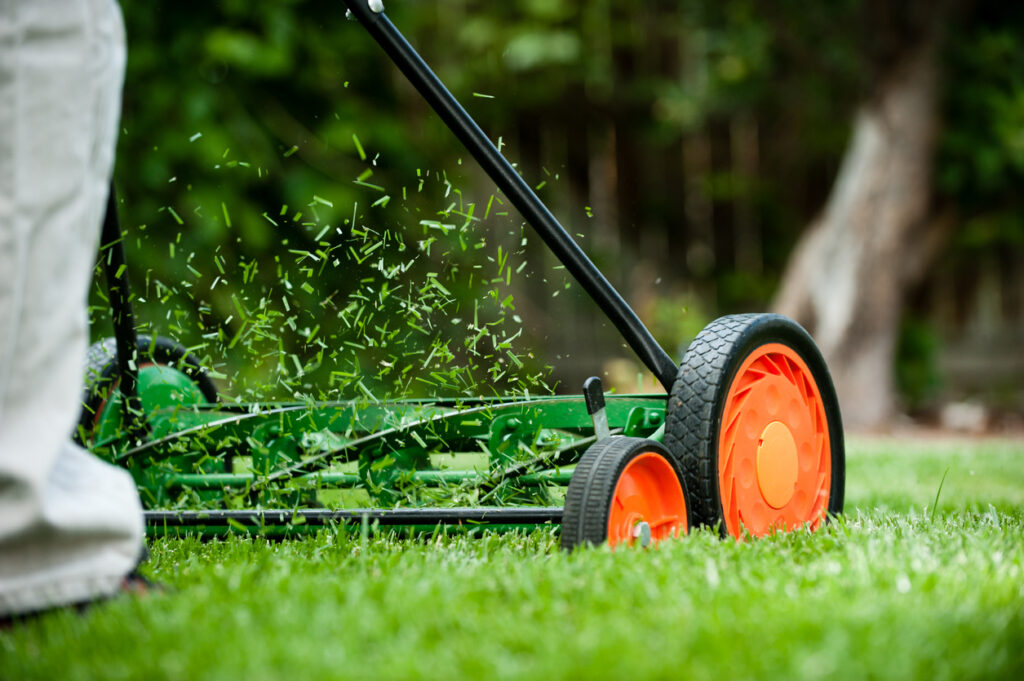
It might seem harmless, but scattering grass cuttings onto roads or pavements can create a slipping hazard. Cyclists in particular are at risk, and local authorities can fine you for creating an obstruction. The Highways Act 1980 makes it an offence to deposit material on public roads that could cause danger. Always sweep up or collect clippings if they spread beyond your boundary.
Mowing council-maintained verges without permission
Even if the verge in front of your home looks unkempt, it’s often maintained by the local council or highways department. Cutting it yourself can technically breach maintenance agreements. Some councils require permission before residents alter verge height or remove plants. Doing so without approval might sound minor but can still count as property interference.
Disturbing bats or their roosts
Bats often roost in long grass near trees, fences, or sheds. They’re fully protected under UK law, and destroying their roosting sites is an offence, even if you didn’t realise they were there. Before heavy trimming, especially at dusk, check for wildlife signs. If bats use your garden, contact a licensed ecologist before cutting. Fines for disturbing them can reach several thousand pounds.
Cutting grass near listed buildings

Historic properties sometimes have conservation conditions that include how their grounds are managed. Using machinery or altering lawns can breach heritage guidelines tied to the property’s listed status. Owners often need permission to make landscaping changes. Ignoring this can affect insurance or even invite enforcement notices from heritage authorities.
Removing grass that’s part of a right of way
Public footpaths and bridleways running across private land are legally protected. If you cut grass or alter surfaces in a way that blocks or damages the route, it can count as obstruction. The Highways Act requires landowners to keep paths clear, but not to reshape them. Cutting too deep, spreading soil or blocking gates may trigger a complaint from local access officers.
Using weedkiller or mower fuel near waterways
If you’re cutting grass close to rivers, streams or ponds, run-off from petrol or chemicals can pollute the water. The Environmental Protection Act covers contamination from domestic sources, even unintentional ones. You could face penalties if chemicals harm fish or amphibians. Always use hand tools or eco-friendly methods near water to stay on the right side of the law.
Cutting grass that forms part of a rental agreement

In rented homes, tenants and landlords often disagree over who handles garden maintenance. If you cut grass the contract doesn’t assign to you, or alter landscaping, you might breach tenancy terms. It’s not a criminal issue but could cause deductions from deposits or disputes over property condition. Always check your tenancy agreement before starting maintenance work.
Ignoring local rewilding or community projects
Across the UK, councils and community groups are turning grassy spaces into wildflower meadows or rewilded patches. Mowing these areas without permission can undo months of restoration work. Even if it looks overgrown, the land may be managed deliberately. Cutting it can lead to fines or community complaints, especially if funding was involved in its conservation.
Why it pays to check before you mow
Most of these rules come down to responsibility rather than punishment. Mowing is simple, but land ownership, conservation, and safety laws make it more complex than people expect. Before starting the mower, check property lines, council regulations and local wildlife seasons. Staying informed keeps you out of legal trouble and helps protect the green spaces that make British gardens special.