
There’s long been speculation about water on the Moon, but new research is starting to suggest something more specific: that actual ice might be hiding in its darkest, coldest corners. We’re talking deep, shadowed craters near the poles, where the Sun never reaches and temperatures plunge low enough to preserve ice for billions of years. Here’s what scientists are piecing together about the Moon’s frosty secrets, and why it matters more than you might think.
The Moon’s cold traps are basically natural freezers.
Some craters on the Moon never get direct sunlight. Not once. These are called “permanently shadowed regions,” and they can hit temperatures colder than Pluto. That means any water that’s drifted in and settled there has probably stayed frozen, untouched for billions of years.
Scientists think these spots could be hiding actual sheets or grains of ice, buried just below the surface. Unlike water vapour or hydrated minerals, this is the real deal: solid H₂O. If it’s there, it’s stayed hidden and frozen for longer than humans have existed.
NASA’s LRO is giving us the best clues so far.
The Lunar Reconnaissance Orbiter (LRO) has been mapping the Moon for over a decade, and one of its jobs is to figure out where ice might be hanging out. It’s got thermal sensors, cameras, and a few other tools that help scientists guess where ice could be lurking under the surface.
So far, data shows that these super-cold spots are prime candidates. While we haven’t drilled in yet, the evidence is stacking up. Every pass the LRO makes gives scientists a clearer picture of where to look next, and where future missions might want to land.
Sunlight never touches these regions.
The Moon doesn’t tilt much on its axis, which means its poles don’t really get seasons like Earth does. Because of that, some crater floors near the poles are locked in darkness. We’re talking pitch black, 24/7, forever. That lack of sunlight is key because it means temperatures stay stable and super cold. And since there’s no atmosphere to redistribute heat, anything that ends up there tends to just stay put. Including, possibly, ancient ice.
This could change how we explore the Moon.

If solid ice really is tucked away in these craters, it’s not just a cool scientific discovery. It could be a literal game-changer for Moon missions. Water is heavy and expensive to launch from Earth. If astronauts could tap into frozen lunar reserves, they’d have access to drinking water, breathable oxygen, and even rocket fuel.
That’s why NASA’s Artemis missions and other future plans are zeroing in on the lunar poles. The Moon might not just be a pit stop; it could become a launch pad, and ice is the fuel that could make it happen.
The ice might not be easy to reach.
Even if the ice is there, it might not be conveniently sitting on the surface. Scientists think a lot of it is buried beneath a layer of lunar soil, or regolith. So you’d have to dig through moon dust to get to it, and on the Moon, that’s easier said than done. Plus, we still don’t know how pure or how deep the ice is. It could be spread out in tiny grains, mixed with rock, or concentrated in patches. Until we land a rover or drill rig into one of these shadows, it’s all educated guessing.
Water likely came from comets, asteroids, or solar wind.
One theory is that ice on the Moon came from comets or asteroids slamming into it over time, delivering water that got trapped in the coldest places. Another theory? The solar wind, a stream of charged particles from the Sun, could’ve interacted with the lunar surface to form tiny amounts of water.
Either way, once the water found its way into those ultra-cold craters, it didn’t go anywhere. No atmosphere means no evaporation. So if it got in, it stayed. Which means it could be really, really old.
It’s not just about the Moon. It’s about survival.
The idea of finding water on the Moon ties into something bigger: living off Earth. If we want to go further, to Mars or beyond, we’ll need to figure out how to live without constant supply runs from home. Lunar ice could be the first test of that idea.
Extracting, filtering, and using water on another world would be a massive step toward long-term space missions. More than space science matters here. It’s about future survival, and the Moon might be where we learn how to do it.
These discoveries are still in early days.
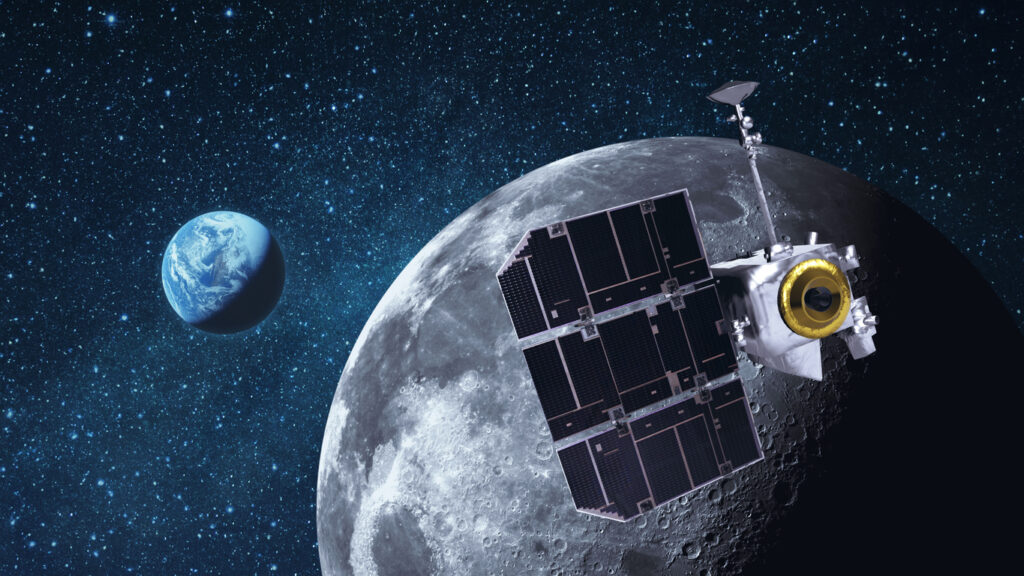
Right now, most of what we know is based on remote sensing: think satellites and instruments looking from above. We haven’t sent anyone (or anything) into these dark craters to dig around just yet. That’s what makes it exciting and frustrating in equal measure. We have solid data that strongly suggests ice is there, but confirmation will take boots (or bots) on the ground. It’s the kind of mystery that’s only going to get more attention as lunar exploration ramps up.
India’s Chandrayaan‑3 is heading into the conversation.
India’s recent lunar missions are also targeting the Moon’s south pole, where the cold traps are. The Chandrayaan‑3 lander is already making headlines, and if it succeeds, it could help confirm what’s really happening beneath the lunar surface. Having more countries and more missions in the mix means more eyes, more data, and a better chance of solving the Moon’s ice mystery once and for all. It’s not just the US anymore; it’s a global effort.
The Moon might be dry and dusty, but not empty.
For decades, we assumed the Moon was a dry rock. No water, no clouds, no weather. But now, that assumption is falling apart. Ice might not be splashing around in puddles, but it could be hiding just out of reach, quietly waiting to be found. If that’s true, it changes how we see the Moon, not just as a dead satellite, but as a stepping stone. The next few years will likely show us just how alive with possibility this cold, grey rock really is.