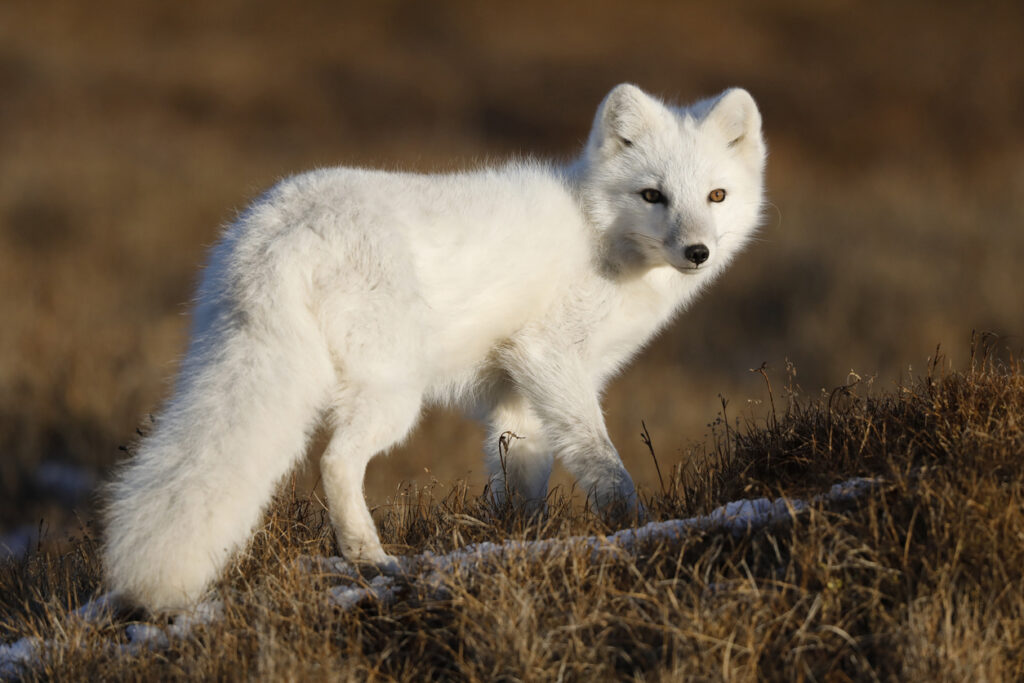
The Arctic fox is basically nature’s version of a colour-changing wizard that swaps its entire wardrobe twice a year without even trying. These fluffy little survival machines have cracked the code for staying invisible in some of the harshest conditions on Earth, and they do it by pulling off the most impressive seasonal makeover in the animal kingdom.
They go from brown to pure white and back again.
Arctic foxes completely change their coat colour from dark brown or grey in summer to brilliant white in winter, and this transformation happens so smoothly that it’s like watching someone fade between two different animals. The change takes about 10 weeks and involves growing an entirely new coat rather than just changing the colour of existing fur.
This isn’t just a slight tint change like some animals do. We’re talking about a complete transformation from looking like a regular fox to resembling a fluffy white cloud with legs. The winter coat is so white it almost glows against the snow.
Their winter coat is ridiculously thick and warm.
The white winter fur isn’t just for camouflage. It’s also incredibly dense, with up to 300 hairs per square centimetre, which is more than most luxury fur coats. This creates amazing insulation that lets them stay comfortable in temperatures that would kill most other animals.
The coat is so effective that Arctic foxes don’t start shivering until the temperature drops to -70 °C, which is colder than most freezers. They’re basically wearing the world’s best winter jacket that also happens to make them invisible in snow.
Even their paws get the full winter treatment.
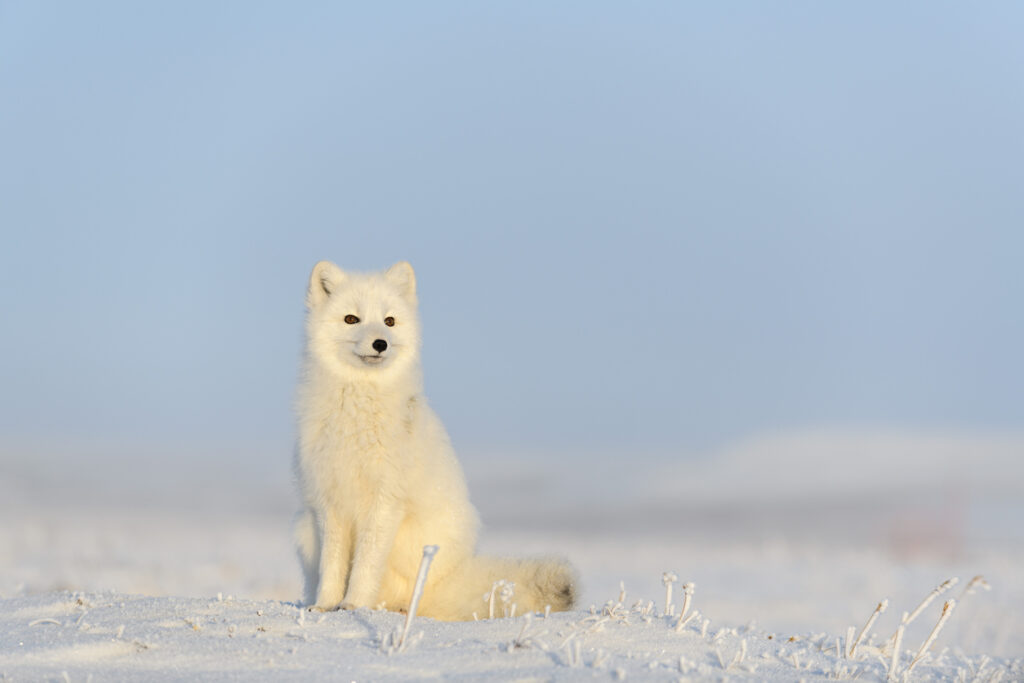
Arctic foxes don’t just change the colour of their body fur. They also grow thick fur on the bottom of their paws that acts like natural snowshoes and keeps their feet from freezing to the ground. They basically have built-in thermal socks and winter boots all in one.
This paw fur also gives them better grip on ice and snow, so they can run and hunt effectively even on slippery surfaces. They’ve essentially evolved their own winter sports equipment as part of their body.
The colour change is triggered by daylight, not temperature.
What’s really clever is that Arctic foxes don’t wait for cold weather to start changing colour. Instead, they respond to the amount of daylight each day, which means they’re ready for winter before it actually arrives. Their internal clock is so precise that they start growing white fur when the days begin getting shorter.
This gives them a head start on camouflage and insulation before the snow actually falls, and it means they’re perfectly timed with the seasons rather than scrambling to adapt after conditions change. They’re basically weather forecasters who prepare months in advance.
Not all Arctic foxes turn completely white.
Some Arctic foxes have a “blue” colour phase where they turn dark bluish-grey in winter instead of white, and these blue foxes are actually the same species as the white ones. The blue colour is caused by different genetics, and it’s more common in coastal areas where the camouflage needs are different.
Blue Arctic foxes are rarer and were historically more valuable to fur traders, which led to them being hunted more heavily. The colour difference doesn’t affect their survival abilities; it’s just a different camouflage strategy for different environments.
They have incredible hearing that works under snow.
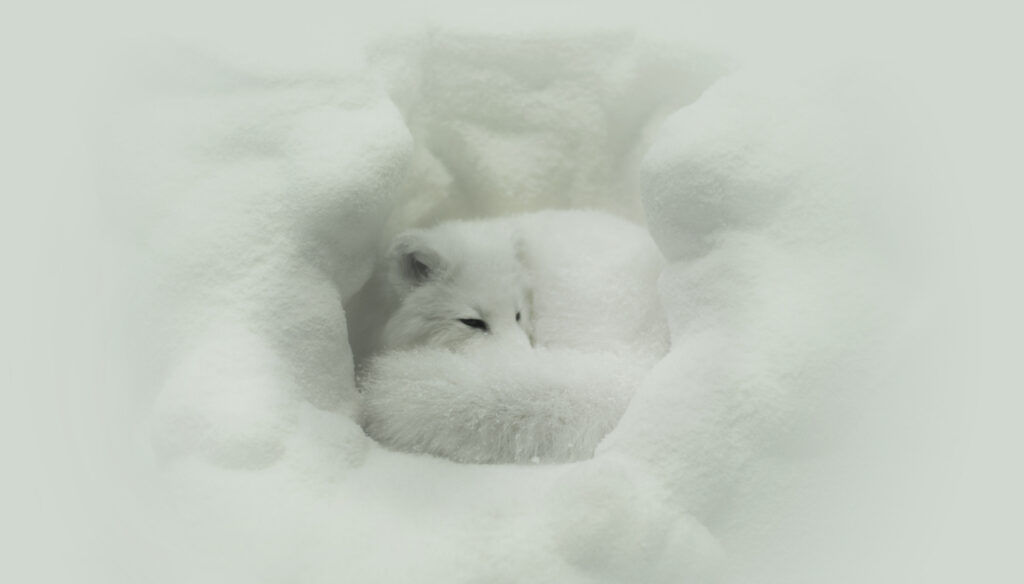
Arctic foxes can hear small mammals moving around under a metre of snow, and they use this superpower to hunt for lemmings and voles during winter when other food is scarce. Their hearing is so good, they can pinpoint exactly where prey is hiding beneath the surface.
Once they locate something tasty underground, they perform an amazing hunting technique called “mousing” where they leap high into the air and dive head-first through the snow to catch their prey. It’s awe-inspiring how good their aim is.
They’re incredibly adaptable eaters.
While many Arctic animals specialise in eating just one or two types of food, Arctic foxes will eat pretty much anything they can catch, find, or steal. Their diet includes everything from lemmings and birds to berries, insects, and even polar bear leftovers when they get the chance.
This flexibility is crucial for surviving in an environment where food availability changes dramatically with the seasons and weather patterns. They’re opportunistic omnivores who can switch between hunting, scavenging, and foraging depending on what’s available.
They follow polar bears to steal scraps.
Arctic foxes have figured out that polar bears are excellent hunters but terrible at finishing their meals, so they often follow bears around at a respectful distance to clean up the leftovers from seal kills. It’s their own personal meal delivery system.
This relationship works because polar bears usually only eat the fat and skin from seals, leaving plenty of meat behind for enterprising foxes. The foxes have learned to time their approach perfectly to avoid becoming the polar bear’s next snack.
They can survive temperatures that would kill most mammals.
Arctic foxes are comfortable in temperatures down to -50 °C, and can survive brief exposure to even colder conditions that would be fatal to humans within minutes. Their entire body is designed for extreme cold, from their compact build that conserves heat to their counter-current blood flow that prevents frostbite.
They actually prefer cold weather to warm conditions, and can overheat if temperatures rise above 10 °C while they’re wearing their thick winter coats. They’re so adapted to cold that moderate temperatures become uncomfortable for them.
Their tails are incredibly versatile tools.
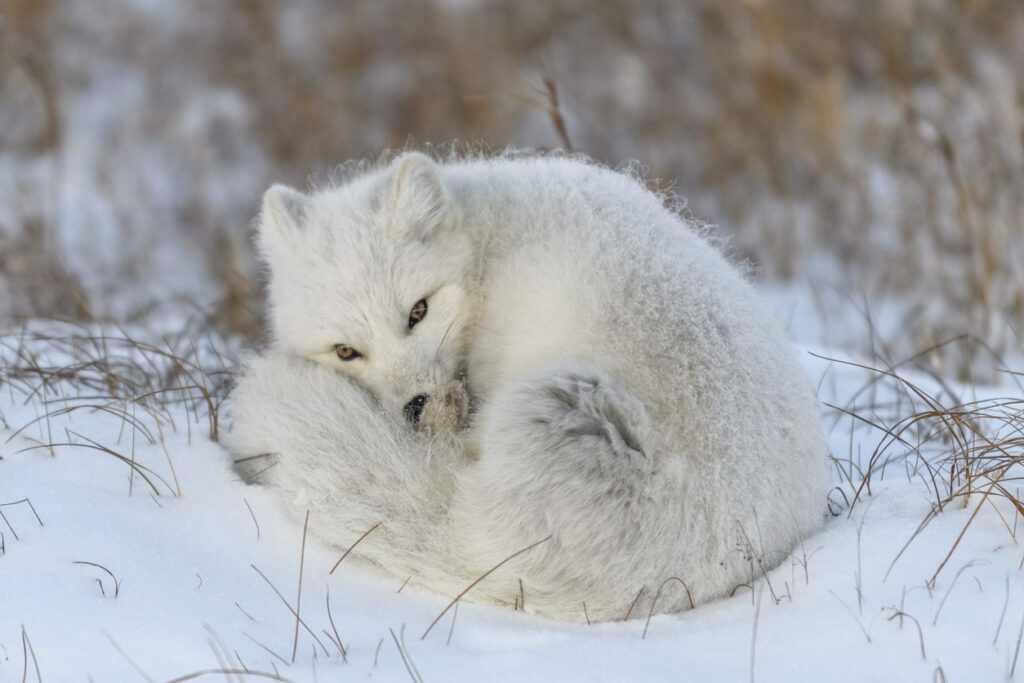
An Arctic fox’s tail isn’t just for balance. It also serves as a warm blanket when they curl up to sleep, a signal flag for communicating with other foxes, and extra insulation when wrapped around their body. The tail is so fluffy and thick that it’s almost like carrying around a portable duvet.
When Arctic foxes sleep, they wrap their tails around themselves like a scarf and tuck their noses underneath for extra warmth. The tail fur is often the fluffiest part of their entire coat and provides crucial protection for their face and breathing passages.
They mate for life and share parenting duties.
Arctic fox pairs often stay together for multiple breeding seasons, and both parents work together to raise their kits. The male helps dig the den, hunts for food, and protects the family while the female is nursing, which is fairly unusual behaviour among fox species.
Their dens can be incredibly complex with multiple entrances, tunnels, and chambers that have been used by fox families for decades or even centuries. Some dens are like underground fox cities, with dozens of entrances and rooms for different purposes.
They’re incredibly fast and agile.
Despite their fluffy appearance, Arctic foxes can run up to 50 kilometres per hour and are amazingly agile on snow and ice. They use their speed and manoeuvrability to escape from larger predators and to catch fast-moving prey like birds and small mammals.
Their compact, muscular build gives them excellent power-to-weight ratio, and their furry paws provide traction that lets them make sharp turns and quick direction changes that would be impossible for larger animals on slippery surfaces.
Climate change is making their camouflage less effective.
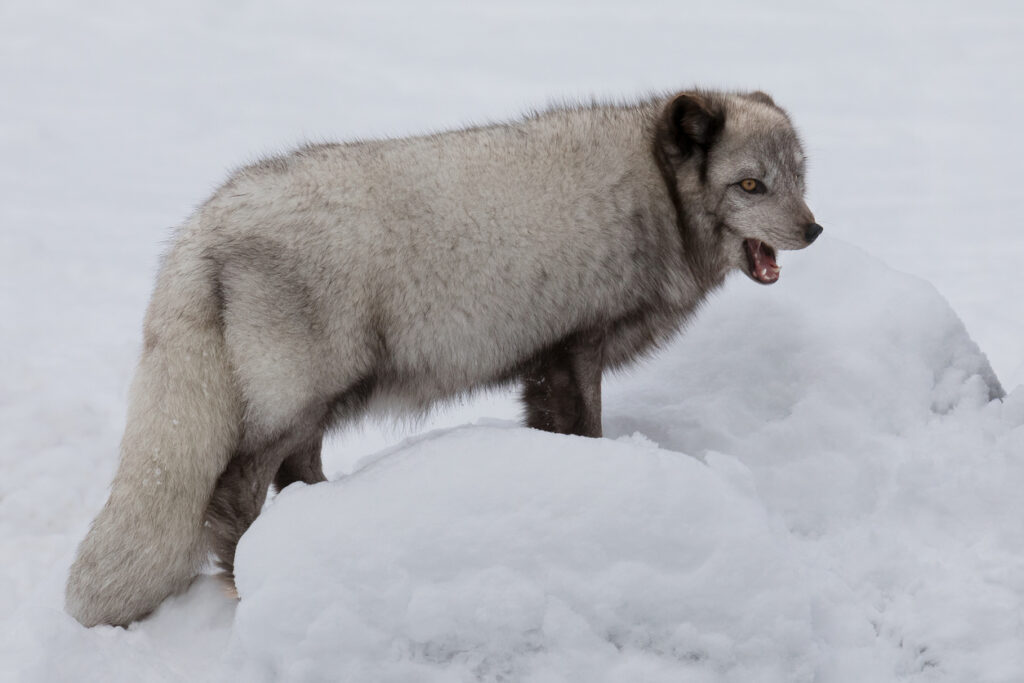
As Arctic regions warm up and snow cover becomes less reliable, Arctic foxes sometimes find themselves bright white against brown tundra or dark white against patchy snow, which makes them easy targets for predators and reduces their hunting success.
Their perfectly timed colour-changing system is being disrupted by unpredictable weather patterns, and some populations are struggling to adapt to these rapid environmental changes. The magic trick that’s kept them alive for thousands of years is becoming less magical in a changing climate.
They’re one of the few mammals that thrive in the Arctic year-round.
While many Arctic animals migrate south for winter or hibernate to avoid the worst conditions, Arctic foxes stay active throughout the brutal Arctic winter and actually do some of their best hunting when other animals have given up and gone away.
They’re proof that with the right adaptations, mammals can not just survive, but actually thrive in some of the most extreme conditions on Earth. Their colour-changing ability is just one part of an incredible survival toolkit that makes them true Arctic specialists.