Most people think all robins look the same, or that every blackbird is just a blackbird.
However, male and female birds often look completely different from each other, and once you know what to look for, you’ll start seeing it everywhere. The differences aren’t always obvious, and some species are trickier than others, but there are patterns that’ll help you work out who’s who in your garden.
Robins look identical (and that’s unusual).
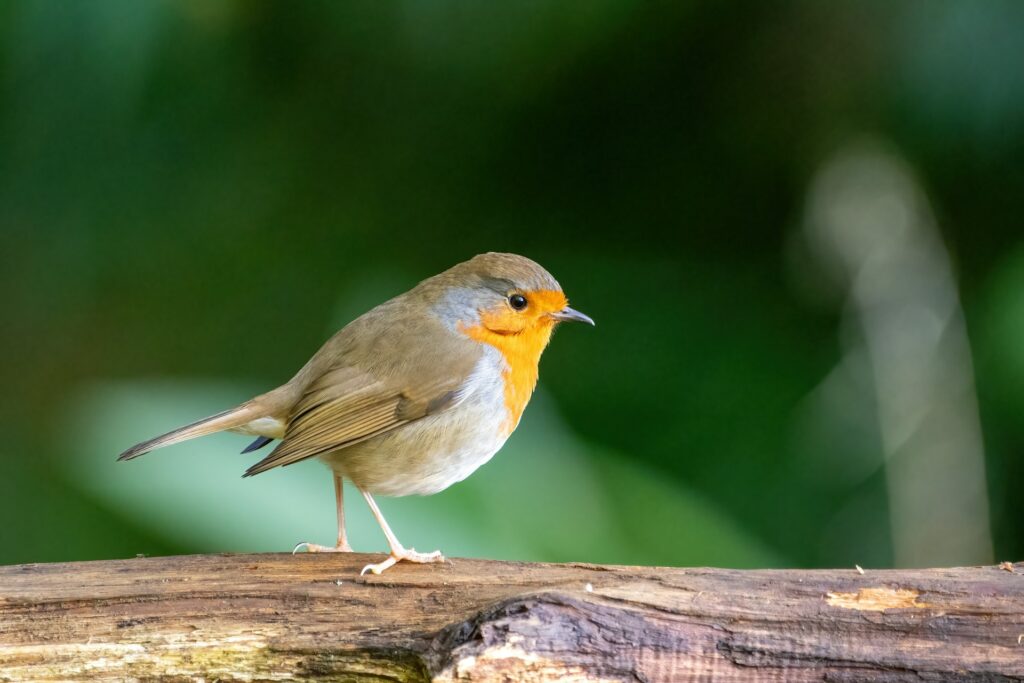
Here’s a surprise to start with. Male and female robins actually look the same. Both have that famous red breast, same brown back, same white belly. You can’t tell them apart by looking at them.
This is pretty rare in the bird world. Most species have clear differences between males and females, but robins kept things simple. The only real way to tell is by behaviour. Males sing more and defend territory more aggressively, while females do most of the nest building. But just by looking? They’re identical.
Male blackbirds are black, and females are brown.
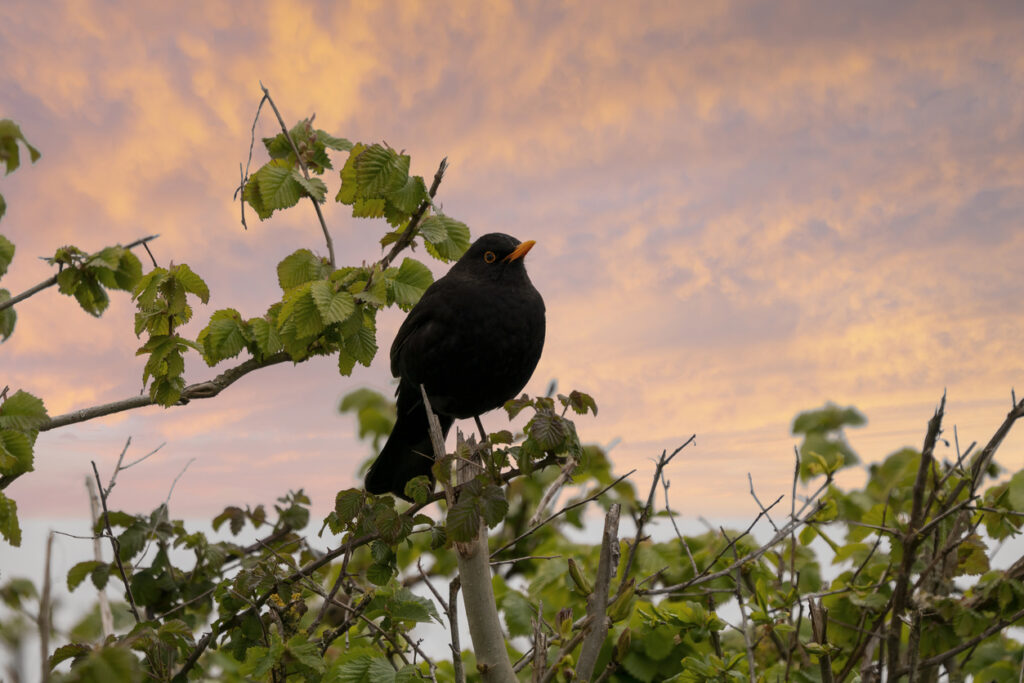
This one confuses loads of people. Male blackbirds are properly black with a bright yellow beak and yellow ring round the eye. Females are completely different. They’re dark brown all over, with a streaky, mottled chest and a darker beak.
People often think female blackbirds are a different species entirely. They’ll see a brown bird with speckles and assume it’s a thrush or something else. Nope, it’s just a lady blackbird. The males get all the dramatic colouring while females blend into the background, which helps when they’re sitting on eggs.
Male house sparrows have the black bib.
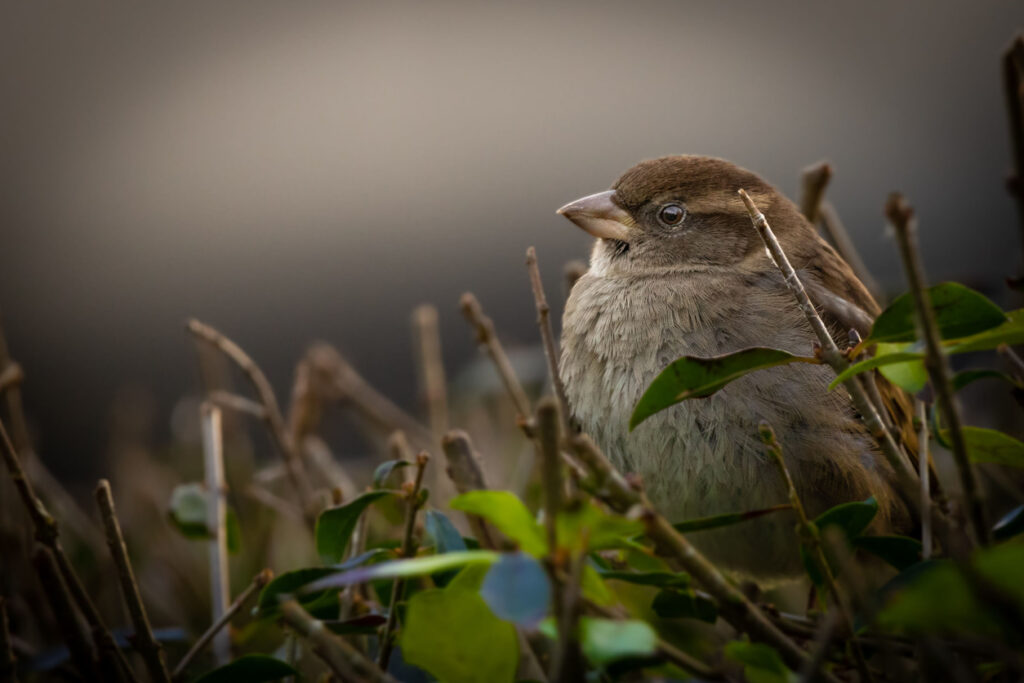
Male house sparrows have a grey crown on their head, a black bib under their chin, and richer brown colours. Females are much plainer. They’re just streaky brown all over with a pale eyebrow stripe and no black bib at all.
Female sparrows are so plain that people often don’t even register them as sparrows. They look like generic little brown birds. The males are showing off with their markings, while the females have gone for the invisible look.
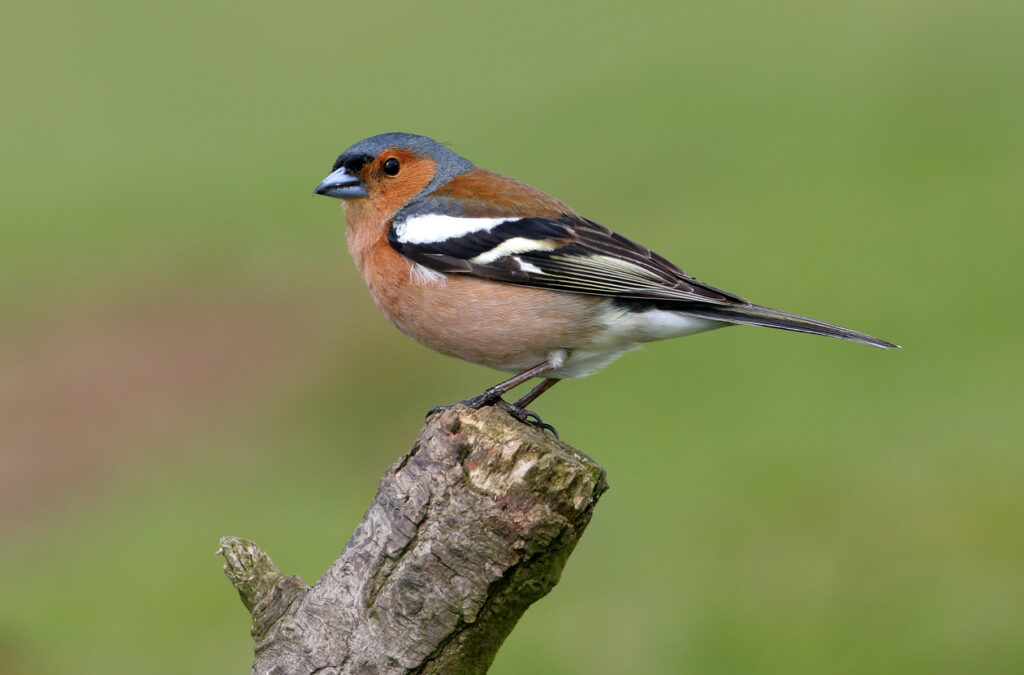
Male chaffinches are pink and blue, females are beige.

Male chaffinches are one of our most colourful common birds. They’ve got a pink breast, blue grey head, and white shoulder patches that really stand out. Females are greenish brown with the same white wing bars but none of the flashy colours.
When you see a male chaffinch properly, it’s actually quite stunning. The pink isn’t subtle. But females look like they’ve been designed to disappear into hedgerows, which is exactly what they need when nesting.
Female mallards are brown, males have the green head.
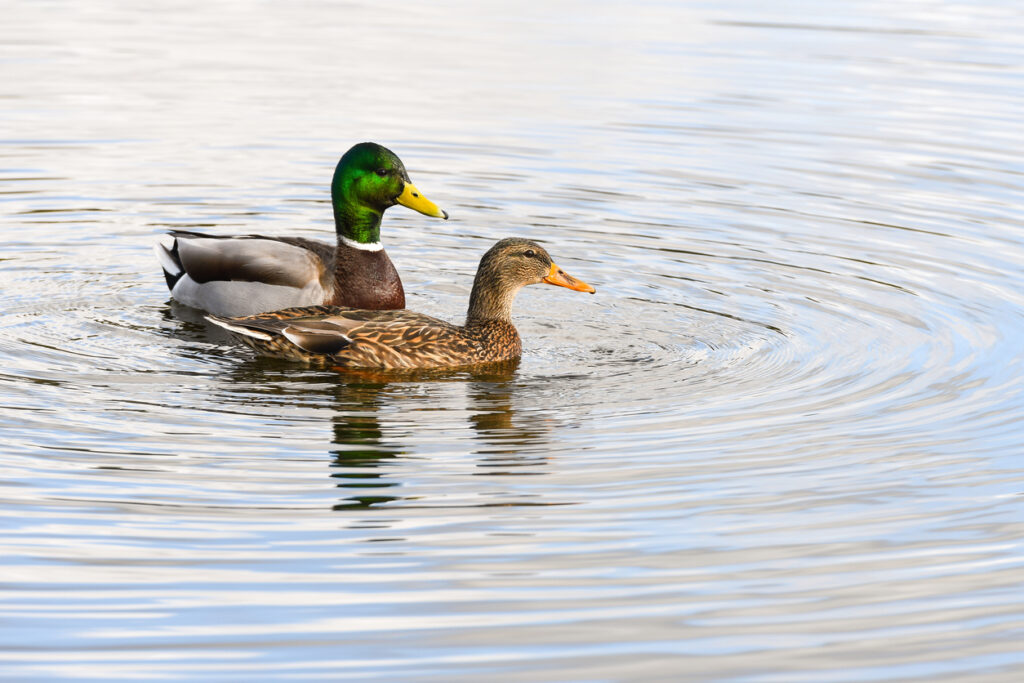
Everyone knows male mallards. Green head, yellow beak, grey body, curly black tail feathers. They’re the classic duck. Female mallards are mottled brown all over, with an orange and brown beak. They look totally different.
Female mallards need to blend in when they’re sitting on eggs by the water, so they’ve evolved to look like dead leaves and mud. Males don’t have that worry, so they’ve gone full peacock mode with the colouring. It works, though. Males are dead easy to spot, females practically vanish.
Male goldfinches have more red on the face.
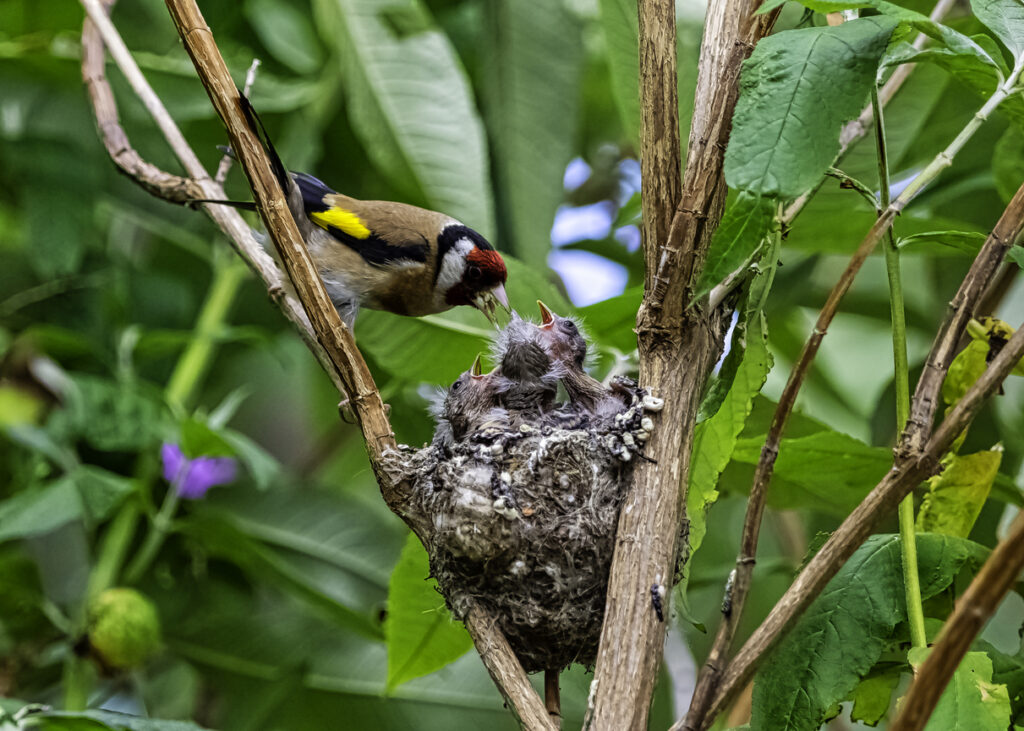
Both male and female goldfinches have that lovely red face and yellow wing bars, but males have red that extends further back behind the eye. Females have a slightly smaller red patch that doesn’t go as far.
This is one where you really need to look closely. The difference is there, but it’s subtle. The overall impression is the same, though. Males are just slightly more dramatic in their markings.
Male pheasants are enormous and colourful.
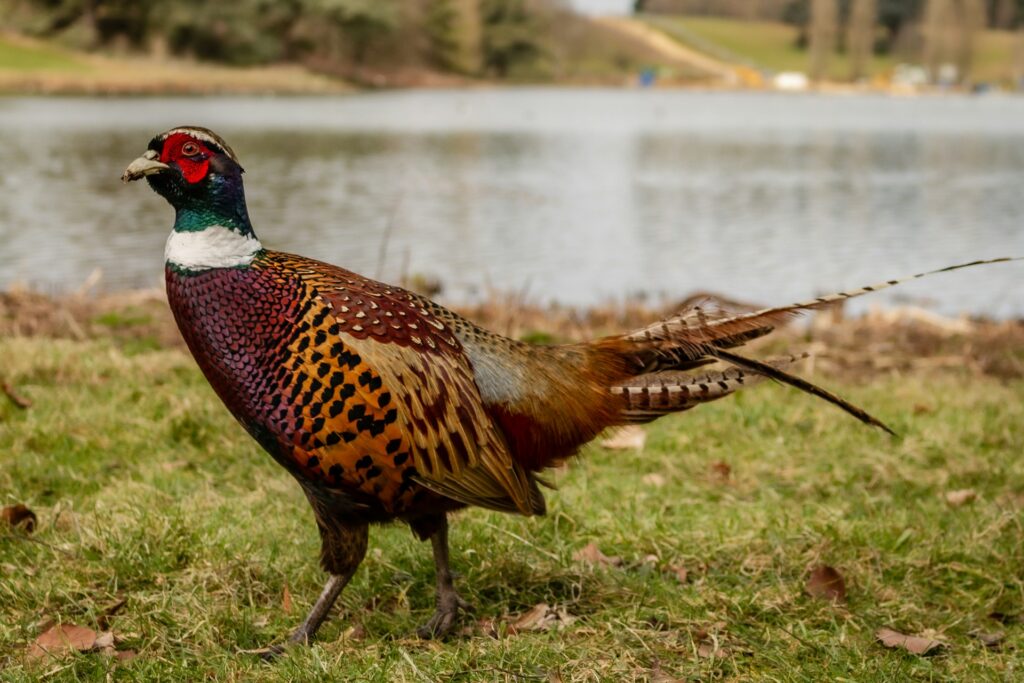
Male pheasants are impossible to miss. Massive long tail, red face, iridescent green head and neck, copper body with intricate patterns. They’re absolutely enormous. Female pheasants are small, pale brown, and covered in subtle mottling that makes them invisible in long grass.
The size difference alone is wild. Males are nearly twice the size of females. And while males are strutting about looking like they’ve escaped from a fancy dress shop, females are doing all the actual work of raising chicks while staying completely camouflaged.
Male greenfinches are brighter green and yellow.
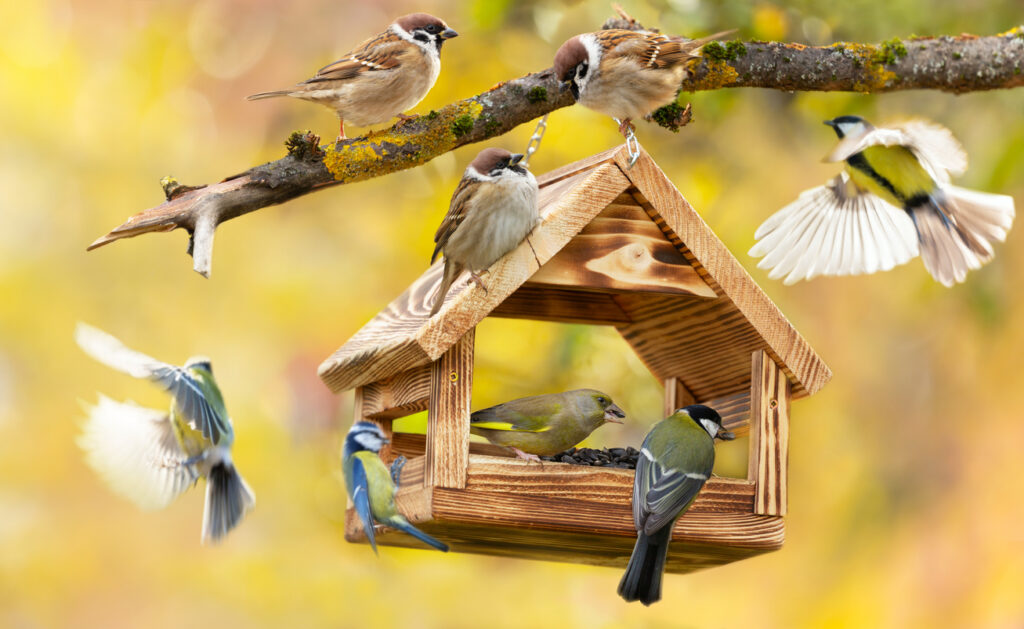
Male greenfinches are a vivid yellowy green with bright yellow flashes on their wings and tail. Females are more of a subtle olive brown with just hints of the yellow. They’ve got the same overall shape, but the colours are much more muted.
If you see a greenfinch that looks like it’s been highlighted with a marker pen, that’s a male. If it looks like it’s been left out in the sun and faded a bit, that’s a female.
Male woodpigeons and females look identical.

Like robins, woodpigeons are another species where males and females look the same. Grey body, white neck patch, pink breast. You can’t tell them apart visually at all.
The only giveaway is behaviour. Males do that loud cooing display and the clapping wing flight when they’re trying to impress females. But if they’re just sitting on a branch or waddling about on your lawn, you’ve got no chance of knowing which is which.
Female wrens look the same as males (just slightly smaller).
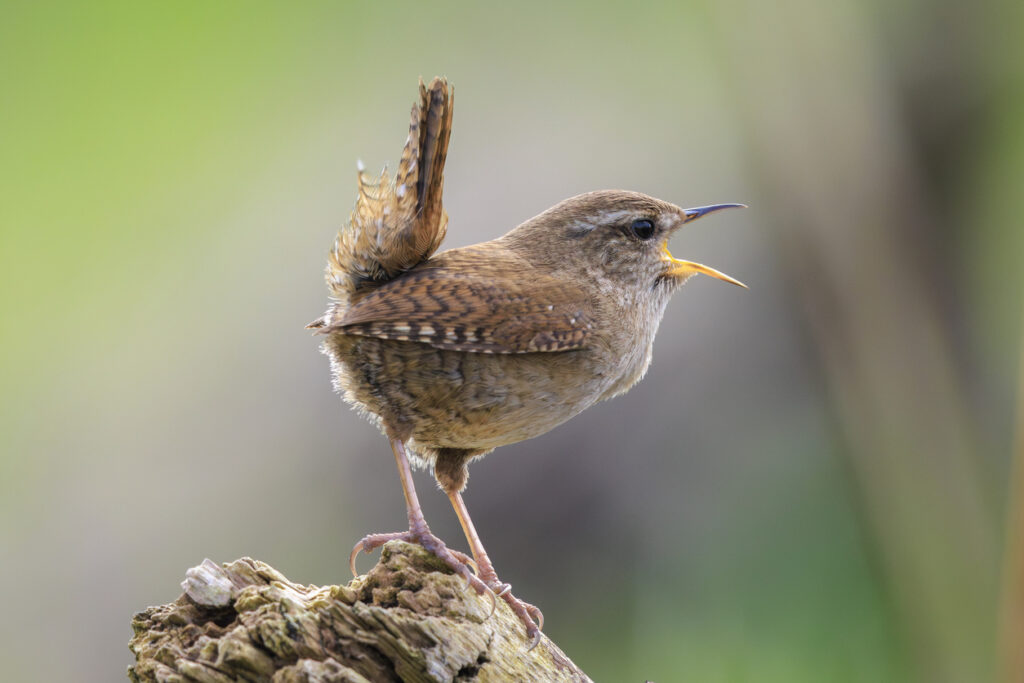
Male and female wrens are basically identical. Tiny, brown, barred pattern, turned up tail. The only difference is females are fractionally smaller, but you’d need them side by side to notice.
Wrens are so small anyway that the size difference is meaningless in the real world. If you see a wren, just appreciate that it’s a wren. Working out its gender is practically impossible unless you’ve got a pair together.
Male starlings are glossier with more colour.
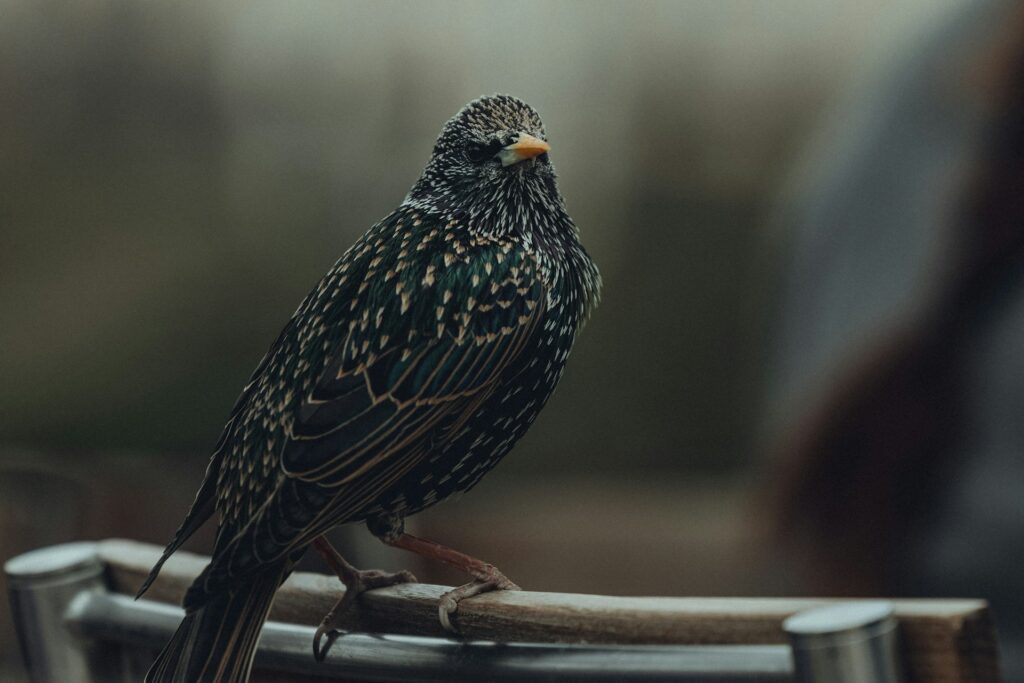
In breeding season, male starlings are glossy black with green and purple iridescence and hardly any spots. Females are similar but less glossy, with more obvious pale spots all over. Outside breeding season, they both get covered in spots and look more similar.
The difference is most obvious in spring, when males are trying to attract mates. That’s when they look their glossiest and most colourful. Females stay a bit more understated all year round.
Male dunnocks and females are nearly identical.
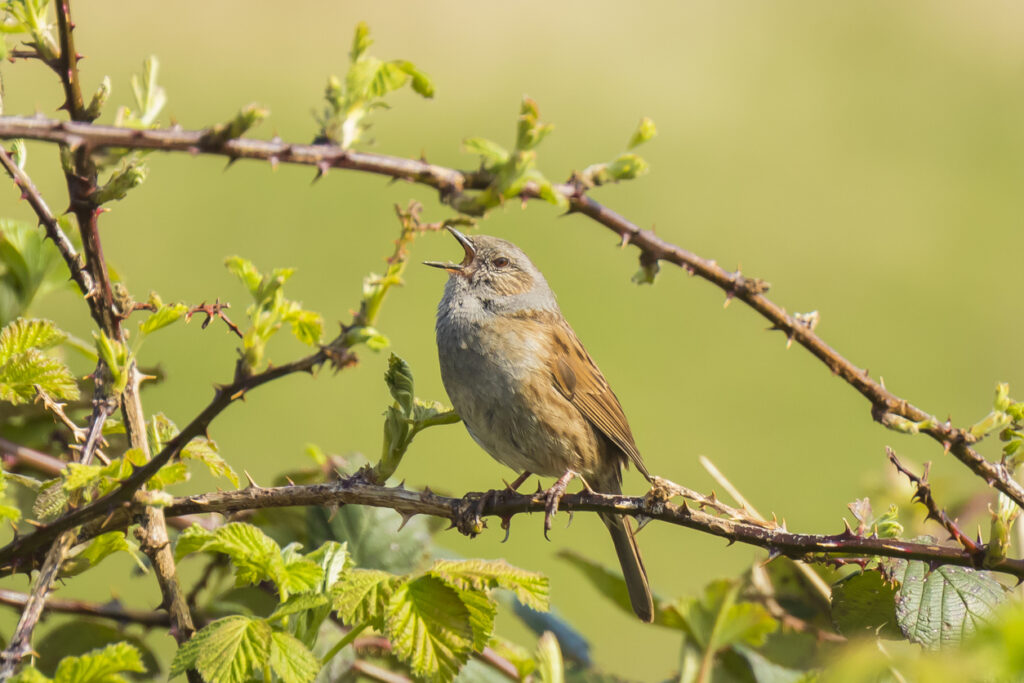
Dunnocks are one of those birds that barely anybody notices. They’re small, grey, and brown, and they shuffle about under bushes. Males and females look almost identical. You’d need to be an expert to spot any difference.
The most interesting thing about dunnocks isn’t what they look like, but what they get up to. They have incredibly complicated love lives with multiple partners. But from the outside, they just look like boring brown birds, regardless of gender.