
Most of us have had that oddly satisfying moment where we pause, sniff the air, and say, “Smells like rain’s coming.” But is that actually real, or just something we’ve been conditioned to believe? As it turns out, the idea that you can smell rain before it falls isn’t just poetic—it’s grounded in real science. The weather, the soil, and even the bacteria under our feet all play a role in creating that unmistakable scent. Here’s how it works, and why your nose might be better at weather forecasting than you thought.
Yes, you really can smell rain before it arrives.
It’s not just in your head—many people genuinely notice a distinct scent before it starts raining. This happens when specific compounds get released into the air ahead of a storm, and your nose picks them up before the first drop hits the ground.
This “pre-rain smell” is most noticeable after a dry spell, especially in warm weather. It’s not the rain itself that has a scent. It’s the mix of natural chemicals being stirred up just before it begins to fall.
The key player is something called petrichor.
Petrichor is the name scientists gave to that earthy, slightly sweet smell that often lingers before or after rain. The term was coined in the 1960s, and it describes a mix of plant oils and compounds from soil that get released into the air.
When rain hits dry soil or stone, it breaks apart these molecules and sends them into the air, sometimes carried ahead by wind gusts from an approaching storm. It’s this that gives the air that comforting, earthy aroma you instinctively recognise.
Bacteria in the soil contribute to the smell.
There’s a group of bacteria in soil called actinomycetes, and when the soil is dry, they stay pretty dormant. But once the environment becomes damp, they release a compound called geosmin, which has a distinct, earthy scent that humans can detect even in tiny amounts.
Geosmin is a big part of what we associate with “rain smell.” It’s so potent that our noses can detect it at just a few parts per trillion. That’s why even a small whiff of moist soil can bring on that fresh, rainy feeling.

Wind can carry the scent ahead of the rain.
One reason you can smell rain before it arrives is that wind from an oncoming storm can blow these scent molecules ahead of the actual rainfall. You’re not imagining it; you’re literally catching a breeze that’s carried the smell with it.
This effect is strongest during thunderstorms, when atmospheric pressure changes quickly and gusty winds pick up speed. The scent travels faster than the raindrops do, so your nose often gets the first alert.
Lightning plays a role too.
During a thunderstorm, lightning can break apart nitrogen and oxygen in the atmosphere, creating a sharp-smelling gas called ozone. Sometimes, people say they can “smell a storm coming,” and it’s this high-up chemical change they’re picking up on.
Ozone has a slightly metallic, clean scent, almost like chlorine. It’s more noticeable at higher altitudes, or during large storms, and adds another layer to that pre-rain smell that feels both fresh and electric.
Dry spells make the scent stronger.
The longer it’s been since it last rained, the more noticeable the smell when rain finally does arrive. That’s because plant oils and bacterial compounds have had more time to build up on surfaces like soil, rocks, and pavement.
When those dry surfaces are suddenly hit with moisture, everything gets released at once, like uncorking a bottle. The result is a stronger, more intense petrichor that’s almost impossible to miss.
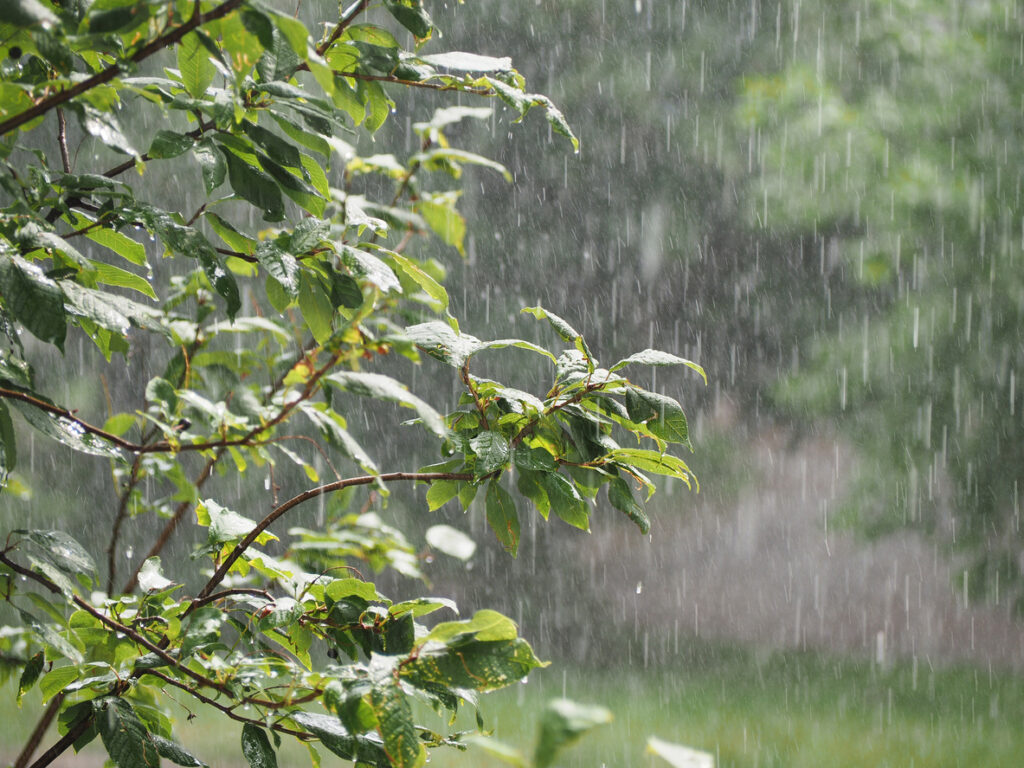
Plants contribute their own oils.
Some plants release oils during dry periods to slow water loss. These oils get absorbed into soil and rocks. When rain falls, those trapped oils are released into the air along with geosmin and other compounds, enhancing that fresh scent.
In this way, the local plant life plays a part in how “rainy” it smells. A forest before a storm smells different from a city or a field—and that’s partly due to the unique mix of plant oils in the environment.
Your nose gets trained to notice it.
Part of why rain smells so familiar is that we’ve been exposed to it since childhood. Like the smell of fresh-cut grass or the sea breeze, petrichor becomes part of our scent memory. Even the slightest trace of it can trigger a strong reaction.
As time goes on, your brain learns to associate that scent with an incoming change in weather. So when you say “It smells like rain,” you’re not just sniffing the air; you’re drawing from years of unconscious pattern recognition.
City rain smells different from countryside rain.
That earthy smell is most noticeable in rural or natural areas where there’s more soil and plant matter. In urban areas, rain can stir up different scents—think concrete dust, car oils, and pollutants that have built up during dry days.
While you might still smell rain in the city, it often has a grittier, more industrial edge. But even then, the core components of petrichor and ozone still sneak through, especially in green spaces or after a long dry spell.

Pets often sense it too.
Animals, particularly dogs, often react to incoming storms before they arrive. Part of this is due to their ability to smell the same atmospheric changes, plus their sensitivity to pressure drops and distant rumbles of thunder.
So if your dog starts acting strange, sniffing the air more, or pacing before rain, they might be picking up the same things your nose is, just with a lot more intensity. It’s another layer of natural weather forecasting, powered by scent.
Some people are more sensitive to it than others.
Not everyone notices the scent of rain with the same clarity. Some people have a stronger sense of smell or are more attuned to natural cues, while others might not register it unless it’s particularly strong.
If you’ve always felt like you’re the first to call out “smells like rain,” you might just have a naturally heightened sensitivity to geosmin, ozone, or plant oils. It’s not a superpower, but it is a pretty cool quirk of biology.
It’s one of nature’s most nostalgic scents.
That earthy, pre-rain smell has an emotional pull for many people. It’s associated with summer storms, cosy afternoons, fresh air after a long dry stretch—moments of calm or anticipation that stick in your memory.
Petrichor doesn’t just signal a weather change. It often evokes feelings, memories, and a sense of connection to the natural world. So yes, you can smell rain coming, and it means a lot more than just wet ground.