Nature follows mathematical rules and creates repeating patterns across completely different organisms and environments. These patterns appear so consistently that scientists can predict them, and they’re often based on principles of efficiency, survival, and physics that work the same way whether you’re a plant, an animal, or an entire ecosystem.
The Fibonacci sequence appears everywhere from flowers to galaxies.
The Fibonacci sequence, where each number is the sum of the two before it (1, 1, 2, 3, 5, 8, 13…), shows up constantly in nature in ways that seem too consistent to be coincidence. Flower petals almost always appear in Fibonacci numbers, with lilies having 3, buttercups 5, and daisies typically 34, 55, or 89.
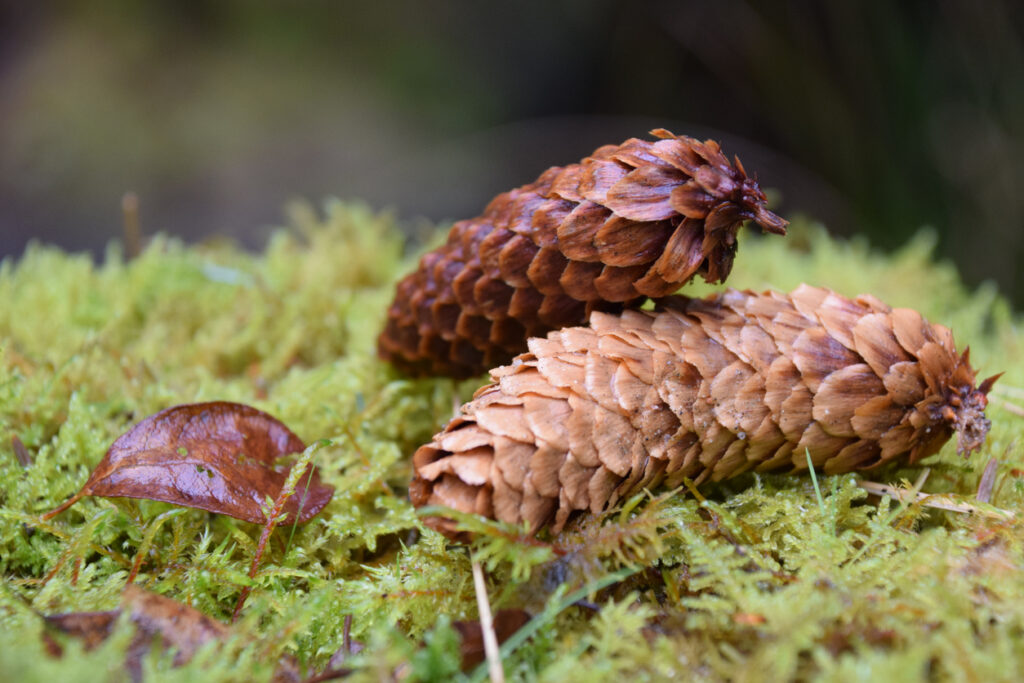
This happens because the Fibonacci spiral is the most efficient way to pack seeds, petals, or leaves so each one gets maximum sunlight and space without overlapping. Pinecones, sunflower seed heads, pineapples, and even spiral galaxies follow this pattern because it’s mathematically the most efficient arrangement.
Fractals repeat the same pattern at every scale.
Fractals are patterns that look the same whether you’re viewing them close up or from far away, repeating infinitely at different scales. Trees are perfect examples, where the branching pattern of the whole tree is repeated in each branch, then in each twig, creating the same forking structure at every level.
Coastlines, river networks, ferns, and blood vessels all follow fractal patterns because this structure maximises surface area while minimising space and materials needed. This pattern emerges naturally because it’s the most efficient solution to distributing resources through a system.
Hexagons are nature’s favourite shape for efficiency.
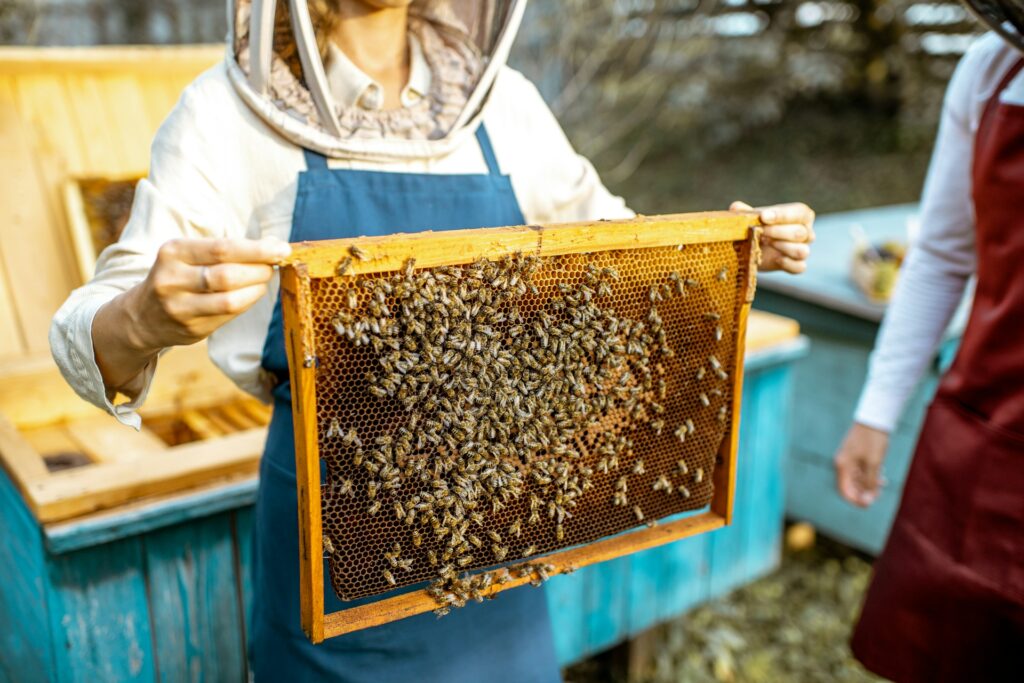
Bees build honeycombs in perfect hexagons because it’s the most efficient way to divide space with the least amount of material. Hexagons tessellate perfectly with no gaps and use less wax than squares or triangles while providing maximum storage space.
This same pattern appears in insect eyes, crystal structures, basalt columns at Giant’s Causeway, and the way bubbles pack together. When forces are applied equally in all directions, hexagons emerge because they balance structural integrity with material efficiency perfectly.
Symmetry appears as a sign of health and genetic fitness.
Bilateral symmetry, where one side mirrors the other, is incredibly common in animals because it indicates good genes and healthy development. Faces, bodies, butterfly wings, and flower petals that are perfectly symmetrical signal that the organism developed without stress, disease, or genetic problems.
Asymmetry usually indicates developmental issues or injury, which is why animals including humans are attracted to symmetrical potential mates. The pattern is so reliable that even slight asymmetries in human faces are unconsciously noticed and affect attractiveness ratings.
Spirals show up in everything from shells to weather systems.
Spirals appear constantly in nature, from nautilus shells and snail shells to spiral galaxies, hurricanes, and curling fern fronds. The logarithmic spiral found in shells grows at a constant rate, allowing the organism to maintain the same proportions as it gets bigger without changing shape.
Hurricanes and galaxies spiral because of rotational physics, where rotating systems naturally form spiral arms as they spin. The spiral is efficient for growth because it allows expansion without requiring the organism to completely rebuild its structure.
Stripes and spots follow mathematical rules.
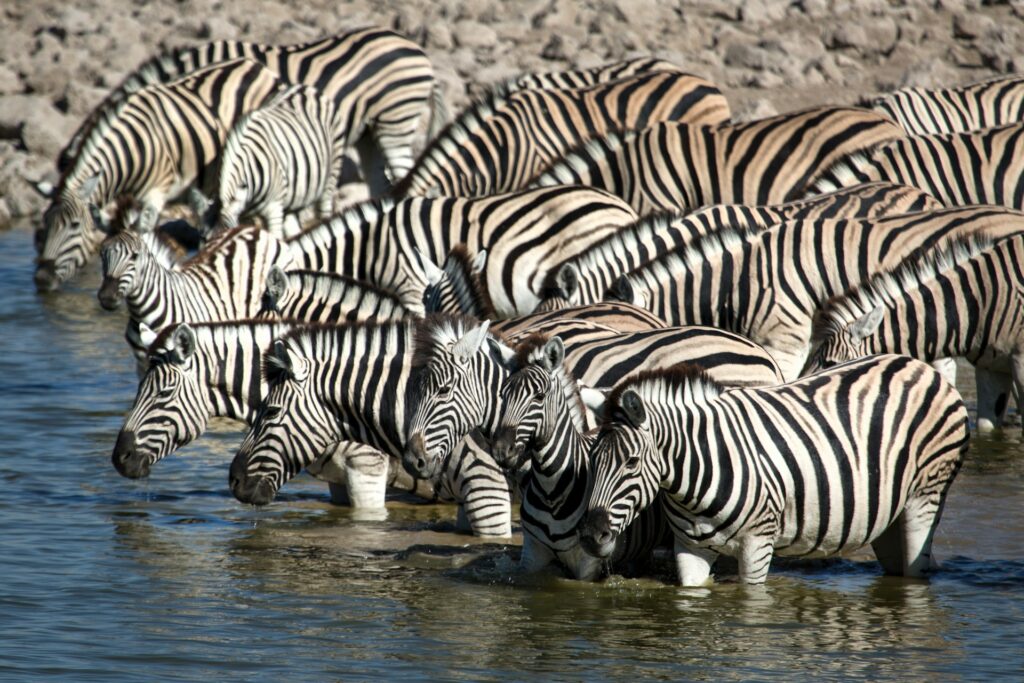
Animal markings like zebra stripes, leopard spots, and tiger stripes aren’t random, they follow predictable mathematical patterns described by reaction-diffusion equations. These patterns form when two chemicals spread through developing skin at different rates and interact, creating waves that settle into either stripes or spots, depending on the animal’s size and shape.
Small, round animals tend to get spots while longer animals get stripes, and you can predict which pattern an animal will have based on its body shape. The same mathematical principle creates patterns in sand dunes, cloud formations, and chemical reactions.
Ecosystems reach stable patterns of predator and prey numbers.
Predator and prey populations cycle in predictable patterns that mathematicians can model with surprising accuracy. When prey populations increase, predators have more food and their numbers increase, which then reduces prey numbers, causing predator numbers to drop, allowing prey to recover, and the cycle repeats.
This pattern appears across ecosystems from arctic hares and lynx to plankton and fish, following the same mathematical rules regardless of species. The cycles aren’t perfectly regular because other factors interfere, but the underlying pattern is consistent enough to predict population swings years in advance.
Growth rings record time with remarkable consistency.
Trees, shells, fish scales, and coral all create growth rings that record time passing with patterns scientists can read like history books. Trees add one ring per year, with wider rings during good seasons and narrow rings during droughts, creating a record that can be matched across different trees to date wood thousands of years old. That’s because growth rates vary with seasons and environmental conditions, and organisms respond consistently to these changes. By matching overlapping patterns across many individuals, scientists can reconstruct climate conditions going back further than written human records.
Migration routes follow the same paths across generations.
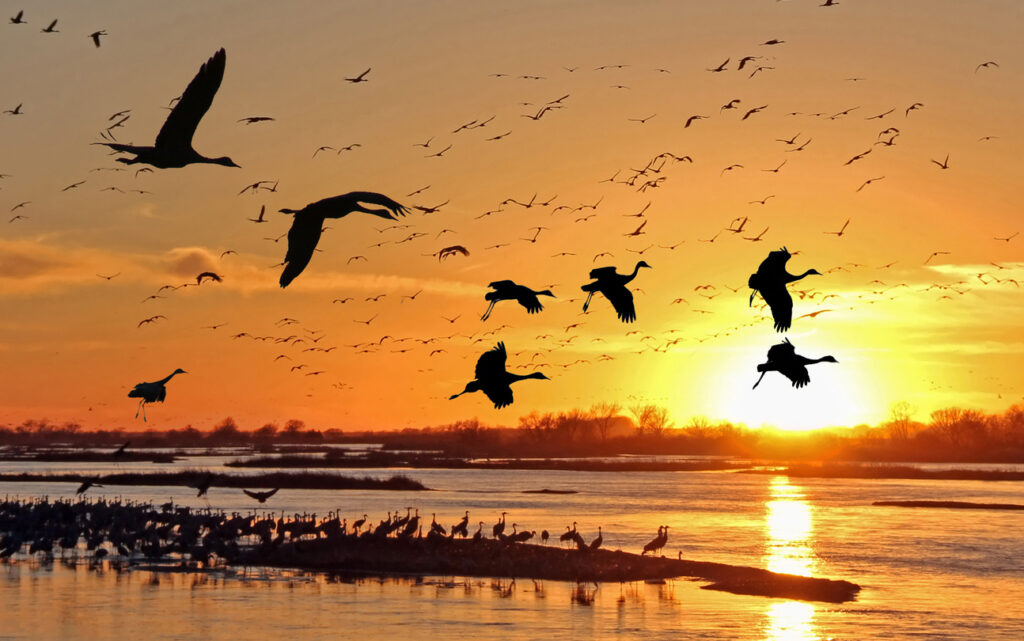
Birds, whales, butterflies, and fish follow migration routes that repeat with remarkable precision year after year, generation after generation. Monarch butterflies that have never made the journey somehow fly to the exact same Mexican forests their great-great-grandparents used, and birds return to the same nesting sites despite flying thousands of miles away.
The pattern emerges from inherited navigation abilities, environmental cues, and learned behaviour passed between generations. The routes aren’t arbitrary, they connect breeding grounds with food sources in patterns refined over thousands of years of evolution.
Forest structures create repeating patterns of diversity
Forests develop predictable layers of vegetation with canopy trees, understory trees, shrubs, and ground cover appearing in consistent patterns regardless of specific species. The vertical structure emerges because different plants compete for light at different heights, creating niches that get filled by species adapted to those conditions.
The pattern repeats in tropical rainforests, temperate forests, and even underwater kelp forests because the same physical rules about light and space apply everywhere. This structural pattern creates habitat diversity that supports more species than uniform forests would.