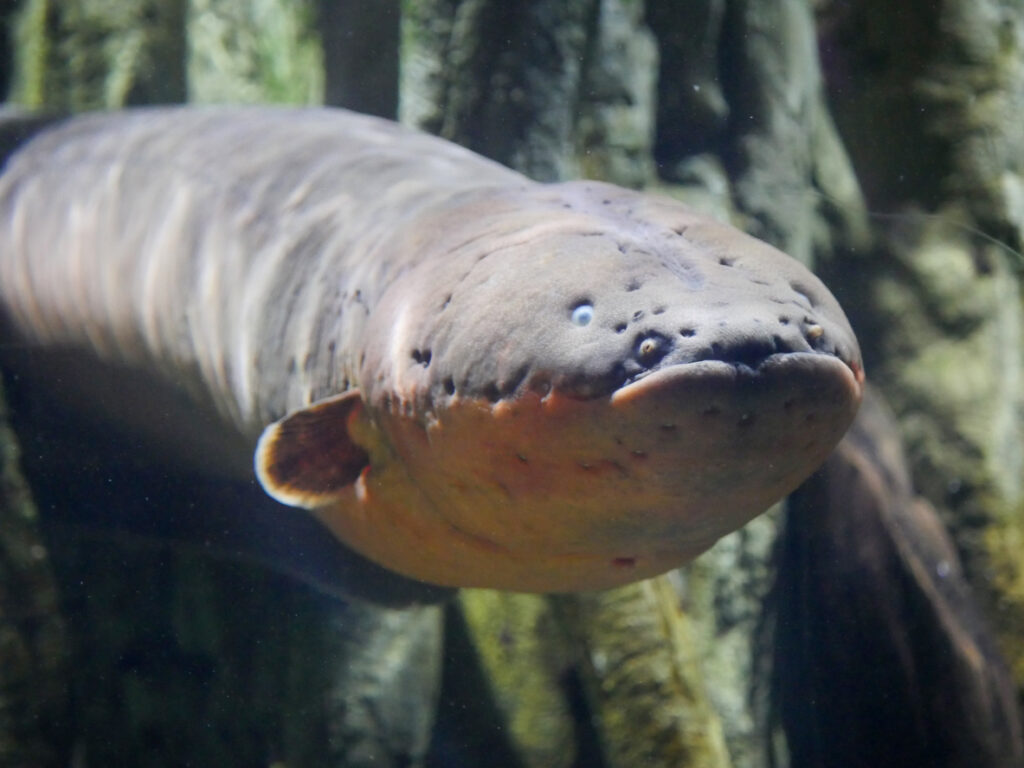
Electric eels are one of those creatures you hear about as a kid and assume must be exaggerated, but they’re very real and even more impressive than most people realise. They don’t just give off a tiny zap either. They can generate enough electricity to stun prey, protect themselves and basically act like a swimming power plant.
What makes them fascinating is that their bodies aren’t built like anything we’re used to. They create electricity using specialised cells that work together in a way that feels almost mechanical, but it’s pure biology. Once you hear how they do it, the whole thing becomes even more mind-blowing. Here’s how these creatures actually produce their charge, and what you need to know about them in general.
They’re not actually eels at all.
Most people assume electric eels are a type of eel based on the name and their long, snake-like appearance. They look eel-ish enough that it seems obvious they’d be related to the eels you might see in rivers or at the fishmonger.
Electric eels are actually a type of knifefish, more closely related to carp and catfish than to true eels. They just happen to have evolved a similar long body shape, which is a classic example of different animals developing similar features independently. The “eel” name has stuck despite being technically wrong, which must be quite annoying for scientists trying to be accurate.
Most of their body is basically a living battery.
When you think about an animal’s body, you’d expect most of it to be vital organs, muscles, and the usual biological bits. You wouldn’t imagine that the majority of a creature’s body could be dedicated to something as specific as electricity generation.
About 80% of an electric eel’s body is made up of special electric organs that work like biological batteries. Their actual vital organs like heart, digestive system, and reproductive bits are all crammed into just the front 20% of their body. The rest is literally electric-generating tissue, which shows how important shocking things is to their survival strategy.
They’ve got three different electric organs for different jobs.
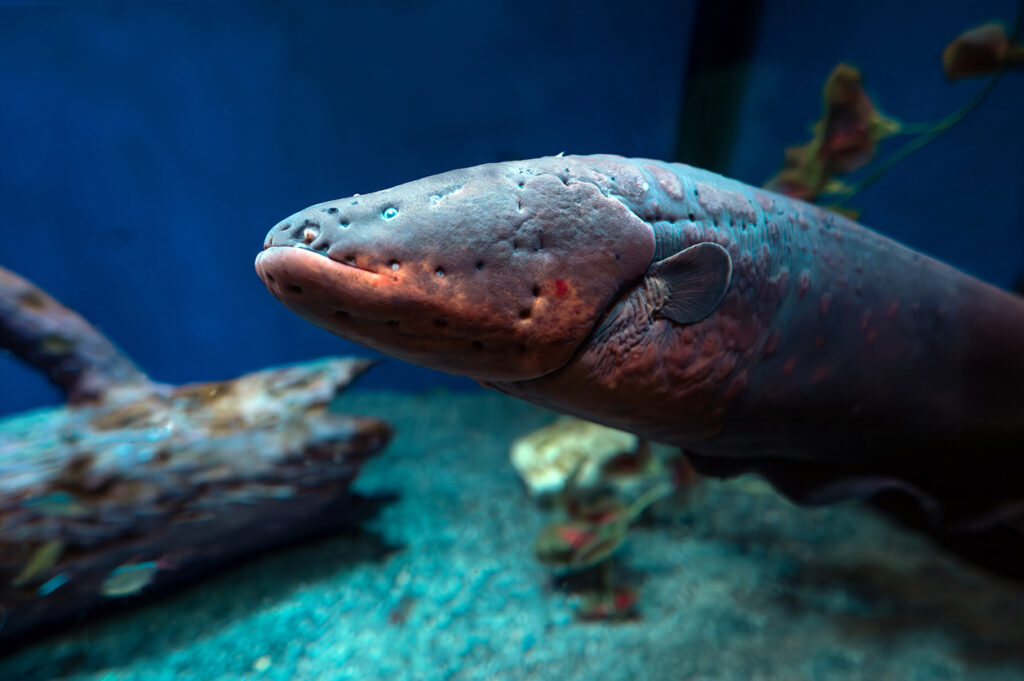
You’d probably assume an electric eel has one electric organ that does everything, like having one heart that pumps blood. It seems logical that they’d have a single system for generating electricity rather than multiple specialised organs.
Electric eels actually have three separate electric organs that serve different purposes. The main organ produces the big, powerful shocks for hunting and defence, while the other two create weaker pulses for navigation and communication. It’s like having different power settings built into their body, with gentle mode for everyday use and full power for emergencies.
The electricity comes from modified muscle cells.
When people think about how electricity might be generated in a body, they probably imagine some thoroughly unique biological structure unlike anything else. The idea that normal body parts could be repurposed for electricity generation seems unlikely and overly complicated.
The electric organs are made from cells called electrocytes, which are basically modified muscle cells that’ve evolved to produce electricity instead of movement. All muscle cells create tiny electrical signals when they contract, but electric eels have taken this basic ability and amplified it massively. It’s brilliant evolutionary recycling, taking existing biological machinery and adapting it for a completely different purpose.
They stack thousands of cells like batteries in series.
A single cell producing electricity wouldn’t create much power, probably just a tiny, unnoticeable voltage. Most people wouldn’t understand how weak individual cells could possibly add up to the kind of serious voltage that can stun prey or hurt predators.
Electric eels have thousands of these electrocyte cells stacked in columns running the length of their body, working exactly like batteries connected in series. Each cell produces about 0.15 volts, but when you’ve got 6,000 of them stacked together, you get up to 860 volts. It’s the same principle as stacking AA batteries to get higher voltage, just done with living cells instead of manufactured batteries.
The shock only lasts a few milliseconds.
When you hear about electric eels producing 860 volts, you’d probably imagine a sustained electric current that lasts for several seconds. The mental image is probably like being electrocuted by mains electricity, with the shock continuing for an extended period.
Each shock actually only lasts about two milliseconds, which is almost instantaneous. It’s like a really powerful taser rather than a continuous current, delivering all that voltage in an incredibly brief pulse. The short duration is probably why people can survive encounters with electric eels because a sustained 860-volt shock would be absolutely lethal.
They can control exactly how much voltage they release.
You’d think an electric eel would just have an on/off switch for its electricity, either shocking things at full power or not shocking at all. Having fine control over voltage output seems unnecessarily complicated when you could just zap everything at maximum strength.
Electric eels can vary their discharge from tiny 10-volt pulses for navigation up to full 860-volt blasts for defence. They’ll use low voltage to sense their surroundings and find prey, medium voltage to stun small fish, and only unleash full power when they’re threatened or hunting something big. The fact that they have this control is dead clever because it means they’re not wasting energy shocking everything at full strength constantly.
They use electricity like echolocation.
Most people know electric eels shock things but don’t realise they use electricity for much more than just attacking. The assumption is that electricity is purely a weapon rather than a sophisticated sensory system that works underwater.
Electric eels constantly emit weak electric pulses and sense distortions in the electric field to navigate and find prey, basically like bats using sound. They’re creating an electric bubble around themselves and detecting anything that disrupts it, which lets them “see” in murky water where vision is useless. Electroreception is their primary sense, making them essentially blind fish that navigate by electricity instead of sight.
They need to breathe air despite living underwater.
Electric eels live in water like any other fish, so you’d naturally assume they breathe through gills and get oxygen from the water around them. There’s no obvious reason why a fish would need to surface for air when they’re literally surrounded by water containing dissolved oxygen.
Electric eels actually need to surface every ten minutes or so to gulp air because they can’t get enough oxygen from water alone. Their electric organs demand massive amounts of energy, which requires more oxygen than gills can provide from murky South American rivers. They’ll literally drown if prevented from reaching the surface, which is bizarre for a creature that lives its entire life in water.
They don’t shock themselves because of clever insulation.
One of the most obvious questions about electric eels is why they don’t electrocute themselves when they discharge. You’d think that producing hundreds of volts inside your own body would be extremely dangerous and potentially fatal to the eel itself.
Electric eels are protected by a thick layer of fatty tissue that acts as insulation, keeping the electricity flowing through the intended path rather than back through their own vital organs. Their nervous system and important organs are also positioned in the one part of their body that’s not filled with electric tissue. It’s brilliant biological engineering that lets them weaponize electricity without becoming their own victim every time they use it.