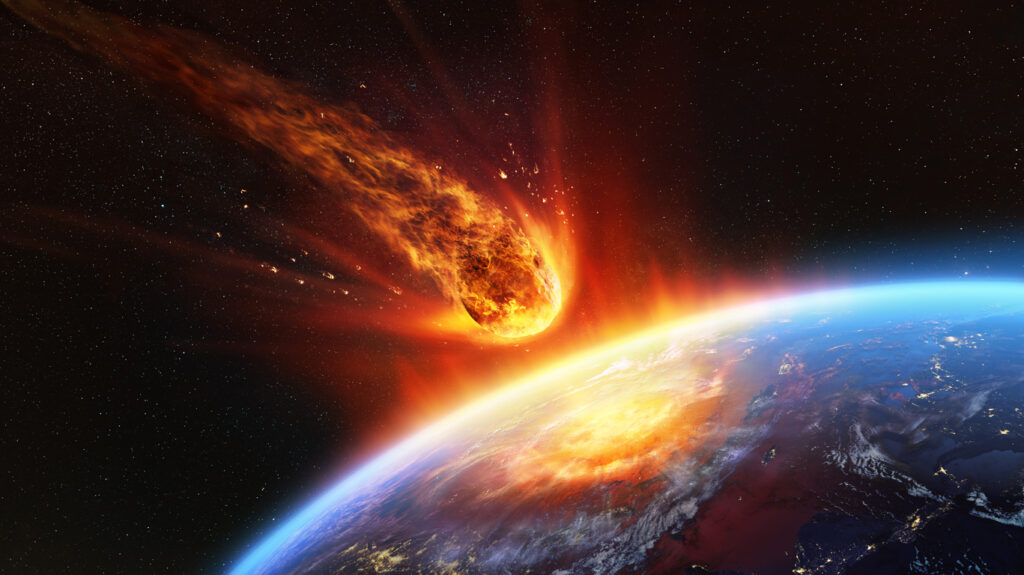
Even though it might feel like the world is ending, especially lately, in reality, that’s not likely to happen for another several billion years. It’s coming for us in the end, but exactly how is anyone’s guess. Scientists do, however, have some theories that are simultaneously fascinating and absolutely horrifying. These are just a few of the possibilities that might play out, though none of us will be around to experience it, thankfully.
Everything just… runs out of power.
This is like when your phone battery dies: basically, the universe would use up all its energy and everything would go dark and cold forever. All the stars would burn out one by one until there’s no light or heat left anywhere, and nothing exciting would ever happen again.
It’s basically the universe getting so tired that it can’t do anything anymore, like a giant machine that slowly grinds to a halt. Everything would just sit there in the dark, completely still and frozen at the same incredibly cold temperature, with no energy left to power stars, planets, or life.
Space stretches everything apart.
Imagine blowing up a balloon until it pops, but instead of popping, it keeps stretching until it rips everything inside it to pieces. That’s what could happen if dark energy makes space expand faster and faster until it literally tears the universe apart.
Even tiny things like atoms would get pulled apart because space itself is growing faster than anything can stick together. First galaxies would separate, then solar systems, then planets, and finally even the smallest particles would get stretched until they break into nothing.
Everything crashes back together.
What if gravity eventually wins and starts pulling everything back into one giant pile? It would be like the Big Bang but in reverse, with everything squashing back into one tiny point in what scientists call the Big Crunch.
All the galaxies and stars would crash into each other faster and faster until there’s just one massive cosmic collision that destroys everything by squishing it together. The temperature would get incredibly hot and everything would melt and compress until reality itself gets crushed out of existence. Sounds like fun, eh?
Reality glitches and breaks.
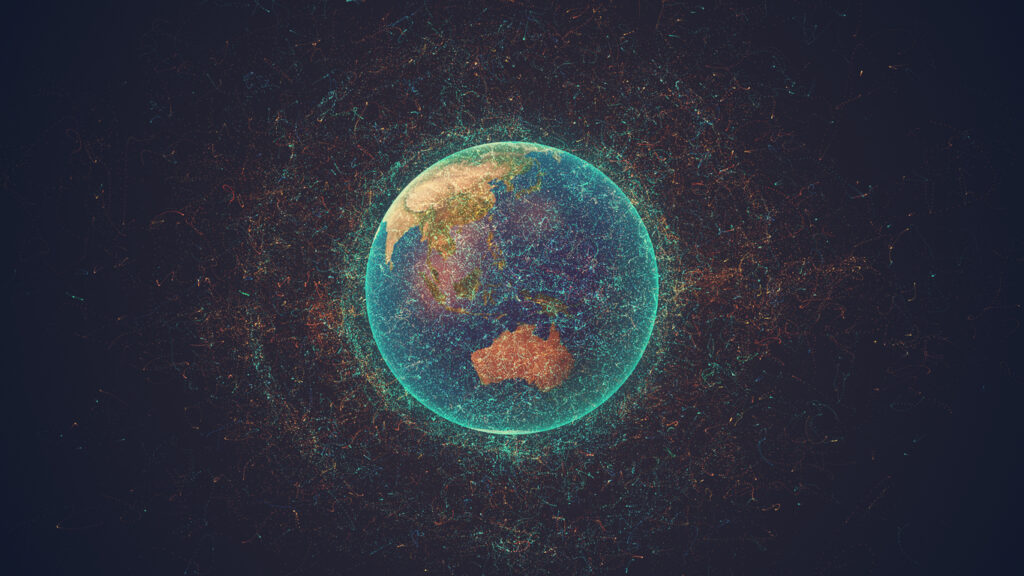
Scientists think our universe might be unstable, like a house built on shaky ground that looks fine but could collapse at any moment. If it “glitches,” a wave of destruction could spread out at light speed and change all the rules of physics.
It would be like discovering your whole world was built on quicksand, and once it starts sinking, there’s no way to stop it from collapsing completely. That bubble of different physics would expand and rewrite the laws of reality, making atoms impossible and destroying everything we know.
Even atoms fall apart over time.
What if the tiny building blocks that make up everything aren’t actually permanent? Given enough time—we’re talking way more time than you can imagine, with more zeros than there are stars—even the particles inside atoms might just dissolve.
It would happen so incredibly slowly that entire civilisations could rise and fall trillions of times before you’d notice any change, but eventually, everything solid would just melt away into nothing but energy and tiny particles floating around in empty space.
The universe restarts like a computer.
Some scientists think the universe might be like a bouncing ball. In other words, it expands for billions of years, then gravity pulls it back together in a Big Crunch, but instead of ending there, it immediately bounces back in a new Big Bang.
So, our universe ending might just be the beginning of a brand new universe with fresh stars, planets, and maybe even life, and this cycle could have happened loads of times before ours even started. We might be living in universe number 50 or 500 and never know it.
Black holes eat everything.
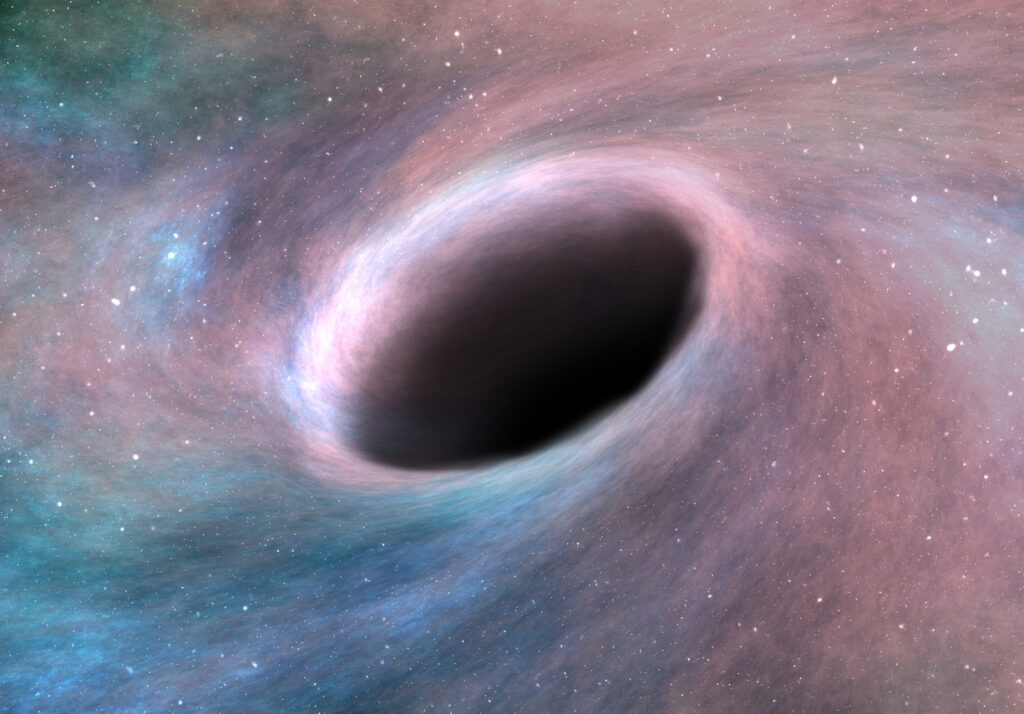
Black holes are like cosmic vacuum cleaners that suck up everything around them, and they keep growing bigger every time they swallow something. Eventually, they might grow so massive that they merge together and swallow the entire universe bit by bit.
Even after they’ve eaten everything, the black holes themselves would slowly disappear through something called Hawking radiation over incredibly long periods. We’re talking about time spans that make the age of the universe look like a blink of an eye, leaving nothing behind but empty space.
Our universe bumps into another one.
What if there are other universes floating around in higher dimensions like soap bubbles, and if ours bumps into one with completely different physical laws, it could totally change or destroy our reality in an instant?
It would be like two different video games crashing into each other. The rules would get mixed up and nothing would work the same way anymore. Gravity might stop working, atoms might become impossible, or time itself could flow differently, making our universe unrecognisable.
Random quantum events mess everything up.
Weird quantum stuff happens all the time on microscopic scales, with particles popping in and out of existence and doing impossible things, but what if something random happened on a massive scale and just broke the fundamental laws of physics everywhere?
It would be like reality having a major computer bug that spreads everywhere and makes nothing work properly anymore. The forces that hold atoms together could suddenly change, making all matter unstable, or the speed of light could change and break causality itself.
Maximum entropy, also known as cosmic boredom.
Entropy means things getting more random and spread out over time, and there might come a point where the universe reaches maximum entropy and literally runs out of interesting things to do. Every possible combination of particles would have been tried.
Think of it like a cosmic card game where every possible hand has been dealt and there are no surprises left, just an eternal state of perfect randomness where nothing meaningful can ever happen again because everything is as mixed up and boring as it can possibly be.
Information reaches its limit.
Some physicists think the universe can only hold a certain amount of information, and once it hits that limit, reality might just stop being able to process new events or create new structures because there’s nowhere to store the data.
It would be like a computer running out of memory and freezing up, except instead of just slowing down, the universe would reach a point where no new information could be created or processed, effectively ending the story of existence even though matter and energy might still exist.
We’re in a simulation that gets turned off.
Some serious scientists think our whole universe might be like a giant computer simulation run by some incredibly advanced civilisation, and it could end if whoever’s running the program just decides to quit or runs out of computing power.
We’d never even know it happened because we’d just stop existing instantly, like characters in a video game when someone turns off the console. One moment we’re here thinking about the universe, and the next moment there’s no “next moment” because the whole simulation has shut down, and we never existed outside of it.