Carnivorous plants might sound like something out of a horror film, but they’re very real, and surprisingly clever.
They’ve evolved to survive in environments where the soil doesn’t give them enough nutrients, so instead, they’ve learned to feed themselves in a different way. Using traps, sticky surfaces, and even fast movements, these plants lure, catch, and digest unsuspecting prey.
What’s fascinating is how many different species have developed their own unique methods for catching food. Some snap shut in seconds, while others slowly trap insects without them even realising it. They might not be monsters, but they are one of nature’s most inventive solutions to survival.
Venus Flytrap
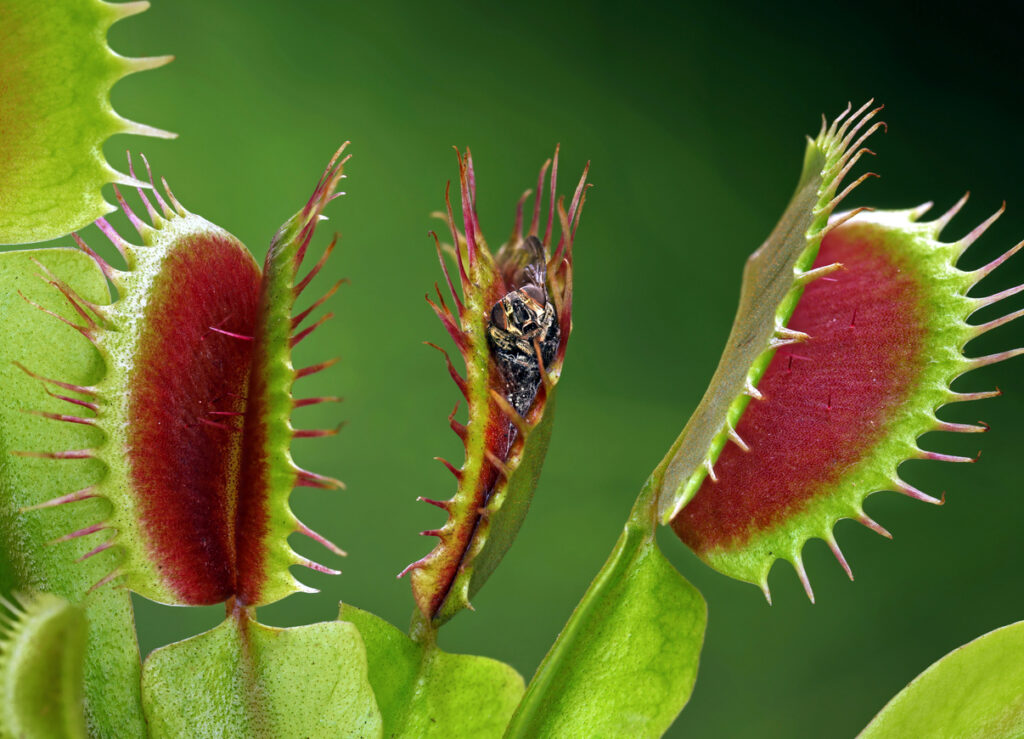
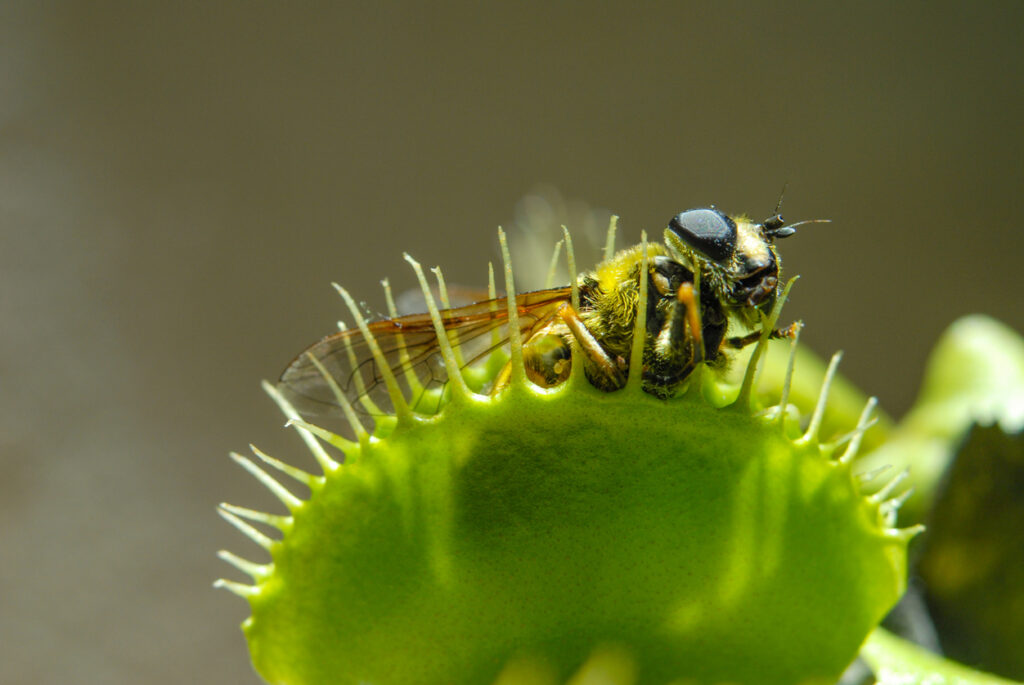
The Venus flytrap is probably what you think of first when someone mentions carnivorous plants, and for good reason. It’s got that dramatic snap action that looks almost animal-like, as if the plant is actively grabbing its prey. What makes it even more remarkable is how clever the mechanism actually is. The inside of each trap has tiny trigger hairs, and the plant won’t close unless those hairs are touched twice within about twenty seconds. This prevents the trap from wasting energy on false alarms like raindrops or falling debris.
Once something triggers it properly and the trap snaps shut, the real horror begins for whatever’s inside. The plant secretes digestive enzymes that slowly break down the insect over five to twelve days, absorbing all the nutrients it needs. Then the trap opens again, the dried husk of the insect blows away, and the whole thing resets for another meal. Each trap can only close a handful of times before it dies off, so the plant can’t afford to waste them.
Pitcher Plant
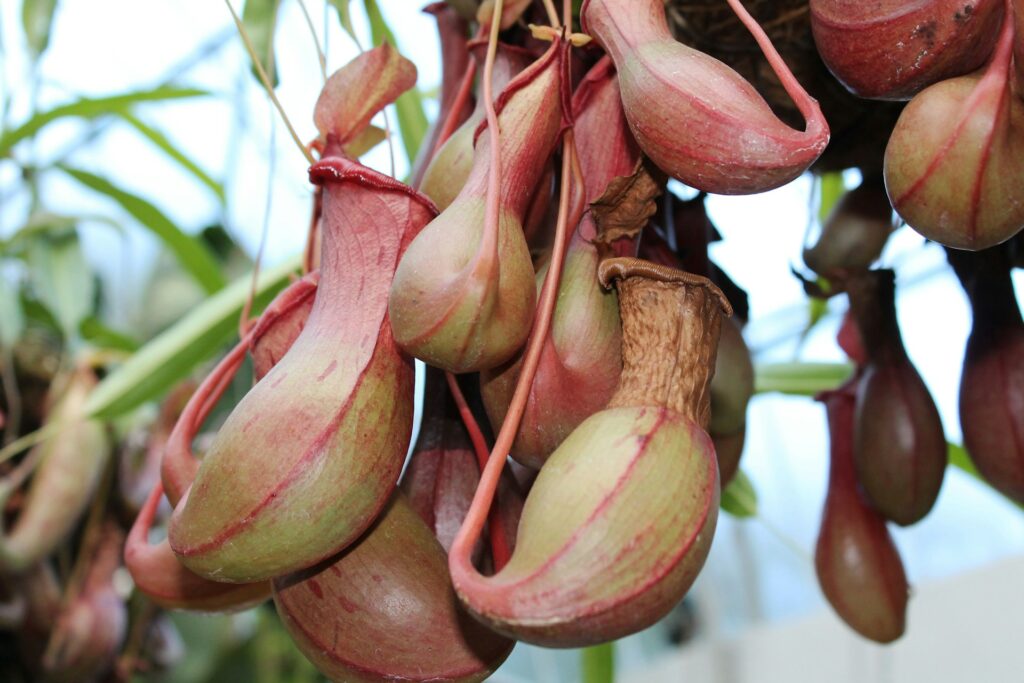
Pitcher plants took a completely different approach. Rather than grabbing prey actively, they’ve essentially created elaborate death traps that insects fall into and can’t escape from. The pitcher itself is a modified leaf that’s formed into a deep cup filled with digestive fluid. The rim of the pitcher is often slippery or covered in downward-pointing hairs, and many species secrete a sweet nectar that attracts insects in the first place.
What happens next is genuinely grim. An insect lands on the rim, attracted by the smell, and either slips on the waxy surface or gets confused by the visual patterns the plant creates. Once it falls into the liquid below, it’s finished. The sides are too slippery to climb, and eventually the insect drowns. The plant’s enzymes then break down the body over several days, and the pitcher essentially becomes a little soup of digested insects.
Sundew
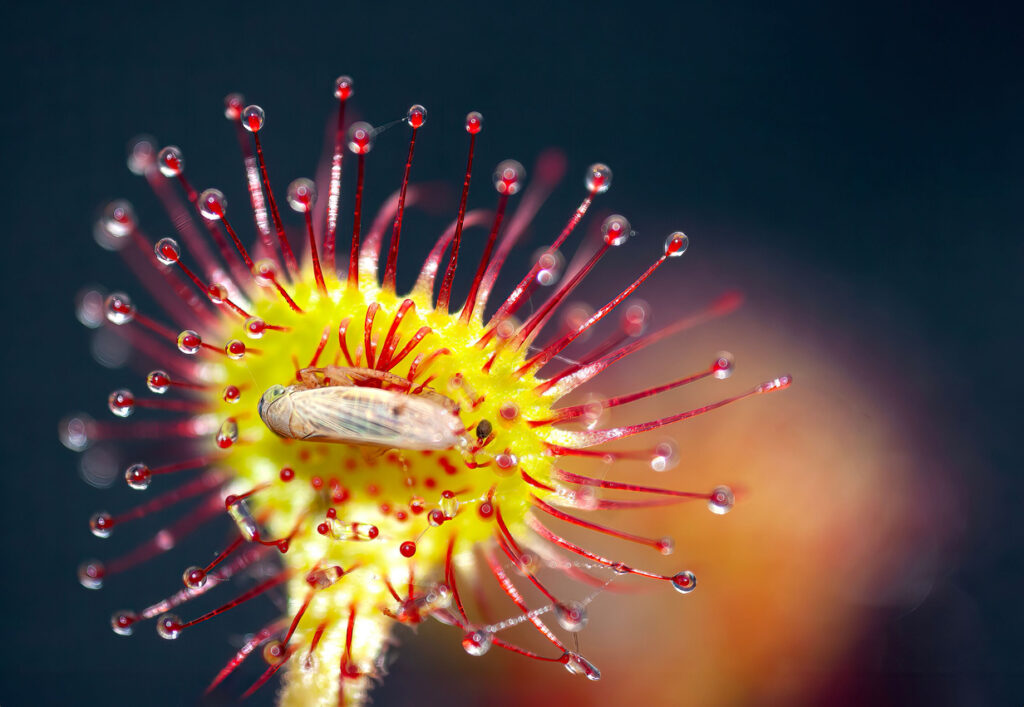
Sundews might be the most visually striking of the carnivorous plants because they look almost beautiful until you realise what’s actually happening. Their leaves are covered in tiny tentacle-like structures, each topped with a glistening droplet that looks like dew in the sunlight. Insects see this and think it’s water or nectar, but it’s actually an incredibly sticky mucilage that works like natural superglue.
The moment an insect touches one of these droplets, it’s stuck. And here’s where it gets worse: the plant can sense the struggle, and the surrounding tentacles slowly bend inward, wrapping the prey in more and more sticky droplets until it’s completely immobilised. Then the leaf itself starts to curl around the insect, bringing it closer to digestive glands on the leaf surface. The whole process can take hours or even days, and the insect is alive for much of it.
Bladderwort
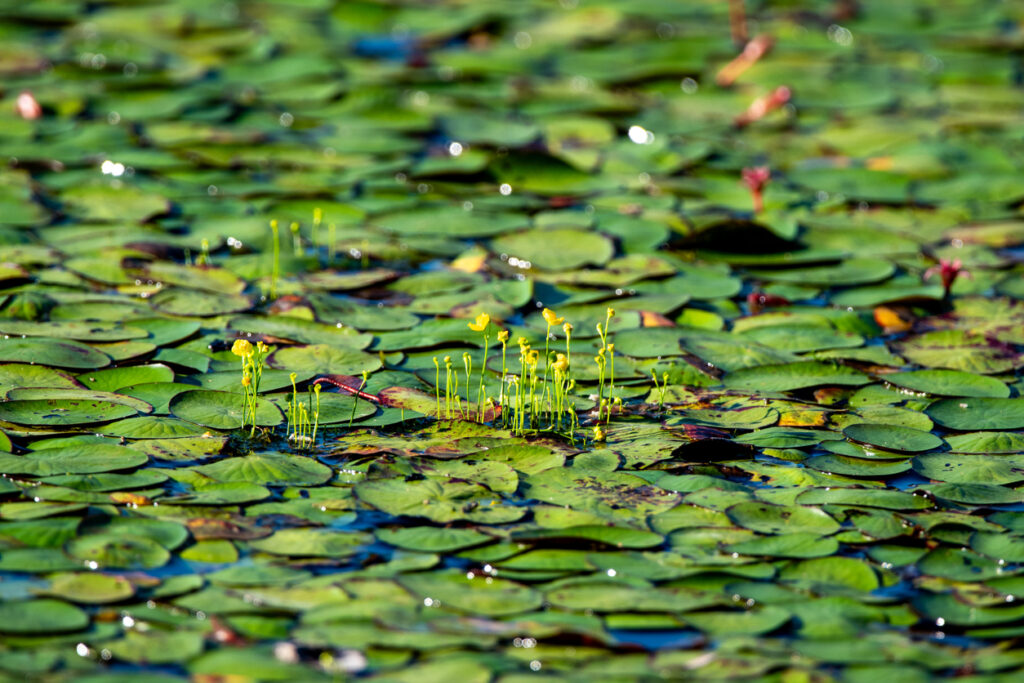
Bladderworts operate on a completely different principle to anything else in the plant world. They’re aquatic or semi-aquatic plants that hunt underwater using tiny bladder-like traps, and they’re fast. Ridiculously fast. We’re talking about one of the quickest movements in the entire plant kingdom, happening in less than a millisecond. That’s faster than you can blink.
Each bladder is like a miniature vacuum chamber. The plant pumps water out of the bladder, creating negative pressure inside, and sets tiny trigger hairs around the entrance. When a small aquatic creature like a water flea touches those hairs, the trap door flies open, water rushes in along with the prey, and the door slams shut again. The whole thing happens so fast that if you filmed it at normal speed, you’d miss it entirely.
Butterwort
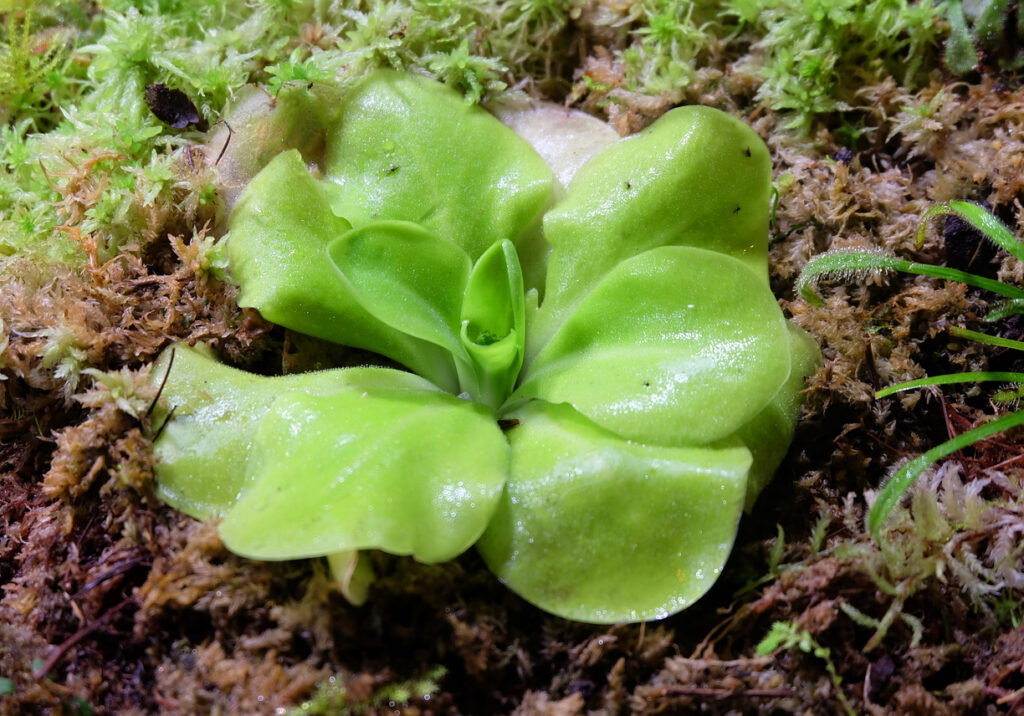
Butterworts look deceptively innocent. They’ve got these flat, greasy-looking leaves that lie close to the ground, often with a pretty purple flower growing up from the centre. But those leaves are covered in two types of glands: ones that secrete sticky mucilage and ones that produce digestive enzymes. It’s a simpler system than the sundew but just as effective.
Small insects land on what they think is just another leaf and immediately get stuck in the greasy secretion. Unlike sundews, butterworts don’t wrap around their prey or move much at all. They just wait. The insect struggles, gets more stuck, and eventually exhausts itself. Then the digestive enzymes get to work, breaking down the soft parts of the insect over several days. The leaf might curl very slightly at the edges, but mostly it just sits there, patient and deadly.