On October 24th each year, Australia and the world celebrate one of the planet’s most distinctive animals: the kangaroo.
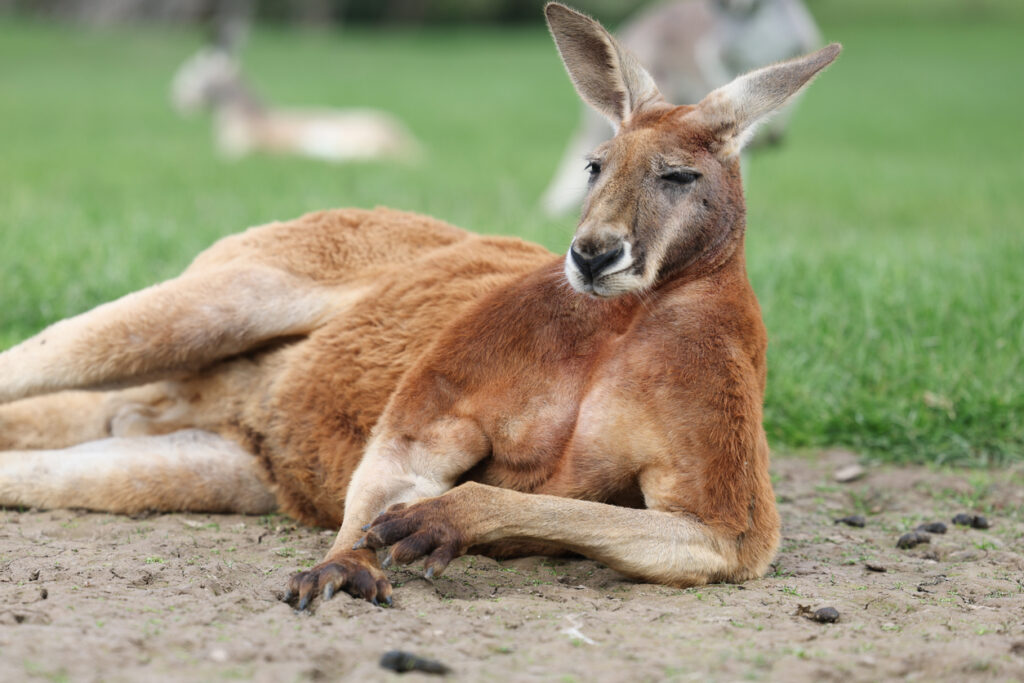
World Kangaroo Day isn’t just about appreciating a unique marsupial. It’s about recognising how a hopping, pouch-bearing creature became so deeply intertwined with a nation’s identity that it’s impossible to think of Australia without picturing a kangaroo bounding across the outback.
How did this happen, though? How did an animal found nowhere else on Earth become not just a symbol, but an ambassador for an entire continent? The story of the kangaroo’s journey from curious wildlife to beloved icon is as remarkable as the animals themselves.
The kangaroo is an animal like no other.

When European explorers first encountered kangaroos in the late 1700s, they struggled to describe what they were seeing. Here was an animal that hopped on two legs like a giant rabbit, had a tail as long as its body, carried its young in a pouch, and could grow taller than a man. Nothing in their experience prepared them for kangaroos.
Captain James Cook’s crew, encountering kangaroos during their 1770 voyage, asked local Aboriginal people what these strange creatures were called. The reply, according to popular legend, was “kangaroo,” though whether this was the actual indigenous name or a misunderstanding lost to history remains debated. Regardless, the name stuck.
Today, we know kangaroos are macropods, literally “big foot,” a family of marsupials that includes wallabies, wallaroos, and several smaller relatives. There are four main species of large kangaroos: the red kangaroo, eastern grey kangaroo, western grey kangaroo, and antilopine kangaroo. Each has adapted to different Australian environments, from arid deserts to coastal forests.
They’re built for hopping.
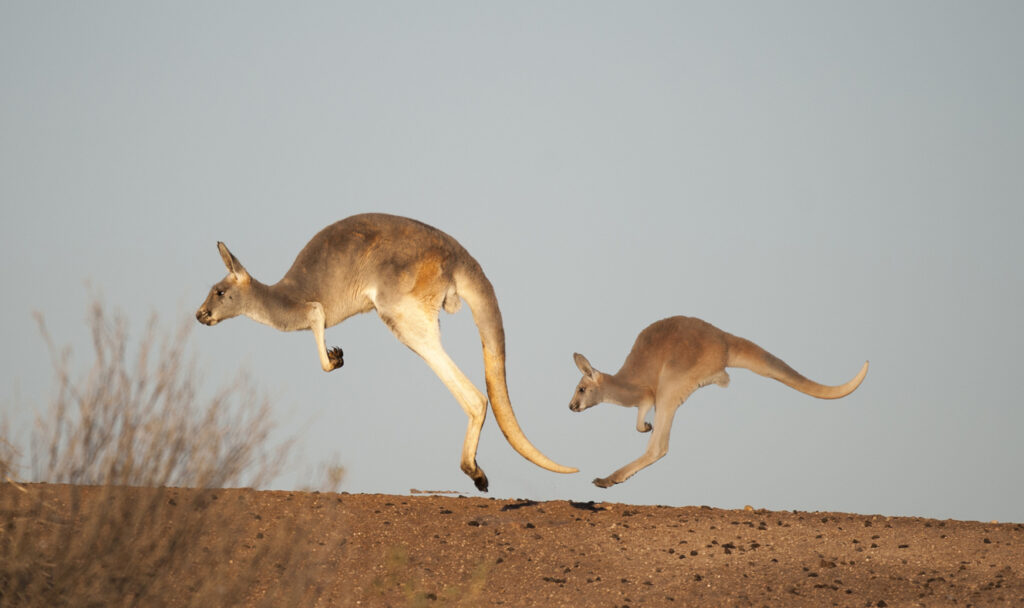
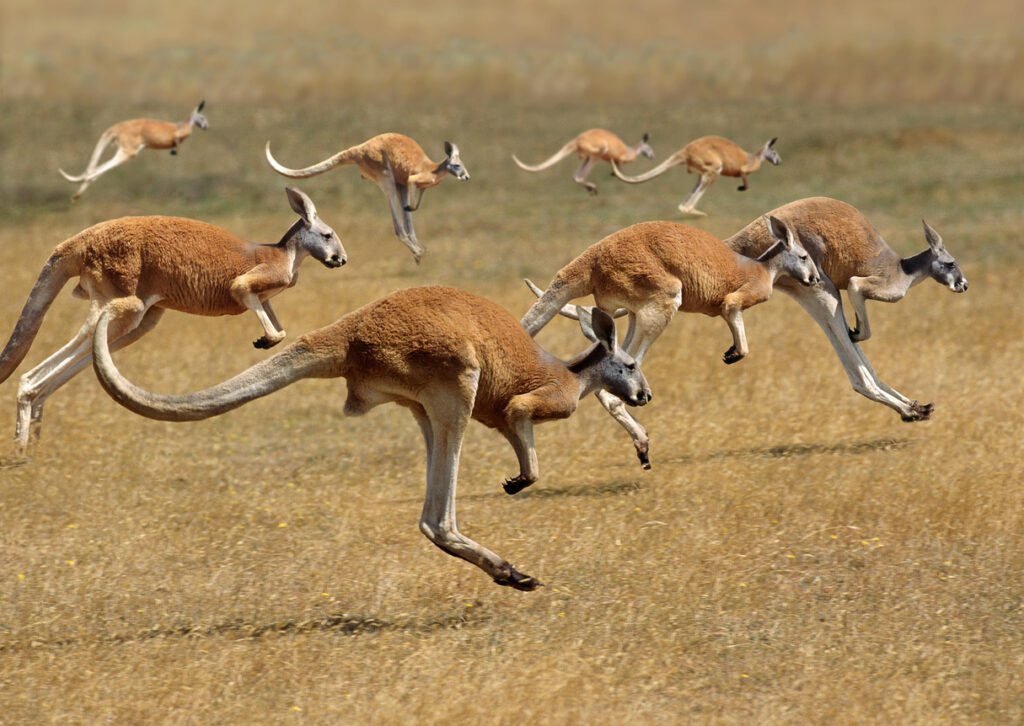
What makes kangaroos truly extraordinary is their locomotion. They’re the only large animals on Earth that move primarily by hopping. This isn’t just a quirky way to get around; it’s an evolutionary masterpiece of efficiency.
A kangaroo’s body is essentially a biological pogo stick. Their powerful hind legs contain elastic tendons that store and release energy with each hop, similar to springs. This means that once a kangaroo reaches cruising speed or around 20 to 25 kilometres per hour, hopping actually uses less energy than walking would. The faster they go, the more efficient they become, up to speeds of 70 kilometres per hour in short bursts.
Their massive tail isn’t just for balance. It acts as a fifth leg when moving slowly, supporting the kangaroo’s weight as it moves both hind legs forward together. Recent research has shown that a kangaroo’s tail does more propulsive work during slow movement than both front and back legs combined.
Large male red kangaroos can stand over two meters tall and weigh up to 90 kilograms of pure muscle. Their legs are so powerful, they can leap three meters high and cover nine meters in a single bound. Watching a mob of kangaroos in full flight across open country is like watching nature’s own track and field event.
The pouch changed everything.
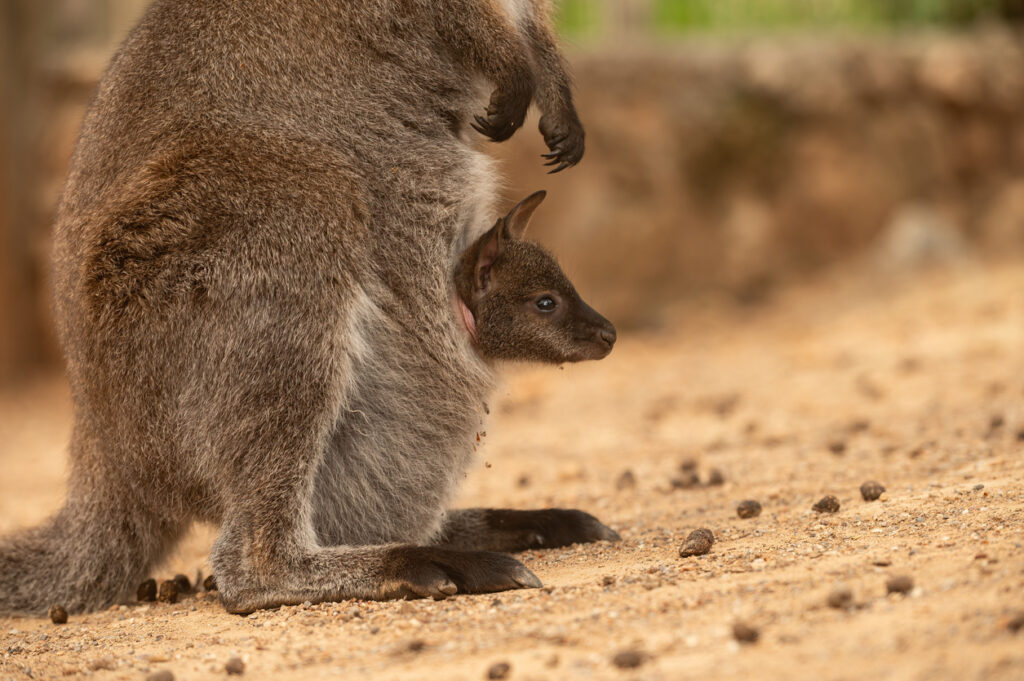
Kangaroos are marsupials, which means they give birth to extremely underdeveloped young that complete their development in their mother’s pouch. A newborn kangaroo, called a joey, is about the size of a jelly bean, blind, hairless, and barely formed.
This tiny creature makes an incredible journey immediately after birth, crawling from the birth canal up through its mother’s fur to reach the pouch. Once inside, it latches onto a teat, which swells in its mouth to prevent it from detaching. The joey will remain attached for weeks, growing and developing in the safety of the pouch.
What’s truly remarkable is that female kangaroos can be perpetually pregnant. They can have one joey at foot (old enough to leave the pouch but still nursing), one joey in the pouch, and one embryo in suspended development, waiting for the pouch to become available. Each joey receives milk specifically formulated for its developmental stage, as the mother can produce different types of milk from different teats simultaneously.
This reproductive strategy allows kangaroos to respond quickly to environmental conditions. In good times with abundant food and water, they can produce joeys rapidly. In drought or harsh conditions, they can pause development until circumstances improve.
They’re perfect for the Australian landscape.
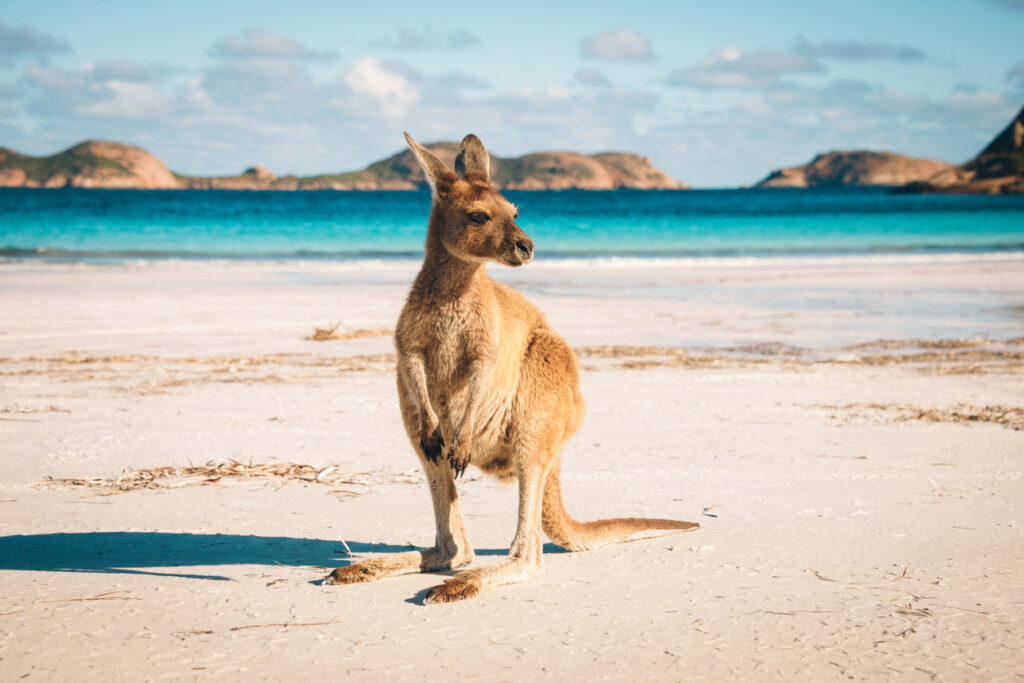
Australia is a harsh continent. It’s the driest inhabited landmass on Earth, with unpredictable rainfall, extreme temperatures, and vast distances between water sources. Kangaroos are superbly adapted to these conditions.
Their hopping locomotion allows them to cover enormous distances efficiently, crucial in a landscape where food and water can be widely scattered. They can go for long periods without drinking, getting much of their water from the vegetation they eat. In extreme heat, they lick their forearms where blood vessels are close to the skin, using evaporative cooling to regulate body temperature.
Kangaroos are primarily grazers, feeding on grasses and low vegetation. Their digestive system is similar to that of cattle and sheep, with a chambered stomach that allows them to extract maximum nutrition from tough, fibrous plants. They can survive on vegetation that many other animals would find inadequate.
Their social structure also suits the Australian landscape. Kangaroos live in groups called mobs, typically consisting of several females and their young, with one or more dominant males. These mobs offer protection through numbers, offering many eyes watching for predators, while remaining flexible enough to split up when food is scarce.
They started as a curiosity but became a national symbol.
When kangaroo specimens first reached Europe in the late 1700s, they caused a sensation. Scientists were fascinated by their unique biology. The public was captivated by their strangeness. Kangaroos appeared in zoos, menageries, and even aristocratic private collections.
However, for Australians, kangaroos were simply part of the landscape. Early settlers had complicated relationships with them; kangaroos competed with livestock for grazing, but they also provided meat and skins. Aboriginal Australians had been hunting and living alongside kangaroos for over 60,000 years, incorporating them into their culture, art, and Dreamtime stories.
The transition toward seeing kangaroos as national symbols began in earnest in the early 20th century. As Australia forged its own identity separate from Britain, the search was on for distinctly Australian symbols. What could be more Australian than an animal found nowhere else, perfectly adapted to the Australian landscape?
In 1908, kangaroos appeared on the first Australian coat of arms alongside the emu. The choice was deliberate. Both animals are known for their inability to move backwards easily, symbolising a nation always moving forward. The kangaroo has remained on every iteration of the coat of arms since.
The kangaroo is a truly sporting mascot.
Perhaps nothing cemented the kangaroo’s iconic status more than sport. Australian national teams began adopting kangaroo imagery, with the rugby league team becoming known as the Kangaroos in the 1920s. The boxing kangaroo flag, featuring a kangaroo wearing boxing gloves, became an unofficial symbol of Australian sporting prowess.
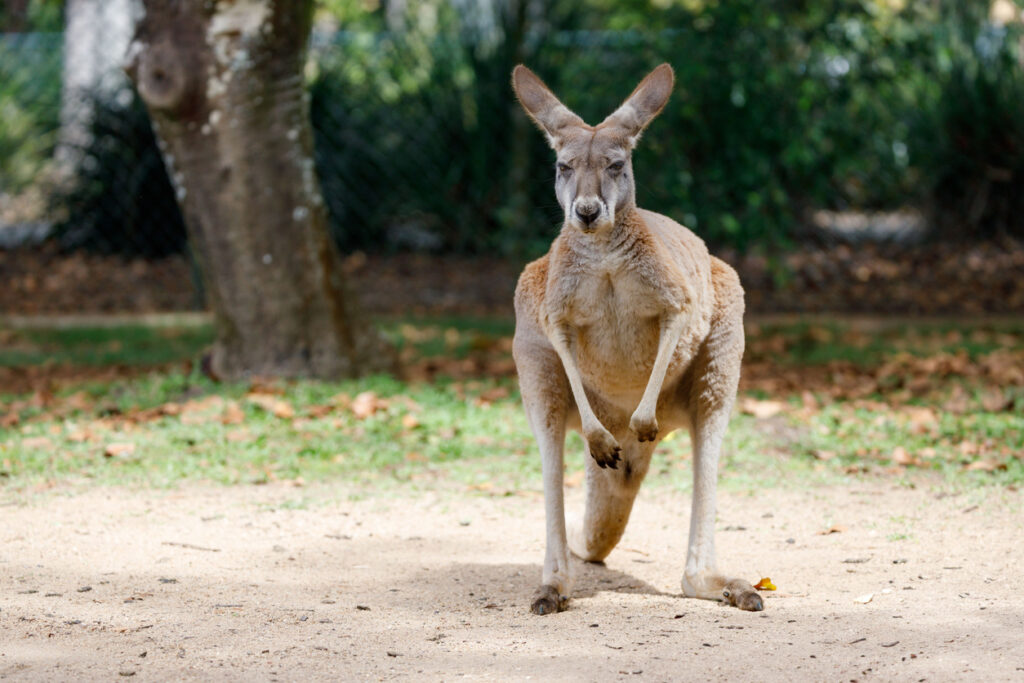
This sporting association reinforced certain characteristics Australians liked to see in themselves, such as toughness, fighting spirit, and athletic prowess. Male kangaroos do actually “box,” standing upright and grappling with rivals while delivering powerful kicks with their hind legs. These displays of strength and the kangaroo’s muscular build made them perfect sporting mascots.
The kangaroo logo appears on countless Australian products, from airlines to military insignia. Qantas, Australia’s national airline, features a kangaroo in its logo, projecting Australian identity worldwide. The Royal Australian Air Force uses a red kangaroo in its roundel.
The country’s relationship with the ‘roo is complicated.
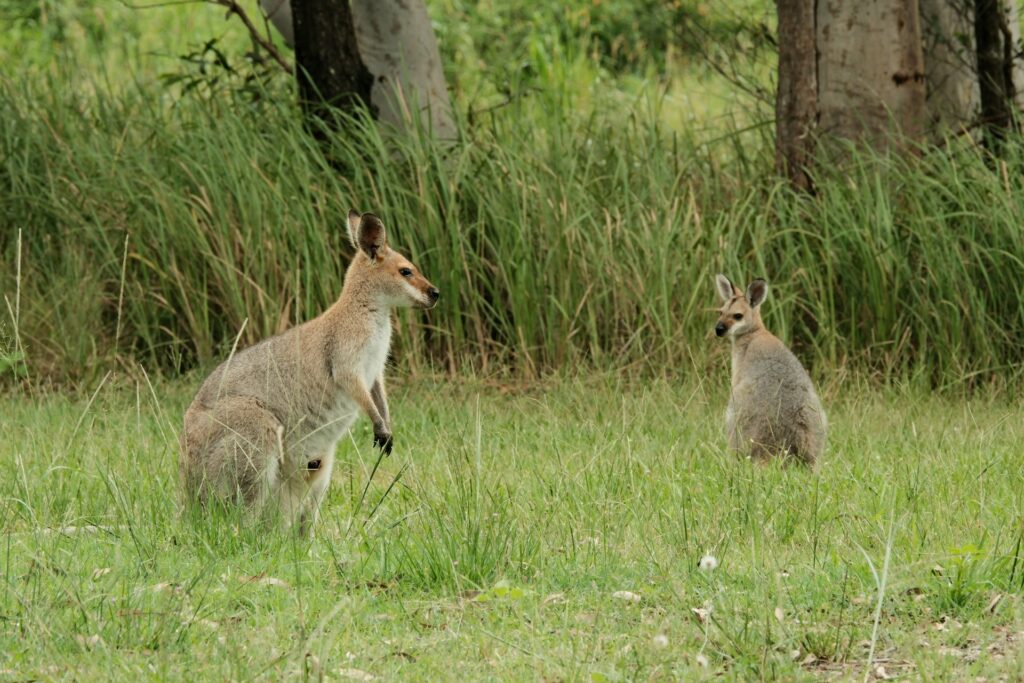
Australia’s relationship with kangaroos isn’t entirely straightforward. While they’re beloved symbols, they’re also wild animals that sometimes conflict with human interests. With the removal of many natural predators and the creation of artificial water sources for livestock, kangaroo populations in some areas have increased significantly.
This creates genuine challenges for farmers, as kangaroos compete with livestock for grazing. Road collisions with kangaroos are common and can be dangerous. Balancing conservation with management requires ongoing effort and sometimes difficult decisions.
However, kangaroos also represent sustainable practices. Some Australians argue that kangaroo meat is an environmentally friendly protein source, as kangaroos have a much lower environmental impact than cattle or sheep, requiring no additional land clearing, producing less methane, and being naturally adapted to Australian conditions.
They’re a big part of popular culture.
Kangaroos have hopped their way into global popular culture in ways few animals have. From Skippy the Bush Kangaroo, the beloved 1960s television series, to Roo from Winnie the Pooh, to the Kangaroo Jack films, these marsupials have entertained generations.
Tourism marketing heavily features kangaroos, and for many international visitors, seeing wild kangaroos is a bucket-list experience. Wildlife parks and sanctuaries across Australia offer opportunities to observe and sometimes interact with kangaroos, making them accessible to millions of tourists annually.
This global recognition means that kangaroos have become not just Australian icons, but international symbols of Australian wildlife and wild places. They represent the unique biodiversity that evolved on an isolated continent.
Conservation and coexistence are the focus of World Kangaroo Day.

World Kangaroo Day celebrates kangaroos while also promoting awareness of conservation and coexistence challenges. While most kangaroo species are not threatened, they face pressures from habitat loss, climate change, and human development.
Some smaller macropod species are endangered or have become extinct. The conservation lessons learned from these losses inform how we manage more common kangaroo species. Maintaining habitat corridors, protecting breeding areas, and reducing road mortality all contribute to long-term kangaroo conservation.
Education programs teach people how to coexist with kangaroos: how to drive safely in kangaroo areas, what to do if they encounter an injured kangaroo, and how to appreciate these animals while respecting their wild nature. Wildlife rescue organisations care for injured and orphaned joeys, with many volunteers dedicating themselves to kangaroo welfare.
What makes them so special, really?
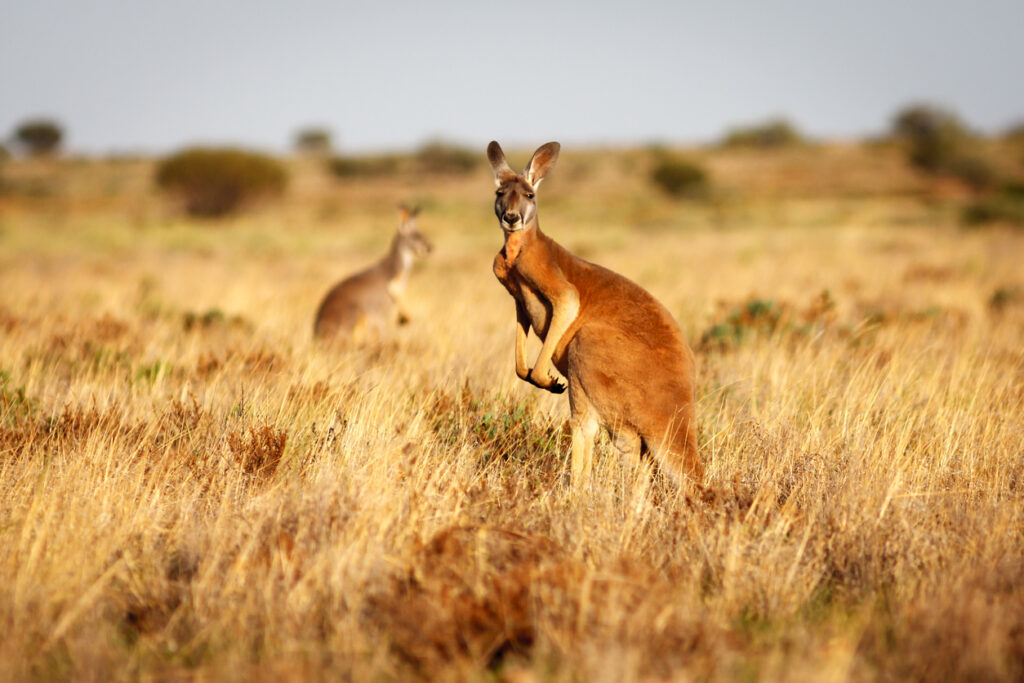
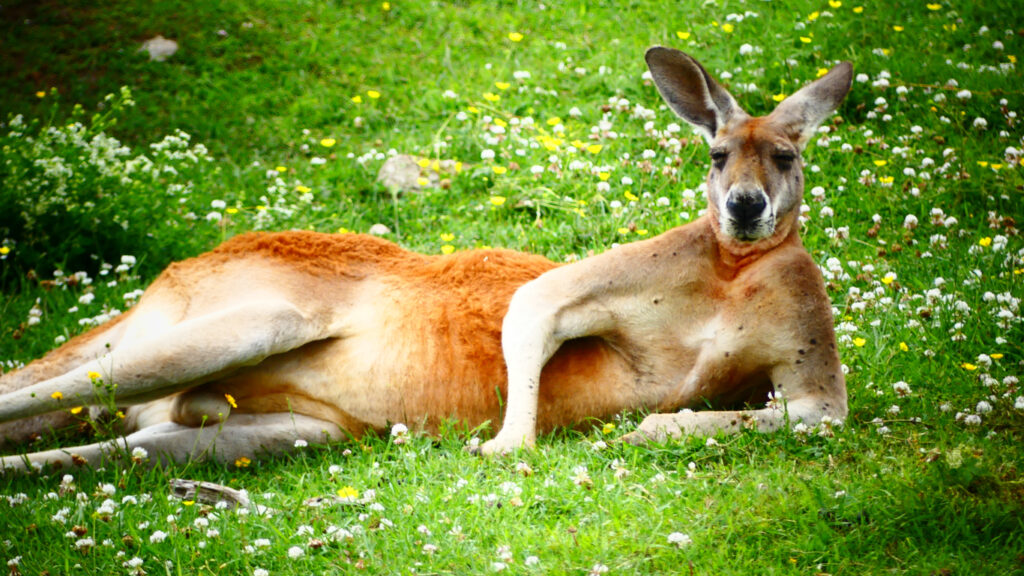
Beyond their iconic status and unique biology, there’s something inherently appealing about kangaroos. Perhaps it’s their gentle faces and large, expressive eyes. Perhaps it’s watching a joey peek out from its mother’s pouch. Perhaps it’s the grace of a mob bounding across the landscape in the golden light of an Australian sunset.
Kangaroos represent something wild and free. Despite living alongside humans for over 200 years of European settlement, they remain fundamentally wild animals, following ancient patterns, adapted to ancient landscapes. They haven’t been domesticated or fundamentally changed by human presence.
They also represent resilience. Kangaroos have survived ice ages, megafauna extinctions, and dramatic climate changes over millions of years. They’ve adapted to one of the harshest continents on Earth and thrived. That resilience resonates with Australians who see their own history of surviving and thriving in challenging conditions.
How people celebrate World Kangaroo Day wherever they are in the world.

World Kangaroo Day offers an opportunity to appreciate these remarkable animals. Schools run educational programs about kangaroo biology and conservation. Wildlife organisations use the day to raise awareness and funds for rescue and research programs. Zoos and sanctuaries host special events where people can learn about and observe kangaroos.
For those lucky enough to live in or visit kangaroo habitat, the day is a reminder to appreciate the privilege of sharing space with these animals. Early morning or late afternoon drives in rural areas might reveal mobs grazing peacefully or joeys playing while their mothers feed.
Social media fills with kangaroo photos, videos, and facts. People share their kangaroo encounters, from seeing them in the wild to visiting wildlife sanctuaries. The day creates a global conversation about these uniquely Australian animals.
Kangaroos are one of the most important creatures on Earth.

Kangaroos matter for many reasons. Ecologically, they play important roles in Australian ecosystems as grazers and prey animals. Economically, they support tourism and various industries. Culturally, they’re irreplaceable symbols of Australian identity.
But perhaps most importantly, kangaroos remind us that Earth still has wild places and wild animals. They represent the possibility of coexistence between humans and wildlife. They show that with understanding and effort, we can share landscapes with remarkable creatures.
World Kangaroo Day celebrates all of this: the biology, the symbolism, the challenges, and the joy these animals bring. It’s a day to recognise that Australia gave the world something special in kangaroos, and to commit to ensuring they continue hopping across Australian landscapes for generations to come.
So on October 24th, take a moment to appreciate the kangaroo. Learn something new about them. Support conservation efforts. And maybe, if you’re very lucky, spot one bounding across the landscape, a living symbol of Australia and a reminder of nature’s endless creativity.