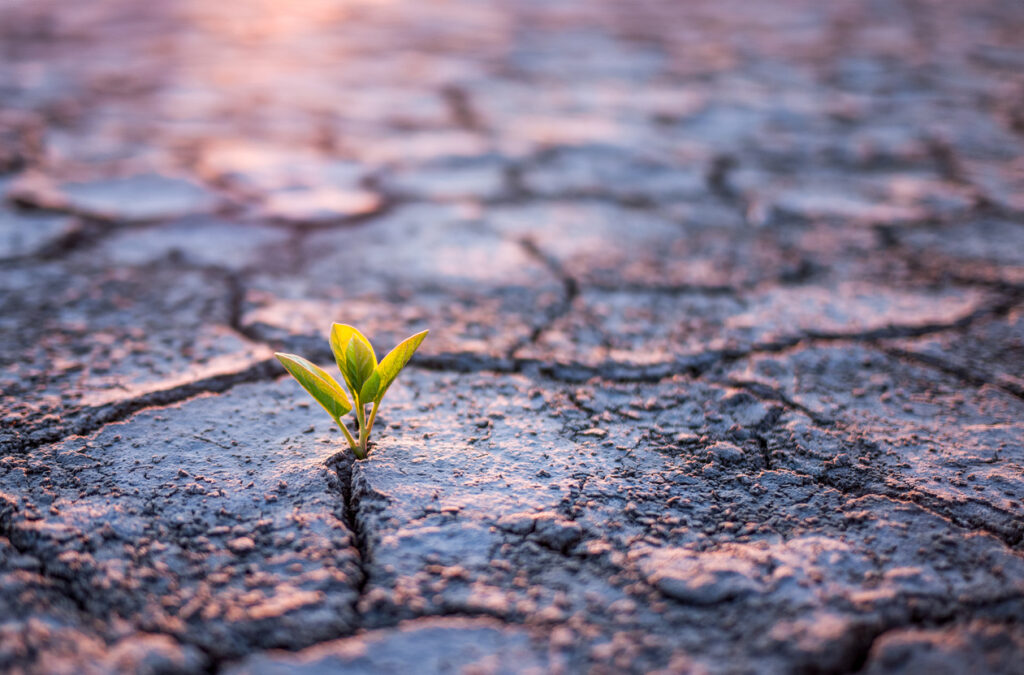
It might sound like something out of science fiction, but a team at the University of Kent has managed to grow tea plants in soil designed to mimic the surface of the Moon. The researchers used Dartmoor Tea saplings and planted them in lunar soil simulant under carefully controlled conditions of light, temperature, and humidity. According to The Register, the tea didn’t just sprout—it actually flourished, putting down healthy roots and producing leaves that compared well with plants grown in Devon earth. By contrast, saplings planted in Martian soil simulant withered and failed to establish, suggesting that while the Moon may be viable for certain crops, Mars will present far tougher challenges.
The work was led by Professor Nigel Mason and Dr Sara Lopez-Gomollon, with support from students and outside collaborators. It was as much a cultural experiment as a scientific one. Tea, after all, is central to British life, and proving it can be grown in extraterrestrial soil isn’t just about food security in space. It’s about carrying traditions into new worlds. For astronauts who might one day live for months on lunar bases, the ability to sit down with a cup of tea could make the difference between survival and a sense of belonging.
What the results reveal
The study compared three types of soil: the lunar simulant, a Martian simulant, and natural Devon soil as a control. In the lunar soil, plants anchored themselves successfully, showing strong leaf development and healthy physiological responses. The Martian simulant, however, proved too toxic and lacking in nutrients, and seedlings quickly failed.
The next stage of the project is to examine the molecular detail: how plants adapt at the genetic level, whether harmful substances accumulate in the leaves, and what adjustments might be needed to boost yield. That matters because the lunar simulant is still only an approximation. Real regolith will include sharp mineral grains, exposure to radiation, and more extreme temperature shifts. Even so, the early results suggest that lunar agriculture may be far more achievable than previously thought.
Beyond space exploration, the findings are relevant to Earth. Many regions here are dealing with degraded soil, poor water retention, or increasing salinity. If tea can take root in a soil designed to be as inhospitable as the Moon’s, scientists may be able to apply similar insights to farming on marginal land, creating crops better suited to survive in the face of climate change.
What this means for space and for Earth, if anything
For those planning the future of lunar exploration, the experiment answers a pressing question: can humans sustain themselves without constant resupply from Earth? Staple crops like potatoes and wheat are usually the first candidates for off-Earth farming, but introducing something like tea addresses psychological as well as nutritional needs. Long missions are gruelling, and small comforts help to maintain morale.
There are hurdles to overcome. Scaling up production from a handful of saplings to a plantation that could supply a crew is no small task. Greenhouse infrastructure, soil processing, and energy use would all be substantial. Scientists also need to ensure that lunar crops are safe for consumption, ruling out any harmful mineral build-up.
Still, the experiment is a reminder that space research doesn’t just serve space. Technologies developed for extraterrestrial greenhouses, such as efficient lighting, water recycling, and soil treatments, often find their way back into Earth-based agriculture. They could improve yields in drylands, reduce energy use in greenhouses, or help rehabilitate depleted soils.
The Kent team’s tea plants are, at this stage, only a scientific curiosity. But they also carry a message: survival in extreme environments is possible, and culture matters as much as calories. A future astronaut might one day stand on the Moon, sip from a mug, and think of home, not because tea is essential, but because it makes us human.