
Advances in technology are turning science fiction into genuine possibilities for spotting alien life sooner than we once imagined. From clever ways of listening for signals to detecting chemical clues in distant skies, bold ideas are reshaping how and where scientists search. Here are 12 approaches that could bring us closer to finding evidence of extraterrestrial life.
1. Listening from Earth’s shadow
Some scientists now suggest using Earth’s shadow as a listening post for alien signals. The reasoning is that when Earth blocks the Sun’s noise, signals from beyond might be easier to pick up. Positioning instruments in these predictable alignments could filter out interference and reveal faint technosignatures we would otherwise miss.
With more sensitive telescopes being developed, this strategy could transform how we monitor the skies. It transforms the search from simply scanning everywhere to targeting specific windows when signals are most likely to come through clearly.
2. Targeting where our own signals travel
For decades, Earth has been leaking powerful radio signals into space. By analysing where most of these transmissions are directed, such as towards Mars and spacecraft near certain points in orbit, researchers realised that alien watchers might notice them too. By reversing this logic, we can focus our searches on star systems directly in line with our strongest emissions.
Taking a more targeted approach narrows the vastness of space into more realistic zones. It means we can prioritise observing stars within a few dozen light-years that sit along the pathways our own signals have taken.
3. Timing searches with planetary alignments
Another idea builds on the fact that intelligent beings might direct signals when their planets line up with others. Just as we beam radio messages towards our spacecraft during alignments, alien civilisations may use similar tactics. By concentrating on exoplanets that cross our line of sight edge-on, astronomers can improve the odds of catching a deliberate broadcast.
This method uses geometry and timing as filters, making the search more efficient. Instead of listening constantly in every direction, scientists can watch the moments when signals are most likely to be sent.
4. Detecting powerful electromagnetic leaks

It is not only deliberate signals that could give aliens away. Just as Earth’s airports, radars, and military systems produce massive amounts of electromagnetic power, alien societies might also leak strong signals unintentionally. These emissions can travel far into space and stand out against background noise.
By training telescopes to detect these unplanned leaks, scientists can expand the range of possible technosignatures. This widens the net from waiting for a friendly hello to spotting everyday by-products of advanced technology.
5. Searching for laser beacons
Radio waves are not the only form of communication to watch for. A global project called LaserSETI is working on spotting short, bright pulses of light that could be artificial. These flashes would be more precise than natural starlight and might represent attempts at interstellar signalling.
With instruments monitoring the sky continuously, the hope is to catch rare, fleeting pulses that standard observatories might miss. If successful, this could open a whole new window into how alien technology might communicate.
6. Looking for megastructures around stars
Beyond signals, scientists are also hunting for signs of alien engineering on massive scales. The idea of a Dyson sphere — a structure built to capture the energy of a star — may sound far-fetched, but unusual patterns in starlight or heat output could indicate something artificial at work.
Thanks to advances in sensors and computing power, researchers are better equipped to spot anomalies that cannot be explained by natural processes. Even if we never find such megastructures, the search expands the scope of what counts as evidence of intelligent life.
7. Focusing on exotic planets with thick atmospheres
Instead of looking only at Earth-like worlds, scientists are turning to planets with hydrogen-rich atmospheres and vast oceans, sometimes called Hycean planets. These environments may support forms of life that produce different chemical markers, such as unusual gases detectable with modern telescopes.
Spotting these chemical traces could be quicker and easier than searching for traditional oxygen or methane signatures. By widening the criteria for habitability, researchers may dramatically increase the odds of finding alien biosignatures.
8. Tracking strange gases on promising exoplanets

Recent telescope studies have hinted at complex chemicals in the atmospheres of certain exoplanets. One compound of interest is dimethyl sulphide, which on Earth is only produced by marine organisms. Detecting it alongside other gases such as methane and carbon dioxide raises intriguing possibilities.
Although results are still being verified, the discovery shows how much more powerful modern instruments have become. Even faint fingerprints in distant atmospheres can now be examined for clues that might point to alien biology.
9. Using polarised light to detect life
Life on Earth interacts with light in distinctive ways, twisting it into circular patterns. A project known as MERMOZ is developing instruments that can detect this unique signal of biological activity from a distance. Early tests from aircraft have already confirmed the method’s potential.
If deployed on satellites or deep-space telescopes, this approach could scan entire planets for the telltale spiral of light that only living matter creates. It is a direct way of looking for the universal signature of biology.
10. Training AI to filter out interference
One of the biggest barriers to the search for extraterrestrial life is noise from human technology. Radio telescopes pick up endless interference from satellites, phones, and aircraft, which can mask faint signals from space. Machine learning is now being used to filter out this clutter automatically.
By cleaning up the data, AI allows genuine signals to stand out more clearly. This speeds up the search and makes it more likely that a real technosignature will not be overlooked in the noise.
11. Probing atmospheres with infrared interferometry
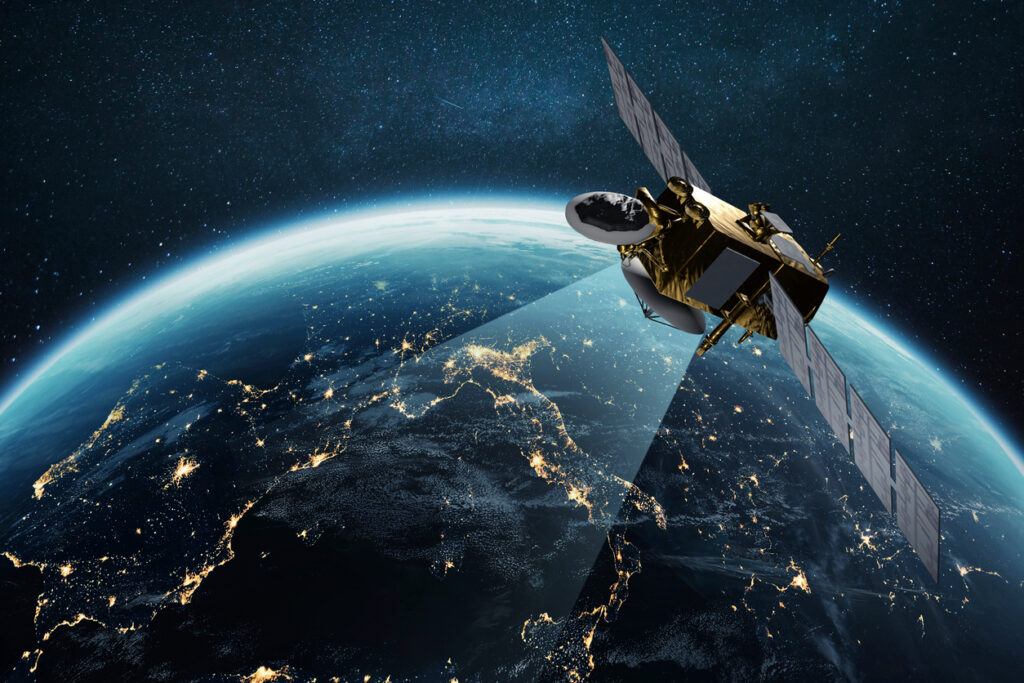
Future missions are being designed to look directly into the atmospheres of distant worlds. One ambitious proposal is to use a mid-infrared interferometer in space, capable of detecting biosignatures such as methane, ozone, or water vapour on Earth-sized planets.
This technology would provide far greater sensitivity than current telescopes. By targeting planets similar in size and temperature to Earth, scientists could dramatically improve the odds of finding habitable environments.
12. Searching close to home for artefacts
Not all alien evidence needs to be light-years away. Some researchers argue that unexplained objects orbiting Earth or passing through the Solar System could be signs of non-human technology. New projects now use telescopes, radar, and AI to catalogue and study these possibilities systematically.
Even if most turn out to be natural or man-made, the approach ensures that nothing unusual is ignored. It also recognises that the first evidence of alien intelligence may not come from signals, but from physical artefacts in our own cosmic neighbourhood.