At first glance, whip scorpions look like the stuff of nightmares.

They’ve got enormous pincers, long legs, and a tail that looks like it could deliver a nasty sting. However, despite their fearsome appearance and name, they’re not nearly as dangerous as people imagine. In fact, whip scorpions are gentle giants in the arachnid world. They’re ancient, secretive, and far more helpful than harmful.
These odd-looking creatures are part of nature’s clean-up crew, quietly keeping pest numbers in check while going about their nocturnal business. They might look like something out of a fantasy novel, but in reality, they’re just another clever adaptation in the endlessly inventive story of evolution.
Here’s what makes whip scorpions such fascinating (and unfairly misunderstood) creatures.
They’re not true scorpions.

Despite the name, whip scorpions aren’t true scorpions at all. They belong to a separate group of arachnids called Thelyphonida, which makes them distant relatives rather than close cousins. Like scorpions, they have eight legs and a hard exoskeleton, but that’s where the similarities largely end.
They don’t have venom glands, they don’t sting, and they don’t use their tails for attack. In fact, they’re closer to spiders in terms of structure and behaviour. The confusion mostly comes from their looks, as they have that scorpion-like body shape and menacing tail. However, beneath the tough exterior, they’re harmless, shy, and far more likely to scurry away than strike.
Their tails aren’t weapons.

The long, whip-like tail that gives them their name looks like something you’d want to keep your distance from. It flicks, it waves, and it seems primed to sting. But the truth is, it’s completely harmless.
That “whip” isn’t a weapon at all. It’s a sensory tool, used to explore their surroundings in the dark. Whip scorpions are nocturnal and rely heavily on touch and vibration rather than sight. The tail acts like an extra antenna, helping them detect prey, obstacles, or even changes in air movement. It’s nature’s version of a cane, not a sword.
They spray vinegar when threatened.

Whip scorpions don’t sting or bite to defend themselves, but that doesn’t mean they’re defenceless. When threatened, they can release a spray of acetic acid, which is the same chemical that gives vinegar its sharp smell and taste. That’s why they’re sometimes called “vinegaroons.”
The spray doesn’t do much harm to people, but it’s enough to make predators think twice. If you get too close, you might catch a whiff of that vinegary scent. It can sting a little if it hits your eyes or open skin, but it’s hardly dangerous. It’s more of a chemical warning shot than a serious weapon, and it works surprisingly well.
Their pincers do the real work.
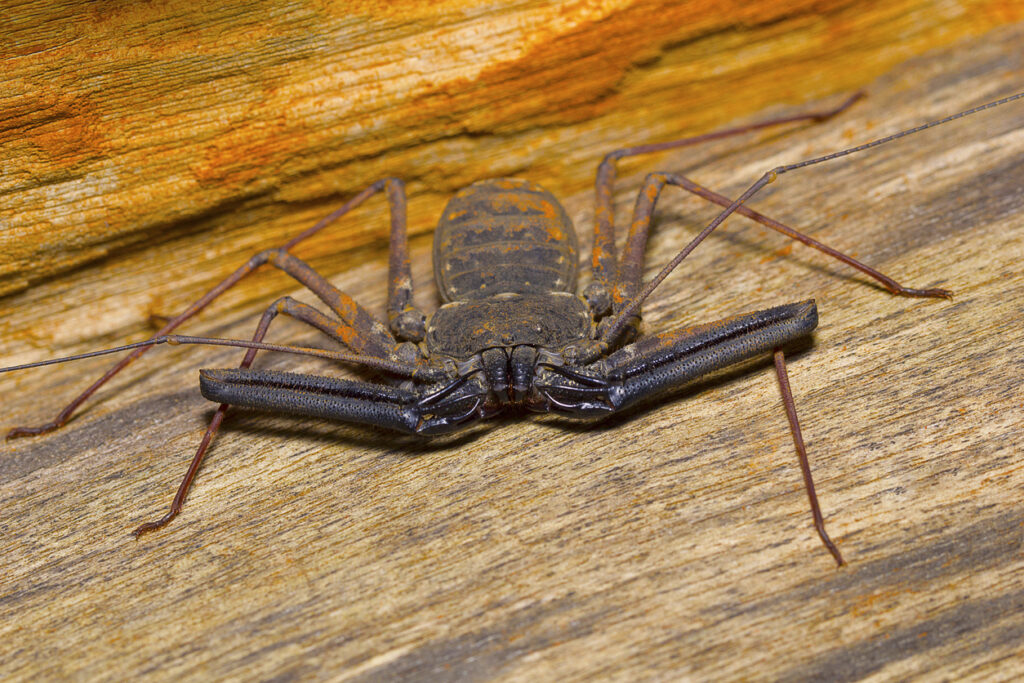
Instead of relying on venom, whip scorpions depend on brute strength and precision. Their large pincers, technically called pedipalps, are used for grabbing and crushing prey. They feed mostly on insects, worms, and other small invertebrates, though some of the larger species have been known to tackle small frogs or lizards.
When they hunt, they use their front legs and tail to sense movement, then strike quickly with those powerful pincers. For humans, the worst that can happen is a sharp pinch if one feels cornered, but it’s not strong enough to break skin. Their claws are built for catching dinner, not picking fights.
They live underground or in dark spaces.
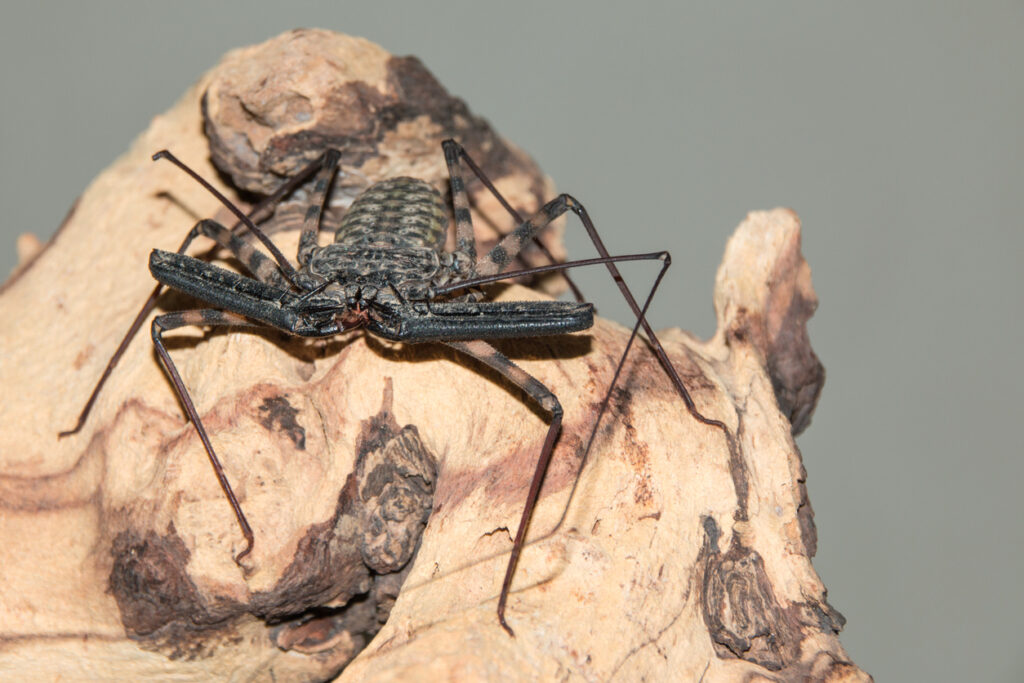
Whip scorpions spend most of their lives hidden away. They’re nocturnal, which means they only come out at night, and they prefer damp, dark places such as burrows, caves, or under logs and rocks. During the day, they hide to avoid predators and to keep their bodies from drying out.
If you ever spot one in the wild, it’s usually pure luck, or bad timing on their part. They’re shy and slow-moving, so even though they look intimidating, they’re far more interested in avoiding you than engaging with you.
They play a role in pest control.

It might sound strange to think of something that looks like a mini-monster being “helpful,” but whip scorpions do a great job of keeping insect populations balanced. They feed on cockroaches, crickets, termites, and beetles, all of which are creatures that can become a nuisance if left unchecked.
So, if you happen to live somewhere warm enough to have whip scorpions nearby, consider them your unpaid pest control team. They might not be pretty, but they’re doing their bit to keep ecosystems healthy and homes bug-free.
They can grow surprisingly large.
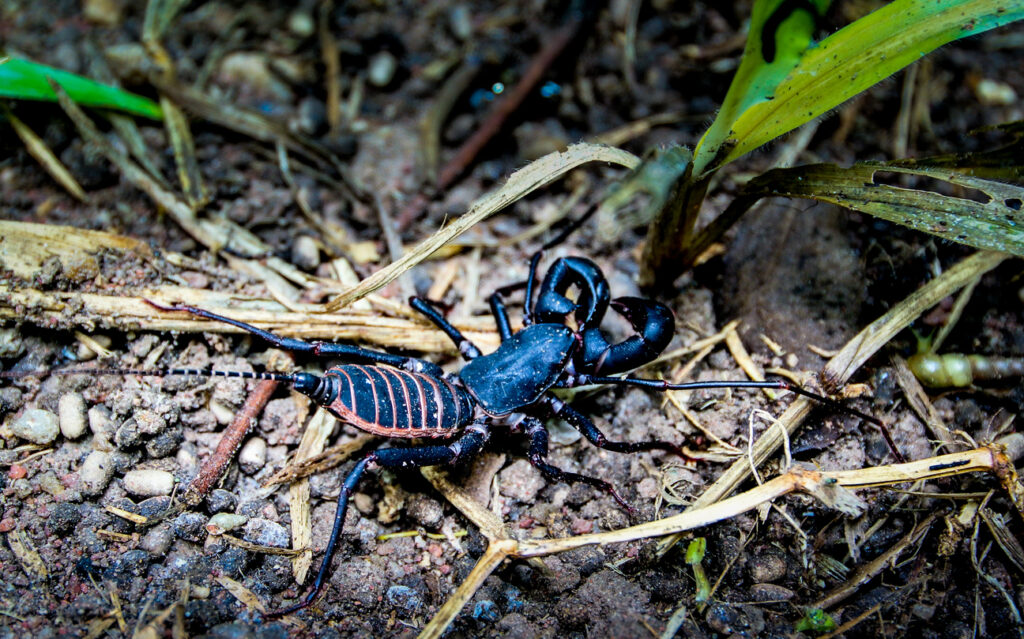
Depending on where you find them, whip scorpions can range from a few centimetres to over eight centimetres long, and that’s not including the tail. The largest species live in tropical regions, where food is abundant and temperatures stay warm all year round.
Their size makes them look far scarier than they are. In reality, they’re slow, careful movers, and despite their armour-like bodies, they’re vulnerable to predators. Size helps them catch prey and defend themselves, but it’s never used aggressively toward people.
They live in warm regions around the world.

Whip scorpions are found in tropical and subtropical areas all over the planet, from parts of Africa and South America to India, Southeast Asia, and the southern United States. They love humidity and warmth, so they thrive in places with consistent moisture and plenty of insect life.
In the UK, you’re unlikely to stumble across one in the wild, which makes them even more mysterious to us. When people do encounter them abroad, it’s usually by accident, perhaps lifting a log or walking through a damp forest at night.
They don’t bite without reason.
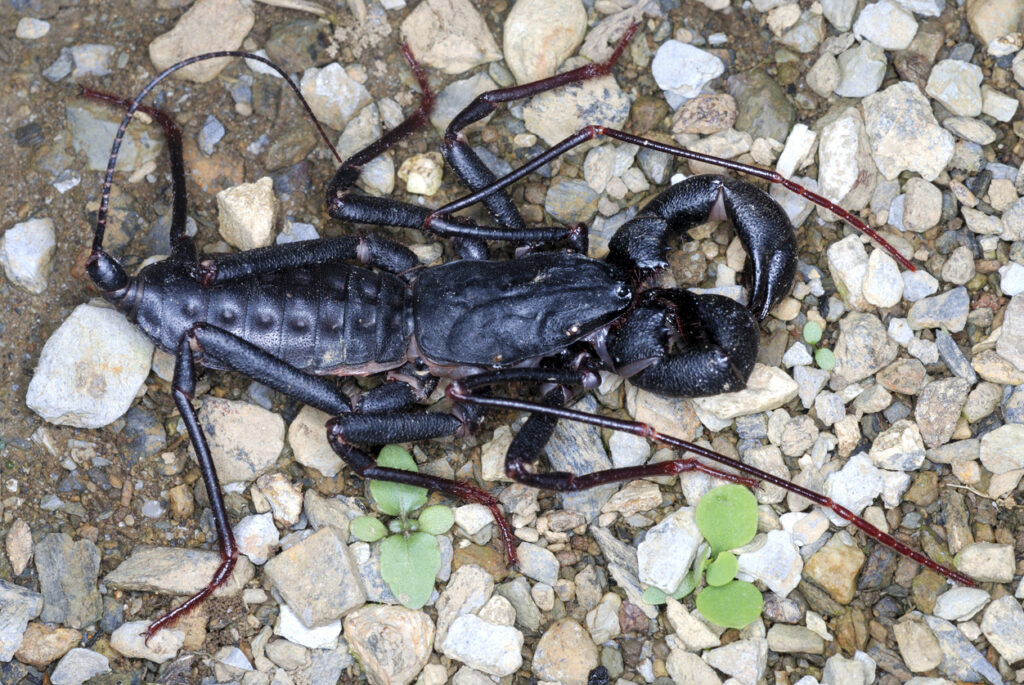
Whip scorpions get a bad reputation because of their looks, but they’re actually non-aggressive. If disturbed, their first instinct is to run, not fight. They only pinch if they feel trapped or handled roughly.
Most people who’ve come across them describe them as surprisingly calm once they realise you’re not a threat. Like many misunderstood creatures, their scary appearance is simply nature’s way of saying “don’t mess with me,” not “I’m out to get you.”
They’re older than dinosaurs.

Fossils show that whip scorpions have been crawling around for over 300 million years, and that’s tens of millions of years before the first dinosaurs appeared. Back then, some of their ancient relatives were enormous, nearly the size of dinner plates.
The fact that modern whip scorpions still look so similar to their prehistoric ancestors tells you how well their design works. When a species hardly changes for hundreds of millions of years, it’s a sign it’s already perfected the art of survival.
They’re sometimes kept as pets.

Believe it or not, whip scorpions are fairly popular in the exotic pet world. Their lack of venom and calm temperament make them easier to care for than true scorpions or large spiders. They don’t bite, they don’t sting, and they’re fascinating to watch at night when they come to life.
That said, they still require specific care, including controlled humidity, heat, and space to burrow. They’re not pets to cuddle, but they’re perfect for anyone curious about the strange side of the animal kingdom.
They prove looks can be deceiving.
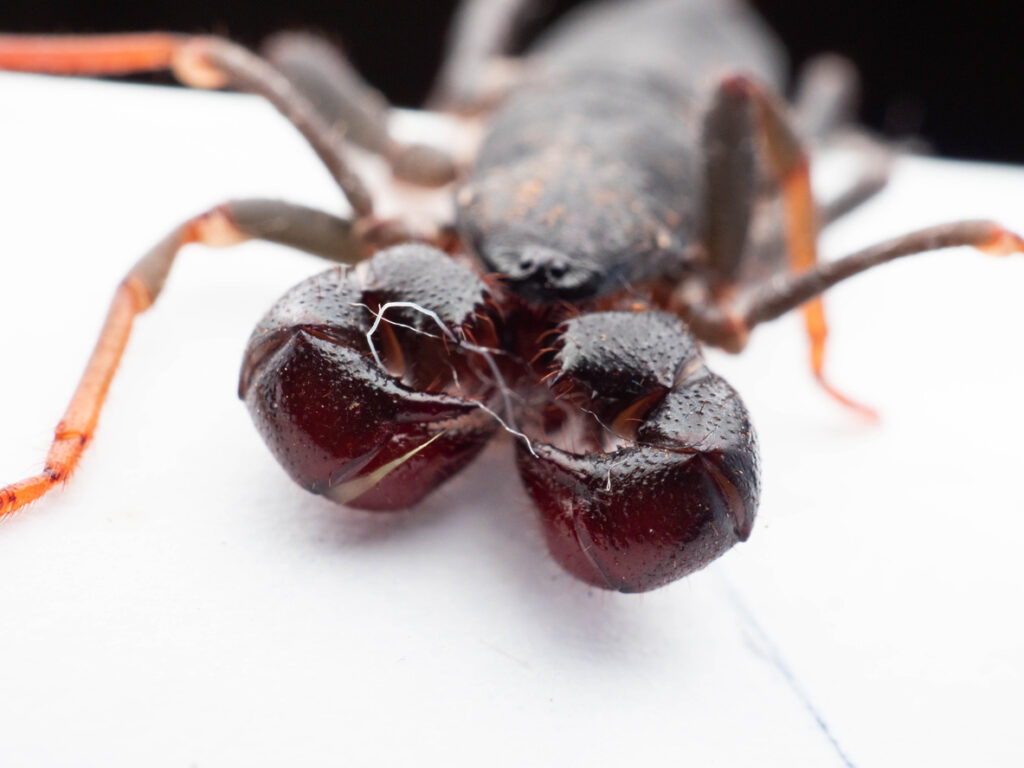
Whip scorpions are a perfect example of how nature loves to trick us. They look like a cross between a scorpion and a spider, armed and ready for battle, but they’re harmless little hunters who just want to be left alone.
They remind us that the creatures we fear most are often the ones we understand the least. Once you know their story, fear turns to fascination. After all, sometimes, the scariest-looking animals are the ones doing the quiet, important work that keeps the world turning.