Nature truly is full of some weird and wild creatures, and tent caterpillars top the list.
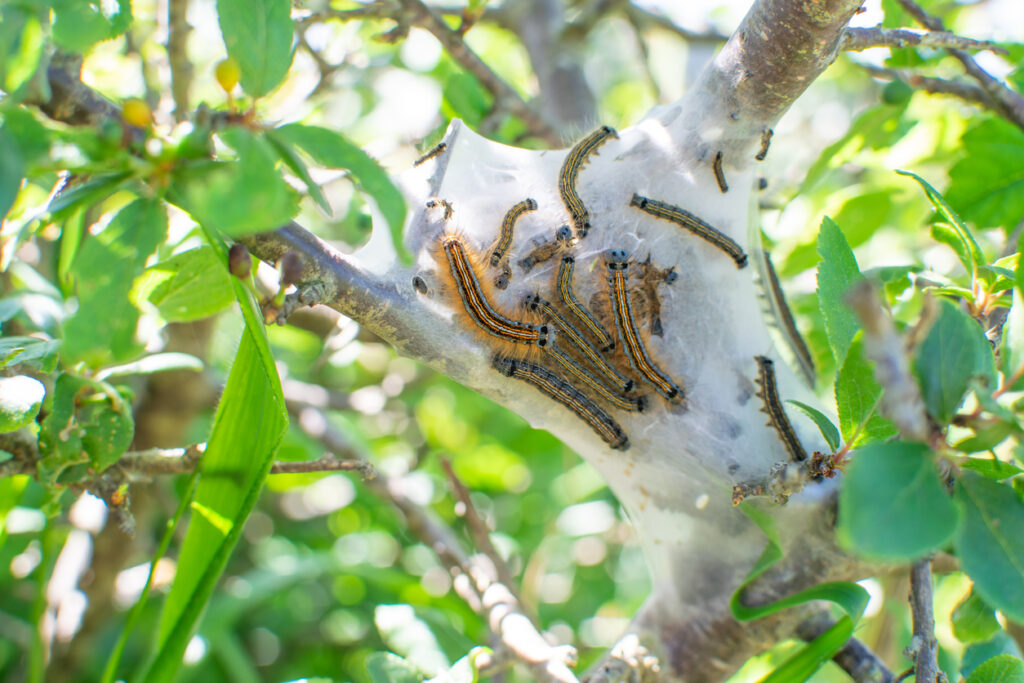
If you’ve ever wandered past a hedgerow or woodland in spring and spotted what looks like a silvery web draped across a branch, chances are you’ve found a tent caterpillar colony. At first glance, they look a bit eerie, like a mass of wriggling larvae huddled inside a gauzy web that shimmers in the light, but there’s far more going on than meets the eye.
Tent caterpillars are some of nature’s most organised little insects. They build communal homes, work together to find food, and even seem to communicate in surprisingly clever ways. They’ve been both admired and disliked for centuries: admired for their teamwork and resilience, disliked for the damage they can cause to trees when their numbers boom.
However, behind their slightly unsettling appearance lies a world of strange behaviour, biological precision, and environmental importance. Whether you think of them as pests or tiny architects, tent caterpillars are far more complex than you might expect.
They build communal silk tents for protection.
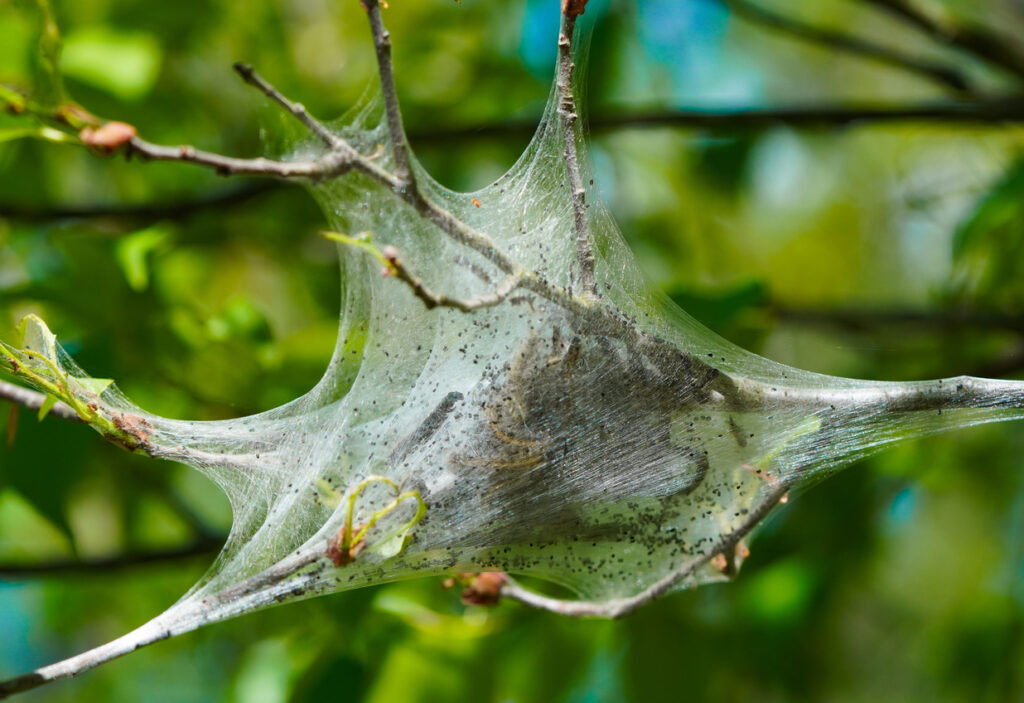
Tent caterpillars spin these massive webbed shelters in tree branches where hundreds of siblings hang out together between feeding times. The tent isn’t just for show, it’s like a protective fortress that shields them from predators and harsh weather.
The silk structure can get surprisingly large, sometimes covering entire sections of branches. They’ll retreat inside during the day to rest and digest, then head out in coordinated groups when it’s time to feed again.
They follow pheromone trails like tiny hikers.
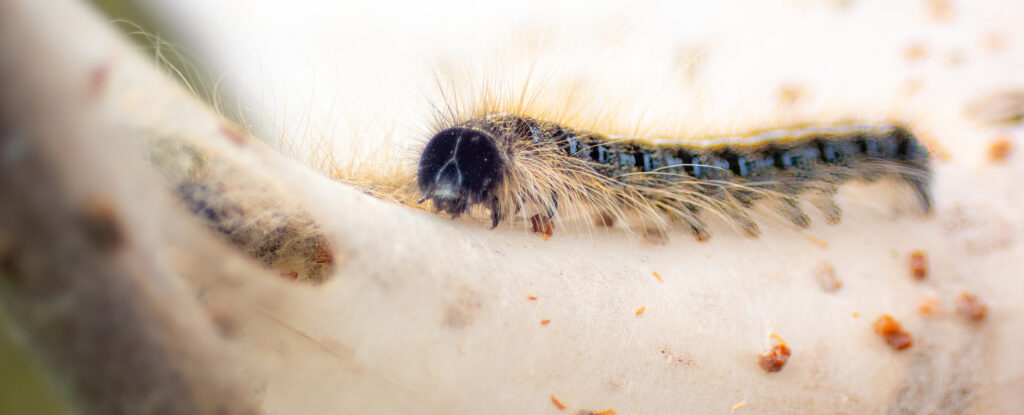
When one caterpillar finds a good food source, it lays down a chemical trail for the others to follow back to the tent. It’s basically their version of leaving breadcrumbs, except it actually works and doesn’t get eaten by birds.
The whole colony uses these scent highways to navigate efficiently between their tent and feeding spots. Stronger trails mean better food sources, so they’re constantly updating their route information through chemical communication.
They’re not actually that destructive long term.
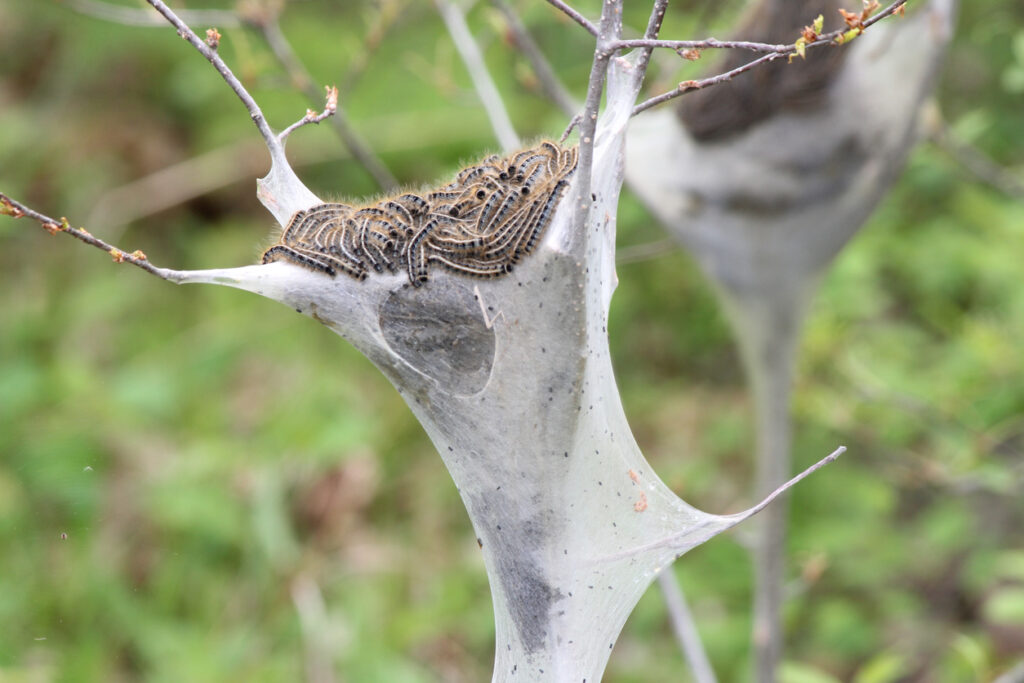
Yeah, they’ll defoliate a tree, and it looks absolutely devastating when they’re done with it. However, most healthy trees bounce back completely by growing new leaves once the caterpillars have moved on to their next life stage.
The panic around tent caterpillars is often overblown because trees are tougher than people think. Unless a tree’s already stressed or gets hit multiple years running, it’ll recover without any lasting damage from one season’s munching.
They synchronise their activities as a group.
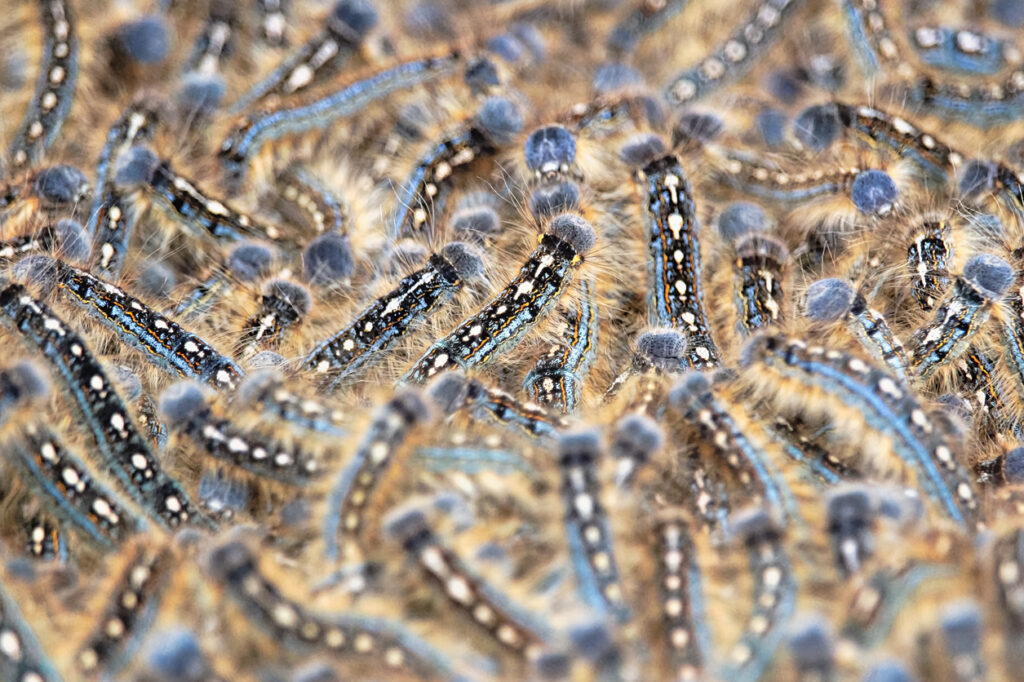
The entire colony moves, feeds, and rests on the same schedule, creating these mass exodus moments where hundreds pour out of the tent simultaneously. It’s not random, they’re responding to temperature cues and communicating through vibrations in the silk.
Their synchronised behaviour confuses predators and makes them more efficient at finding food. Working as a coordinated unit gives them survival advantages that solitary caterpillars don’t have.
Different species prefer different trees.
Eastern tent caterpillars love cherry and apple trees, whilst forest tent caterpillars go for oak and aspen, even though they don’t actually build tents. Each species has evolved alongside specific host plants and can be quite picky about what they’ll eat.
Knowing which species you’re dealing with helps predict where they’ll show up. If you’ve got fruit trees, you’re more likely to see the classic tent builders setting up camp each spring.
They can survive surprisingly cold temperatures.
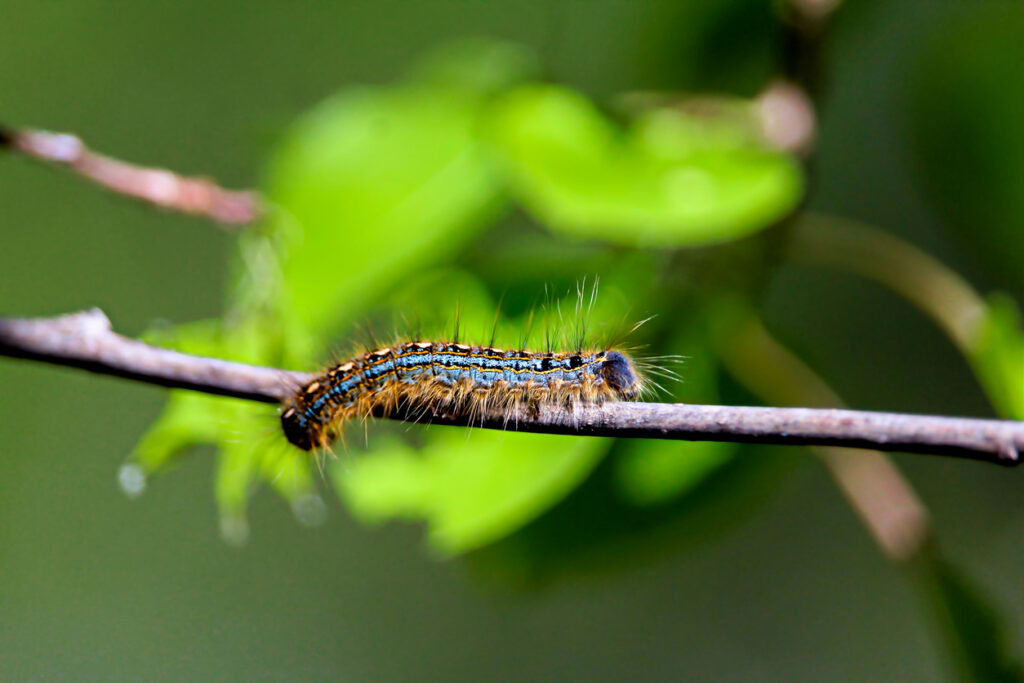
Tent caterpillar eggs overwinter on tree branches through freezing temperatures that would kill most insects. They’ve got natural antifreeze in their system that prevents ice crystals from forming and destroying their cells.
Come spring, when temperatures warm up, the eggs hatch right as trees are budding out with fresh tender leaves. The timing’s evolved to match perfectly with when their food source becomes available.
Their population explodes in cycles.
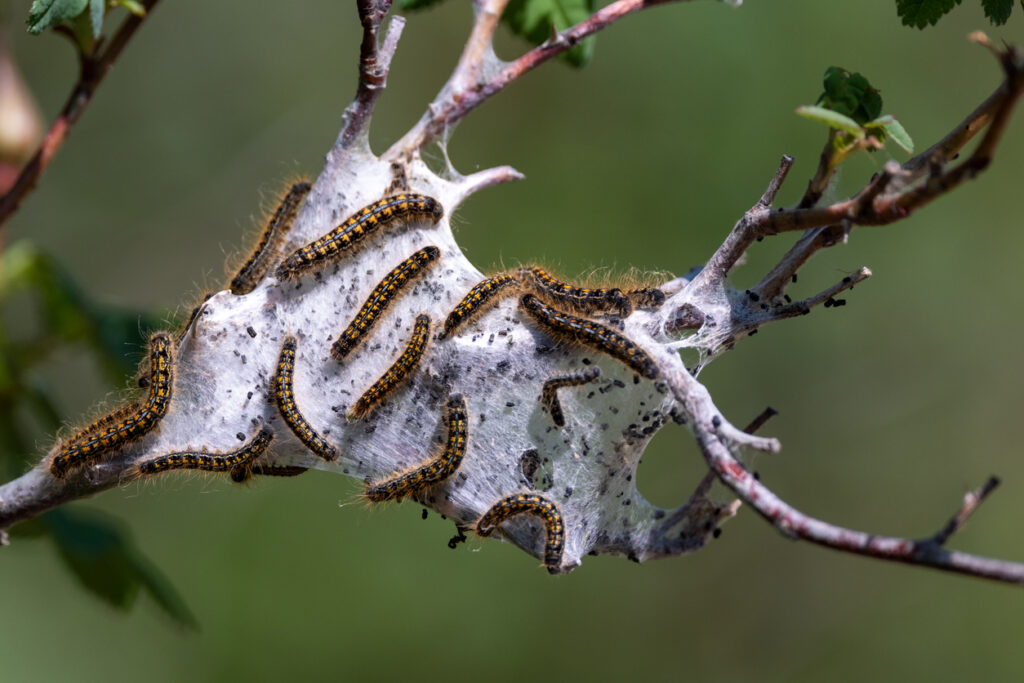
Tent caterpillar numbers boom and crash in roughly ten year patterns, with some years seeing barely any and others where they’re absolutely everywhere. Scientists aren’t entirely sure why these cycles happen, but disease and parasites probably play a role.
During outbreak years, the sheer number of caterpillars can be genuinely unsettling if you’re not expecting it. Then they’ll virtually disappear for several years before the next population surge hits.
They’re covered in defensive hairs.
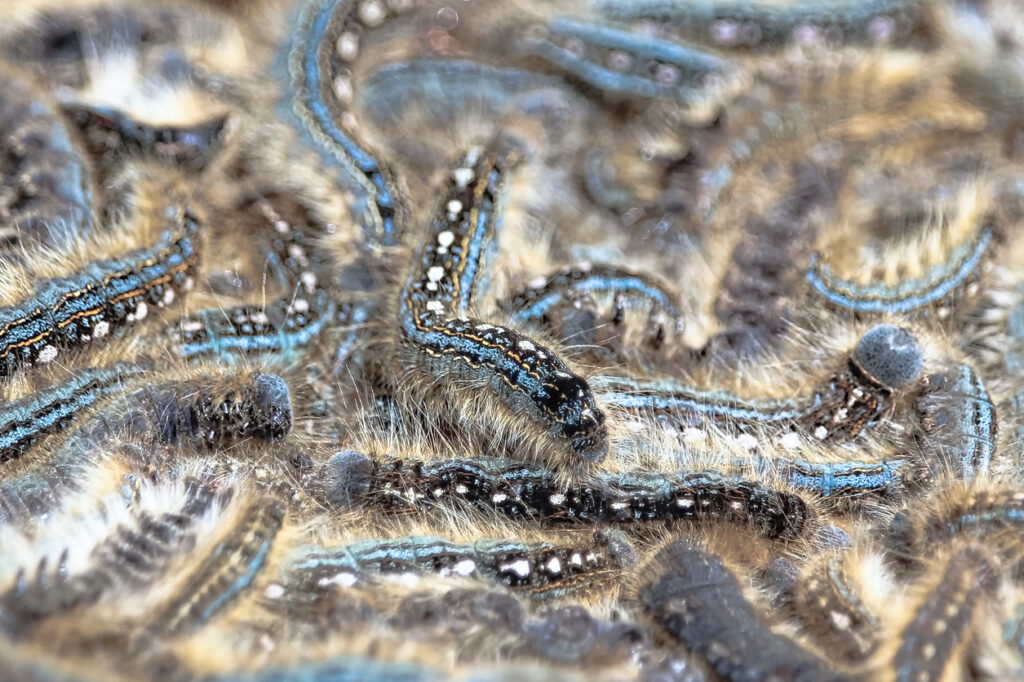
Those fuzzy bodies aren’t just for show, the hairs can cause skin irritation and allergic reactions in some people. It’s a defence mechanism against predators, who quickly learn that these caterpillars aren’t pleasant to eat.
Handling them isn’t recommended, especially if you’ve got sensitive skin. The irritation isn’t dangerous, but it’s uncomfortable enough to make you regret touching them without gloves.
Birds and wasps are their main enemies.
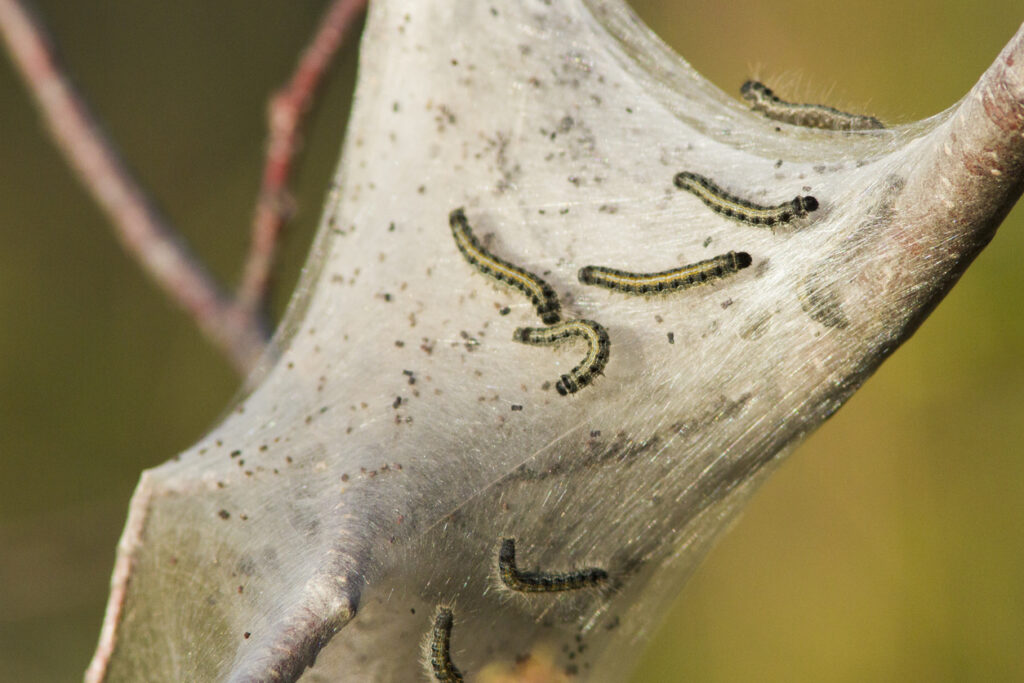
Despite their defences, plenty of predators have figured out how to eat tent caterpillars safely. Cuckoos and orioles will tear apart the tents to get at the caterpillars inside, whilst parasitic wasps lay eggs directly in their bodies.
These natural predators help keep populations in check during non outbreak years. When the balance tips and caterpillars overwhelm their predators, that’s when you get those massive population explosions.
They pupate in protected cocoons.
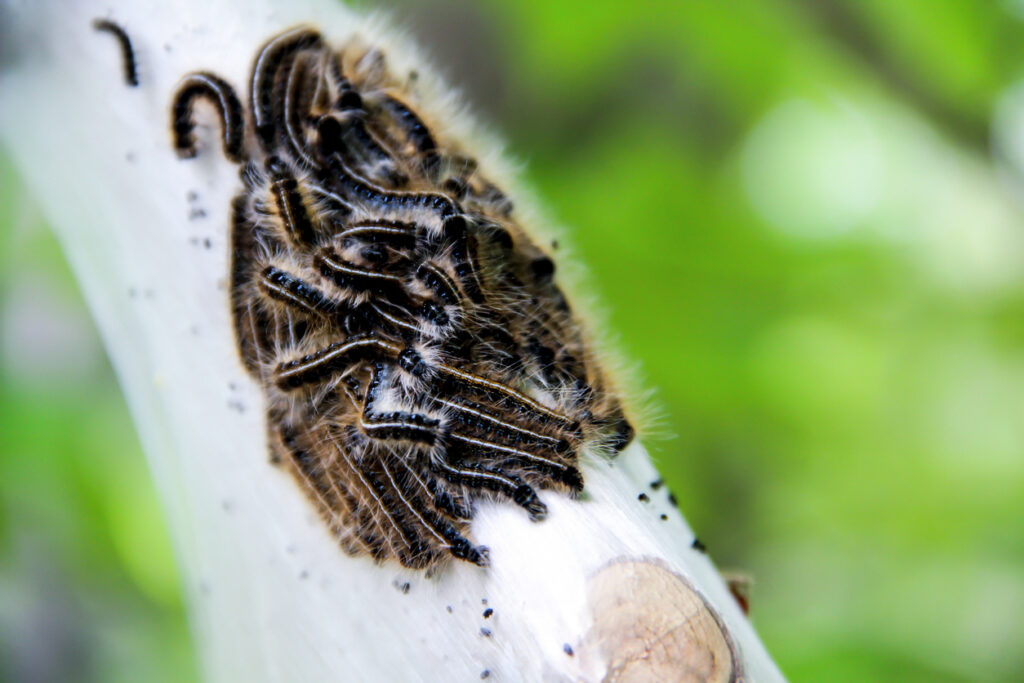
After weeks of group living and eating, each caterpillar wanders off alone to spin a cocoon in a sheltered spot. Inside that silk case, they’ll transform into moths over several weeks through complete metamorphosis.
The adult moths that emerge are actually pretty underwhelming compared to the dramatic caterpillar stage. They’re brownish, fairly plain looking, and only live long enough to mate and lay eggs for next year’s generation.
The moths don’t eat at all.
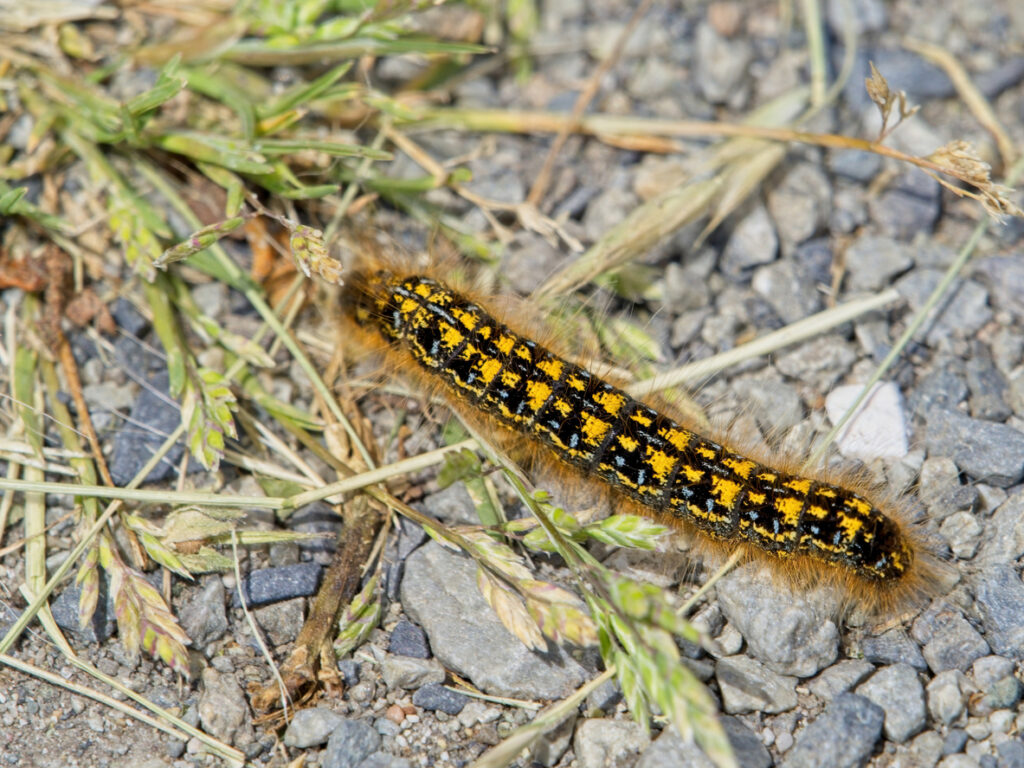
Adult tent caterpillar moths have reduced mouthparts and don’t feed during their brief adult lives. All their nutrition comes from what they ate as caterpillars, so that intensive feeding stage has to fuel both their transformation and reproduction.
They’re literally living off stored energy from their caterpillar days, which explains why the larvae are such voracious eaters. Everything depends on stockpiling enough resources during that developmental window.
They’re native and part of the ecosystem.
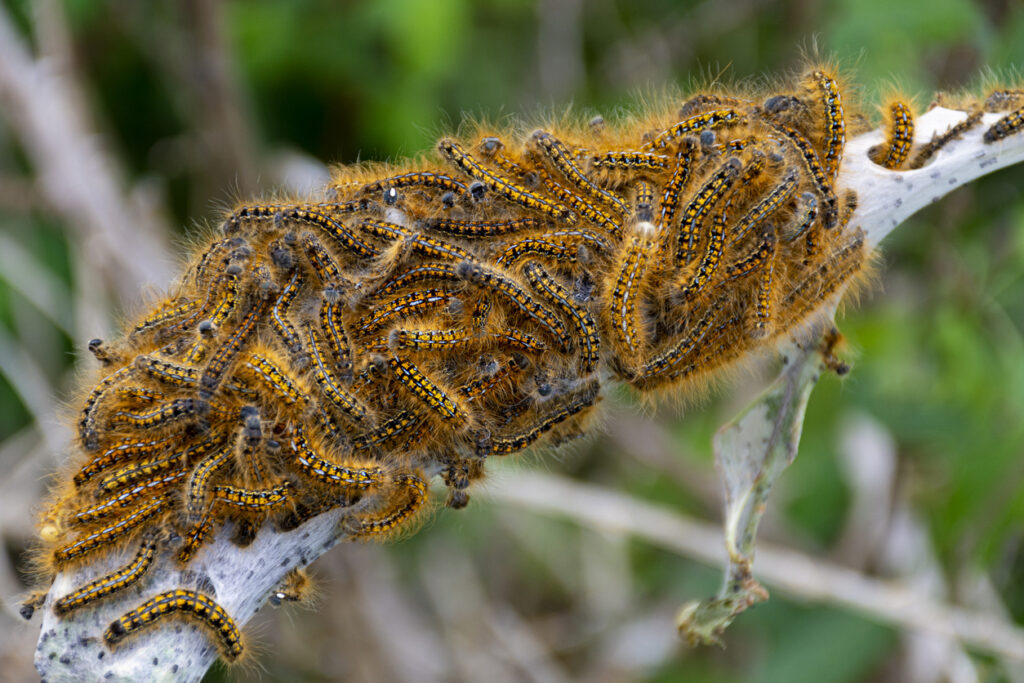
Even though they’re often treated like invasive pests, tent caterpillars are actually native insects that have been here longer than the trees we’re trying to protect. They’re part of the natural food web, providing nutrition for loads of other wildlife.
Trying to eliminate them completely would disrupt the ecosystem more than just tolerating the occasional defoliated tree. They’ve got a role to play, even if it’s not one that makes gardeners particularly happy during outbreak years.