Spotting a small, fast-moving blur dashing across a field or woodland edge in the UK can leave you wondering: was that a stoat or a weasel?

They look incredibly similar at first glance; they’re both sleek, reddish-brown mustelids with a taste for small prey. However, despite their shared family tree, there are several key traits that set them apart. Whether you’re watching from a country footpath or your own garden, here’s how to tell which one you’re actually looking at.
Stoats are bigger than weasels.
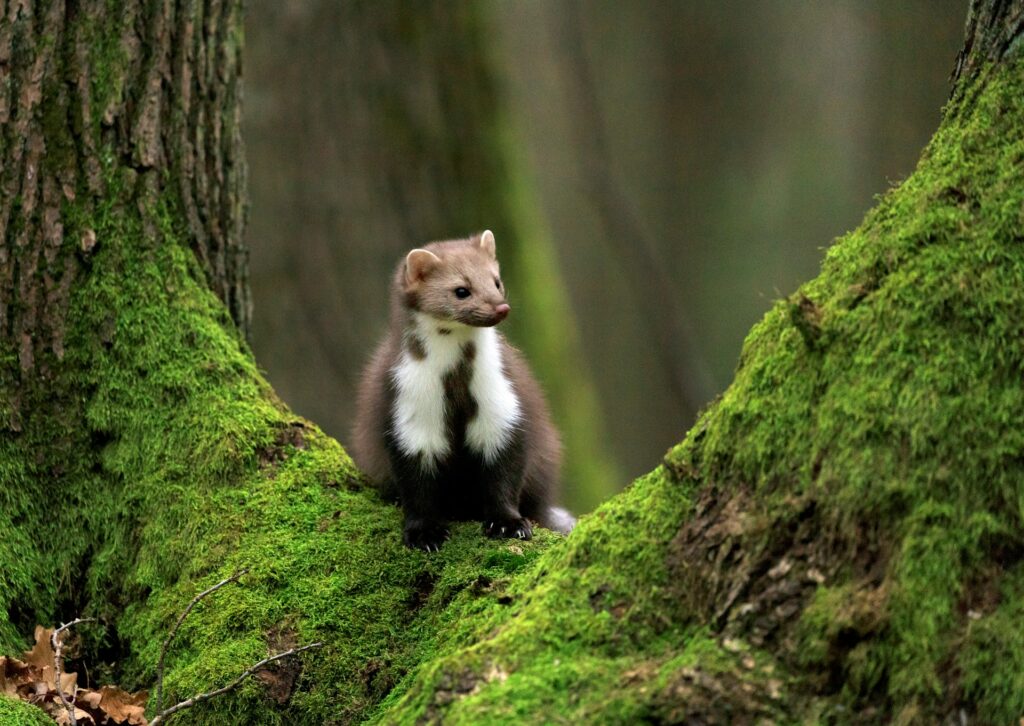
If size is your only clue, it might be enough. Stoats are noticeably larger, measuring around 30–40 cm long (including their tail), while weasels tend to max out around 20–27 cm. Stoats also look a bit more robust, with a chunkier frame and slightly more powerful stance.
Weasels, on the other hand, are more petite and sleek. If the animal you saw looked unusually small, even “mousey” in its movements, it was more likely a weasel. But remember, size can be tricky to judge at a distance, so it’s not the only thing to go by.
Check the tail, as stoats have a black tip.
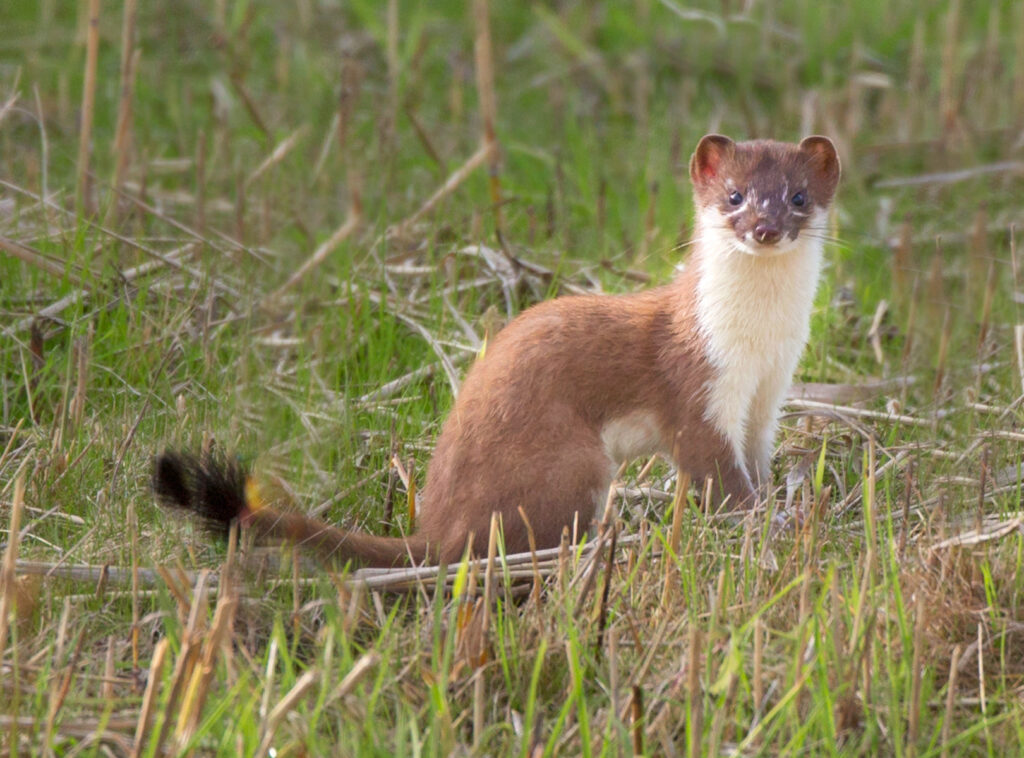
This is one of the clearest visual giveaways. A stoat’s tail is long and bushy, with a very distinct black tip. It almost looks dipped in ink, and that black patch stays even when the animal turns white in winter (in some regions). Weasels have much shorter, thinner tails that are completely brown from base to tip. So if you spot that flick of black on the tail as it darts away, you’ve likely got a stoat on your hands.
3. Weasels move in quicker, tighter bursts.

Weasels tend to move with jittery, frantic energy. They dart, scurry, and disappear in seconds, almost too fast to focus on. Their small size and lightning speed can make them seem like a blur of motion. Stoats are quick too, but they often display more fluid, bounding movements. They look more confident when crossing open spaces and will sometimes pause briefly, giving you a better chance to identify them.
4. Stoats sometimes “dance” to confuse prey.

It’s rare to witness, but stoats have been known to perform an erratic, twisting dance, sometimes called the “stoat war dance,” which can mesmerise prey like rabbits or birds. The movement is bizarre but oddly captivating. This behaviour isn’t seen in weasels, making it a dead giveaway if you ever catch it. While not common to see, videos of it have gone viral for a reason. It’s one of the most curious and unique traits in the mustelid world.
5. Their habitat overlap, but behaviour differs.
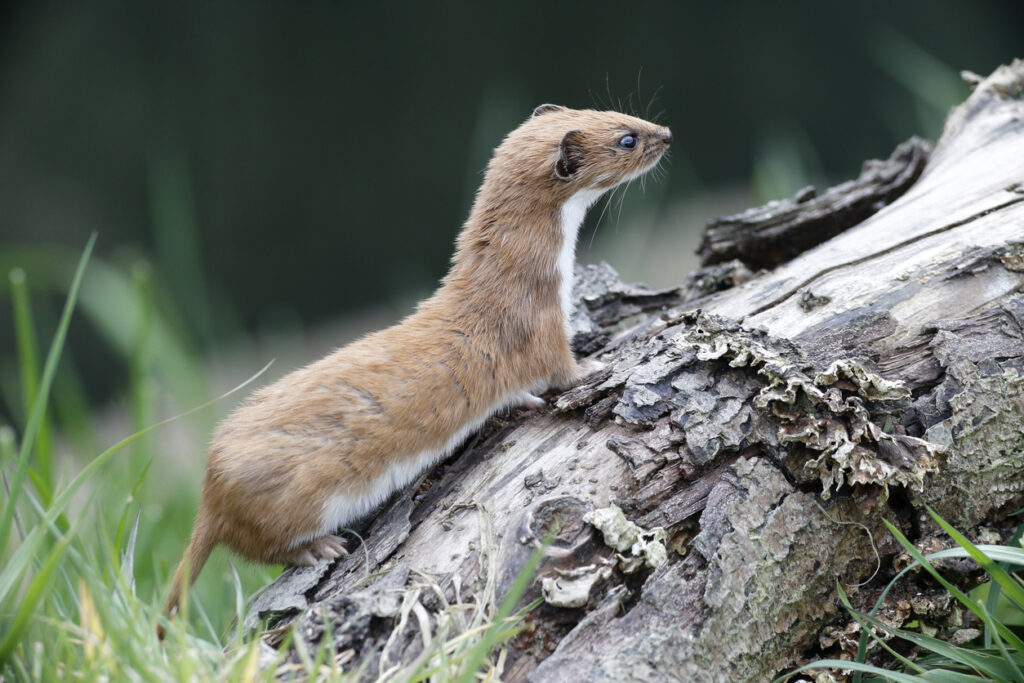
Both animals can be found in similar habitats such as woodland edges, farmland, and even rough grassland, but they don’t always behave the same way within those spaces. Weasels are more secretive and tend to stay close to thick cover. Stoats are bolder and more likely to be seen crossing open ground or exploring out in the open. If you spot something darting across a path or field in broad daylight, there’s a decent chance it was a stoat, not a weasel.
6. Stoats can turn white in winter.
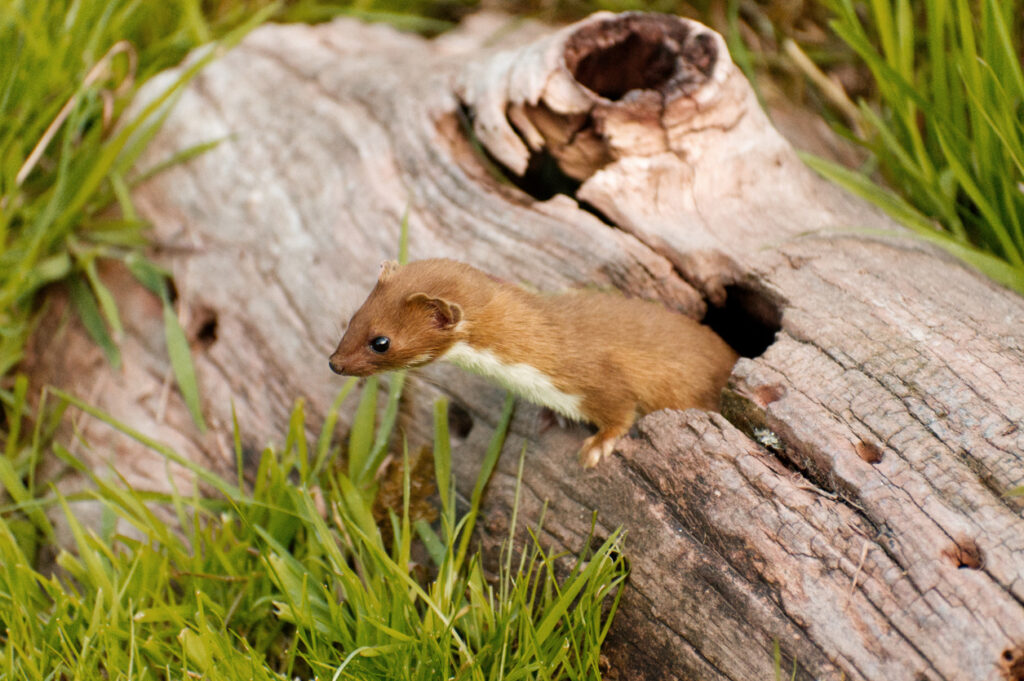
In colder regions of the UK (particularly in Scotland and parts of northern England), stoats sometimes turn white in winter; this coat is called “ermine.” The black tail tip remains, making them even easier to identify in the snow. Weasels, however, almost never change colour in the UK. They tend to stay the same reddish-brown all year round, even in frosty weather. So if you ever spot a white mustelid with a black tail in winter, it’s definitely a stoat.
7. Weasels stick to smaller prey.

Both stoats and weasels are fierce hunters, but weasels tend to go for smaller prey like voles, shrews, and young mice. Their size limits what they can take on, but their speed makes them highly efficient hunters. Stoats, thanks to their bigger build, can take down larger animals, including rabbits, which are several times their size. This makes them surprisingly formidable despite their small stature.
8. Stoats tend to leave more visible trails.
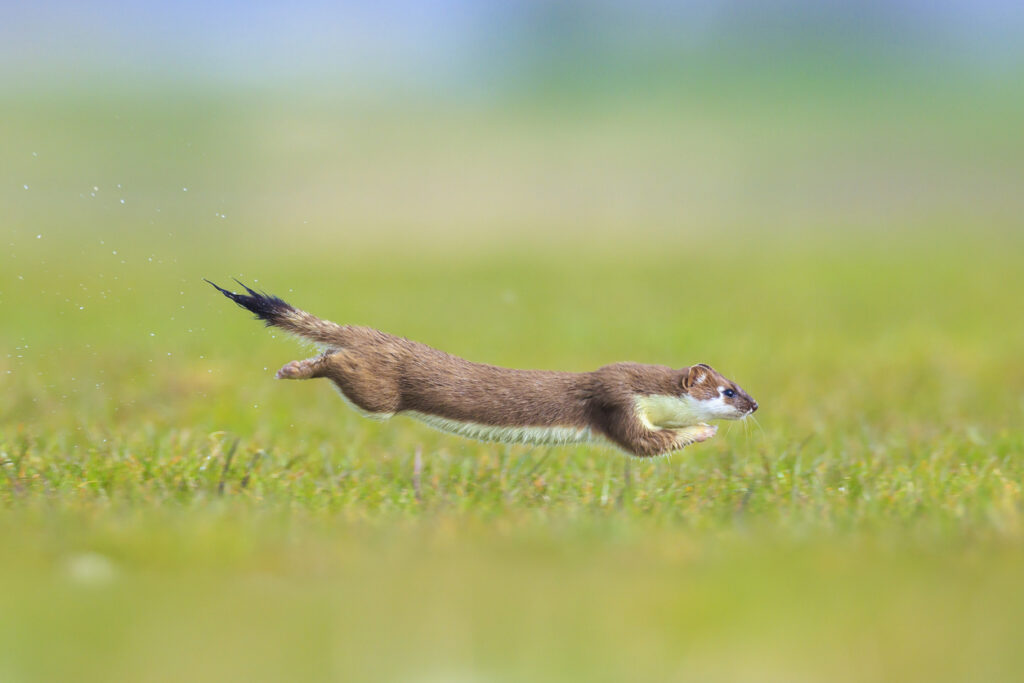
Because they’re bigger, stoats may leave clearer footprints or droppings (known as scats). Their scats are often twisted and may contain fur or bone fragments from their prey. Weasel signs are harder to spot, and they don’t tend to leave such obvious clues. If you’re trying to track one, the size and content of the droppings might help point you in the right direction.
9. Weasels are less commonly seen.

Even though both animals are native to the UK, sightings of weasels are rarer simply because they’re smaller, more reclusive, and harder to spot. Many people go their whole lives without knowingly seeing one in the wild. Stoats are still elusive, but a bit easier to glimpse, especially in places like the Scottish Highlands or remote farmland, where they’re more confident roaming out in the open.
10. Their calls are different, if you’re lucky enough to hear them.

Both stoats and weasels can make high-pitched sounds, but it’s incredibly rare to hear them unless they’re distressed or communicating with their young. Stoats are more likely to hiss or emit short, sharp cries when startled. Weasels may also vocalise when alarmed, but it’s less common and less intense. In either case, sound alone isn’t a reliable method for ID, but it’s a bonus clue if you’re paying attention in the moment.
11. Their head shape and neck length give subtle clues.

Stoats tend to have slightly longer necks and more muscular, broader heads. Their eyes can look more prominent, giving them a more “ferret-like” profile from certain angles. Weasels, in contrast, have shorter necks and a narrower, more delicate face. These differences are subtle, but if you get a good look, they can help confirm what you’re seeing.
12. Weasels are more agile in tight spaces.

Weasels often enter narrow holes, wall gaps, or burrows in pursuit of prey. Their slender bodies allow them to go where stoats simply can’t. If you’ve seen one vanish into a space barely wider than a thumb, it was probably a weasel. Stoats are agile too, but their bulk makes them slightly less flexible. They’re more likely to hunt in open areas or follow prey into slightly larger tunnels or spaces.
13. Stoats have a slightly richer coat colour.
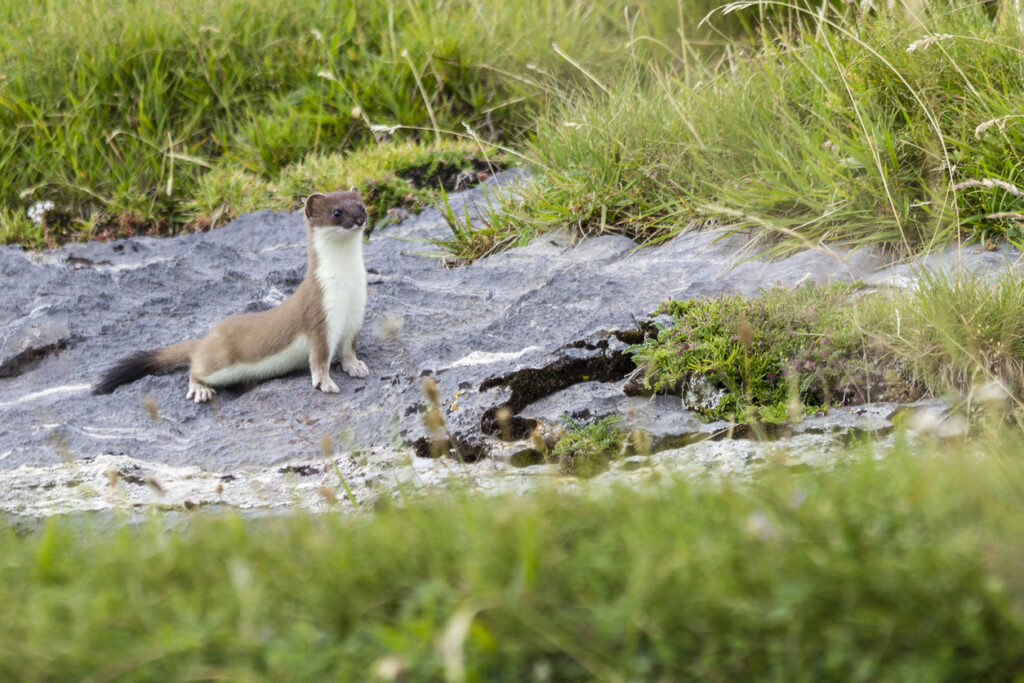
Both animals have reddish-brown upper bodies and creamy underbellies, but stoats often have a deeper, more vibrant colouring that’s almost chestnut in tone. This isn’t a hard rule, but it can help in close encounters. Weasels tend to be paler and more muted in colour, which matches their generally smaller, more subtle appearance. Lighting plays a big role, though, so use this clue alongside others rather than on its own.
14. If it looked cartoonishly tiny, it was probably a weasel.

One of the best natural clues is simply how small and impossibly fast it seemed. Weasels often give the impression of a tiny streak of fur barely bigger than a squirrel’s tail. That level of smallness usually rules out a stoat. Stoats are still small by most standards, but they have more presence. If the creature you saw made you pause and think “Whoa, what was that?” it might’ve been a stoat on the move, especially if that black tail tip caught your eye.