Britain’s woodlands are home to more than just robins and wrens.
In fact, if you slow down and really look (and listen), you’ll find some surprisingly rare and beautiful birds tucked away in the trees. From secretive singers to elusive migrants, these birds aren’t easy to spot, but that’s part of what makes them so special. Whether you’re a seasoned birdwatcher or just someone who loves a quiet walk in the woods, here are 13 rare woodland birds to keep an eye out for in the UK. If you see them, consider yourself extremely fortunate!
1. Hawfinch

Big-beaked and oddly shy for their size, hawfinches are the UK’s largest finch, but you wouldn’t know it from how rarely they show themselves. They favour mature woodlands with hornbeam, cherry, or beech, and tend to stay high up in the canopy, cracking open seeds that most birds wouldn’t dare tackle.
Numbers have dropped sharply in recent decades, but there’s still a decent chance of spotting them in places like the Forest of Dean or the Brecks if you’re quiet and patient. Their thick necks and powerful bills give them a chunky silhouette once you know what to look for.
2. Lesser spotted woodpecker
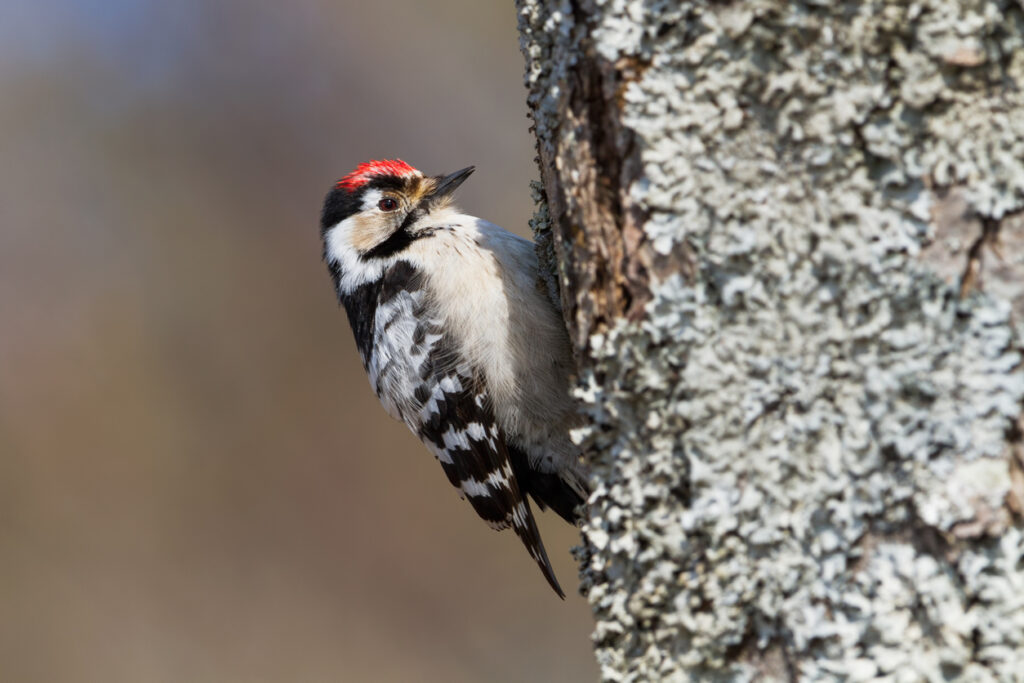
Smaller and more elusive than their great spotted cousins, these woodpeckers are becoming a rare sight in Britain’s woodlands. They’re not much bigger than a sparrow and tend to nest high in old trees, quietly tapping away where few people notice. Their decline is linked to the loss of decaying wood and old trees, which they depend on for nesting. If you do hear their delicate drumming in spring, it’s a real treat. Just be prepared to wait for a glimpse.
3. Willow tit

Often confused with the marsh tit, the willow tit is a subtle little bird with a black cap and a scratchy call. Sadly, it’s also one of the fastest-declining birds in the UK, largely due to the loss of wet, scrubby woodland habitats where it used to thrive. They’re more likely to be found in quiet, damp woodland edges, where they dig their own nest holes in rotting stumps. Their soft colours might not stand out much, but their rarity makes every sighting feel special.
4. Nightingale
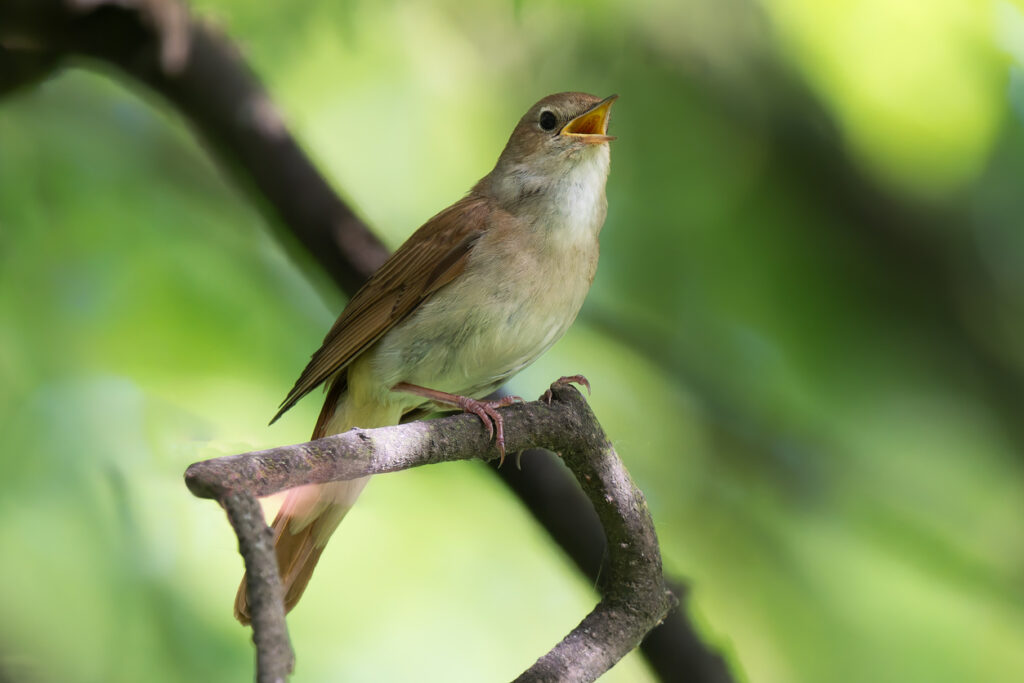
Most people know the nightingale for its famously beautiful song, but fewer have actually seen one. These plain-looking brown birds are surprisingly secretive, and they prefer dense thickets in open woodland to belt out their legendary melodies from late April into June.
Despite the romantic reputation, nightingales are declining in the UK, mostly due to habitat loss. Southern England remains their stronghold, especially in areas with scrubby woodland and tangled undergrowth, where they can hide away and sing.
5. Wood warbler
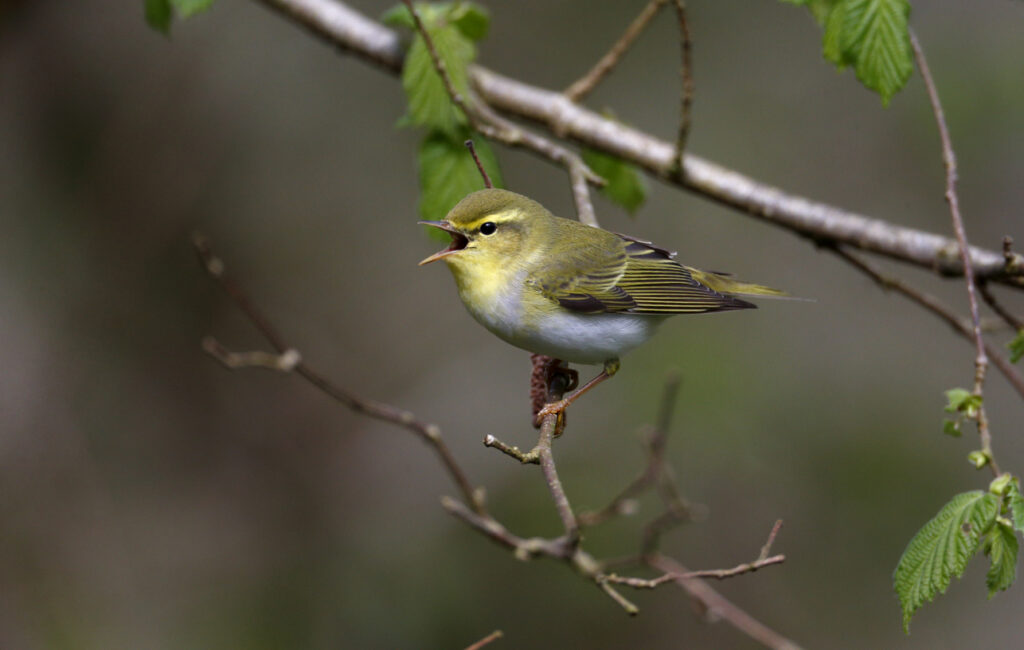
With its bright lemony throat and sweet trilling song, the wood warbler is one of the prettiest spring migrants to pass through British woods. They prefer old, broadleaf woodland, especially oak, and arrive from Africa in April to breed. Unfortunately, their numbers have taken a hit in recent years. You’re more likely to spot them in western and southern areas like the Welsh borders or Dartmoor. Listen for their sewing-machine-like trill; once you hear it, you won’t forget it.
6. Goshawk
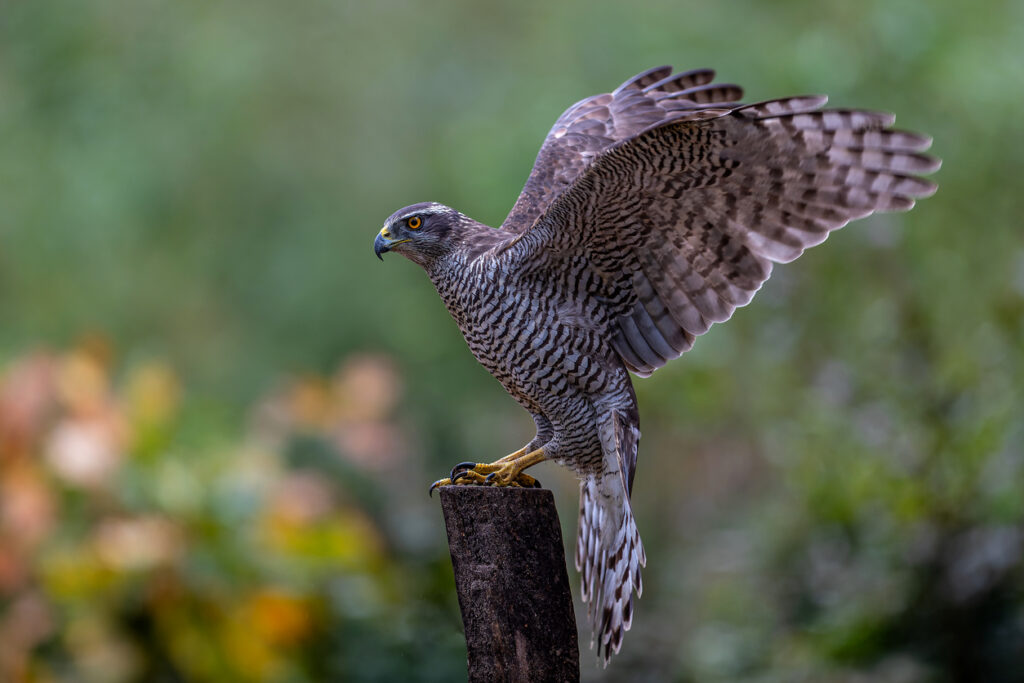
The woodland equivalent of a fighter jet, the goshawk is a powerful bird of prey that skims through trees with incredible speed and precision. Rare and fiercely elusive, they’re hard to see without patience and luck, or a quiet winter woodland when the leaves are down.
After being wiped out in Britain, they were reintroduced and now have scattered strongholds in places like Northumberland and the New Forest. Spotting one is like watching a ghost flash through the trees: silent, fast, and gone before your brain catches up.
7. Woodcock

This chunky, camouflaged wader seems out of place in woodland, but it thrives in damp, leaf-littered areas where it feeds on worms and insects. Most Brits only see them when they flush unexpectedly, zig-zagging off in alarm with a whirring of wings. They’re crepuscular, meaning they’re most active at dawn and dusk. During spring, males perform a curious “roding” flight, making frog-like croaks and whistling overhead. If you hear it, you’ll know you’re in proper woodcock territory.
8. Pied flycatcher
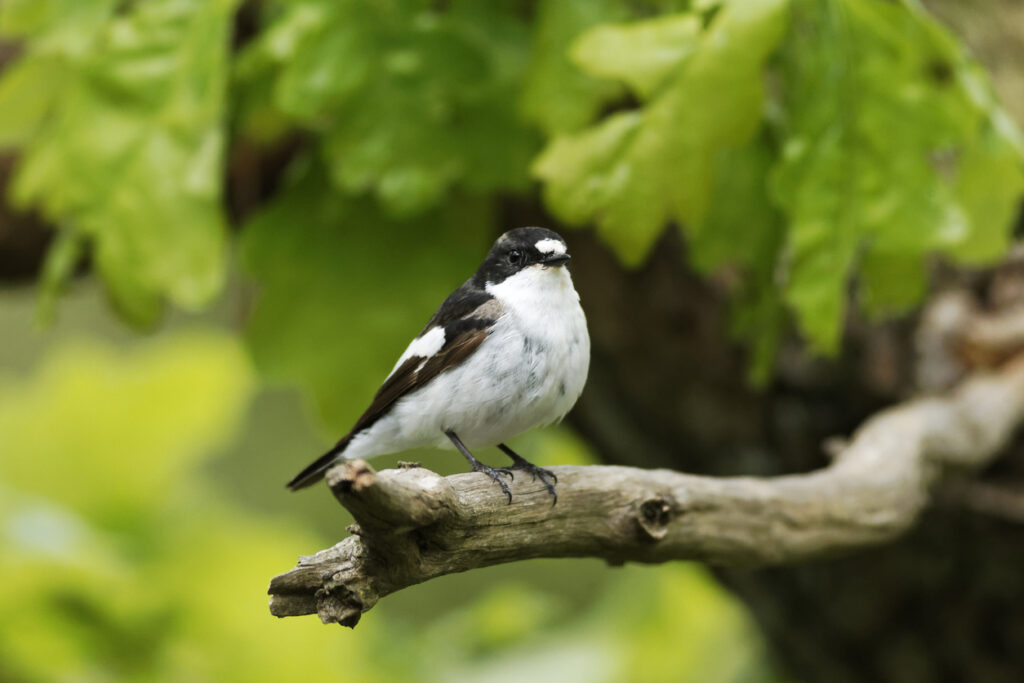
These smart little birds, black and white in the males and browner in the females, are classic summer visitors to mature oak woods, especially in Wales and the north-west. They arrive in April and quickly set about finding tree holes for nesting.
They’re small, flitty, and easy to miss if you’re not listening out for their fast, high-pitched calls. Keep an eye on nest boxes in well-managed woodland reserves; many conservation groups have put them up to help this species recover.
9. Redstart
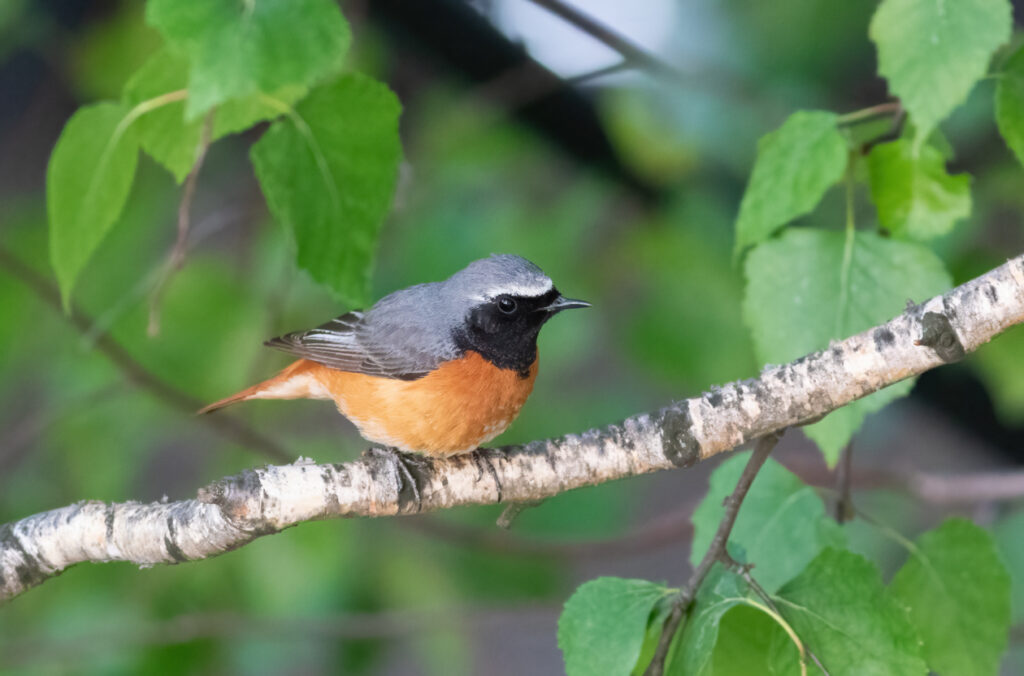
With their fiery orange tails and slate-grey backs, redstarts are one of the UK’s most stylish woodland visitors. They favour open woodland with scattered trees and stone walls, often perching upright on low branches to scan for insects. Like pied flycatchers, they’re summer migrants and mainly found in upland woods in the west. If you hear a slightly scratchy, hurried song and catch a flash of orange, stop and watch. They’re charismatic little birds, full of energy.
10. Crossbill
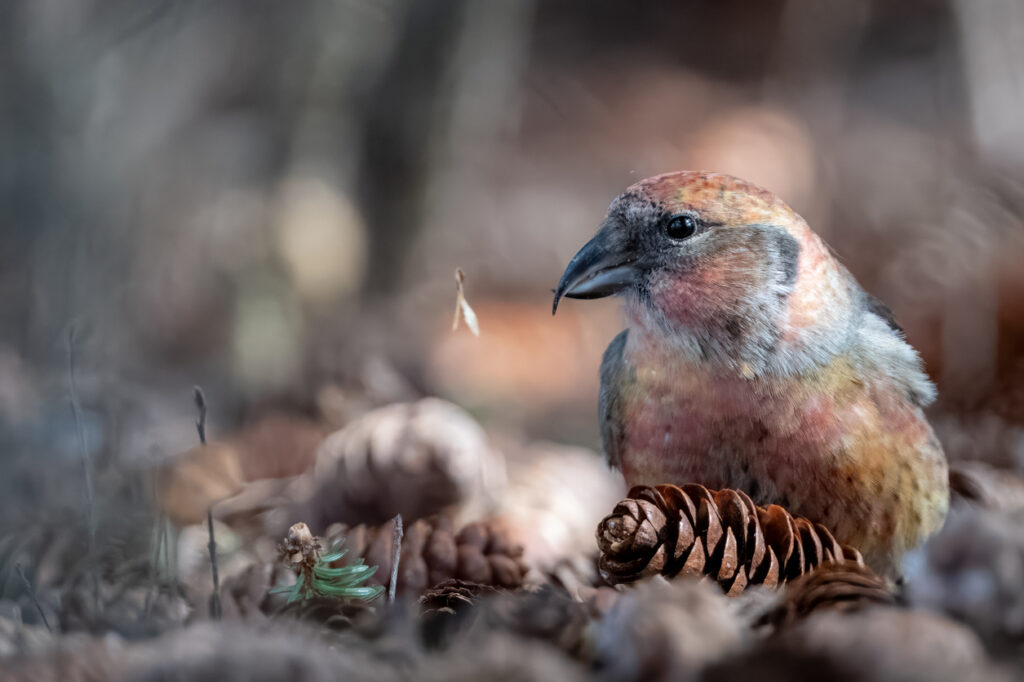
Crossbills are specialists, adapted to extract seeds from pine cones with their twisted bills. They’re typically associated with coniferous forest, but you’ll sometimes find them on the edge of mixed or broadleaf woodland too, especially after irruptions when they move more widely. They’re social, often found in noisy flocks, and their call is a sharp “glip-glip” overhead. Spotting a male’s reddish plumage among the treetops is always a win for a woodland walk.
11. Tree pipit

This subtly streaked bird often gets overlooked, but its parachuting display flight in spring is hard to miss. Tree pipits favour open woodland and heath edges, where they flutter down in slow motion while singing their delicate warble.
They’re a summer migrant and becoming harder to find in the south, with most remaining strongholds in Wales and northern England. If you hear that descending song from a treetop perch, there’s a good chance it’s a tree pipit making its seasonal appearance.
12. Spotted flycatcher
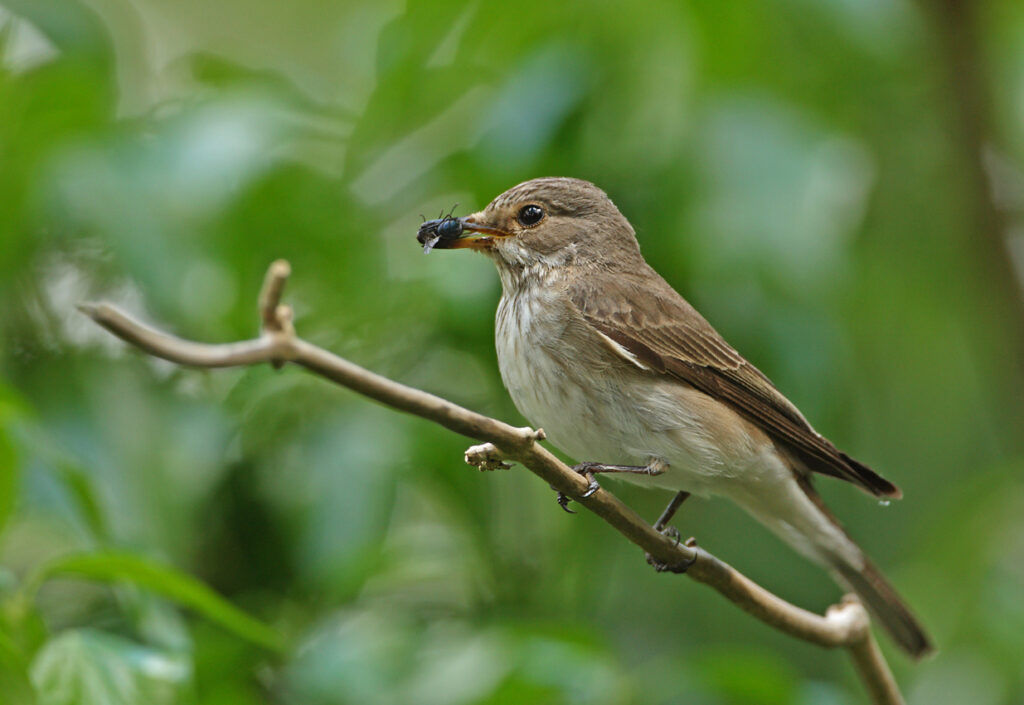
Once common in parks and gardens, the spotted flycatcher has retreated into quieter woodland in recent years. These slim, greyish birds with streaked chests perch upright on branches, darting out to catch insects mid-air with pinpoint accuracy.
Their populations have dropped steeply, but they still breed in places with open glades and mature trees. If you spot a fluttering silhouette returning to the same branch again and again, there’s a good chance it’s one of these understated hunters.
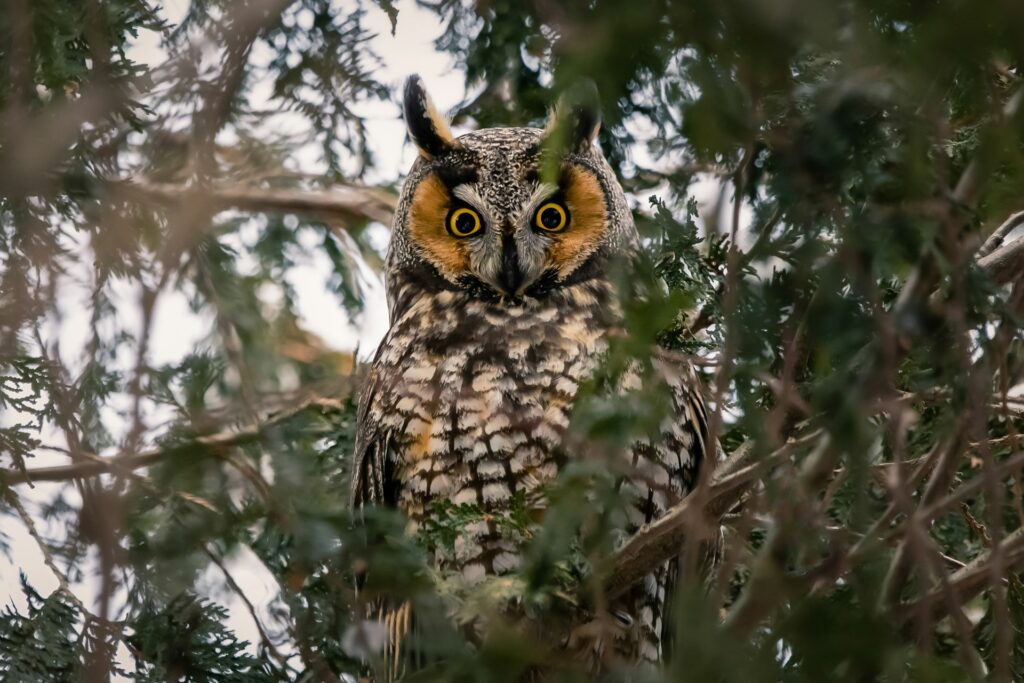
13. Long-eared owl
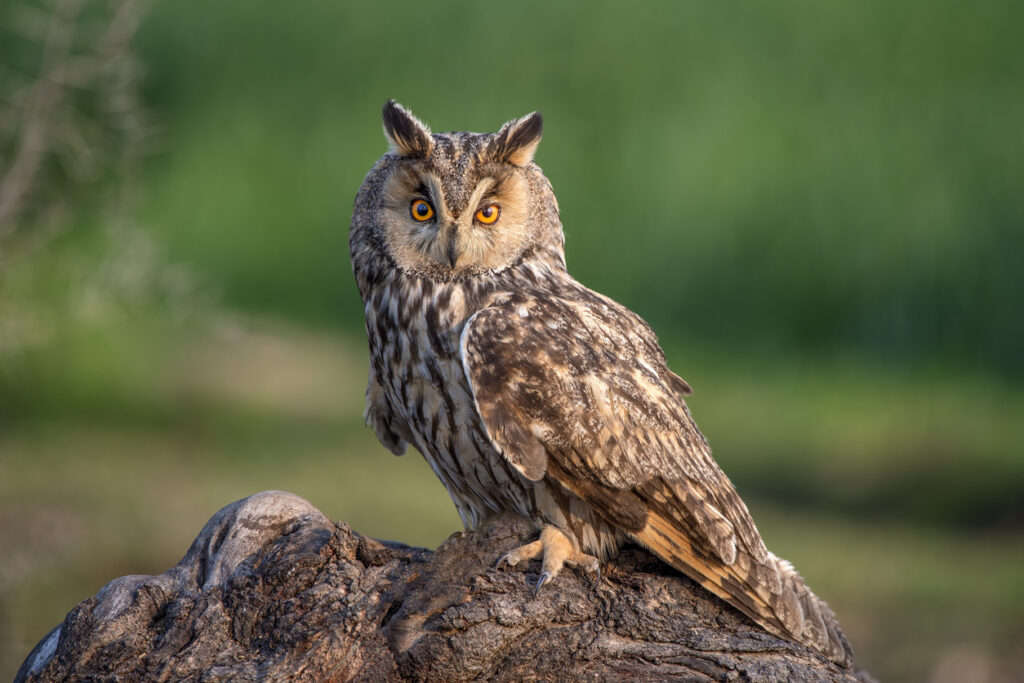
Often more heard than seen, long-eared owls roost deep within dense conifers or mixed woodland during the day. Their mottled brown feathers make them near-invisible, and their upright ear tufts only add to their ghostly, alert appearance. At dusk, they become more active, hunting silently across open ground or woodland edges. Hearing their low, moaning hoots in spring is an eerie, magical experience if you’re lucky enough to catch it.