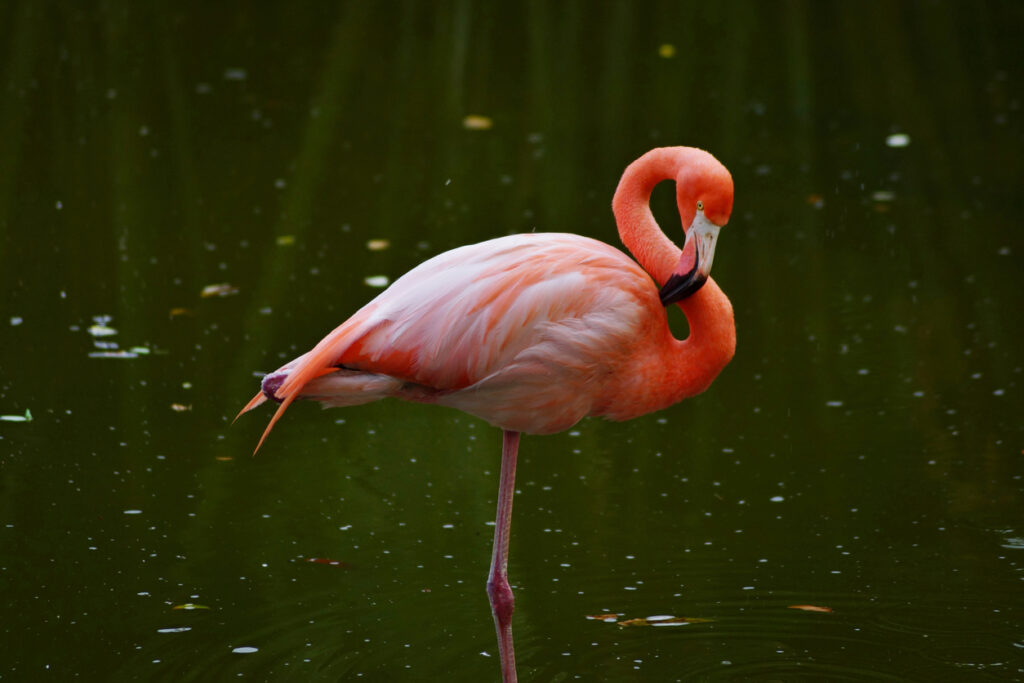
Flamingos are famous for their bright pink feathers, curved beaks, and, perhaps most oddly, their habit of standing on one leg. It’s the kind of behaviour that sparks curiosity in just about everyone who sees it. While it might seem uncomfortable or even strange, there’s actually some pretty clever biology behind this quirky pose. Here are 10 reasons scientists believe flamingos stand on one leg so often, and what it tells us about these brilliant birds.
1. It helps conserve body heat.
One of the most widely accepted theories is that flamingos stand on one leg to keep warm. By tucking one leg up close to their body, they reduce heat loss in cooler water. It’s especially helpful when they’re wading or resting in shallow lakes or lagoons, where the temperature can drop and affect their exposed limbs.
Birds don’t have a lot of fat in their legs, and flamingos often live in climates where the water can get chilly. Standing on one leg minimises the surface area exposed to cold conditions, helping them conserve energy without needing to move much. It’s a practical solution built into their biology.
2. It takes surprisingly little effort.
It might look awkward, but for flamingos, balancing on one leg is actually easier than it seems. Their anatomy allows their leg joints to lock into place, which means they can stand like that with minimal muscular effort. It’s not a struggle; it’s just efficient design. Studies have even shown that flamingos sway less and are more stable on one leg than on two, which seems counterintuitive at first. But their unique skeletal structure makes this pose restful, not tiring. They’re basically built for it.
3. It’s part of their resting behaviour.
Flamingos don’t just stand like this for show. In reality, it’s often a part of their resting routine. While we might lie down or curl up, flamingos are more likely to doze off while balancing on one leg. It’s just how they rest comfortably.
This posture likely helps reduce strain on certain muscle groups while they sleep. Since they spend most of their time standing in shallow water, resting on one leg gives parts of their body a break without forcing them to leave their habitat or lie down on soggy ground.
4. It may help with balance in water.
Wading birds like flamingos often stand in soft, shifting environments. Balancing on one leg can actually give them more stability, especially in flowing water or on uneven terrain. It’s a smart way to stay upright when the ground beneath you isn’t exactly solid.
By lifting one leg, flamingos reduce the area of contact with the unstable surface, which can help them avoid tipping or sinking. Their long legs and webbed feet work together to keep them steady, like natural changes designed for marshy conditions.
5. It reduces muscle fatigue.
Rotating between legs while standing may reduce fatigue, allowing one leg to rest while the other supports the body. Alternating positions in this way helps them avoid overusing the same muscles over long periods of time. It’s similar to how humans might shift their weight from one foot to the other when standing still. For flamingos, it’s a natural way to give their muscles a break while still staying alert and upright in their environment.
6. It’s a thermoregulation strategy.
Beyond just conserving body heat, standing on one leg plays into the flamingo’s broader thermoregulation system. Their legs and feet are among the few body parts not covered in feathers, which makes them prime spots for heat loss.
When they draw one leg up into their feathers, they’re effectively controlling their body temperature in real time. It’s a neat example of how animals use simple behaviours to solve complex problems like temperature regulation without needing to find shelter or leave the water.
7. It’s instinctual and starts young.
Young flamingos begin mimicking this one-legged stance from a fairly early age. It’s not something they need to be taught; it’s hardwired into their instincts. That tells us it serves an important biological purpose across their lifespan. Even as chicks, flamingos will start showing signs of this behaviour once they’ve got the leg strength for it. It becomes part of their daily rhythm, reinforcing the idea that this isn’t just a quirky habit. It’s actually a key part of being a flamingo.
8. It may reduce parasite exposure.
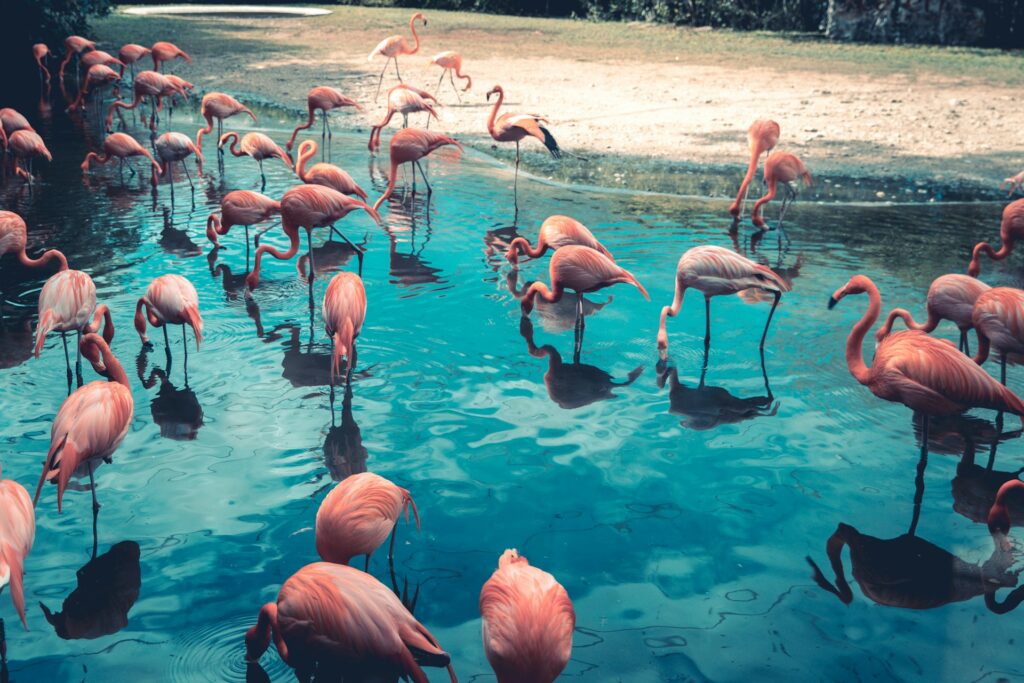
Standing on one leg could also help limit the time each leg spends submerged in parasite-prone water. By reducing contact with the water, flamingos may lower their chances of picking up infections or parasites from their environment. Wetland and lagoon ecosystems are full of microscopic life, not all of which is friendly. Alternating legs might give each one a chance to dry out occasionally, which makes it harder for certain parasites to thrive on their skin.
9. It’s used during courtship displays.
During mating season, flamingos are known for their coordinated group displays, which sometimes include exaggerated versions of the one-legged pose. It’s part of a bigger visual performance meant to attract mates and show off physical health.
Since symmetry and balance are considered signs of fitness in many animal species, a stable, long-legged pose might subtly indicate that a flamingo is in good health. It’s less about showing off the leg and more about demonstrating overall control and stamina.
10. It’s just what flamingos do.
At the end of the day, flamingos stand on one leg simply because it works for them. Evolution has shaped their bodies to be efficient, stable, and adaptable in the environments they live in, and this posture is just part of that design.
While it’s fun to speculate about the reasons behind it, sometimes the simplest answer is that this is just part of how flamingos are built. One-legged standing isn’t weird for them; it’s completely normal, and part of what makes them one of the most fascinating birds on Earth.