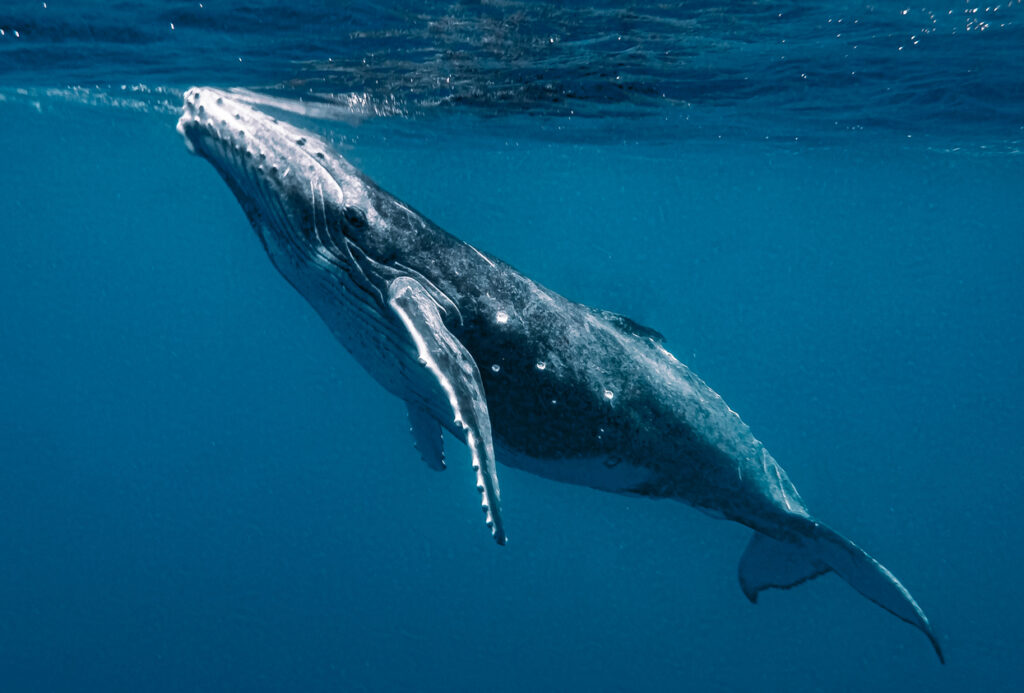
Humpback whales might be some of the most iconic animals in the ocean, but they’re also full of surprises. They don’t just cruise through the waves looking majestic—they communicate in song, travel thousands of miles without eating, and even use clever hunting strategies that look suspiciously like teamwork. If you thought you knew everything about these marine giants, think again. Here are some fascinating facts that’ll make you see humpback whales in a whole new light.
1. They sing long, complex songs.
Male humpbacks are famous for their haunting underwater songs, which can last up to 20 minutes and be repeated for hours. What’s wild is that these songs actually change over time, almost like they’re evolving or trending in a certain whale community.
Researchers believe these songs are related to mating, but they’re still not entirely sure how or why. Some scientists compare the way songs spread between populations to human pop music—one group starts a new “tune,” and others gradually copy and modify it.
2. They don’t eat for months at a time.
During their long migrations from feeding grounds in the cold to breeding grounds in the tropics, humpbacks rely entirely on their fat stores. They can go several months without eating anything at all, living off the energy they built up earlier in the year.
That means when you see one gliding through tropical waters, looking completely unbothered, it’s actually running on reserves. This fasting period can last up to six months, especially for nursing mothers who are also feeding their calves during the journey.
3. They use bubble nets to hunt.
Humpbacks don’t just lunge blindly into schools of fish—they have a strategy. One of their most clever hunting techniques is bubble-net feeding, where a group of whales blows bubbles in a circle around fish to trap them near the surface. Once the net is formed, they rise through the middle of it with their mouths wide open, scooping up everything inside. It’s smart, cooperative, and almost looks choreographed, like underwater theatre with dinner as the finale.
4. They migrate farther than almost any other mammal.
Some humpback whale populations travel over 5,000 miles between their feeding and breeding grounds, making them one of the most well-travelled mammals on Earth. They don’t stop to snack or stretch—they just go. This enormous journey happens twice a year and can take them across entire ocean basins. It’s a long haul, but it ensures they’re in the best environments for both food and raising young, depending on the season.
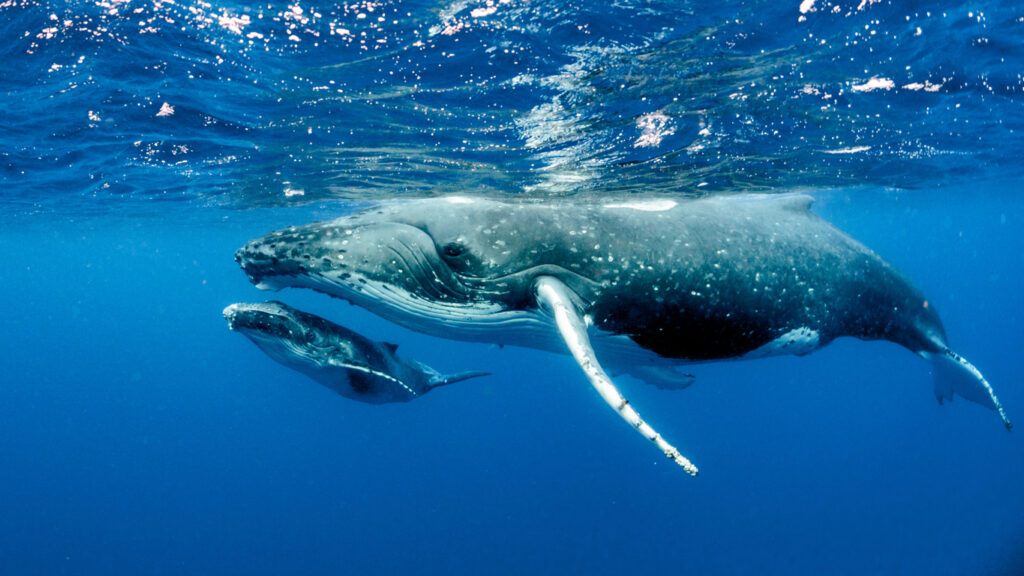
5. Calves gain up to 100 pounds a day.
Newborn humpbacks are already big—around 10 to 15 feet long—but they grow quickly. Thanks to a diet of rich, fatty milk from their mothers, they can gain up to 100 pounds every single day. This fast growth is essential because they need to be strong enough for migration and to avoid predators like orcas. Within a year, they’ll almost double in length and be on their way to becoming independent swimmers.
6. They can breach their entire body out of the water.
Seeing a humpback whale launch itself out of the ocean and crash back down with a huge splash is unforgettable. This behaviour is called breaching, and scientists still aren’t entirely sure why they do it. It might be a form of communication, a way to shake off parasites, or simply something they enjoy. Whatever the reason, it’s impressive to see a 30-ton animal perform a move that would make most gymnasts jealous.
7. They have distinctive fluke patterns.
Every humpback whale has a unique pattern on the underside of its tail, or fluke. These markings are like fingerprints and are used by researchers to identify individual whales. This makes it easier to track migrations, study behaviour, and even reunite old acquaintances from years past. Citizen scientists and photographers often contribute fluke photos to whale databases around the world.
8. Their pectoral fins are unusually long.
Humpbacks have the longest pectoral fins (or flippers) of any whale, sometimes reaching nearly a third of their body length. These long fins give them incredible maneuverability for such massive creatures. They use their flippers to steer, slap the surface, or even wave. It’s one of the reasons humpbacks are often seen as more “expressive” than other whales—their limbs allow for a surprising amount of body language.
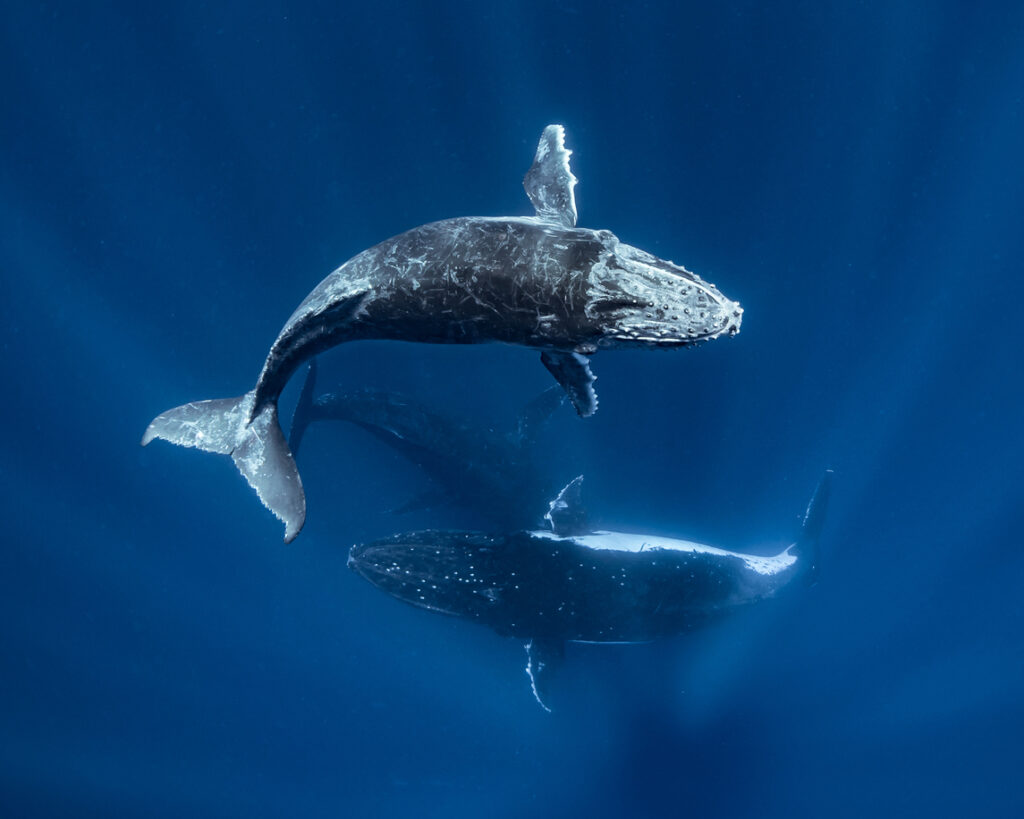
9. They form short-term friendships.
Unlike some whales that stick in the same pod for life, humpbacks are more flexible with their social lives. They often form short-term groups to feed or migrate, and then go their separate ways. However, that doesn’t mean they’re antisocial. Some individuals are known to meet up with the same companions season after season, suggesting that certain whales might have preferred partners, or at least remember a good teammate when they find one.
10. They have hair.
It might sound strange, but whales are mammals—and yes, that means humpbacks have hair. Not a full fur coat, of course, but small, bristly hairs around their mouths and jawline. These hairs are thought to help with navigation or sensing movement in the water. They’re one of the subtle features that link whales back to their land-dwelling ancestors.
11. They’ve made a huge comeback.
Once hunted nearly to extinction, humpback whales have seen a remarkable recovery thanks to international protections. Since commercial whaling ended in most places, many humpback populations have rebounded dramatically. It’s one of the great success stories in marine conservation, showing that with the right measures, and enough time, nature really can bounce back from the brink.

12. They’re surprisingly acrobatic for their size.
Despite weighing up to 40 tons, humpbacks are known for their agility. Beyond breaching, they tail-slap, fin-slap, roll, spin, and even perform underwater twirls that look downright graceful. This athleticism is partly down to those long flippers, but also to their strong muscles and high energy during feeding seasons. Watching a humpback play in the water is like seeing a school bus do ballet.
13. Their name isn’t about their size.
You’d think “humpback” refers to their large body, but it actually comes from the shape they make when they dive. As they arch their backs before a deep dive, a small hump becomes visible just before the tail disappears beneath the surface. It’s a distinctive move that sets them apart from other whales, and makes them easier to recognise in the wild. The name may sound simple, but it tells you exactly what to look for on the open sea.