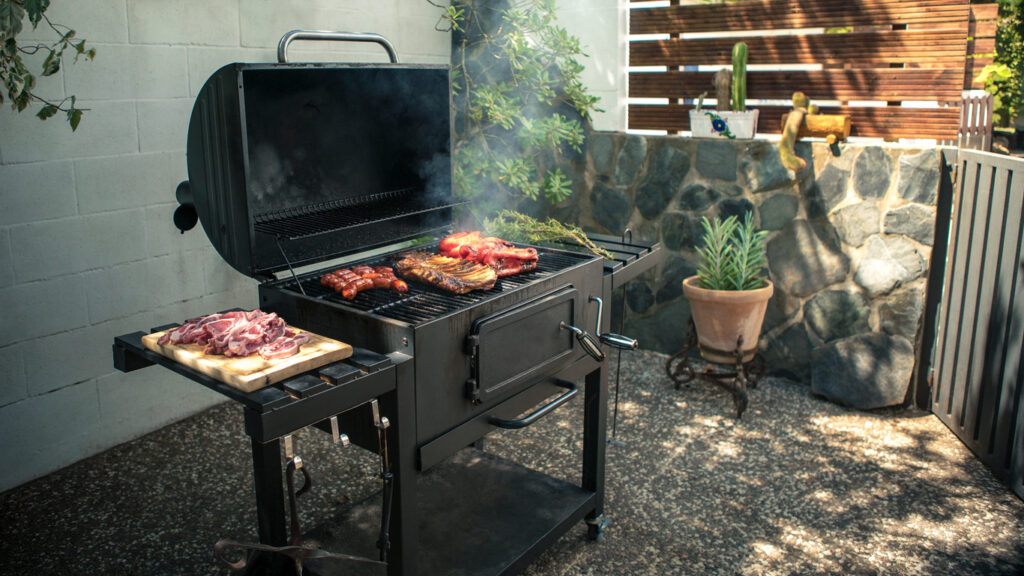
Whether you’ve got a sprawling lawn, a shady courtyard, or just a balcony with room for two chairs and a grill, there’s always a way to make outdoor cooking work. The key is tailoring your BBQ setup to the space you’ve got, not the garden you wish you had. From smart seating to space-saving grills and simple lighting ideas, here are BBQ tips and setup tricks for every kind of garden, no matter the size or style.
For small patios: go vertical with storage and decor.
If you’re short on floor space, use your walls or fences to bring in storage and personality. Wall-mounted shelves can hold spices, sauces, or utensils, while hanging plants or lights instantly lift the space. It keeps things practical and stylish without eating into valuable BBQ space.
Go for a compact charcoal or gas grill that tucks neatly into a corner when not in use. You don’t need a massive setup—just enough to handle a few burgers and skewers. Folding tables and stackable stools are great additions that can be pulled out only when needed.
For long, narrow gardens: create zones.
Use the shape to your advantage by breaking it up into different sections. A BBQ zone at one end, seating in the middle, and a small chill-out or fire pit area at the other makes the space feel purposeful and less like a corridor. Even a simple outdoor rug can visually define each zone.
String lights or pathway lanterns help guide the eye down the space and make it feel cosier in the evening. A slimline BBQ that fits up against a wall or fence is ideal, giving you enough room to move around without crowding the rest of the garden.
For balcony BBQs: think electric or smokeless.
If you live in a flat with a balcony, your best bet is a compact electric grill. They’re allowed in most places that ban open flames, and modern versions can get just as hot as their charcoal cousins. Plus, there’s no smoke to annoy your neighbours.
Pair it with a small bistro table and foldable chairs for easy dining. Add a few potted herbs like rosemary, thyme, or basil—not just pretty, but handy for flavouring your food too. A clip-on light or a solar lantern can keep the party going after dark.
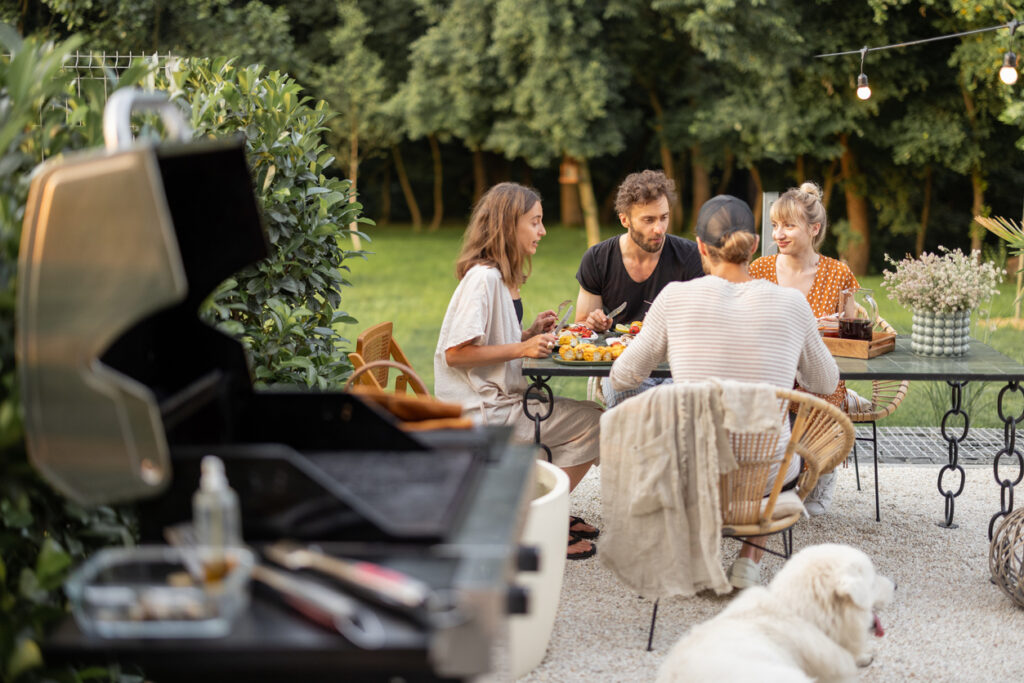
For large lawns: build a dedicated BBQ station.
If you’ve got the space, why not treat your BBQ setup like a permanent feature? A DIY outdoor kitchen or grill station with prep space, shelving, and even a mini fridge can make outdoor cooking easier and way more enjoyable.
Use stone, brick, or weatherproof wood to frame your BBQ and give it that polished look. Surround it with benches, large tables, or an L-shaped seating area to make it the heart of your garden gatherings. Just make sure it’s placed with the wind direction in mind, so smoke doesn’t head straight toward your guests.
For shaded gardens: lean into the ambience.
Just because you don’t have sun all day doesn’t mean your garden can’t shine in the evening. Shade gardens often feel naturally cooler and more intimate, so embrace that with warm lighting, soft cushions, and layered textures.
Use lanterns, festoon lights, and fairy lights to create a glow. Opt for a BBQ with a built-in lid to help control cooking temperature in cooler zones. And if your garden’s on the damp side, choose weather-resistant materials and store cushions somewhere dry when not in use.
For urban courtyards: go for charm and function.
Urban spaces often feel boxed in, but that doesn’t mean you can’t create a welcoming vibe. Think of your BBQ zone like a pocket-sized bistro: compact furniture, strong design choices, and multi-use pieces will make a big impact.
Use mirrors or light-coloured walls to bounce light around and make the area feel larger. A tabletop grill or kamado-style cooker gives you great cooking power without dominating the space. Add a few planters, a wine crate for storage, and you’ve got a charming little grill oasis in the middle of the city.
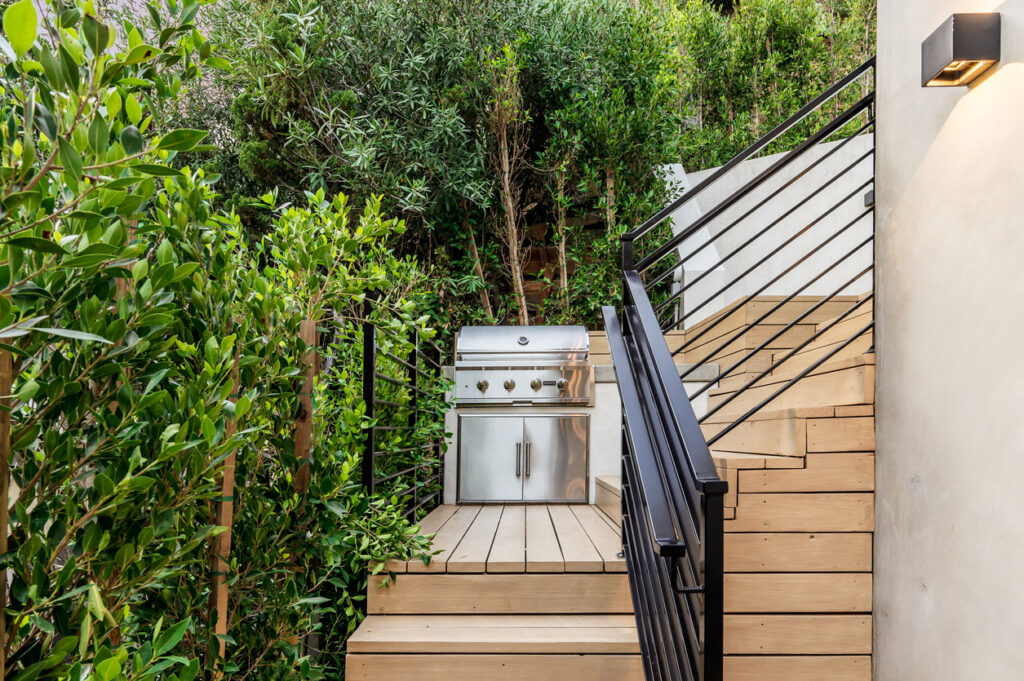
For sloped gardens: terrace your BBQ setup.
Uneven ground can be tricky, but it also adds character. Create small level platforms or terraces using decking, paving, or gravel to give you safe, usable space. One tier for the BBQ, another for dining—it gives your garden structure and flow.
Be sure to place your grill on a stable, level surface away from anything flammable. Then use plants and lighting to soften the transitions between levels. It might take a bit more planning, but tiered BBQ setups can look stunning and feel incredibly unique.
For gardens with kids: separate cooking and chaos.
Safety comes first when kids are around, so plan your BBQ setup to keep hot grills well away from play zones. Use planters, outdoor storage boxes, or low fencing to subtly create boundaries while still keeping things sociable.
Set up a designated kid-friendly zone with a play tent, sandpit, or games area, so little ones can have fun without getting underfoot. Keep your BBQ tools out of reach and go for a grill with a stable base and cool-touch handles if possible.
For wildlife-friendly gardens: choose natural touches.
If your garden is full of birds, bees, or butterflies, it’s worth creating a BBQ area that blends in with the natural vibe. Avoid synthetic materials and go for timber furniture, stone paving, or untreated wood wherever possible.
Use planters of lavender, mint, and chives around the seating area to add scent, deter pests, and attract pollinators. Try a charcoal BBQ with natural lumpwood charcoal instead of briquettes full of additives—better for you and the environment.
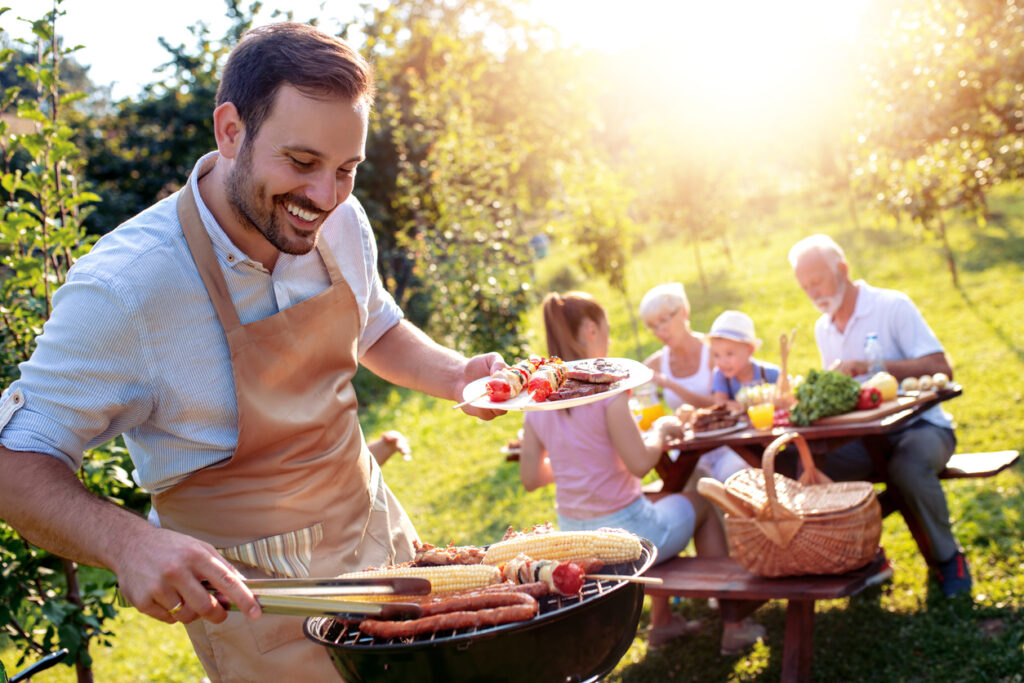
For all gardens: keep it simple and relaxed.
You don’t need a picture-perfect garden or expensive setup to enjoy a great BBQ. Even a small grill, a few camping chairs, and some homemade skewers can turn a quiet evening into something memorable. It’s more about atmosphere than budget.
Add a portable speaker, a jug of something cold, and a few friends or family, and you’ve got everything you need. The best BBQs are the ones where people feel comfortable, full, and slightly sun-kissed by the end of the evening.