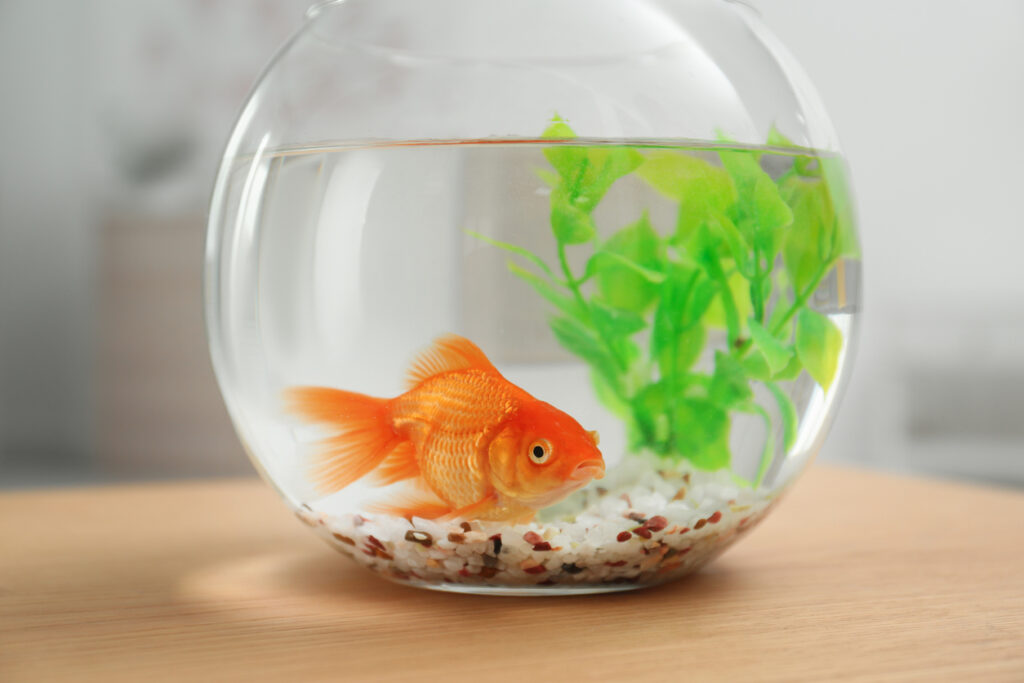
Somewhere along the line, goldfish became the poster child for forgetfulness. You’ve probably heard the joke: they swim around, forget where they are, and start the whole loop again every three seconds. But here’s the thing—it’s not true. Not even close. Goldfish are actually far smarter than they get credit for, and their memories are way better than most people think. So if you’ve ever wondered whether they’re just swimming in circles with no clue what’s going on, here’s the real story behind goldfish memory (and why the myth stuck around).
The “three-second memory” thing is pure myth.
There’s no science backing the idea that goldfish forget everything after three seconds. It’s just one of those throwaway lines that somehow became common knowledge, even though it’s completely wrong. Studies have shown that goldfish can remember things for days, weeks, and even months. They’re not the absent-minded little creatures pop culture makes them out to be.
They can learn tricks and routines.
Goldfish have been trained to swim through hoops, push levers for food, and even tell the difference between shapes and colours. That kind of behaviour requires memory and learning, not a blank slate every few seconds. With a bit of patience (and some tasty bribes), goldfish can pick up on patterns and routines just like many other pets. They’re not just floating decor—they’re responsive animals.
They recognise their owners.
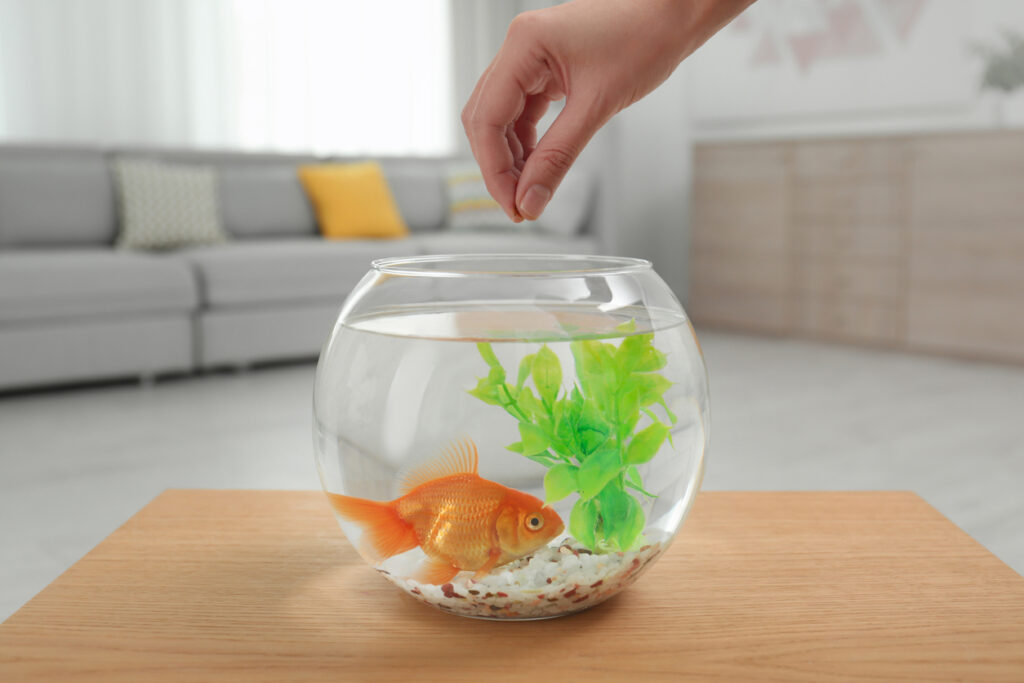
Goldfish can learn to associate specific people with feeding time. Some will swim to the front of the tank when their person approaches, and even follow your finger along the glass. That recognition doesn’t happen with a three-second memory. It shows they can store information, recognise visual cues, and link it all together, especially when food’s involved.
They remember tank layouts and objects.
If you rearrange their tank, goldfish often notice and explore the changes. They also remember where objects like plants or rocks were, and can get noticeably curious or cautious about new additions. That kind of spatial memory helps them navigate their environment, avoid stress, and feel secure. In the wild, it would help them remember hiding spots or feeding areas—crucial for survival.
They can anticipate feeding times.
Goldfish quickly learn when feeding time rolls around, especially if you’re consistent. Some even get visibly more active as the clock ticks closer to dinner, swimming near the top or “begging” for food. This shows they’re capable of time-based learning and routine awareness. They’re not just reacting—they’re anticipating, which requires memory that goes way beyond a few seconds.
Studies have tested goldfish memory directly.
Researchers have trained goldfish to respond to specific sounds and then tested them weeks later, and they still remembered the connection. That’s a long way from forgetting something in three seconds. In some experiments, goldfish retained training results for up to five months, especially when food rewards were involved. That’s better recall than some humans on a Monday morning.
They can distinguish between different shapes and colours.
Goldfish aren’t just reacting to light and motion—they can actually tell objects apart. Studies show they can distinguish between triangles and circles, red and green, even more complex shapes with enough training. This level of visual processing and recognition proves they’re not mentally blank slates. It takes memory and consistent perception to learn those differences and respond accordingly.
They’re used in learning and memory research.
Because goldfish are so good at forming associations and responding to cues, scientists use them in research around learning, memory, and even navigation. They’re ideal for controlled experiments, and their behaviour can tell us a lot about how animals store and retrieve information. They’re not mindless; they’re actually helping us understand minds better.
Their brains are more capable than they look.
Goldfish have a relatively simple brain, but it’s well-structured for learning. They have a cerebellum, optic tectum, and telencephalon, all of which play roles in memory, processing, and decision-making. They’re clearly not on the same level as primates or dolphins, but within the fish world, they’re near the top when it comes to smarts. And they’re surprisingly good at making use of what they’ve got.
The myth likely stuck because goldfish are quiet.
Unlike dogs or cats, goldfish don’t vocalise or show obvious facial expressions. That makes it easy to underestimate them—they just swim silently, so people assume nothing’s going on. However, under the surface, they’re constantly taking in information, recognising patterns, and adjusting their behaviour. They just do it without wagging a tail or meowing about it.

Small tanks may limit their mental stimulation.
Part of the reason goldfish get stereotyped as boring or forgetful is because they’re often kept in small, unstimulating environments with nothing to do. However, that’s more about setup than intelligence. Given space, objects to explore, and a bit of interaction, goldfish become curious, responsive, and downright playful. A better tank setup brings out the brain power they actually have.
They have social awareness.
Goldfish are social animals that recognise tank mates and respond to changes in their little community. They can even form pair bonds or become more active around familiar fish. This level of social behaviour requires memory and recognition, not just instinct. If one fish disappears or a new one is added, goldfish often react in ways that suggest they know something’s changed.
They can be taught to navigate mazes.
In lab tests, goldfish have been trained to swim through mazes to find food rewards. They remember which turns lead to success and which ones don’t, and can even adapt if the path changes slightly. Maze learning is a classic test of memory and problem-solving. The fact that goldfish can handle it puts them in the same learning league as rats and pigeons.
They respond to names (sort of).
Some goldfish can learn to associate a specific sound—like a whistle, bell, or even their name—with food or attention. They don’t understand language, of course, but they remember the pattern. It’s another sign that they can link cause and effect and retain that link over time. Call it Pavlov’s goldfish, but it definitely shows memory at work.
They deserve way more credit.
Goldfish might not be writing symphonies, but they’re far from the daft, three-second-loop creatures they’re made out to be. They’re curious, adaptive, and capable of learning more than most people realise. So next time someone cracks a goldfish joke, you’ve got 15 reasons to correct them (politely, of course). Because under that shiny orange exterior is a little mind that remembers a lot more than you think.