Finding a place where you’re truly on your own is getting harder, but if you’re willing to endure a week-long boat ride or a flight to the edge of the Arctic, there are still spots where you won’t see another soul for days. This isn’t about a quiet weekend in the Cotswolds; it’s about the kind of isolation that requires serious planning and a high tolerance for your own company.
From volcanic outposts in the middle of the Atlantic to the vast, empty stretches of Central Asia, these destinations are for anyone who thinks a busy hiking trail is one other person.
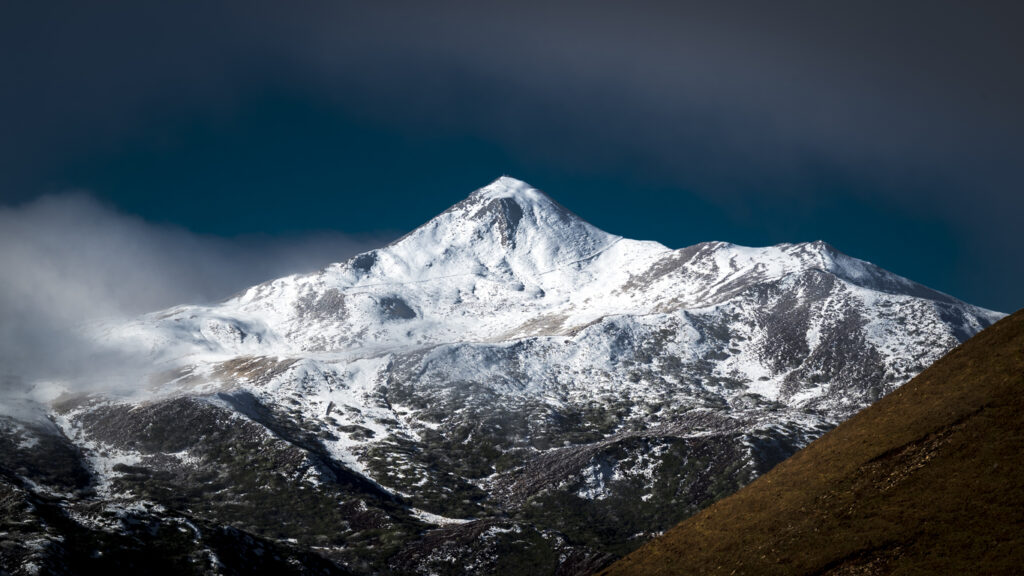
The Tibetan Plateau, China
The highest plateau on earth sits at an average elevation of over 4,500 metres, and vast stretches of it see almost no human presence at all. The landscape is stark and enormous: grasslands, salt lakes, and mountain ranges extending further than feels real.
Getting there requires serious preparation, altitude acclimatisation, and in many areas a special permit beyond the standard Chinese visa. Infrastructure is minimal once you leave the main roads, and the remoteness is genuine rather than constructed. The quality of the light up there is unlike anywhere at lower altitude, and the sky on a clear night is extraordinary.
Svalbard, Norway
This Arctic archipelago sits halfway between mainland Norway and the North Pole, and outside the small settlement of Longyearbyen, it is almost entirely uninhabited. Polar bears outnumber people here, which means venturing into the backcountry without a guide and appropriate safety equipment isn’t just inadvisable; it’s actively dangerous.
In summer, the sun doesn’t set for months; in winter, it doesn’t rise. The landscape is glaciers, frozen fjords, and mountains that have barely been touched, and the silence out on the ice is total. It’s not somewhere you stumble across, which is precisely the point.
@abraham001007 Al Rub’ al Khali (Empty Quarter) Sand Desert in the Arabian Peninsula. #tiktok #fyp #World #Asia #Africa #fyp #fypシ #foryou #viral #fypシ ♬ Aesthetic – Tollan Kim
The Empty Quarter, Arabian Peninsula
The Rub’ al Khali is the largest continuous sand desert in the world, covering around 650,000 square kilometres across Saudi Arabia, Oman, Yemen, and the UAE. There are no permanent settlements, no roads, and in large parts of it, no water. The dunes reach heights of up to 250 metres.
Crossing sections of it is possible with the right preparation and local knowledge, and expedition companies run trips into parts of the desert, but it demands serious respect for the conditions. In the right light, particularly at dawn, the colours of the sand shift through golds and reds in a way that makes the difficulty of getting there feel entirely worth it.
Pitcairn Island, South Pacific
Pitcairn has a population of around fifty people and no airport. The only way to reach it is by boat, and supply ships pass through just a handful of times a year. It sits in the middle of the South Pacific, roughly equidistant from New Zealand and South America, which gives you a sense of just how far from anything it actually is.
The island is descended from the Bounty mutineers who settled there in 1790, and that history is still very present in the community. Visitors are rare enough that arriving feels genuinely significant, and the surrounding ocean is some of the most pristine in the world.
The Siberian taiga, Russia
The boreal forest stretching across Siberia is the largest forest on earth, covering millions of square kilometres and containing entire river systems that barely appear on detailed maps. Some areas see no human activity whatsoever for years at a time.
Getting genuinely deep into it requires planning, appropriate gear for temperatures that drop to -50 °C in winter, and a realistic plan for emergencies given how long rescue would take. In summer, it transforms completely: warmer, green, and alive with wildlife in a way the frozen version gives no hint of. Both versions are extraordinary for different reasons.
@aegis774 When nature does the impossible. Watch new episodes of The UnXplained Fridays at 9/8c on HISTORY! #TheUnXplained #creatorsearchinsights #mystery #history #explore ♬ original sound – Hidden Mysteries
Northern Greenland
The northern tip of Greenland is one of the least visited places on earth. The population of the entire country is around 56,000 people, most of them concentrated in coastal towns in the south and west. Go north and the numbers thin out dramatically until you reach areas where human presence is essentially zero.
The landscape is ice sheet, Arctic tundra, and frozen coastline, and the logistical challenge of getting there is significant enough that it filters out casual visitors entirely. The reward is an environment so untouched that it’s difficult to calibrate your sense of scale against it.
The Atacama Desert, Chile
Parts of the Atacama receive less than a millimetre of rain per year, making it the driest non-polar desert on earth. The landscape ranges from salt flats so white they’re almost painful to look at, to volcanic craters, to geysers that erupt in the cold of early morning at altitude. Some areas have never recorded rainfall.
Life exists here, but you have to know where to look, and the vast central sections of the desert are genuinely devoid of human presence. The altitude makes the night sky exceptional, which is why several of the world’s most important astronomical observatories are built here.
Fiordland, New Zealand
The southwest corner of New Zealand’s South Island contains some of the most rugged and inaccessible terrain in the southern hemisphere. Fiordland National Park covers over 1.2 million hectares, and large sections of it have never been explored on foot. Annual rainfall in some parts reaches nine metres, which keeps casual visitors away and maintains the landscape in something close to its original state.
The famous Milford and Doubtful Sounds sit within it, but venture beyond the established routes and the solitude becomes absolute very quickly. The combination of fiords, ancient rainforest, and mountains that drop straight into the sea is unlike anywhere else in the world.
@beautifull_earthh Faroe Islands, Norway #faroeislands #norway #norwaytravel #norwaytiktok #viralvideo #viraltiktok #originalcontent #original ♬ Spiritual Hug of Angel – Weightless
The Faroe Islands
Eighteen islands sitting in the North Atlantic between Norway and Iceland, with a total population of around 55,000 concentrated in and around the capital Tórshavn. The interior of the larger islands and the smaller, uninhabited ones see almost no visitors, and even the busier spots are quiet by most standards.
The landscape is dramatic, with sea cliffs, waterfalls running straight off cliff edges into the ocean, and a particular quality of light that changes constantly as weather moves across the islands. It’s accessible enough to reach without an expedition, but remote enough that you can walk for hours on the higher ground without seeing another person.
Bouvet Island, South Atlantic
Bouvet Island is a Norwegian territory sitting in the South Atlantic and is widely considered the most remote island on earth; the nearest land is Antarctica, roughly 1,600 kilometres away. It’s almost entirely covered by a glacier, has no permanent inhabitants, and receives only the very occasional scientific visit. There’s no harbour and landing is extremely difficult in most weather conditions. It’s not somewhere with a realistic tourist route, but it exists at the far end of the spectrum of remoteness in a way that puts everywhere else in perspective.
The highlands of Iceland
Iceland’s interior, known as the highlands, is completely uninhabited and only accessible during the summer months when the F-roads, or rough mountain tracks, are passable by four-wheel drive. Outside that window, the interior closes entirely.
Vast lava fields, volcanic landscapes, glacial rivers, and geothermal areas stretch across the middle of the island with no infrastructure and no permanent structures beyond the occasional basic highland hut. Go far enough in, and the silence and the scale of the landscape make it easy to understand why Iceland’s mythology is so deeply tied to its wilderness.
Cape York Peninsula, Australia
The very tip of Australia’s Cape York Peninsula is one of the most remote inhabited regions in the country, and beyond the small communities that live there, the surrounding wilderness is genuinely vast. The peninsula covers around 137,000 square kilometres of largely untouched tropical savannah, rainforest, and wetland.
During the wet season from November to April, most of the tracks flood and the region becomes almost entirely inaccessible. The dry season journey up the Old Telegraph Track is one of Australia’s great overland adventures. It’s rough, slow, and spectacular, but it demands a well-prepared vehicle and a realistic attitude towards the distances involved.