You don’t need a garden, a greenhouse, or even a particularly green thumb to grow your own food. Some of the most useful vegetables in your kitchen will happily regrow from scraps in nothing more than a glass of water on a sunny windowsill. If you want to feel like you’ve got a green thumb and get something yummy out of the bargain, here are a few to try growing yourself.
Spring onions
Spring onions are the easiest starting point and probably the most satisfying for beginners because the results are visible within days. When you’ve used the green tops, leave around five centimetres of the white root end and place it in a glass with just enough water to cover the roots.
Put it somewhere with decent light, change the water every couple of days, and the green shoots will be back and ready to snip within a week. You can harvest from the same roots multiple times before they eventually give up, which makes a single bunch of spring onions go considerably further than it otherwise would.
Celery
Celery regrows beautifully from its base. When you’ve used all the stalks, cut the base off leaving about five centimetres intact and sit it cut-side up in a shallow dish of water on a bright windowsill. Within a few days new pale yellow leaves will begin emerging from the centre, and within a couple of weeks you’ll have a cluster of new growth that’s perfectly usable in cooking. The regrown stalks are smaller and more delicate than the original, but the flavour is good, and the whole process costs nothing beyond a bit of patience and the water you were already drinking.
Lettuce and other leafy greens
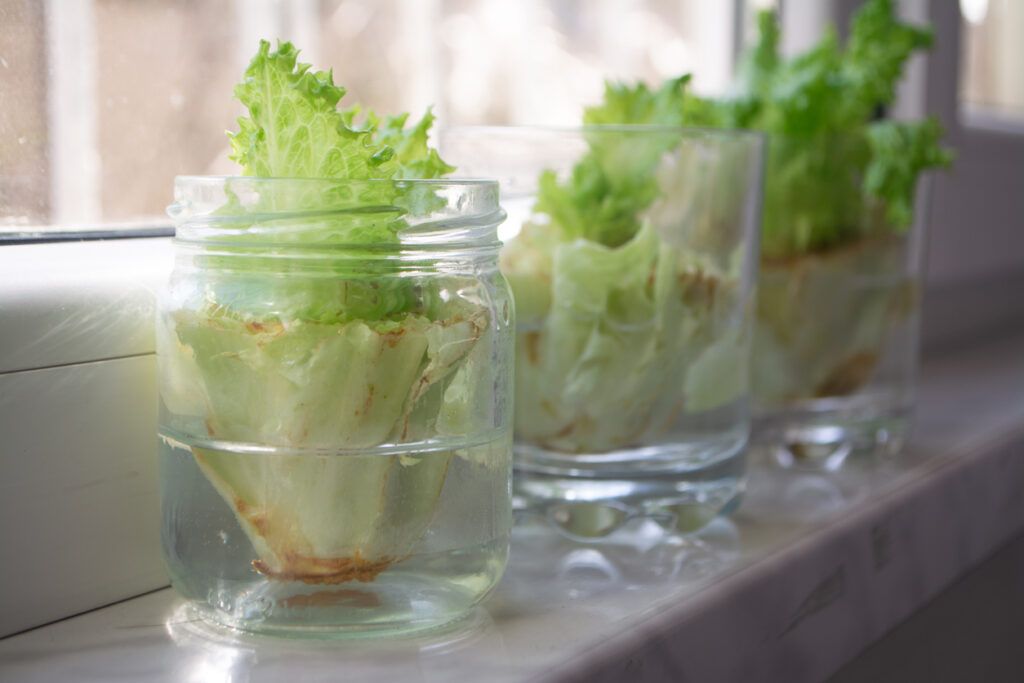
The same base-in-water method that works for celery applies equally well to lettuce, romaine in particular, as well as bok choy and cabbage. Cut the base away from the leaves, leaving a few centimetres intact, and sit it in shallow water with the cut surface facing up. New leaves emerge from the centre relatively quickly, and while you won’t regrow a full head, the fresh leaves that appear are crisp and usable as salad or garnish. They tend to have a slightly milder flavour than the original plant, which suits them well for fresh eating.
Garlic
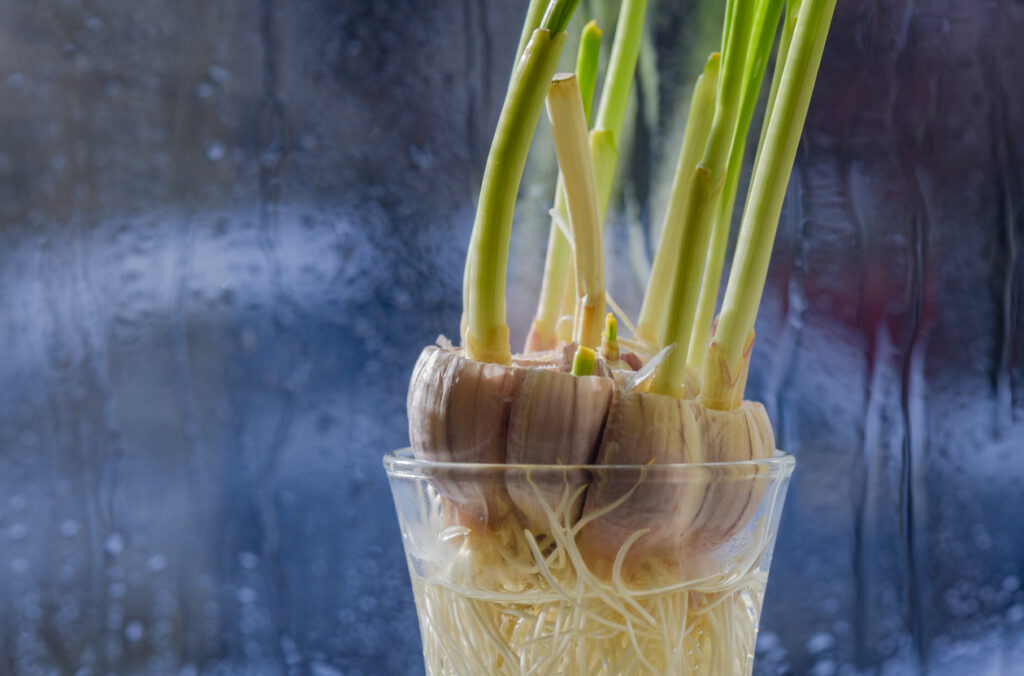
A garlic clove that has started sprouting a green shoot is usually treated as a sign it’s past its best and thrown away. It’s actually a sign that it wants to keep growing. Pop a sprouting clove into a small glass with a little water, and it will continue to produce green shoots that taste like a mild, fresh version of garlic that’s closer to a chive in strength than a full clove. They’re excellent snipped into salads, stirred through scrambled eggs, or used anywhere you want a subtle garlic flavour without the pungency of raw clove. Change the water regularly and a single clove will keep producing for a couple of weeks.
Fennel
Fennel bulb bases regrow in the same way as celery, sitting in a shallow dish of water on a bright windowsill. The feathery fronds that emerge are fully usable as a herb, with the same aniseed flavour as the original plant but in a finer, more delicate form. They work well as a garnish, in salads, or stirred through fish dishes in the same way you’d use dill. Fennel needs a bit more light than some of the others on this list, so a south-facing windowsill in winter makes a real difference to how quickly and abundantly it regrows.
Leeks
Leeks follow the same logic as spring onions. Cut the root end off leaving about five centimetres of the base intact, stand it in water deep enough to cover the roots, and new growth emerges from the top within a few days. The regrown greens won’t form a full leek, but they produce usable green tops that work well in soups, stir-fries, and anywhere you’d use the green part of a leek normally. Like spring onions, they can be harvested a few times over before the root base runs out of energy.
Beetroot
Beetroot is unusual in that it’s the tops rather than the root that you’re regrowing. Cut the leafy top off a fresh beetroot leaving about a centimetre of root attached and sit it in shallow water on a bright windowsill. New leaves will grow from the cut surface within a week or so, and while they won’t regenerate the root itself, the leaves are edible and worth having. Young beetroot leaves have a mild earthy flavour and can be used in salads or wilted into dishes like spinach. It’s a good way to get a second use out of something you’d otherwise put straight in the compost.
Carrot tops

Carrot tops work in the same way as beetroot. Cut the top of the carrot off with a centimetre or so of root still attached, and sit it cut-side down in shallow water. The feathery green tops that grow back are edible, though they have a slightly bitter flavour that suits them better as a herb or pesto ingredient than as a straightforward salad leaf. Blended with olive oil, garlic, and a handful of nuts, they make a usable pesto that gets a lot of food out of something most people put straight in the bin. Change the water every couple of days to keep things fresh.
Lemongrass
If you can find fresh lemongrass stalks with the root end intact, which most good supermarkets sell, they’ll regrow readily in a glass of water. Stand the stalks upright in a few centimetres of water in a sunny spot, and roots will begin forming within a week or two. Once the roots are a centimetre or so long, you can either pot the plant on into compost or continue growing it in water. The new growth that emerges from the top can be harvested as soon as it reaches a usable size, and the plant will keep producing for months if it gets enough warmth and light.
Coriander and basil
Herb stems with a few centimetres of stalk left on them will root in water before they can be potted on into compost, and a glass on a bright windowsill is all they need in the meantime. Coriander roots quickly and reliably, and basil (particularly the supermarket variety sold in small pots) will shoot roots from the lower nodes within a week or two of being placed in water. Once the roots are established, potting them into compost gives them a longer life than water growing alone, but even in the glass stage you can pinch leaves for cooking while the roots develop. It’s one of the most practical windowsill habits you can develop if you use a lot of fresh herbs.
Once you start regrowing kitchen scraps, it becomes genuinely difficult to stop, partly because it works and partly because there’s something quietly satisfying about watching food come back from what was heading toward the bin. A windowsill with a few glasses of water and a bit of root-end optimism costs almost nothing and keeps producing in a way that’s hard not to appreciate.