We’ve all grown up with the idea that certain things about our pets are just absolute gospel, like the fact that a wagging tail always means a happy dog or that cats are naturally out to get the family pup.

Most of these “facts” have been passed down for so long that we don’t even think to question them, but the truth is that a lot of what we think we know about our animals is total rubbish. Understanding the real logic behind how your pets think and behave is the only way to actually give them what they need, rather than just guessing based on old wives’ tales. It turns out that once you start looking at the actual science of pet behaviour, a lot of these long-standing rules start to fall apart.
1. Dogs and cats naturally hate each other.

Dogs and cats can absolutely be mates, they just communicate differently, which causes misunderstandings. A dog wagging its tail means it’s happy, but a cat swishing its tail means it’s annoyed. A dog play-bowing wants to be friends, but a cat seeing that might think it’s being stalked.
When they’re raised together or introduced properly, they often become really close. The “natural enemies” thing is just based on them not speaking the same body language. Plenty of households have dogs and cats who cuddle together and genuinely like each other.
2. Dogs age seven years for every human year.

This neat calculation is completely wrong and oversimplifies how dogs actually age. Dogs mature really quickly in their first couple of years, so a one-year-old dog is more like a teenager, not a 7-year-old child. After that, the ageing rate depends massively on the dog’s size, with big dogs ageing much faster than small ones.
A 10-year-old Great Dane is genuinely ancient, but a ten-year-old Chihuahua is just middle-aged. The seven-year rule doesn’t account for breed differences at all. Scientists now use more complicated formulas that actually match up with how dogs’ bodies age.
3. Cats always land on their feet.
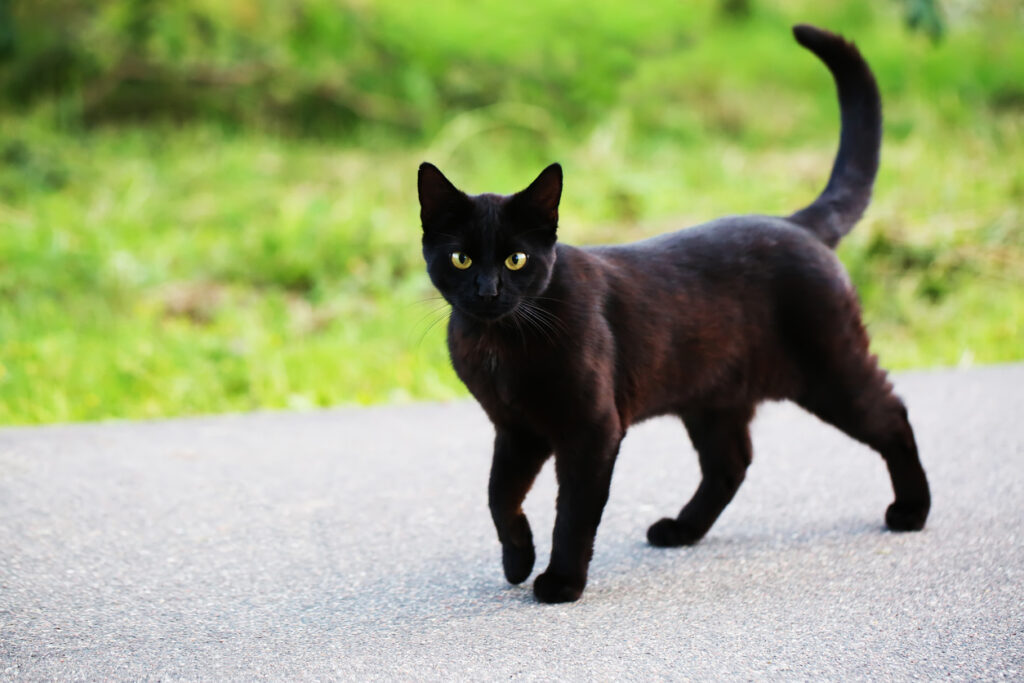
Cats have an amazing ability to twist their bodies mid-fall and usually do land on their feet, but it’s not guaranteed and doesn’t mean they’re safe. They can still get badly injured or killed from falls, especially from medium heights, where they don’t have time to position themselves properly.
Vets actually see more injuries from falls of two to six storeys than from really high falls because cats can’t complete their twisting reflex. The righting reflex is impressive, but it’s not magic, and older or overweight cats are much worse at it. Just because a cat lands on its feet doesn’t mean it hasn’t broken bones or damaged internal organs.
4. Dogs eat grass because they’re sick.

Dogs eat grass for loads of reasons, and being ill is only one small possibility. Most dogs just like the taste or texture, or they’re bored, or they’ve seen other dogs do it. Studies show that most dogs who eat grass aren’t sick beforehand and don’t throw up afterwards.
It’s completely normal behaviour and not something to worry about unless they’re eating huge amounts or seem unwell in other ways. Some researchers think it’s left over from wild ancestors who ate plant matter from their prey’s stomachs. Your dog munching grass on a walk is probably just having a snack, not trying to make itself sick.
5. You can’t teach an old dog new tricks.

Older dogs can absolutely learn new things, they just might take a bit longer or need different motivation than puppies. Their brains don’t stop working just because they’re older, and training actually helps keep them mentally sharp. The saying is more about stubborn people than actual dogs.
Older dogs often have better focus than puppies because they’re calmer and less easily distracted. They might have physical limitations that make some tricks harder, but their ability to learn is fine. Loads of rescue dogs get adopted as adults and learn house rules, commands, and tricks without any problem.
6. Cats are antisocial and don’t need attention.

Cats need social interaction and can get lonely or depressed if ignored, they’re just more subtle about showing it than dogs. They bond strongly with their owners, and many cats get separation anxiety when left alone too long. Some breeds like Siamese and Ragdolls are especially social and will follow you around demanding attention.
The independent reputation comes from cats being better at entertaining themselves than dogs, but that doesn’t mean they don’t want or need your company. A cat that seems aloof might just have learned that humans don’t respond to its communication attempts. When cats are raised with attention and interaction, most become quite affectionate.
7. Dogs’ mouths are cleaner than humans’.

Dog mouths are absolutely not cleaner than human mouths, this is gross and completely false. Dogs lick their own bottoms, eat rubbish, and carry loads of bacteria that can make humans sick. Their saliva does have some antibacterial properties, but so does human saliva.
The bacteria in a dog’s mouth is different to what’s in human mouths, not cleaner or safer. You can get infections from dog bites or even from them licking open wounds. The myth probably started because dogs lick their wounds, and they often heal fine, but that’s more about leaving the wound alone than magical cleaning properties.
8. A dog wagging its tail always means it’s happy.

Tail wagging shows a dog is emotionally aroused, but doesn’t automatically mean friendly or happy. Dogs wag their tails when they’re excited, anxious, aggressive, or uncertain. A stiff, high tail wagging quickly can mean the dog is agitated and might bite.
A loose, full-body wag with a relaxed posture usually means happy, but you need to look at the whole dog. Research shows dogs even wag more to the right when happy and more to the left when anxious. Approaching a dog just because its tail is wagging without checking its other body language is how people get bitten.
9. Cats purr only when they’re happy.

Cats also purr when they’re stressed, in pain, giving birth, or dying. Purring seems to be a self-soothing behaviour as well as a communication tool. Some researchers think the vibration frequency of purring might actually help cats heal from injuries or strengthen their bones. Mother cats purr to calm their kittens, and kittens purr while nursing.
Cats at the vet often purr even though they’re obviously terrified. If your cat is purring but also hiding, has flattened ears, or seems unwell, the purring isn’t happiness. It’s one signal that needs to be read alongside everything else.
10. Goldfish have three-second memories.

Goldfish actually have pretty good memories and can remember things for months, not three seconds. They can be trained to recognise colours, shapes, and even music. Studies show they remember feeding times and can navigate mazes they’ve learned. They recognise their owners and get excited when the person who feeds them approaches.
The three-second myth is used to justify keeping them in tiny bowls, but goldfish need proper tanks because they’re intelligent enough to get bored and stressed. They can live over 20 years with proper care, which would be impossible if they forgot everything constantly.
11. Dogs see in black and white.

Dogs see colours, but not as many as humans do. They see blues and yellows pretty well, but reds and greens look more like shades of brown or grey to them. Their colour vision is similar to humans with red-green colour blindness. Where dogs really excel is seeing in low light and detecting movement, which matters more for hunting than seeing loads of colours.
They also have a wider field of vision than humans. The black and white myth is completely outdated and has been disproven for decades, but people still repeat it. Dogs definitely live in a colourful world, just a different colour range than ours.
12. Indoor cats don’t need vaccinations.

Indoor cats still need vaccinations because diseases can get into your house on your shoes, clothes, or through open doors and windows. Some viruses like feline parvovirus can survive in the environment for over a year. If your cat ever escapes or needs to go to the vet or a cattery, they’re exposed to risks.
Indoor cats can also encounter bats or rodents that get inside. Rabies vaccinations are legally required in many places regardless of whether your cat goes outside. The core vaccines protect against serious diseases that can kill cats, and keeping them updated is basic responsible pet ownership, even for cats that never leave the house.