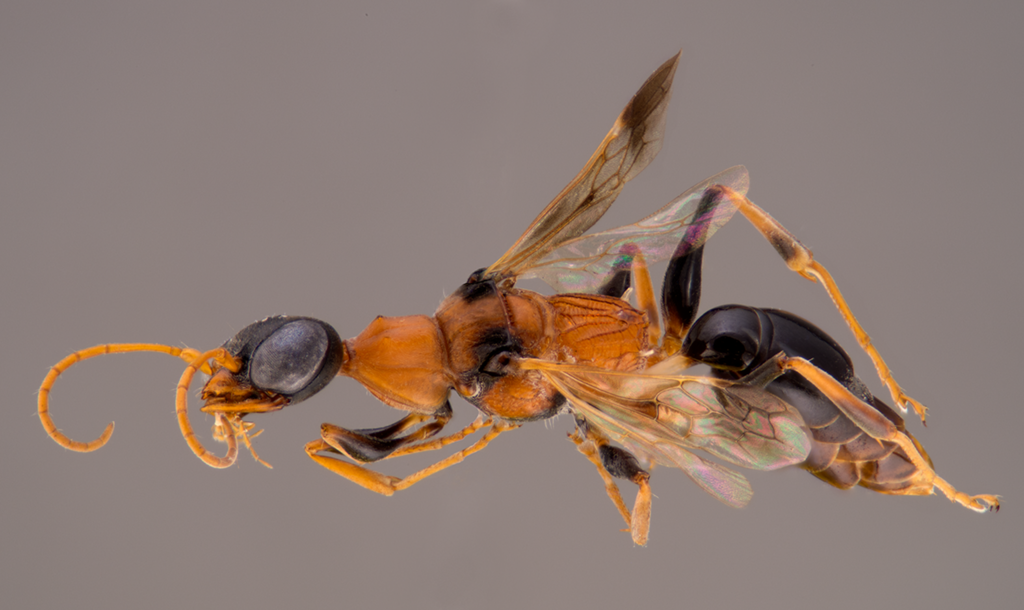
The natural world has produced some genuinely unsettling creatures over the years, but the dementor wasp has a particular claim to being one of the more disturbing discoveries of recent times. It’s not especially large, and it won’t bother you, but if you’re a cockroach, it represents something considerably worse than death.
It was discovered in Thailand’s Mekong region, and nobody knew it existed until 2007.
The Greater Mekong region, spanning Thailand, Cambodia, Laos, Myanmar, and Vietnam, is one of the most biodiverse places on the planet, and it keeps producing new species at a remarkable rate. The dementor wasp was first found there in 2007, living quietly in the Thai jungle without anyone in the scientific world having any idea it existed. It was formally described to science in 2014 as part of a wider report that identified 139 new species from the region in a single year, including a bat with shark-like teeth and a stick insect almost two feet long. The wasp still managed to steal the headlines.
The name was chosen by the public in a vote at a Berlin museum.
When German scientists brought specimens back to the Museum für Naturkunde in Berlin, they made an unusual decision about naming. Rather than simply assigning a scientific name themselves, they handed out pamphlets to around 300 museum visitors and asked them to vote from four options. The choices were Ampulex bicolor, referring to its distinctive red and black colouring, Ampulex mon, honouring the Mon people of Thailand, Ampulex plagiator, after its habit of mimicking ants, and Ampulex dementor, after the soul-sucking creatures from the Harry Potter novels. The public chose the Harry Potter name, and it wasn’t particularly close.
@sauti_science Dementor Wasp #greenscreen #spookyseason #halloween #biology #stem #science #wasp #entomology #dementorwasp #dementor #harrypotter #insect #parasite ♬ Horror train, horror, BGM(1230542) – syummacha
The name fits because of exactly what it does to cockroaches.
Museum visitors were told that dementors were magical beings capable of consuming a person’s soul, leaving behind an empty but functional body without personality or emotions. That description maps almost perfectly onto what this wasp actually does to its prey. The cockroach after being stung is alive, capable of movement, and physically intact, but it has lost the ability to direct itself. It just waits, docile and compliant, to be led into the wasp’s nest. Soul-sucking was felt to be the most accurate description available.
The sting targets the cockroach’s neural control rather than killing it outright.
The wasp injects venom directly into a specific cluster of neurons in the cockroach’s belly. The toxin blocks octopamine receptors, which are responsible for initiating spontaneous movement in insects. The result is that all the physical machinery is still running, but the cockroach can no longer choose to use it. It won’t flee, won’t struggle, and won’t attempt to escape. The wasp can then prod it with her antennae and essentially walk it, like a remote-controlled vehicle, directly into the nest. The precision of the sting is extraordinary for an animal working without any knowledge of neuroscience.
The cockroach is kept alive deliberately because fresh is better.
Once inside the nest, the wasp lays her eggs directly onto the still-living cockroach. When the larvae hatch, they begin feeding on it, and they do so in a specific order that keeps their host alive as long as possible. Non-vital organs are consumed first, with vital ones saved for later. The cockroach is effectively a living larder and the wasp’s larvae are instinctively efficient about keeping the food fresh. By the time the vital organs are reached, the larvae are large enough not to need the host alive any longer.
It belongs to a family of cockroach wasps with a long history of this behaviour.
The dementor wasp is part of the Ampulicidae family, which contains around 200 named species all of whom have some version of this hunting strategy. The most studied relative is the emerald cockroach wasp, a striking blue-green species found across South Asia and Africa that has been researched extensively in laboratory conditions. What makes the dementor wasp interesting even within this family is that its specific techniques and the particular cockroach species it targets remain largely unstudied, meaning the full extent of what it’s capable of is still unknown.
@gvizzle_74 #kickassfacts #facts #interesting #interestingfacts #coolfacts #what #animalfacts #dementorwasp #wasp #cockroach #cockroachwasp #zombie #thailand #thornydevil #australia #thornydragon #Molochhorridus #moloch #milton #paradiselost #bulletant #Paraponeraclavata ♬ original sound – gvizzle
J.K. Rowling retweeting it made it internationally famous overnight.
The wasp had been written about in scientific circles but hadn’t broken into mainstream awareness until May 2015, when J.K. Rowling came across coverage of it and retweeted a photo to her millions of followers. Within hours the dementor wasp was everywhere. The naming story, the zombie cockroach behaviour, and the Harry Potter connection combined into exactly the kind of thing that travels fast online and suddenly a small wasp from rural Thailand was being discussed in offices and schools around the world. The museum’s gamble on public naming had paid off in ways nobody anticipated.
It looks nothing like its more famous relative.
While the emerald cockroach wasp is a jewel-bright blue-green that looks almost artificially vivid, the dementor wasp is red and black with a more angular, ant-like appearance. It belongs to a group of species that actively mimic ants in both looks and movement, which is thought to be a defensive strategy since many predators find ants unpalatable or aggressive. Seeing one without knowing what it was, you might not register anything particularly remarkable about it, which is one of the stranger aspects of a creature with such an unusual set of abilities.
Its habitat is under serious threat.
The Greater Mekong region is ranked among the top five threatened biodiversity hotspots on the planet. Dams, road construction, logging, and hunting are all having a significant impact on the habitat the dementor wasp depends on, and since the species was only formally described in 2014, there’s no baseline data on how it was faring before human pressure intensified. Whether it targets one specific cockroach species or several is still unknown, which matters enormously because if its only host species disappears, the wasp goes with it.
It might eventually help scientists understand neurological conditions in humans.
The precision with which the dementor wasp, and its relatives, manipulate insect nervous systems has attracted genuine scientific interest beyond entomology. The octopamine system the wasp targets doesn’t exist in mammals, but studying how such targeted chemical intervention works in insects provides insights into how neurotransmitter systems function under disruption. Researchers hope that understanding the mechanisms involved could eventually contribute to knowledge about movement disorders and neurological conditions in humans. A creature that turns cockroaches into zombies may, in a roundabout way, turn out to be genuinely useful to medicine.