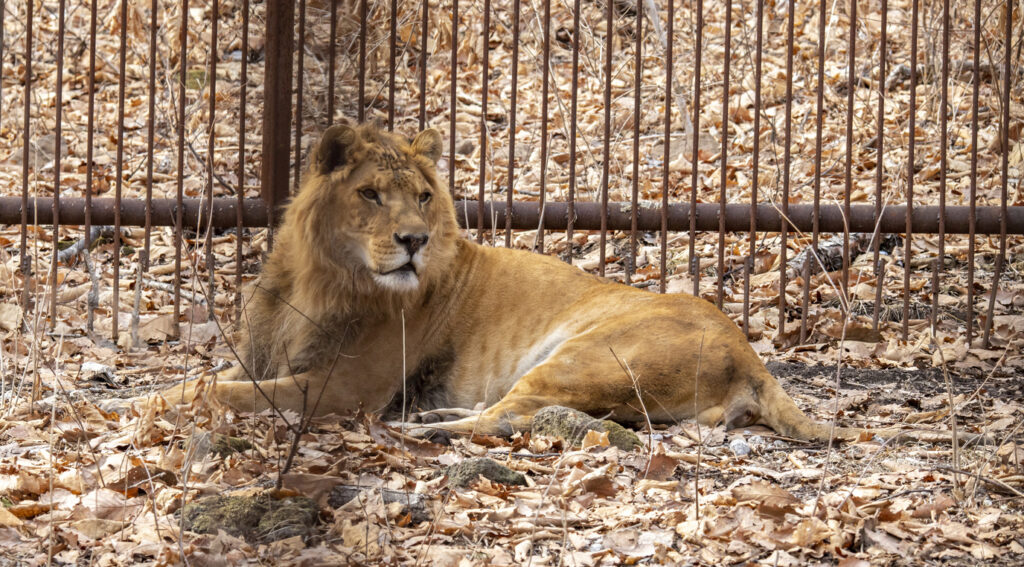
When you think of the biggest cats on the planet, your mind probably goes straight to a male lion or a massive Siberian tiger. But there’s a creature out there that makes both of them look like domestic house cats in comparison. We’re talking about a beast that can weigh as much as 80 or 90 stone, standing taller than a fully grown man when it gets on its hind legs.
It’s a bit of a freak of nature that only exists because of some very specific circumstances, and the reason they get so massive isn’t just down to good genes or a big appetite. There is a specific biological glitch at play that basically removes the stop button on their growth, turning them into these enormous, heavy-set giants that seem like something out of a prehistoric legend.
Ligers can weigh over 400 kg.
The average male lion weighs around 190 kg and a male tiger weighs roughly 220 kg, but ligers regularly exceed 400 kg. The largest documented liger, named Hercules, weighs over 410 kg and measures nearly 3.4 metres long. Some unverified reports claim certain ligers have reached over 500 kg, though these accounts lack scientific documentation. Their sheer size makes them bigger than any naturally occurring big cat on earth, including Siberian tigers, which are typically the largest pure species.
Male lions pass on growth-promoting genes.
In lion prides, multiple males compete to mate with the same females, so male lions have evolved to pass growth-promoting genes to their offspring. These genes help their cubs grow larger in the womb and after birth, giving them a competitive advantage over cubs fathered by other males. This genetic strategy developed because bigger, stronger offspring have better survival rates and are more likely to pass on their father’s genes. The growth-promoting genes are a direct result of lions’ social breeding structure.
@unilad You’ll never beat a liger!! 😲🦁 🎥: IG / waynehowlettpl #UNILAD #liger #lion #tiger #strong #tugofwar ♬ original sound – UNILAD
Female tigers lack growth-limiting genes.
Tigers are solitary animals and tigresses typically mate with only one male, so there’s no competition between cubs from different fathers. Because of this, female tigers never evolved growth-limiting genes to counteract male growth-promoting genes. Lionesses have these growth-limiting genes to keep their cubs from getting too large, but tigresses simply don’t need them. When a male lion mates with a female tiger, the growth-promoting genes go unchecked because there’s nothing to balance them out.
Ligers experience uncontrolled growth.
The combination of a lion father’s growth-promoting genes and a tiger mother’s lack of growth-limiting genes creates what scientists call growth dysplasia. Ligers essentially keep growing throughout their lives without the natural brakes that stop lions and tigers at a certain size. They reach their full size around age six, but even after that they tend to keep putting on weight. This uncontrolled growth is why ligers become so much larger than either parent species, sometimes reaching sizes that strain their bodies.
Tigons are much smaller by comparison.
If you reverse the pairing and breed a male tiger with a female lion, you get a tigon instead of a liger. Tigons end up much smaller, often weighing less than 150 kg because they inherit growth-limiting genes from both parents. Male tigers carry growth-limiting genes and female lions have them too, so tigons get a double dose that keeps them smaller than either pure species. This dramatic difference between ligers and tigons proves that the parent combination matters enormously in determining the offspring’s size.
They only exist in captivity.
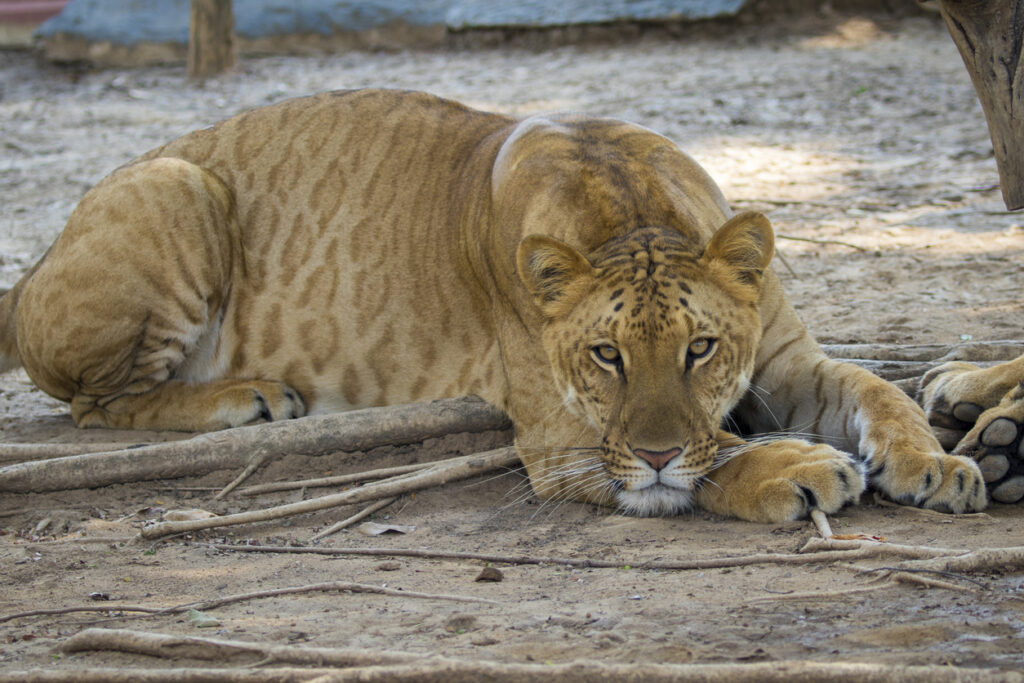
Lions and tigers don’t naturally overlap in the wild because they live in completely different habitats. Lions are found in Africa and a small population exists in India, while tigers live across various parts of Asia. Even in places where their historical ranges might have overlapped, their different behaviours and preferences kept them separate. All known ligers have been born in zoos, wildlife parks, or private collections where lions and tigers are kept together. There are no verified records of ligers occurring naturally in the wild.
Ligers eat massive amounts of meat.
An adult liger can consume 9 kg of meat in a typical day, usually beef or chicken, and is capable of eating up to 45 kg in a single sitting. Their enormous size requires substantial calories to maintain, making them expensive to feed in captivity. Some ligers are reportedly picky eaters, refusing certain types of meat and only accepting beef, elk, or venison. Their feeding requirements are significantly higher than those of pure lions or tigers, adding to the challenges of keeping them in captivity.
Their size causes serious health problems.
The extreme size of ligers puts enormous strain on their organs, joints, and bones, leading to various health issues throughout their lives. Many ligers suffer from obesity because they’re kept in captivity without the space to run and exercise like wild cats would. They’re prone to arthritis, organ failure, cancer, and neurological disorders as they age. Some ligers experience difficulties from birth, with complications during pregnancy and delivery because the cubs are larger than normal. Their bodies simply weren’t designed to carry that much weight.
Male ligers are completely sterile.
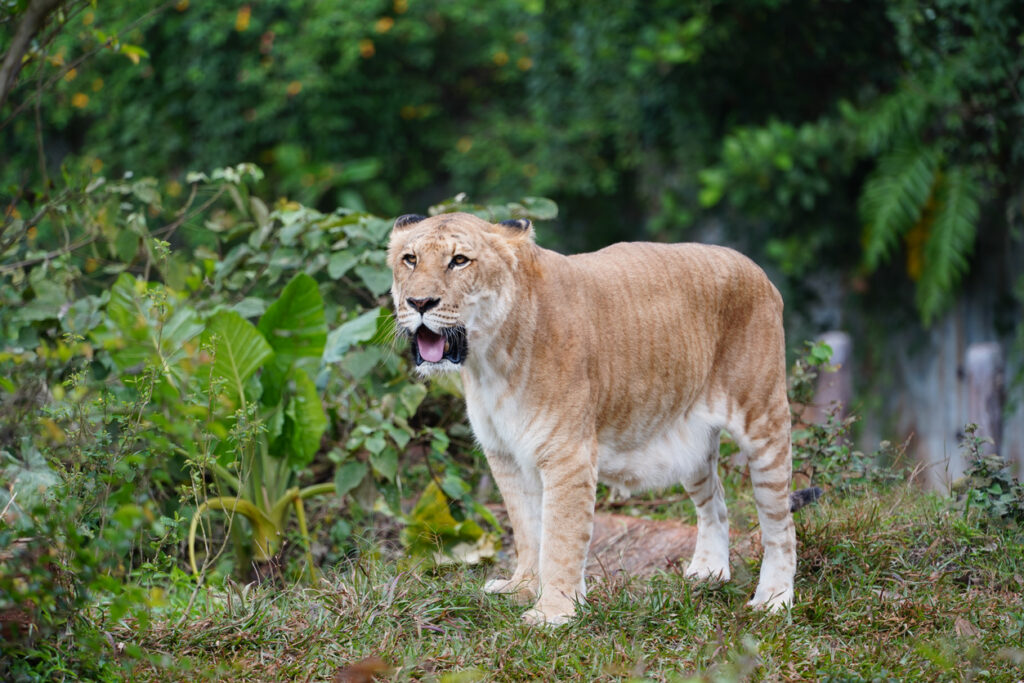
All male ligers are infertile and cannot produce offspring, which is common in hybrid animals. Female ligers can occasionally reproduce if mated with a pure lion or tiger, producing offspring called li-ligers or ti-ligers. This follows Haldane’s rule, which states that in hybrid animals where one gender is absent, rare, or sterile, it will be the gender with different reproductive chromosomes. In big cats, males are affected, so while female ligers might breed, males never can.
They show behaviours from both parent species.
Ligers enjoy swimming, which is a characteristic trait of tigers, and they’re social animals like lions. They can make the vocalizations of both species, roaring like lions and chuffing like tigers. Female ligers tend to enjoy company like lionesses but also appreciate solitude like tigers. Their mixed behaviour can make it difficult for them to interact properly with either pure lions or pure tigers, as they don’t fully match the social patterns of either parent species.
@only1hof Just look at this thing bro… #fyp #reaction #fight #animals #liger ♬ original sound – ONLY1HOF
Conservation groups oppose breeding them.
Most wildlife conservation organizations, including the World Wildlife Fund, don’t support breeding ligers because it serves no conservation purpose. Ligers don’t contribute to the survival of either endangered lions or tigers in the wild. Resources spent on breeding and maintaining ligers could instead go towards protecting pure species and their habitats. Many conservationists view liger breeding as exploitation that prioritizes spectacle over genuine animal welfare or species preservation.
They’re bred purely for entertainment.
The only reason ligers exist is that people breed them intentionally as attractions to draw paying visitors. They were historically created by accident when lions and tigers were kept together in captivity, but modern breeding is deliberate and commercial. Some facilities breed them to create a unique draw that generates revenue through ticket sales and publicity. The practice remains controversial because it creates animals with predictable health problems purely for human entertainment, raising serious ethical questions about whether creating these hybrids is justified.