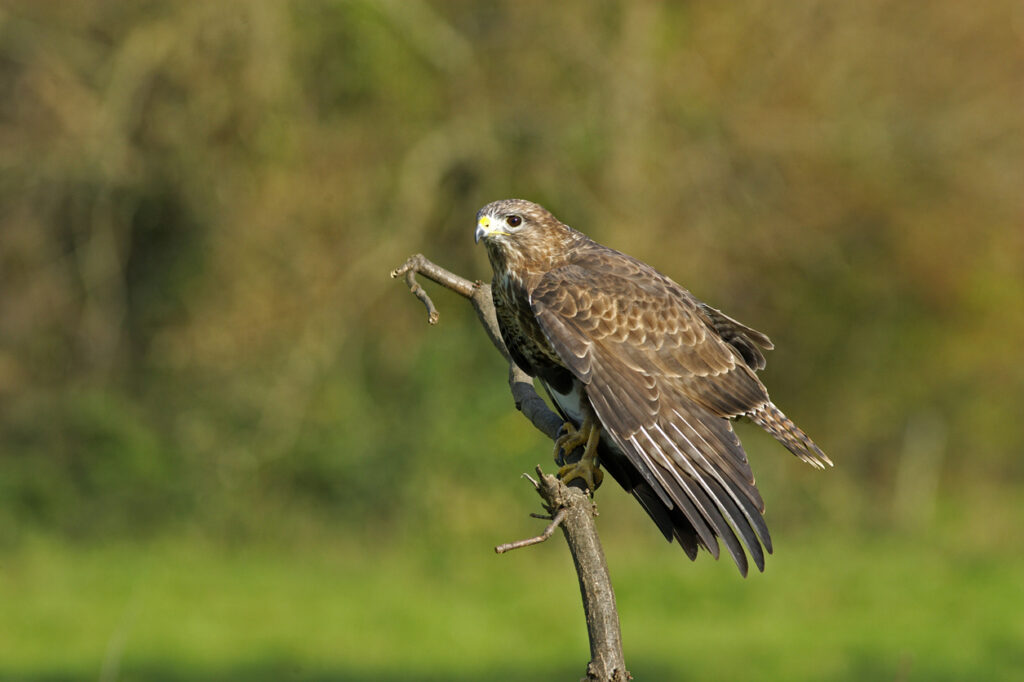
Spotting a large bird of prey soaring over the woods usually leads to a bit of a debate about what you’re actually looking at. Most of the time we just assume it’s the usual suspect seen on every other telegraph pole, but there’s a much rarer and more formidable predator out there that often gets misidentified. While they might share a similar colour palette and hang out in the same patches of countryside, their energy and proportions couldn’t be more different once you really start paying attention. T
he trick to settling the argument in seconds requires more than just looking at the feathers; it’s about watching how they handle the air and noticing the subtle physical markers that separate a common sight from a truly special encounter.
Look at the vibe first, floaty vs forceful.
A buzzard usually looks like it’s enjoying a lazy Sunday, circling high and barely trying. It hangs in the sky on wide wings and lets the air do the work, so the flight feels slow and relaxed. Meanwhile, a goshawk feels more like a missile with feathers. It moves with purpose, often lower, often faster, and it looks like it means business. If the bird makes you go oof that’s quick, you’re already leaning goshawk.
Check the wing shape, broad hands vs shorter paddles.
Buzzards have broad wings with obvious fingertips, like a big hand spread out. When they soar, the wings look chunky and rounded, with a slightly raised shape that helps them glide. Goshawks have shorter, broader wings compared to their body, built for quick turns. They can still look wide, but the whole shape feels more compact and powerful. If the wings look less like a glider and more like a fast cornering machine, think goshawk.
@mercerfalconry Whats the difference between a Buzzard and a Hawk? #bird #birds #birdsoftiktok #animal #animals #animalsoftiktok #animallover #hawk #buzzard ♬ Endless Travel – Tiko Tiko
Tail tells you a lot: one has a short fan, the other a long rudder.
Buzzards have a shorter tail that often looks like a neat little fan when they’re soaring. From a distance, you might not notice it much because the wings steal the show. Goshawks have a longer tail, and you’ll often see it working like a steering wheel. It can look quite long compared to the body, especially when the bird is turning. If you spot a long tail doing active control, that’s a big goshawk hint.
Watch the flapping, lazy beats vs punchy bursts.
Buzzards flap in an unhurried way, then go straight back to gliding. It can look a bit wobbly or casual, like they’re not in a rush to be anywhere. Goshawks flap in stronger, quicker bursts and then glide briefly. It’s that classic accipiter rhythm, flap flap flap, glide, then repeat. If the wingbeats feel urgent and driven, you’re probably not looking at a buzzard.
How high are they? Sky circling vs low and sneaky will tell you what you need to know.
Buzzards love gaining height and circling on thermals, so you’ll often see them as a dark shape way up, slowly spiralling. They’re happy out in the open and don’t mind being seen. Goshawks often fly lower, using trees and woodland edges like cover. They’re built for ambush and surprise, so they don’t tend to spend ages floating around high like a buzzard. If it appears from nowhere near woodland and disappears fast, goshawk becomes more likely.
The underwing look is different; one has pale panels, the other clean bars.
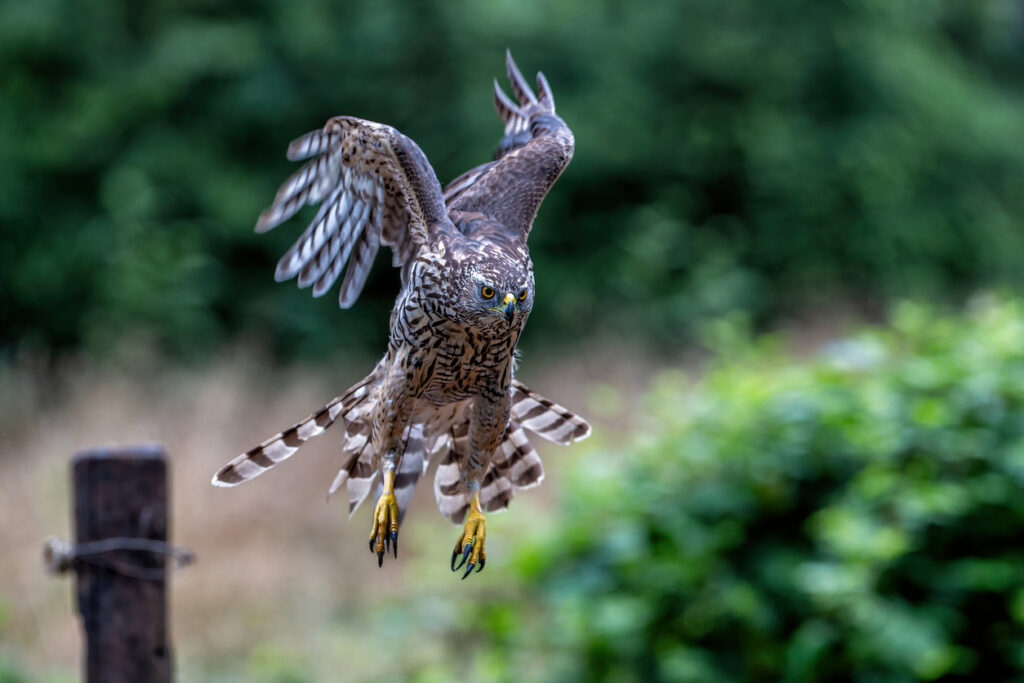
Buzzards are famously variable, which is a polite way of saying they can look like anything from dark chocolate to pale and patchy. Even so, a lot of buzzards show pale areas on the underwings that can look like light windows, especially in good light.
Goshawks often show a more even look underneath with neat barring on the body, especially adults. You might not see details in a split second, but the overall impression is often cleaner and more patterned, not blotchy. If it looks sharply marked rather than random, lean goshawk.
The shape while soaring is chunky rectangle vs cross shape.
When a buzzard soars, it can look like a big chunky rectangle with wings slightly raised. It often looks broad through the chest, with a compact head that doesn’t stick out much. A goshawk in glide can look more like a cross with a long tail behind it. The head can look a bit more pronounced too, especially when it’s flying low and straight. If the silhouette looks like wings plus tail as a strong shape, that points to goshawk.
Where you are matters, depending on whether it’s open country or deep woodland.
Buzzards are everywhere now, from fields and moorland to roadsides and even suburban edges. If you’re in open farmland or rolling countryside, and you see a big raptor circling, buzzard is the safe bet most of the time. Goshawks are much more tied to woodland and forestry, especially big mature woods. You can still see them outside woods while hunting, but their home base is trees. If you’re deep in woodland and a large hawk blasts through, that’s a classic goshawk moment.
@thehawkwalker Goshawk catches Pheasant MIDAIR!!! #goshawk #pheasant #falconry ♬ original sound – The Hawk Walker
Check out their perching style and look for obvious sitters vs hidden watchers.
Buzzards are bold perchers. You’ll see them sat on fence posts, telegraph poles, and lone trees like they own the place, often in full view of the world. Goshawks are less likely to sit out in the open like that, especially near people. They often perch in cover, watching quietly from within trees or near woodland edges. If you keep catching a raptor shape tucked into branches rather than on a pole, goshawk is a contender.
The instant shortcut? Most big circlers are buzzards.
If you get one quick glance at a big bird circling high over open ground, it’s almost always a buzzard in the UK. That’s not a rule carved in stone, but it’s a very good starting point when you’ve only got seconds. If the bird is low, fast, powerful, and using trees like cover, that’s when you start thinking goshawk. When in doubt, ask yourself one question: did it look like it was floating for fun, or hunting like it had a deadline. That answer usually gets you there.