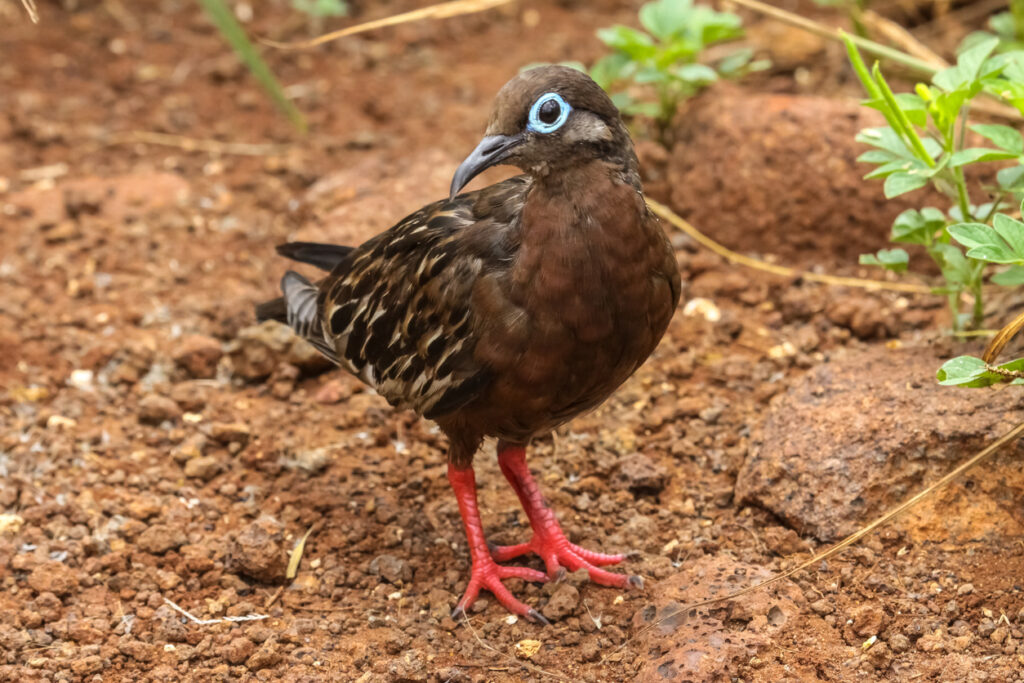
It feels like we’re constantly hearing about species disappearing forever, so it is a massive win when a bird that has been on the ropes for centuries finally starts to make a proper comeback. We are talking about a tiny, secretive creature that has spent the last 200 years being pushed out of its own home by everything from habitat loss to the arrival of predators it was never meant to face.
For a long time, the situation looked pretty bleak, and it seemed like it was only a matter of time before they vanished entirely. But thanks to some incredibly dedicated work on the islands, the tide is finally turning, and this little bird is reclaiming the ground it lost. It is a rare bit of good news that shows nature can actually get back on track if we just give it a fair chance.
The Galápagos rail disappeared from Floreana Island in 1835.
Charles Darwin was the last person to officially record seeing this small, dark grey bird on Floreana Island during his famous 1835 visit. After that, the species completely vanished from the island and was thought to be locally extinct for nearly two centuries. The bird still existed on other Galápagos Islands, but Floreana seemed to have lost its population entirely. Despite repeated surveys over the decades, including extensive searches in 1987, nobody could find any trace of the rails on Floreana.
It’s a tiny bird that can barely fly.
The Galápagos rail weighs between 35 and 45 grams, roughly the weight of a small chicken egg. It has dark grey plumage with a brown back, distinctive red eyes, and fine white speckles across the rear half of its body. The bird is largely flightless, which makes it particularly vulnerable to ground predators. It prefers hiding in dense vegetation like tall grass and tangled forest understory, and it’s known for being extremely shy and secretive, which explains why it remained undetected for so long.
@andres.travels Galápagos rail (Laterallus spilonota) is only found in the Galápagos Islands. (Endemic) -Flightless: This bird cannot fly; it has small wings adapted for a terrestrial lifestyle. -Diet: It eats insects, spiders, worms, seeds, and plant material. -Conservation: The species is vulnerable due to habitat loss and predation by non-native species like rats and cats. -Nesting: Galápagos rails nest on the ground, laying 2-3 eggs per clutch. -Behavior: They are secretive , rare, and often heard rather than seen, with a distinctive call. #galapagoswildlife #ecuadortourism #andrestravels #experiencelife #rarebirds ♬ original sound – Andres.Travels
Invasive species drove the bird to near extinction.
Floreana Island became overrun with non-native animals over the centuries, including feral pigs, goats, cows, dogs, and more recently cats and rodents. These invasive predators arrived with pirates, settlers, and possibly even on Darwin’s own ships. The introduced species ate bird eggs, killed adults, and competed for resources, devastating native wildlife that had evolved without natural defences against such threats. The rails, being ground-dwelling and unable to fly away quickly, were particularly vulnerable to cats and rats.
A massive eradication programme changed everything.
In late 2023, conservation groups launched an ambitious campaign to remove all invasive predators from Floreana Island. The Galápagos National Park Directorate and Jocotoco Conservation Foundation, with support from Island Conservation, used poison dropped from planes and dispersed by hand across the island. Local residents were asked to keep their cats indoors during the operation. The programme represented a decade of preparatory work and aimed to restore Floreana’s natural ecosystem by eliminating the invasive species that had wreaked havoc for centuries.
The rail reappeared just one year after the eradication.
Scientists confirmed the presence of Galápagos rails on Floreana in early 2025, documenting the bird at three different locations within the island’s transition zone. They collected six acoustic recordings, captured two visual sightings, and took one photograph as proof. Marine biologist Paola Sangolqui described the impact as immediate and remarkable, saying the rails are now commonly found walking around the island. The speed of the recovery stunned conservationists, who expected any comeback to take much longer.
Nobody knows whether the birds survived undetected or returned from elsewhere.
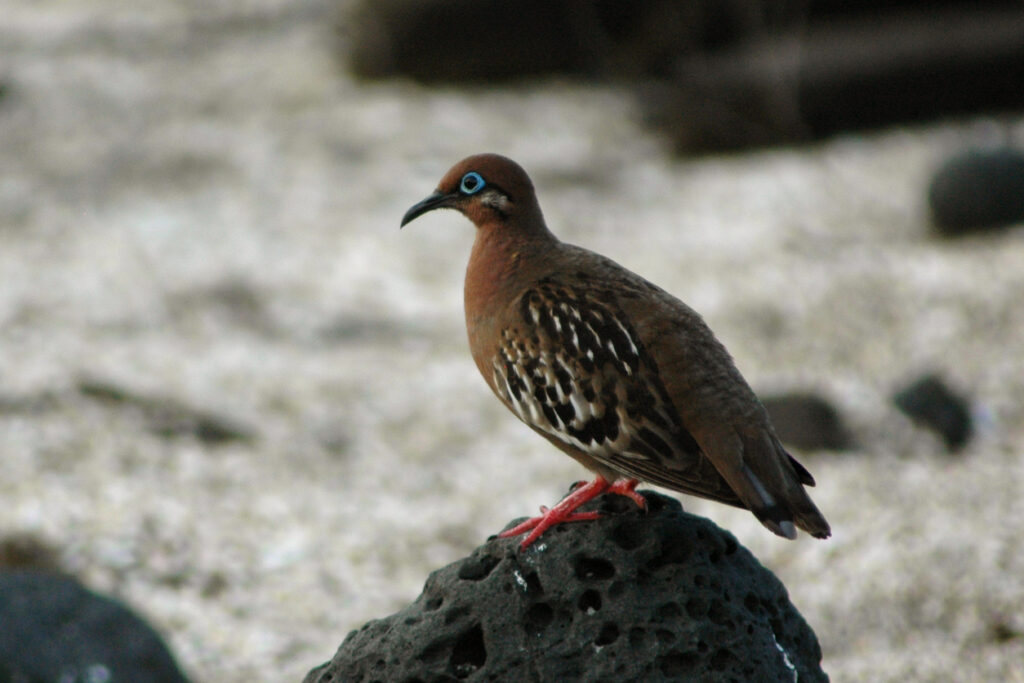
Scientists have two theories about the rail’s reappearance. Either a tiny population survived on Floreana all along in extremely low numbers, remaining undetected because they’re so secretive and rare, or they recolonised the island from nearby Galápagos Islands once predators were removed. The birds aren’t strong fliers, but they’re excellent swimmers, so migration between islands is possible, though difficult. Genetic testing is planned to determine whether the newly recorded birds belong to a long-lost Floreana lineage or descended from populations on other islands.
The rail was one of twelve locally extinct species targeted for reintroduction.
The Floreana Restoration Project had identified the Galápagos rail as one of twelve species that had disappeared from the island and needed reintroducing. The list included the Floreana giant tortoise, Floreana mockingbird, Floreana racer snake, and Galápagos barn owl. Conservationists were preparing to capture birds from other islands and transport them to Floreana when the species surprised everyone by showing up on its own. This discovery means one less species requires human intervention for reintroduction.
Other native species are also making remarkable comebacks.
The rail isn’t the only species benefiting from the removal of invasive predators. Bird counts in 2025 revealed that Galápagos doves, lava lizards, geckos, and dark-billed cuckoos are all being seen much more frequently than before. Behavioural biologist Sonia Kleindorfer described it as an instant explosion of species that were considered very rare until the eradication programme. Some finch species are even singing new songs never heard on the island before, showing how dramatically the ecosystem is recovering.
@optilacrity • The Galápagos Rail hadn’t been scientifically confirmed on the islands for ~190 years. • It was rediscovered in 2018 on Galápagos Islands using: • camera traps 📷 • audio recordings of its calls 🔊 • The species was never officially declared extinct — just “lost to science.” Why it disappeared for so long • It’s tiny, shy, ground-dwelling, and hates flying. • Introduced predators (rats, cats) wiped it out on many islands. • It lives in dense vegetation, making sightings extremely rare. Why this is a big deal • Confirms the species survived undetected for nearly two centuries. • Shows conservation efforts (predator control) are working. • It’s a rare modern example of a “Lazarus species” — thought gone, but still alive. Small nuance (for accuracy) • “Rediscovered” = first confirmed modern evidence, not that it literally vanished completely. • The headline is still fair and scientifically accepted. #galapagos #hideandseek #extinct #found #nature ♬ original sound – OptiLacRity
Local residents are thrilled to see the bird return.
People living on Floreana have been supportive of the eradication programme and excited about seeing wildlife return. Longtime resident Claudio Cruz said he was really moved when told the rail had been spotted, and has since seen it himself. Local communities have a strong interest in conservation success because their livelihoods depend heavily on tourism, and visitors come to the Galápagos specifically to see unique native species. The return of lost birds strengthens both the ecosystem and the local economy.
The success shows that removing threats allows nature to heal itself.
The Galápagos rail’s return demonstrates what conservationists have observed on islands worldwide, when you remove invasive predators, native species can recover in remarkable ways. Arturo Izurieta, director of the Galápagos National Park, emphasised that the discovery highlights nature’s resilience when given the chance. The eradication programme didn’t just benefit the rail but improved the entire ecological balance of Floreana. Conservation groups hope this success story will inspire similar restoration projects on other degraded islands around the world.