
Space is a lot bigger and weirder than most of us realise, and even the smartest people in the world are still basically guessing when it comes to the massive gaps in our knowledge. We like to think we’ve got the universe mapped out, but the reality is that astronomers can only actually see a tiny fraction of what’s out there. The rest is filled with massive mysteries that don’t follow any of the rules we’ve spent centuries writing down.
From galaxies that don’t have enough visible matter to stay together, to strange signals from the middle of nowhere that shouldn’t exist, there are 10 major things that have the experts completely stumped. As it turns out, for all our high-tech telescopes and massive computers, we’re still just staring at the sky and trying to make sense of a playground where the physics don’t always behave.
1. Dark matter makes up 27% of the universe, and we still don’t know what it is.
We can see dark matter’s gravitational effects pulling galaxies together and bending light, but we’ve never actually detected a dark matter particle. Scientists have spent billions searching for weakly interacting massive particles (WIMPs) that might explain it, but decades of experiments have come up empty. A Japanese researcher recently claimed to spot gamma rays that might be dark matter particles colliding, but other experts reckon it could just as easily be neutron stars or black holes.
2. Dark energy is even more mysterious and accounts for 68% of everything.
If dark matter holds galaxies together, dark energy is doing the opposite by making the universe expand faster over time. Nobody knows what’s causing it. Some scientists think it might be a property of space itself, others suspect it’s a new force we don’t understand. A recent theory suggests dark matter and dark energy might not exist at all, and what we’re seeing is just the universe’s fundamental forces getting weaker as it ages.
3. Supermassive black holes shouldn’t have formed so quickly.
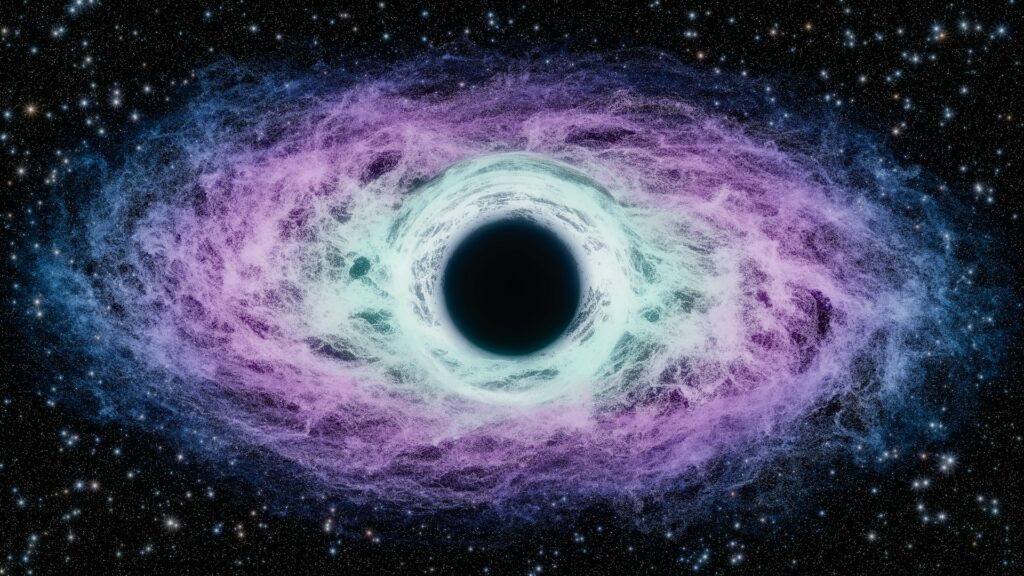
The James Webb Space Telescope keeps finding supermassive black holes in the early universe that are millions or billions of times heavier than our sun. The issue is that they shouldn’t have had enough time to grow that massive. Current theories say black holes form from dying stars and slowly accumulate mass by swallowing nearby material, but these ancient monsters appeared less than a billion years after the Big Bang.
4. We’re missing half the normal matter in the universe.
Forget dark matter for a second. When astronomers count up all the regular atoms and molecules we should be able to see from the early universe to now, the numbers don’t add up. Around half of the normal matter has gone missing somewhere between then and now. Scientists think it might exist as a warm-hot intergalactic medium between galaxies, but locating it remains a priority because it should tell us how galaxies evolved.
5. Fast radio bursts come from nowhere and no one knows why.
These incredibly powerful radio pulses last just a few milliseconds, but release as much energy as the sun does in days. They started being detected in 2007 and come from distant galaxies, but their cause is a complete mystery. Some repeat at unpredictable intervals, while many fire once and never again. Dozens of theories have been proposed involving everything from neutron stars to more exotic phenomena, but none have become widely accepted.
6. Tabby’s Star dims by 22% for no obvious reason.
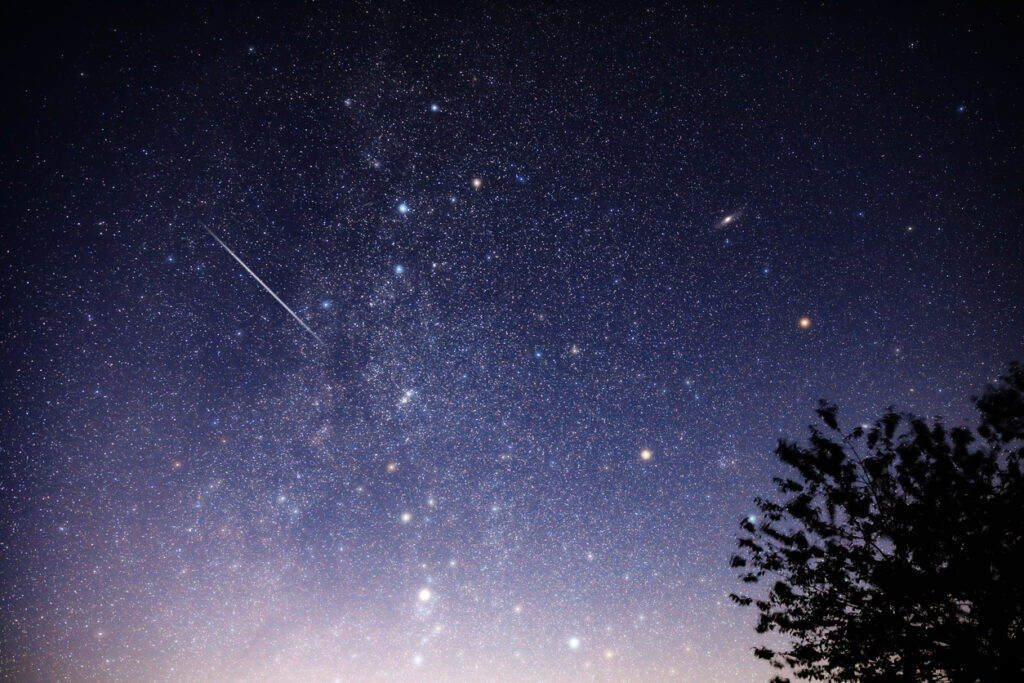
Most stars that have planets passing in front of them dim by less than 1%, but Tabby’s Star blocks up to 22% of its light in completely irregular patterns. It’s 1,470 light-years away and behaves like nothing astronomers have ever recorded. Some evidence suggests it’s been gradually dimming over the past century. Scientists favour explanations involving dust from colliding asteroids, but no single theory accounts for the dramatic, unpredictable behaviour.
7. Jupiter-mass binary objects shouldn’t exist, but they do.
Last year, the James Webb Telescope found 40 pairs of planet-sized objects floating in space that aren’t orbiting any star. They’re called JuMBOs, and they break the rules for how celestial bodies form. They’re too small to be stars because stars need more mass, but they can’t be planets either because planets form around stars. Nobody can explain how they came into existence or why they’re paired up.
8. Odd radio circles are massive and perfectly circular for unknown reasons.
These enormous ring-shaped structures span roughly one million light-years across and only emit radio wavelengths, making them invisible to normal telescopes. First spotted in 2019, they don’t match anything we know, like supernova remnants or galaxy clusters. Their clean, symmetric appearance suggests powerful shockwaves from unknown energetic events, possibly involving supermassive black hole mergers. Only a handful have been identified, and scientists can’t work out if they’re rare or if we’ve just been missing them.
9. The Hubble tension shows we can’t agree on how fast the universe is expanding.
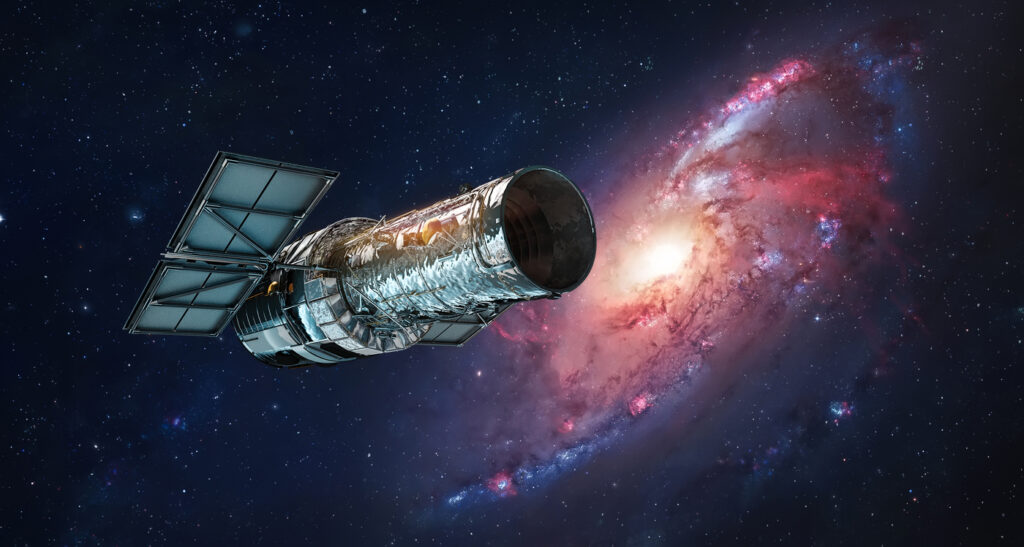
When astronomers measure the universe’s expansion rate using observations of the early cosmos, they get one number. When they measure it using nearby stars and supernovas, they get a completely different number. This discrepancy is called the Hubble tension, and it’s getting worse as measurements become more precise. Either something is wrong with our observations or we’re missing something fundamental about how the universe works.
10. Ultra-high-energy cosmic rays arrive with impossible amounts of energy.
Some cosmic rays hit Earth’s atmosphere with energies that shouldn’t be possible. The most famous one, dubbed the “Oh-My-God particle” in 1991, carried 51 joules of energy in a single proton. That’s like a cricket ball travelling at 100 kilometres per hour, except it’s happening at the subatomic level. Nobody knows what astrophysical processes could accelerate particles to such ridiculous speeds, or where they’re coming from, though recent research suggests pulsar wind nebulae might be involved.