
We spend billions of pounds and decades of research trying to build machines that can clean the air, move water, or create super-strong materials, but nature has been doing all of that on autopilot for millions of years. It’s a bit humbling when you realise that a swamp does a better job of filtering water than a high-tech treatment plant, or that a common spider can spin a thread that’s tougher than steel without needing a factory.
We’re constantly trying to mimic these natural systems with our own engineering, but our versions are often clunkier, more expensive, and prone to breaking down. Nature doesn’t need a manual or a power source to keep things running; it just uses the local environment to get the job done efficiently. These 12 examples show how the natural world handles massive tasks automatically, and why we’re still playing catch-up with our own “advanced” inventions.
1. Filtering and purifying water through wetlands
Wetlands naturally clean water by filtering out pollutants, sediment, and excess nutrients as water flows through plants and soil. The plants absorb chemicals, bacteria break down organic matter, and the slow movement allows particles to settle. Humans build expensive water treatment plants with complex filtration systems and chemical processes to achieve what marshes and reed beds do for free.
We’re finally catching on and creating constructed wetlands for wastewater treatment, but we’re essentially just copying what nature’s been doing forever. The difference is wetlands also provide habitat and flood control while they’re at it, making them far more efficient than our single-purpose facilities.
@stevebackshallofficialWaterway win! Thanks to my friends at Defra, the Environment Agency and London Mayor Sadik Khan for inviting me to Walthamstow Wetlands today, to talk positive plans for London’s rivers. The initial £1.8billion investment aims to clean up 41 of our capitals waterways starting NOW, but with the grand goal of having them swimable in ten years. Thankyou too to @officialthameswater CEO for being willing to sit down and engage. Obvs I’m not holding my breath, but if they pull it off, London would end up being a world leader for water… let’s start with stopping the sewage spills shall we?!
2. Capturing carbon and producing oxygen through photosynthesis
Every plant on earth is a tiny carbon capture machine that pulls CO2 from the atmosphere and converts it into oxygen and plant matter using just sunlight and water. This process happens constantly, across billions of plants, maintaining atmospheric balance without any energy input beyond the sun.
Humans are now spending billions developing carbon capture technology with massive facilities, high energy requirements, and limited capacity. Trees do the same job while also providing shade, habitat, food, and stabilising soil. We’re trying to engineer our way out of a problem that plants solve automatically, and our technology isn’t even close to being as efficient.
3. Controlling pests through natural predators
Ecosystems regulate pest populations automatically through predator-prey relationships that keep everything in balance. Ladybirds eat aphids, birds eat caterpillars, bats consume mosquitoes, and the system self-regulates without intervention. Humans developed pesticides to control pests, which kill beneficial insects too, require constant reapplication, and create resistant pest populations.
We’re now trying to engineer biological pest control by introducing specific predators, which is just recreating what intact ecosystems did naturally before we destroyed them. The natural version works better because it’s evolved over millennia to maintain balance rather than eliminate one species at the expense of everything else.
4. Building structures that withstand extreme conditions
Spider webs are stronger than steel by weight, termite mounds maintain perfect temperature and humidity without mechanical systems, and birds’ nests withstand wind and rain using just twigs and mud. These structures are built with minimal materials, no machinery, and they work perfectly for their purpose.
Humans study biomimicry to copy these designs for buildings, bridges, and materials science because nature’s already solved the engineering problems we’re struggling with. We use tonnes of concrete and steel to achieve what a spider does with a few milligrams of protein. The natural versions are also biodegradable and don’t require manufacturing facilities or energy-intensive production.
5. Creating soil from dead organic matter
Decomposition turns dead plants and animals back into nutrient-rich soil through bacteria, fungi, insects, and worms working together. This process recycles everything and creates the foundation for new growth without any waste or outside energy. Humans are trying to engineer composting systems and soil creation technologies to deal with organic waste and degraded farmland.
We’re essentially attempting to speed up or control what happens automatically in any forest floor or healthy grassland. The natural process doesn’t require bins, turning, monitoring, or any of the faffing about that human composting involves.
6. Regulating temperature in environments
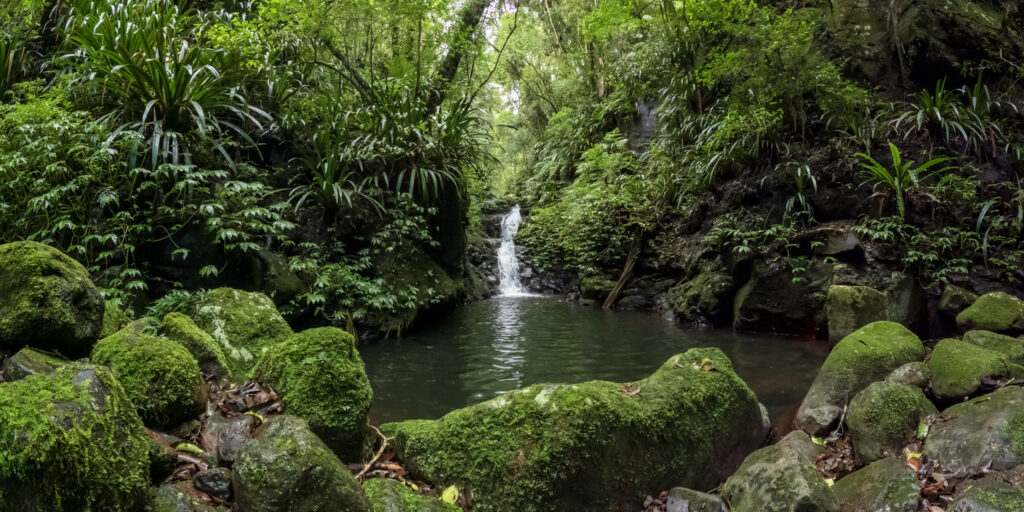
Forests create their own microclimates by providing shade, releasing moisture through transpiration, and moderating temperature swings. A healthy forest stays cooler in summer and warmer in winter than cleared land, all without any mechanical systems. Humans build air conditioning units, heating systems, and insulation to achieve temperature control that uses massive amounts of energy.
We’re now trying to engineer green roofs and vertical forests on buildings to help with urban heat islands, which is just putting back the temperature regulation we removed when we cut down all the trees. Nature’s version runs on sunlight and water, ours requires electricity and maintenance.
7. Distributing water across landscapes
River systems, groundwater, and plant root networks distribute water throughout ecosystems automatically, storing it during wet periods and releasing it during dry spells. This natural water management prevents both flooding and drought in healthy landscapes. Humans engineer dams, reservoirs, irrigation systems, and drainage networks to try controlling water distribution, often causing problems downstream or depleting aquifers.
We’re starting to restore wetlands and natural river courses because our engineered solutions created floods, droughts, and ecological collapse. Turns out, rivers knew what they were doing before we straightened them and paved over floodplains.
8. Producing medicines and antibiotics
Fungi, plants, and bacteria produce complex chemical compounds that kill pathogens, reduce inflammation, and treat diseases. Penicillin comes from mould, aspirin from willow bark, and countless other medicines are derived from natural sources. Nature’s been doing chemical engineering at the molecular level for billions of years.
Humans discovered these compounds, synthesised them in labs, and now struggle with antibiotic resistance because we’re using them incorrectly. We’re constantly searching for new medicines in rainforests and ocean ecosystems, essentially looking for what nature’s already created. The natural versions often have fewer side effects because they’ve evolved alongside the organisms they treat.
@thefrenchiegardener Flowers are feeding us, pollinate them to make sure they are growing vegetables or fruits 🥒🥰🍅 Most of our vegetables & fruits are growing from a flower, but they need first to be pollinated. This can happen with the gentle & precious help of our pollinators or even with the wind. If ever, you do not see many pollinators on your growing space, hand pollination will be more than necessary. 🌼 The flowers of Tomatoes, Aubergine / Eggplants, Peppers or Strawberries contain both the male (stamens) & female (pistil) reproductive organs in the same flowers. By tapping on them, shacking them, this will mix the pollen inside & pollinate the flower by itself. For strawberries, you can take a paintbrush & brush from the outside of the flower towards the center. Brish correctly the whole flower or the strawberry will grow with weird shape. 🌼 For Cucumbers or Courgettes / Zucchinis, it’s a bit more complex as the plant has a distinct male flower (thin stem) & female flower (thicker stem). So to be pollinated, the pollen needs to travel from the male to the female flower. It’s tricky on zucchinis, as the flower only open in the morning, which means a bee or bumblebee has to visit both flowers in the correct order. I consider courgette as the plant which needs definitely this hand pollination process to obtain higher harvests. Without pollination the fruit won’t grow further & will rot. So yes we are being fed by flowers, without them, we would not have these tasty fruits & veggies. But flowers are also feeding us by offering us seeds contained in the fruits. But also when a lettuce bolt into flower. These flowers will give free seeds to plant new lettuce! That’s the beauty & generosity of our Nature! 🙏🏼 Green Love to you 💚 #gardening #flowers #edibleplants #pollination #vegetables #fyfyfyfy #growyourownfood ♬ Vivaldi Variation (Arr. for Piano from Concerto for Strings in G Minor, RV 156 by F. Christl) – Florian Christl
9. Pollinating plants to produce food
Bees, butterflies, birds, bats, and wind pollinate flowering plants automatically, ensuring reproduction and food production across ecosystems. This service happens for free, maintaining biodiversity and agricultural productivity without human input. Humans are now engineering robotic bees and manual pollination methods because we’ve destroyed so many pollinator populations through habitat loss and pesticides. We created the problem by eliminating the natural solution, and now we’re trying to build expensive technological replacements for what insects did perfectly well. A single bee colony pollinates millions of flowers, something no robot has come close to matching.
10. Cleaning air through plant respiration
Plants and trees remove pollutants from the air constantly, absorbing CO2, filtering particulates, and releasing oxygen. Urban trees reduce air pollution significantly just by existing and doing what they naturally do. Humans are developing air purification systems, smog towers, and artificial trees to clean polluted city air, spending millions on technology that living trees provide for the cost of planting and occasional watering.
We’re engineering solutions to pollution that wouldn’t exist at the same scale if we hadn’t removed the forests that were cleaning the air in the first place. The natural system also provides shade, habitat, and beauty while purifying air, making it vastly more efficient than mechanical alternatives.
11. Preventing erosion and stabilising landscapes
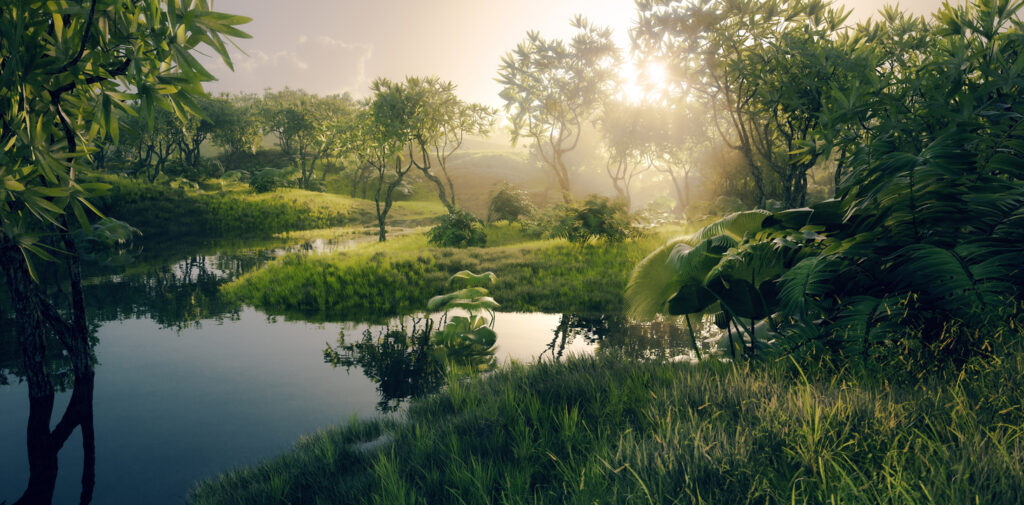
Plant root systems hold soil in place, preventing erosion from wind and water, while allowing water infiltration. Coastal mangroves and dune grasses protect shorelines from storms and sea level rise naturally. Humans build retaining walls, sea walls, and erosion control structures using concrete and engineering when the landscape starts falling apart after we’ve removed the plants that were holding it together.
We’re increasingly using living shorelines and revegetation because our hard structures fail and cause problems elsewhere. Roots do the job better, cheaper, and they regenerate themselves while providing habitat. Engineering can’t compete with a system that maintains itself.
12. Converting waste into resources continuously
Natural ecosystems have no concept of waste because everything gets recycled by something else. Dead animals feed scavengers and decomposers, animal waste fertilises plants, and nothing accumulates because it’s all part of nutrient cycles. Humans produce waste that doesn’t break down, overwhelms natural systems, and requires expensive management and disposal.
We’re trying to engineer circular economies and zero-waste systems, essentially attempting to recreate what ecosystems do automatically. The difference is we’re doing it with materials nature never evolved to process, like plastics and synthetic chemicals. Natural systems prove that waste is a design flaw, not an inevitability, and we’re slowly learning to copy their closed-loop approach.