Nature has a funny way of making things look like a total shambles when there’s actually a very tight logic running behind the scenes.

You look at a massive swarm of starlings or the way a forest floor grows in, and it looks like every part of the system is just winging it. In reality, these setups are far more dependable than anything we’ve managed to build with a blueprint. They rely on a set of simple, unwritten rules that keep everything on track, even when the environment throws a proper spanner in the works. It’s this hidden structure that allows life to bounce back from a disaster, while our own “organised” systems would likely fall apart at the seams.
Seeing these things in the wild might be confusing to us, but to nature, they make perfect sense.
1. Bird murmurations swirling without crashing into each other
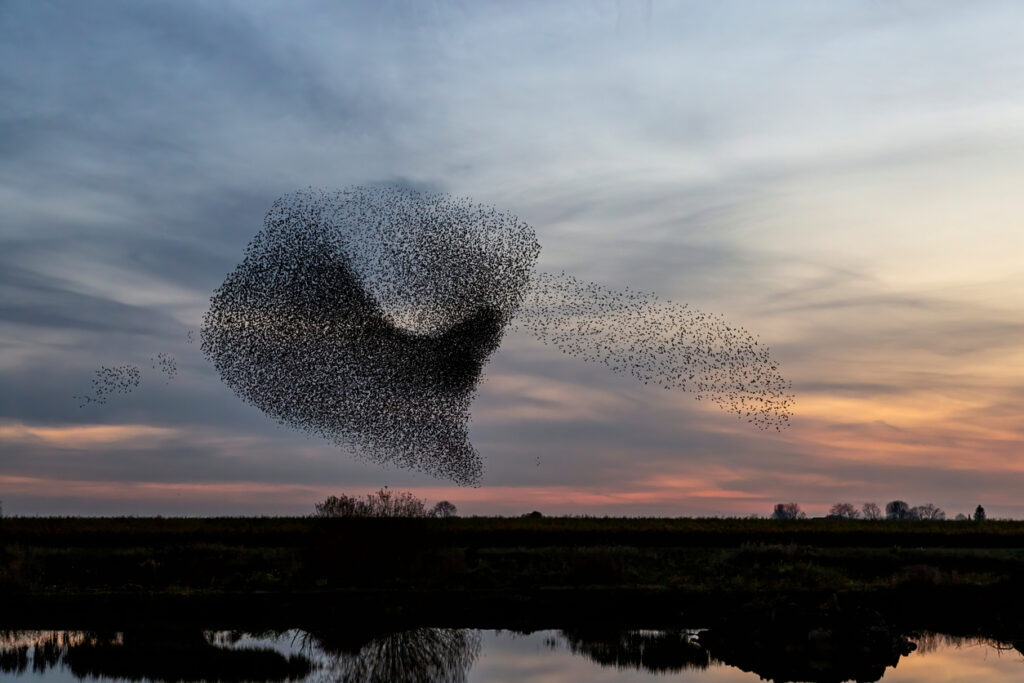
Thousands of starlings flying together in those mesmerising cloud formations look like total chaos, but they’re actually following simple rules that each bird applies individually. Every bird watches the seven birds closest to it and adjusts its speed and direction accordingly, and that’s it. There’s no leader, no plan, just each bird responding to its immediate neighbours, and somehow that creates those stunning coordinated shapes that move as one.
Scientists have studied this for years trying to work out how they don’t collide, and it turns out the system is so reliable that accidents are incredibly rare. The apparent chaos is actually thousands of birds executing the same straightforward instructions perfectly.
2. Ant trails that seem random but always find the shortest route

Watch ants swarming around, and it looks like they’re wandering aimlessly, but they’re actually solving complex navigation problems more efficiently than most computer algorithms. Individual ants lay down pheromone trails as they explore, and when one finds food, other ants follow that chemical path.
The more ants use a route, the stronger the scent becomes, and shorter paths get reinforced faster because ants complete them quicker. Within hours, what looked like chaotic searching becomes an organised highway taking the most efficient route possible. They’re not planning or thinking it through; they’re just following simple chemical signals, and somehow that creates perfect logistics networks.
3. Forest fires clearing land in patterns that let ecosystems thrive
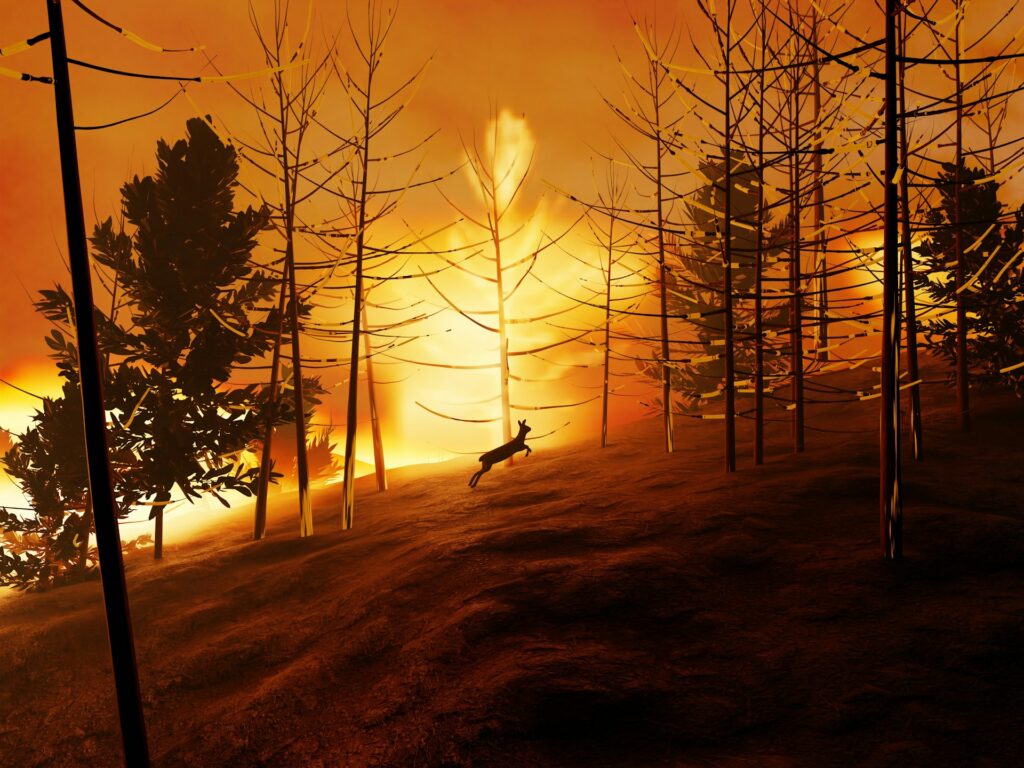
Wildfires feel destructive and random, but in healthy ecosystems, they follow surprisingly predictable patterns that many plants and animals actually depend on. Certain forests need fire every 5 to 15 years to clear undergrowth, release seeds, and return nutrients to the soil. Without these regular burns, forests become overgrown tinderboxes that eventually produce catastrophic fires instead of manageable ones.
Species like lodgepole pine cones only open and release seeds when exposed to fire’s heat, timing their reproduction perfectly to when the ground is cleared and ready. What looks like devastation is actually the forest hitting reset in a cycle it’s followed for thousands of years.
4. Predator and prey populations cycling up and down together
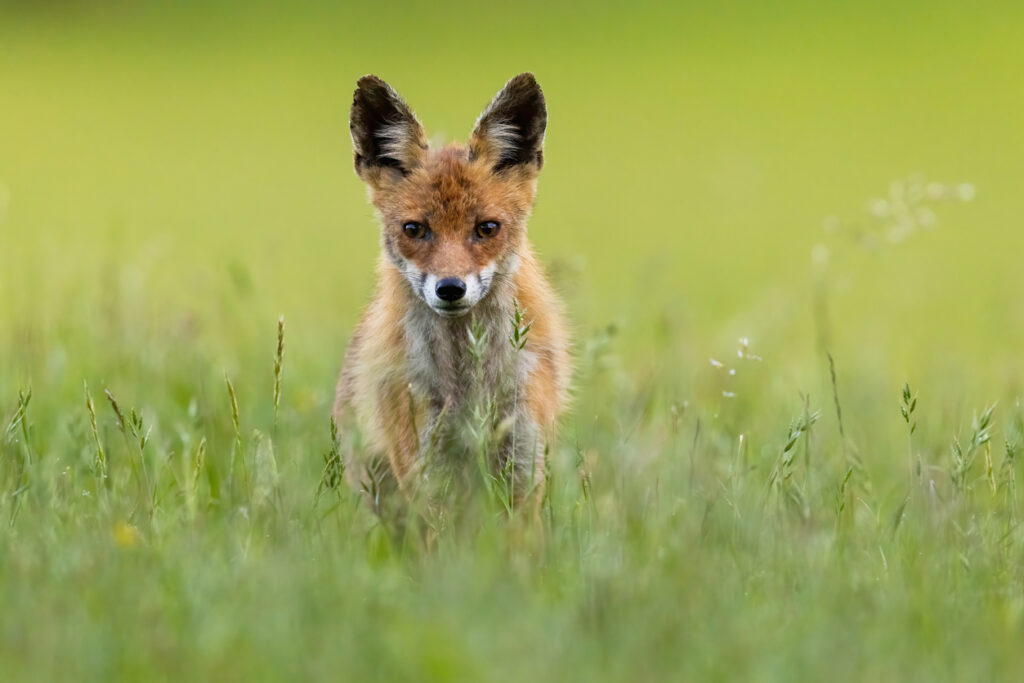
Predator-prey relationships seem volatile: too many foxes eat all the rabbits, then the foxes starve, then rabbits boom again. However, these cycles follow mathematical patterns you can actually predict. When prey populations are high, predators thrive and their numbers increase. As predators become more numerous, they eat more prey, causing prey populations to crash.
With less food available, predator numbers then decline, giving prey populations room to recover, and the whole cycle starts again. Ecologists can track these oscillations across decades, and they’re remarkably consistent, swinging back and forth in rhythms that keep both species in balance over time.
5. Rivers meandering in consistent mathematical curves
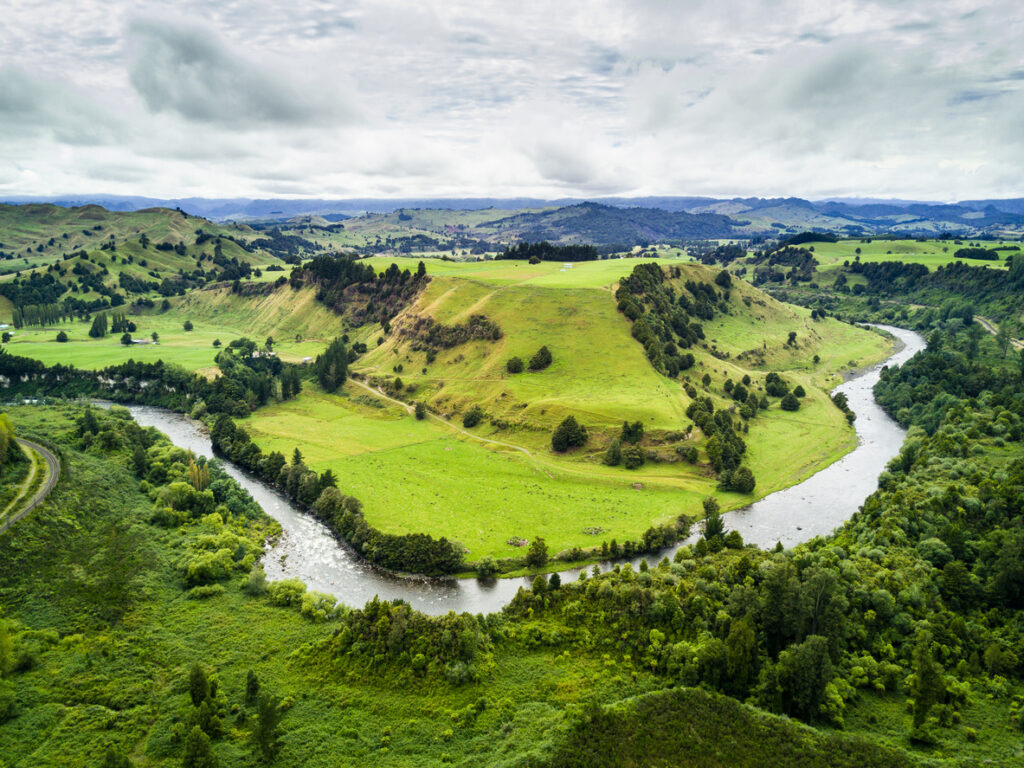
Rivers snake across landscapes in patterns that look completely arbitrary, but they actually follow precise mathematical ratios. The curves rivers make, called meanders, tend to have a wavelength about six times the width of the river, regardless of size. Water flowing on the outside of a bend moves faster and erodes the bank, while slower water on the inside deposits sediment, gradually exaggerating the curve.
Eventually, the loop becomes so extreme that the river cuts through the neck, creating an oxbow lake and starting a new meander. The process repeats endlessly, creating landscapes that feel random but are actually following fluid dynamics that have been consistent for millennia.
6. Salmon returning to the exact stream where they were born

Pacific salmon spend years in the ocean travelling thousands of miles, then somehow navigate back to the precise stream where they hatched to spawn and die. It sounds impossible because the ocean is vast and featureless, and these fish are finding a specific creek they haven’t seen since they were tiny.
They use the Earth’s magnetic field for general navigation, then switch to smell as they get closer, following chemical signatures in the water that lead them home. The reliability is stunning; entire populations return to the same spawning grounds year after year, maintaining a pattern that’s existed for longer than humans have been around.
7. Bee swarms deciding on new hive locations through group voting
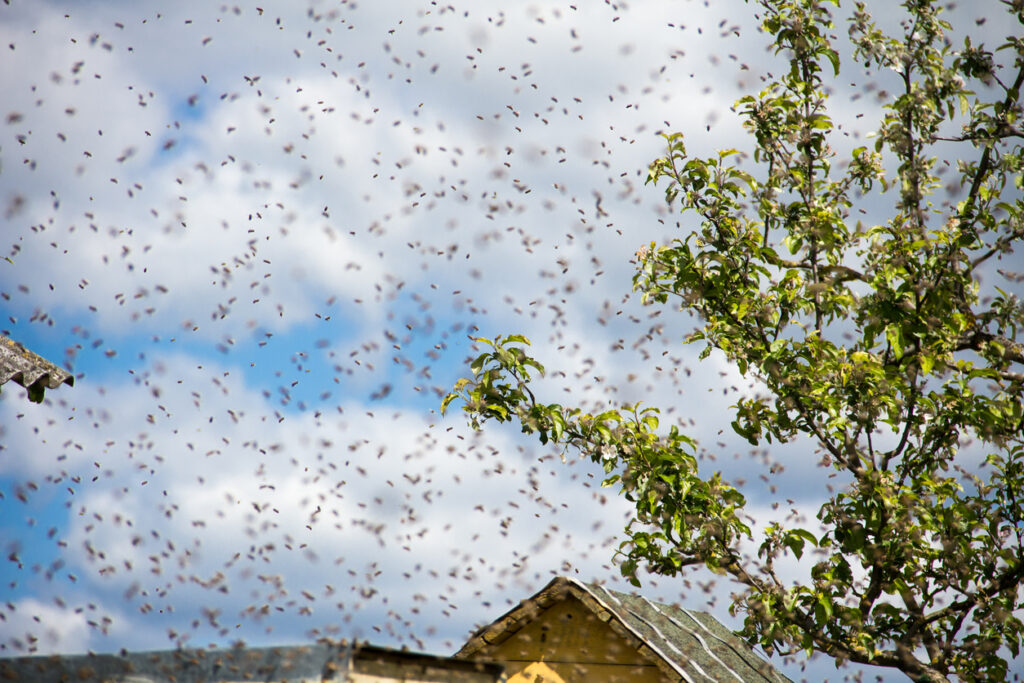
When a bee colony needs a new home, hundreds of scout bees fly off in different directions to investigate potential sites, which should result in chaos and indecision. Instead, they come back and perform waggle dances to advertise their findings, with better sites getting more enthusiastic dances. Other bees check out the most popular options and add their own dances if they agree.
Through this process of advertising and cross-checking, the swarm reaches consensus on the best location without any bee being in charge. It’s democracy in action, and it’s so reliable that bees almost always choose objectively good sites: the right size, proper entrance, good location, even though no individual bee has all the information.
8. Tide pools resetting themselves after every disruption
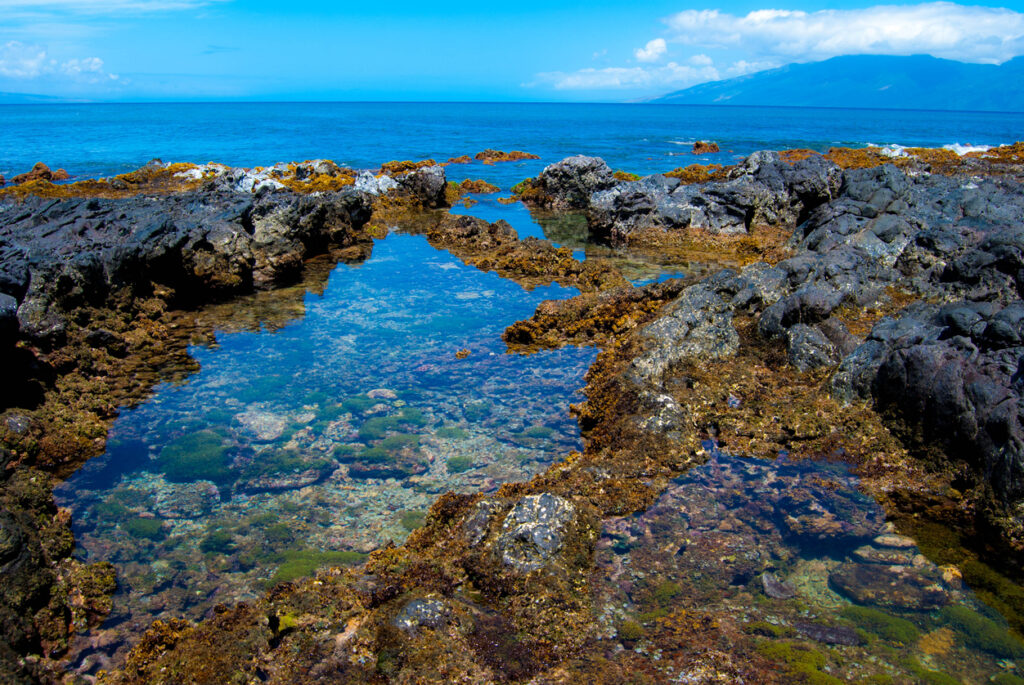
Tide pools get absolutely battered twice daily by waves, experience dramatic temperature and salinity changes, and seem like they should be completely unstable environments. However, the same species occupy the same zones in tide pools all over the world with remarkable consistency.
Fast-growing algae colonise bare rock first, creating conditions for barnacles and mussels to settle, which then allow predators like starfish to move in. If a storm wipes everything out, the whole succession happens again in the same order. The system is so reliable that you can predict which organisms will be where based purely on how high up the rock they are and how often waves reach them.
9. Trees sharing resources through underground fungal networks
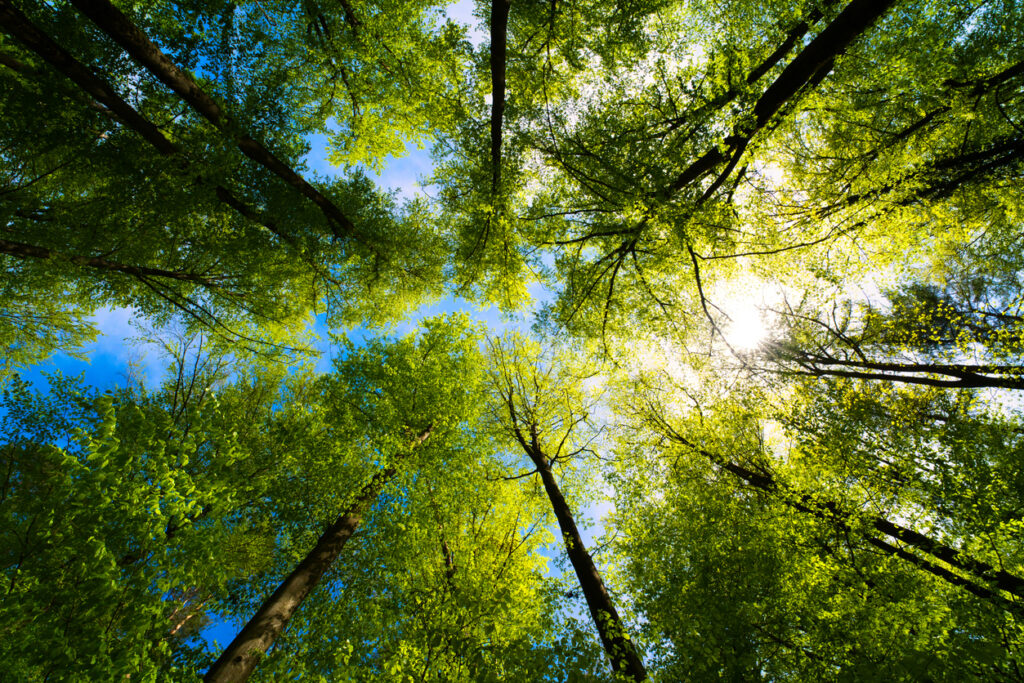
Forests appear to be collections of individual trees competing for light and nutrients, but underground they’re connected through fungal networks that reliably redistribute resources where they’re needed. Older trees send carbon to younger saplings that are shaded and struggling, and trees under pest attack receive chemical defence compounds from their neighbours through these fungal highways.
The fungi get sugars from the trees in exchange for nutrients they’re better at extracting from soil, creating a trading network that benefits everyone involved. What looks like isolated trees is actually a cooperative system that’s been functioning smoothly for longer than humanity has existed.
10. Migratory birds navigating thousands of miles to the same spots annually
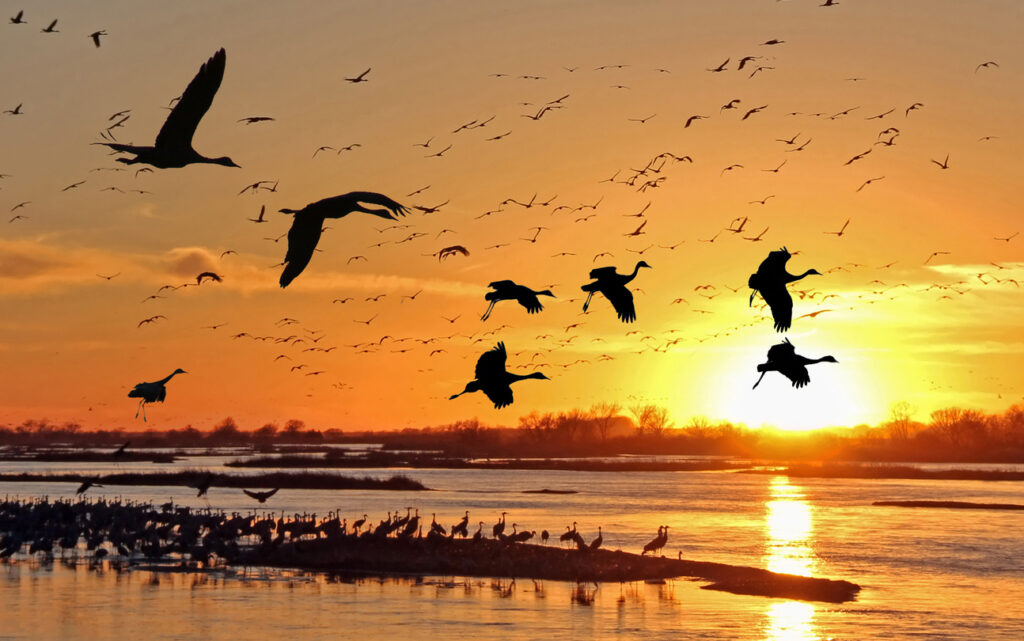
Arctic terns travel from the Arctic to Antarctic and back every year, around 40,000 miles, and somehow end up in the exact same nesting sites they used the previous year. Many do this journey for the first time as juveniles with no experienced birds to guide them, yet they still arrive at the right destination.
They’re using a combination of the sun’s position, stars, Earth’s magnetic field, and even smell to navigate, layering multiple reliable systems on top of each other so that if one fails, others compensate. The consistency is remarkable, as individual birds often return to within metres of where they nested before, after flying halfway around the planet. The chaos of migration masks incredibly precise navigation that somehow works generation after generation without fail.