
Space has a habit of showing us things before it explains them. We detect signals, objects, and behaviours that are clearly real, clearly measurable, and still deeply puzzling. Scientists can track them, name them, and argue about them for decades, yet the underlying truth keeps slipping just out of reach. These are some of the strangest things we can observe in space that we still don’t properly understand.
1. Fast radio bursts that appear without warning
Fast radio bursts are incredibly powerful flashes of radio energy that last for milliseconds and then vanish. They come from far outside our galaxy and release more energy in a blink than the Sun does in days. We can detect them easily now, yet predicting when or why they happen remains frustratingly difficult. Some repeat, others never do, and a few seem to behave in ways that break patterns scientists thought they understood. Theories range from magnetars to exotic stellar remnants, but none explain every observation. For now, fast radio bursts remain cosmic messages without a clear sender.
2. Dark matter that shapes the universe but refuses to show itself
Galaxies rotate too fast for the visible matter they contain. Clusters hold together when they mathematically shouldn’t. Something unseen is adding gravity everywhere we look. Scientists call it dark matter because we know it’s there, but not what it’s made of. It doesn’t emit light, reflect it, or interact in any way we can directly observe. Every experiment designed to detect it has come up empty so far. We’re mapping its effects without knowing its substance, which makes it one of the biggest unanswered questions in physics.
@notenoughspacetalk Join renowned astrophysicist Brian Cox as he delves into the enigmatic question: what is dark matter? In this captivating discussion, Brian explores the mysterious substance that makes up a significant portion of the universe yet remains invisible to our eyes. With his trademark enthusiasm and clarity, he breaks down complex concepts, making them accessible and sparking curiosity in viewers of all ages. Don’t miss this thrilling journey into the unseen forces that shape our cosmos! #BrianCox #DarkMatter #Astrophysics #ScienceFacts #Physics #ScienceExploration ♬ som original – SpxMac
3. Dark energy that seems to be speeding everything up
As strange as dark matter is, dark energy may be even stranger. Instead of pulling things together, it appears to be pushing the universe apart. Observations show that cosmic expansion is accelerating, not slowing down as once expected. No one knows what dark energy actually is. It could be a property of space itself, or something entirely unknown. We can measure its effects on the universe’s expansion, but its nature remains one of the deepest mysteries in modern science.
4. The Great Attractor pulling galaxies toward it
Our local group of galaxies, including the Milky Way, is moving toward a region of space known as the Great Attractor. The pull is strong enough to affect millions of galaxies across vast distances. The problem is that it lies behind a dense region of stars and dust, making direct observation difficult. We know something massive is there, but exactly what it is and how large it might be remains uncertain. It’s a gravitational presence we can feel but barely see.
5. Rogue planets drifting through the galaxy alone
Not all planets orbit stars. Some have been flung out of their original systems and now drift through space on their own. These rogue planets may actually be more common than stars in the Milky Way. We can detect them only indirectly, usually when they briefly bend light as they pass in front of distant stars. How many exist, how they form, and whether they could host life under exotic conditions are all questions without clear answers.
6. Cosmic voids where almost nothing exists
Between galaxy clusters lie enormous regions of space known as cosmic voids. These areas contain very little matter and span hundreds of millions of light-years. They aren’t completely empty, but their role in shaping the universe is still debated. Some scientists think voids may hold clues about dark energy and cosmic evolution, yet their behaviour doesn’t fully match current models.
@cosmoknowledge Boötes Void – The largest void in the universe. #CosmoKnowledge #Space #Science #Astronomy #Universe #Astrophysics #Education #Galaxy #Cosmos #VOID #COSMICVOIDS #bootesvoid #fypシ゚viral ♬ original sound – Cosmoknowledge
7. The behaviour of black holes at their extremes
Black holes can be detected through their effects on nearby stars, gas, and light. We’ve even imaged the shadows of supermassive ones, confirming predictions made decades ago. What happens inside them remains unknown. The laws of physics as we understand them break down beyond the event horizon. Information loss, time distortion, and the true nature of singularities are still unresolved problems.
8. The origin of ultra-high-energy cosmic rays
Cosmic rays constantly strike Earth, but a tiny fraction arrive with mind-bending energy levels. These particles carry more energy than anything human technology can produce. We don’t know where they come from. They don’t point back neatly to known objects, and their paths are scrambled by magnetic fields. Whatever accelerates them must be extraordinarily powerful, yet it remains unidentified.
9. Why the universe looks so smooth on large scales
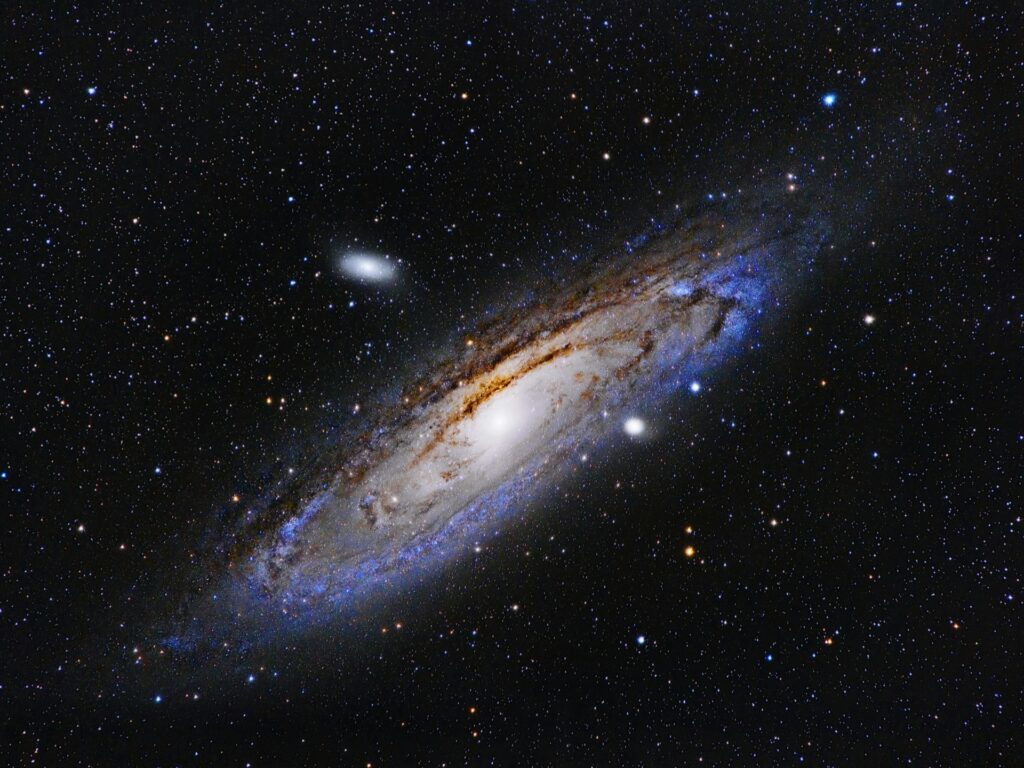
When scientists map the universe at its largest scales, it appears surprisingly uniform. Matter is distributed in a consistent pattern across enormous distances, and that smoothness suggests something shaped the early universe very precisely. Inflation theory explains some of it, but not all details match observations. The early moments of cosmic history are still only partly understood.
10. Whether we’re truly alone
We can detect thousands of exoplanets, analyse their atmospheres, and estimate which ones might support life. We can even listen for artificial signals. Yet we still have no confirmed evidence of life beyond Earth. The silence raises difficult questions. Are we early, rare, or simply listening the wrong way? The universe is vast, old, and full of possibilities, but for now, the question of life elsewhere remains unanswered.