While we’re busy faffing about with satnavs and getting lost if our phone battery dies, the rest of the animal kingdom is moving across the planet with a level of precision that puts our tech to shame. You’ve likely wondered how a bird can find the same tiny patch of garden after flying thousands of miles, or how a turtle can navigate a featureless ocean without a single landmark to guide it. They aren’t just guessing their way through it; they’re tapping into a massive network of natural signals that we can’t even perceive.
From sensing the earth’s magnetic field to reading the stars and the smell of the wind, animals are using a complex set of internal tools that make our most advanced gadgets look like toys. These 14 methods show that while we’ve spent years building satellites to tell us where to go, the natural world has been running on a much more sophisticated system all along.
They sense the Earth’s magnetic field like a built-in compass.
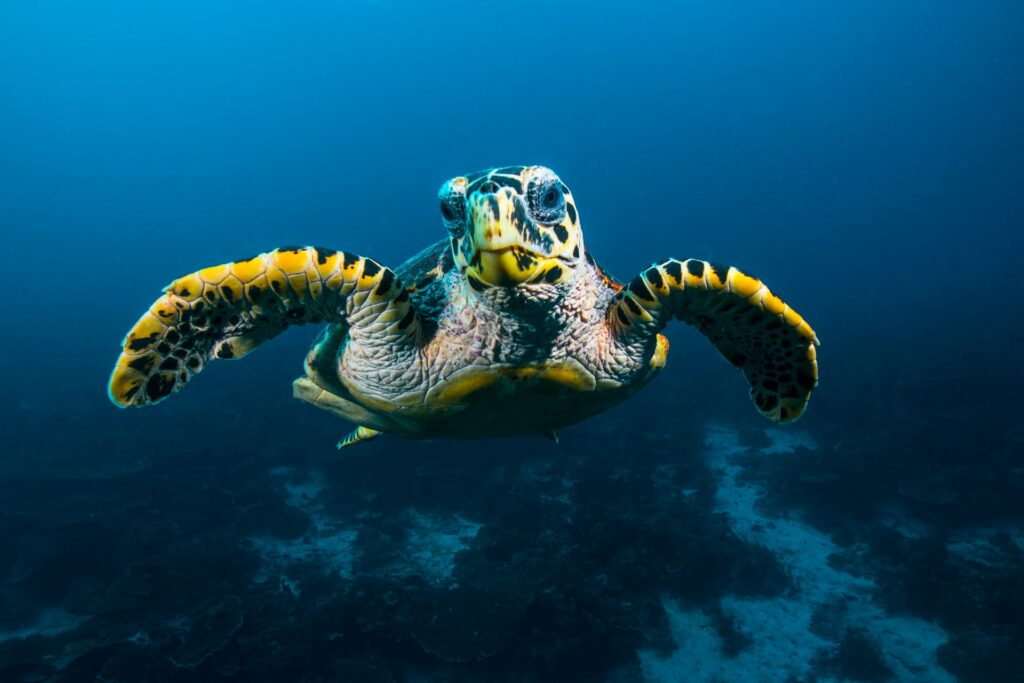
Loads of animals including birds, sea turtles, and even some insects can detect the Earth’s magnetic field and use it for navigation. They’ve got specialised cells containing magnetic particles that essentially function as internal compasses. Sea turtles use this to find their way back to the exact beach where they hatched decades earlier, travelling thousands of miles across open ocean without any visual landmarks. The magnetic field gives them information about both direction and latitude, creating a magnetic map in their heads that works perfectly without them needing to learn it.
@birdseyeview.nature 🐝✨ Did you know bees navigate using the sun and their famous waggle dance to find food? 🌞🍯 But here’s the buzz: recent research reveals that bees also use cognitive maps—something once believed to be unique to mammals! 🧠🐝 Just like we remember landmarks on long car rides, bees create mental images of their surroundings to navigate. 🚗🌳🏠 So next time you spot a big tree or a yellow house on your route, remember, you’re using a cognitive map just like our buzzing friends! 🌟🐝 #Bees #Navigation #CognitiveMaps #NatureEducation #ScienceFacts #AnimalBehavior #Wildlife #BeeFacts #InsectScience ♬ Natural Emotions – Muspace Lofi
Bees and ants navigate using the sun’s position.
These insects use the sun as a compass, compensating for its movement across the sky throughout the day through internal clocks. A bee can fly several kilometres from the hive, visit hundreds of flowers, and fly straight back without getting lost by calculating angles relative to the sun’s position. Ants do similar calculations, and they can even navigate on cloudy days by detecting polarised light patterns in the sky that humans can’t see. The waggle dance bees do to communicate flower locations is essentially them sharing navigational coordinates based on sun position.
Migrating birds navigate by the stars at night.
Nocturnal migrants use star patterns for navigation, particularly the rotation of stars around celestial poles. Baby birds learn these patterns before their first migration by watching the night sky rotate, which gives them a reference point for direction. Studies where scientists put birds in planetariums and changed the star patterns showed the birds adjusting their migration direction accordingly, proving they’re actually using the stars. This works in combination with their magnetic sense, so they’ve got multiple navigation systems as backup.
Salmon smell their way home to spawn.

Salmon imprint on the chemical signature of their birth stream when they’re young, then spend years in the ocean before finding that exact stream again to spawn. Each stream has a unique chemical profile from the minerals, plants, and soil in the area, creating a smell signature the salmon memorise. Once they’re near the coast, they start following chemical gradients in the water, like following a scent trail. This olfactory navigation is so precise that salmon can distinguish between streams that are geographically very close to each other.
Elephants remember detailed mental maps of huge territories.
Elephants have extraordinary spatial memory that lets them navigate territories spanning hundreds of square kilometres, remembering water sources, feeding areas, and safe routes. The matriarch holds this knowledge and leads the herd using her mental map built up over decades. They remember locations they haven’t visited in years and can navigate straight to them when needed, particularly during droughts. Studies have shown elephants can take novel shortcuts between locations they know, proving they’re working from actual mental maps rather than just memorised routes.
Whales and dolphins use sound to map their environment.
Echolocation lets these marine mammals create detailed three-dimensional maps of their surroundings using sound waves. They emit clicks that bounce off objects and return with information about distance, size, shape, and texture, working in complete darkness or murky water where vision is useless. Whales use low-frequency sounds that travel enormous distances underwater to navigate across ocean basins, essentially listening for echoes off underwater features like seamounts and continental shelves. They’re reading the ocean’s soundscape like we read maps, using layers of acoustic information to know where they are.
Dung beetles navigate using the Milky Way.
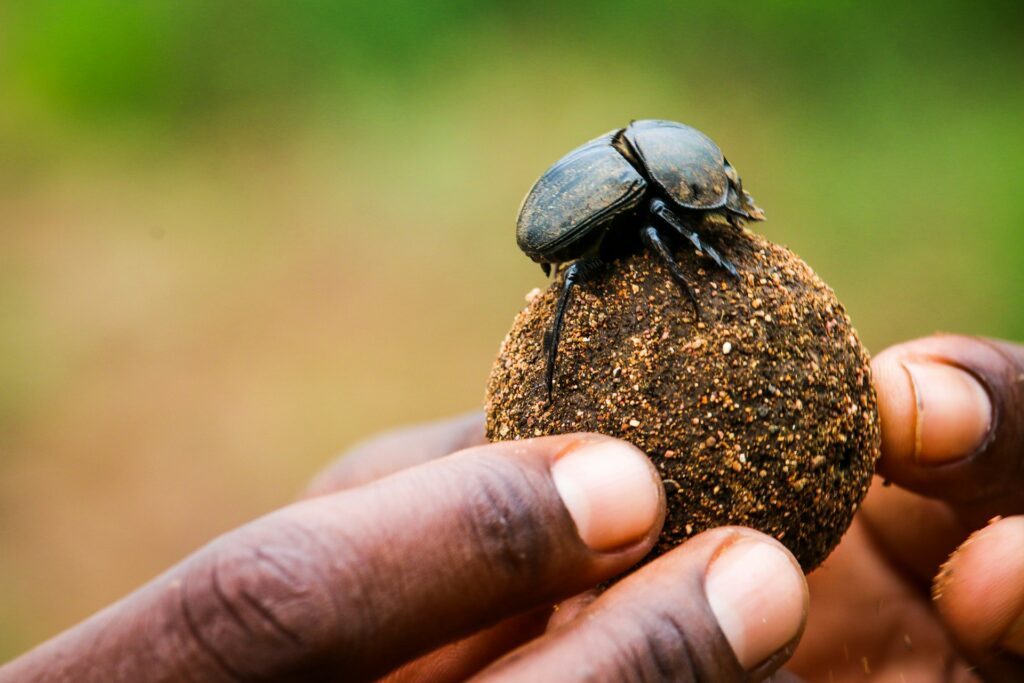
These beetles are the only known insect to navigate using the galaxy, and they do this while rolling balls of dung backwards. They take a mental snapshot of the Milky Way’s position when they find dung, then use that celestial reference to roll in a straight line away from the competition. Experiments in planetariums proved they were using the Milky Way specifically, and on cloudy nights where they can’t see the sky, their paths become much less straight. This is genuinely sophisticated navigation from a creature with a brain smaller than a grain of rice.
Pigeons use multiple navigation systems as backup.
Homing pigeons find their way home from hundreds of miles away using a combination of magnetic fields, sun position, landmarks, and possibly even smell. They create a mental map using all these different inputs, which explains why they’re so reliable even when some navigation cues are unavailable. Young pigeons learn routes by flying them repeatedly with older birds, building up landmark knowledge that supplements their innate navigation abilities. Research has found that pigeons have magnetite in their beaks that helps them sense magnetic fields, while their eyes contain special proteins that might let them literally see magnetic fields as visual patterns.
@nytimes Scientists in Texas are studying monarch butterflies to understand how they navigate thousands of miles, possibly by sensing Earth’s magnetic field. Video by Alexa Robles-Gil, Leila Medina, Joey Sendaydiego and Mark Felix #neuroscience #monarchbutterflies #migration #butterflies #science ♬ original sound – The New York Times
Monarch butterflies migrate using a sun compass and internal clock.
These butterflies migrate thousands of miles from North America to specific forests in Mexico, and no individual butterfly makes the round trip, yet somehow they find the exact same wintering sites their great-great-grandparents used. They navigate using the sun’s position compensated by their internal circadian clock, which tells them what time of day it is so they can adjust for the sun’s movement. This navigation information is genetically encoded so butterflies that have never migrated know exactly where to go, which is one of the most impressive examples of genetic programming in the animal kingdom.
Arctic terns make the longest migration without maps.
These birds fly from Arctic to Antarctic and back each year, covering roughly 70,000 kilometres, which is the longest migration of any animal. They’re using a combination of magnetic navigation, sun and star positions, and visual landmarks when available, navigating across open ocean for much of the journey where there are no landmarks at all. Young terns make this journey for the first time without experienced guides, relying entirely on inherited navigation abilities. They experience two summers per year by following the sun between polar regions, seeing more daylight than any other animal on Earth.