It’s a bit humbling to realise that for all our fancy telescopes and clever maths, we’re basically just toddlers poking at the edges of a massive, dark room.
We’ve mapped out galaxies and figured out what stars are made of, but there’s a stubborn list of mysteries that seem designed to keep us in our place. It’s the kind of stuff that makes your head spin when you’re staring at the sky after a couple of pints, wondering if there’s a proper “edge” to everything or if the whole setup is just one big cosmic fluke.
The frustrating bit is that these aren’t just minor details; they’re the foundational bits that would explain why we’re even here in the first place. Science is brilliant at telling us how things move and interact, but it hits a bit of a brick wall when it comes to the “why” or what happened before the lights even came on. We’ve got to make peace with the fact that some secrets of the cosmos might be permanently tucked away, no matter how many probes we lob into the void or how many supercomputers we build.
1. What happened before the Big Bang?
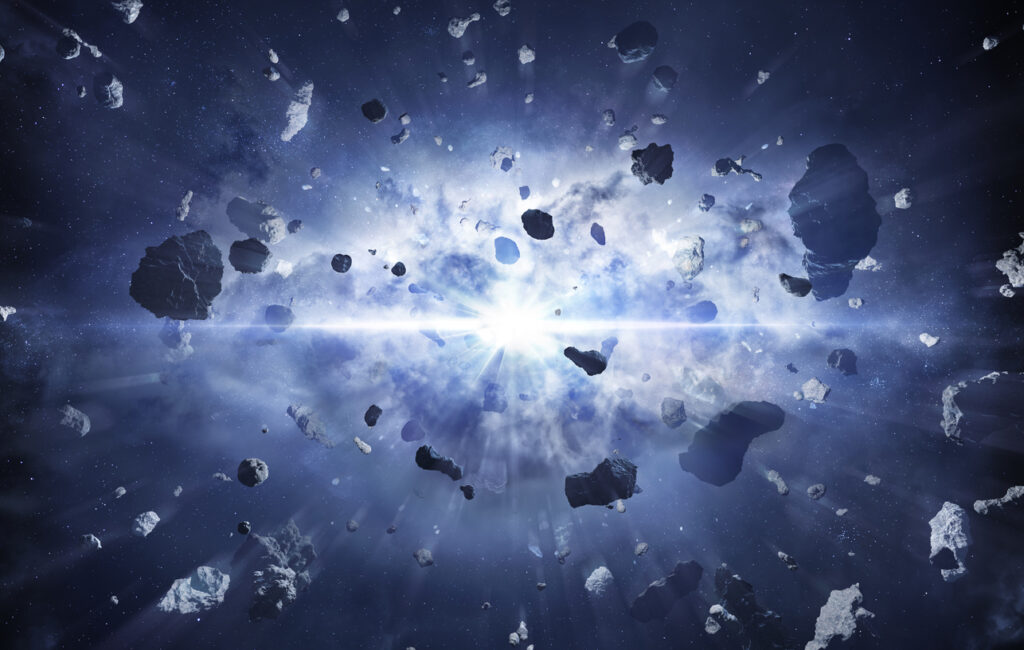
Time itself started with the Big Bang, which makes asking what came before it a bit like asking what’s north of the North Pole. Our physics completely breaks down at that point because the laws we understand only apply after the universe began expanding. We can trace back to fractions of a second after the Big Bang, but that initial moment and anything before it remains completely inaccessible. Some scientists think there was no “before” because time didn’t exist yet, but we’ve got no way to prove or disprove that. The question might not even make sense in the way we’re asking it.
2. Is our universe the only one?
The multiverse theory suggests there could be countless other universes operating under completely different physical laws. We can’t see beyond our own universe because the light from other universes, if they exist, can’t reach us. There’s no experiment we can design to detect something that’s fundamentally beyond our observable reality. Some versions of quantum mechanics and inflation theory point towards multiple universes, but pointing towards something isn’t the same as proving it exists. We’re stuck in our own cosmic bubble with no way to peek outside.
3. Why does anything exist at all?
This is the biggest question and the one that sends you a bit mental if you think about it too long. Science can explain how things work and how the universe developed, but it can’t answer why there’s something rather than nothing. You can keep asking “but why?” after every scientific explanation until you hit a wall. That wall is the simple fact that existence itself just is, and our brains aren’t equipped to understand why being exists instead of complete nothingness. Philosophy and religion tackle this one, but nobody can prove their answer.
4. What is dark matter made of?
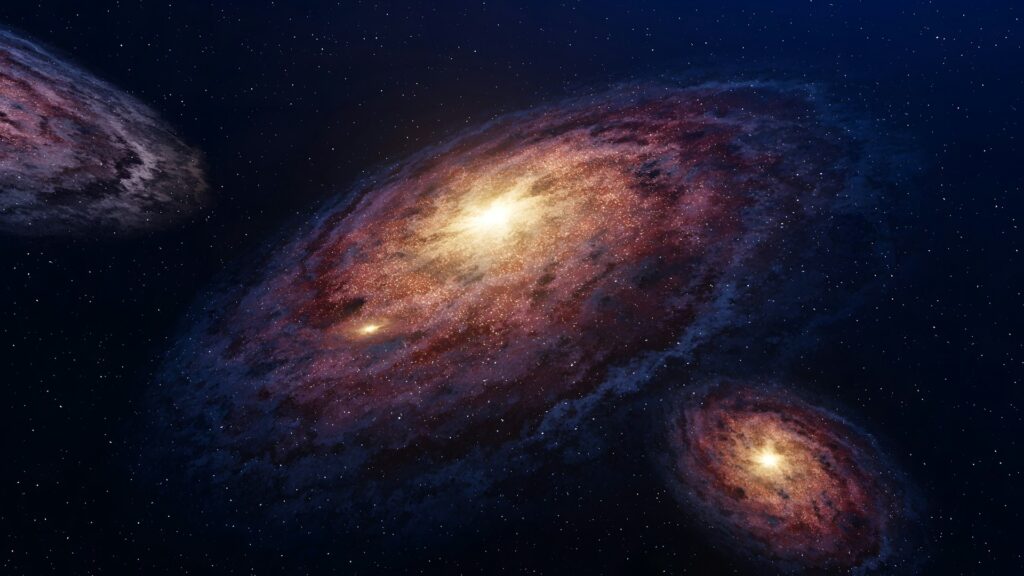
We know dark matter exists because we can see its gravitational effects on galaxies, but we can’t detect it directly no matter how sophisticated our equipment gets. It doesn’t interact with light or normal matter in any way we can measure. Scientists have been searching for dark matter particles for decades with increasingly sensitive detectors, and they keep coming up empty. It might be made of something so fundamentally different from regular matter that our current technology is useless for finding it. We’re trying to catch something invisible with tools designed for a completely different job.
5. How big is the universe really?
The observable universe has a limit because light has only had a certain amount of time to reach us since the Big Bang. Beyond that boundary, there’s more universe we simply can’t see and never will. The expansion of space means distant parts are moving away faster than light can travel, so they’re permanently beyond our reach. The universe might be infinite, or it might curve back on itself, or it might have an edge somewhere incomprehensibly far away. We can measure what we can see, but the full size is something we’ll never know.
6. What’s at the centre of a black hole?
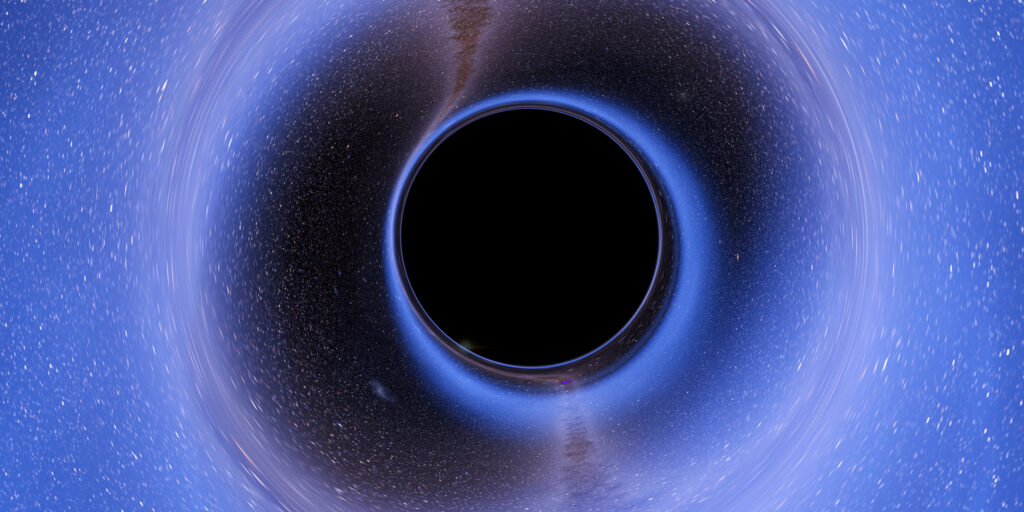
Once matter crosses a black hole’s event horizon, the information about what happens is lost to us forever. Our best theories suggest a singularity where density becomes infinite and spacetime breaks down, but that’s probably not what actually happens. Quantum mechanics and general relativity give different answers about black hole centres, and we can’t test either theory because nothing comes back out. Even if we sent a probe in, it couldn’t transmit any data back. Black holes keep their secrets absolutely locked away.
7. Will the universe end, and how?
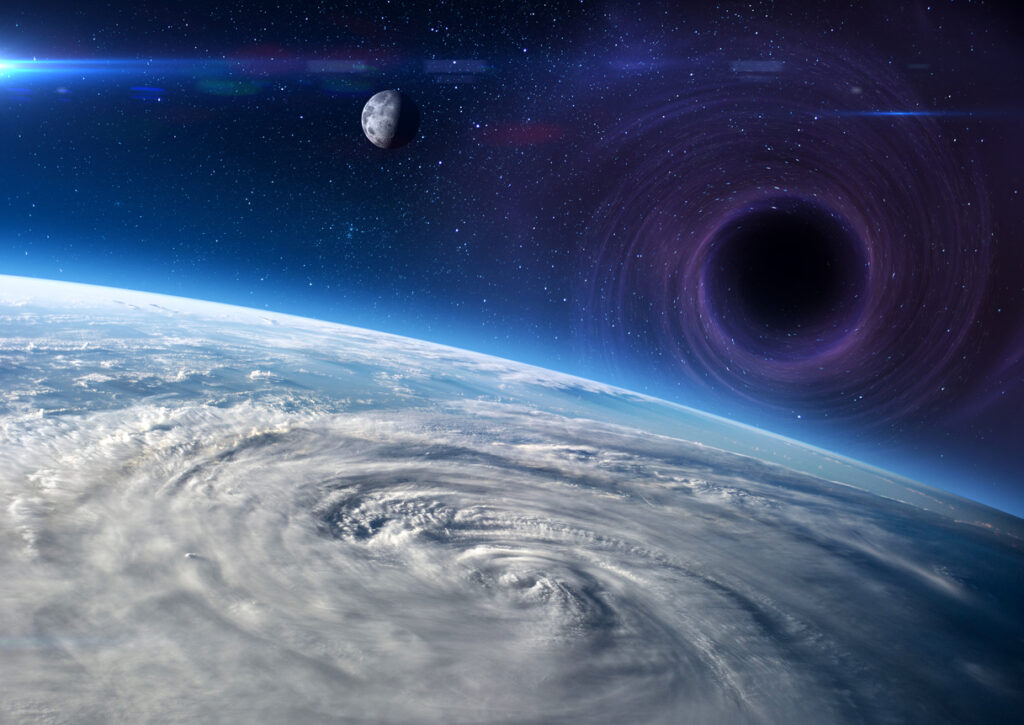
We can make educated guesses based on how the universe is expanding, but we’re talking about events trillions or even infinite years in the future. The expansion might continue forever until everything goes cold and dark, or it might reverse and collapse back in on itself. Dark energy could tear everything apart at the atomic level, or the laws of physics might change in ways we can’t predict. Our observations only cover a tiny slice of cosmic time, so projecting that far forward is basically impossible. The universe could do something completely unexpected that we haven’t even theorised about yet.
8. Is there a theory of everything?
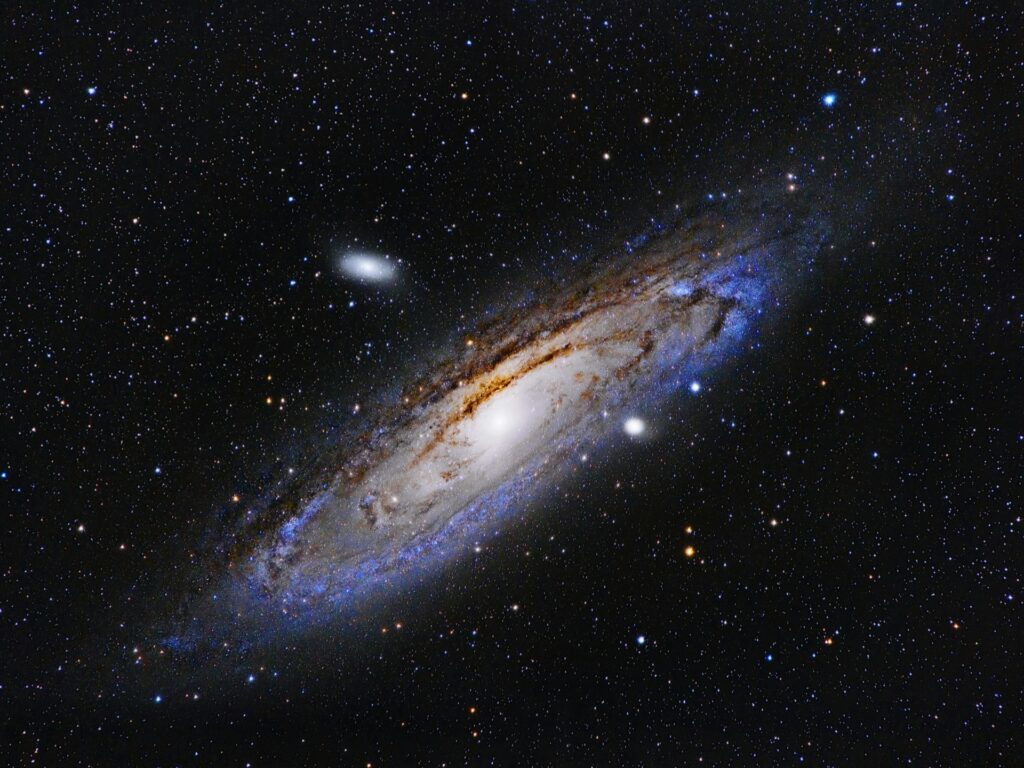
Physicists dream of a single equation that explains all forces and particles, but we might be chasing something that doesn’t exist. Quantum mechanics and general relativity both work brilliantly in their own domains, but contradict each other when you try to combine them. String theory looked promising for a while but hasn’t produced any testable predictions. It’s possible the universe is just fundamentally messy and can’t be reduced to one elegant formula. Our brains want patterns and simple explanations, but reality doesn’t owe us that satisfaction.
9. What is consciousness?
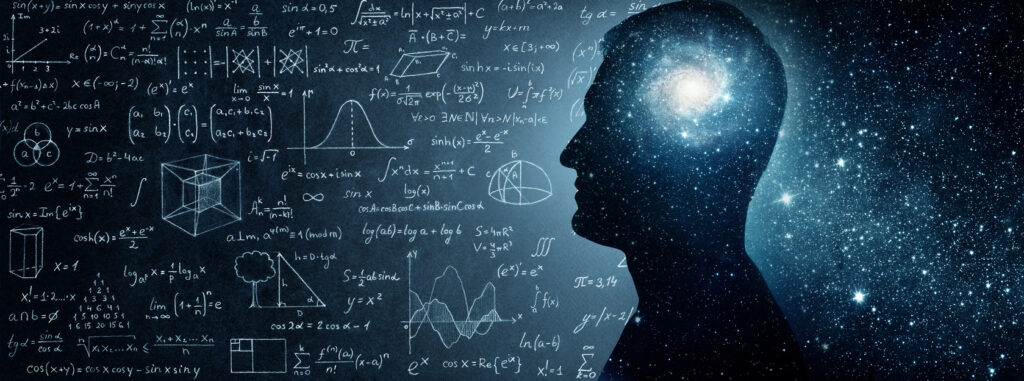
We can map brain activity and identify neural correlates of consciousness, but we can’t explain why physical processes create subjective experience. There’s a gap between describing how neurons fire and understanding why that creates the feeling of being you. We might discover that consciousness is just what complex information processing feels like from the inside, or it might be something entirely outside the physical realm. Testing consciousness scientifically is tricky because you can’t measure someone else’s subjective experience directly. The hard problem of consciousness might genuinely be unsolvable.
10. Does time actually exist, or is it an illusion?
Time feels real and flows in one direction for us, but physics equations work just as well running backwards. Some theories suggest time is an emergent property rather than a fundamental feature of reality. We experience moments one after another, but at the quantum level, past and future might not work the way we think they do. Our perception of time could be a trick our brains play to make sense of the universe, but we’re trapped inside that perception with no way to step outside and check. Understanding time requires understanding it from outside time, which is impossible.