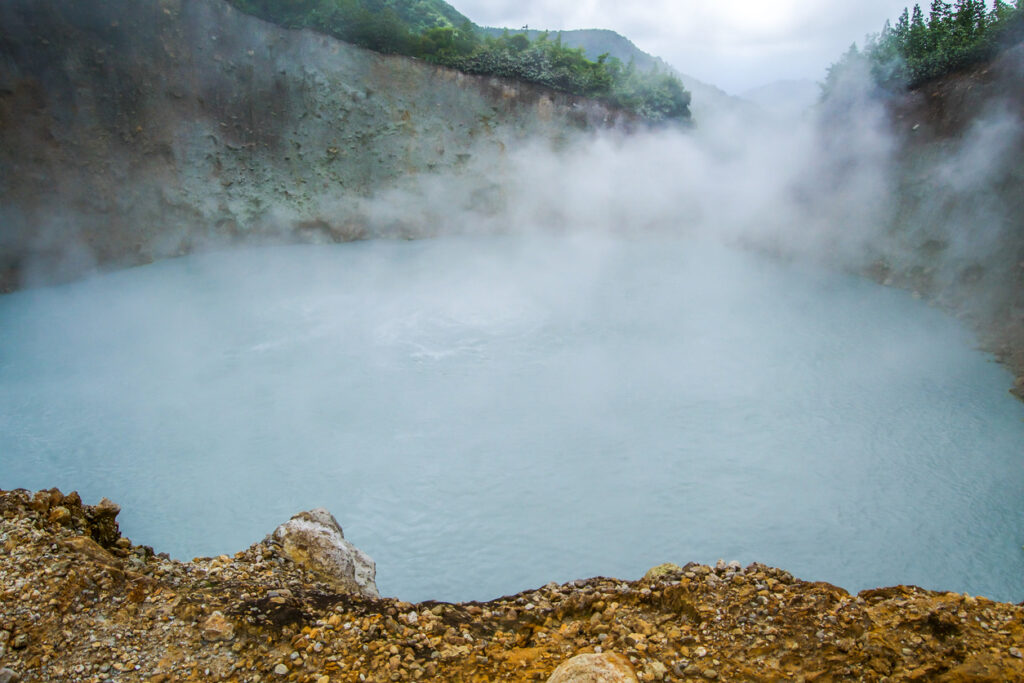
Boiling Lake sounds like something dreamt up for a fantasy novel, but it’s very real, and it’s one of the strangest natural sights on the planet. Hidden away in the rainforest of Dominica, this lake doesn’t just look a bit steamy or warm to the touch. It’s violently, constantly boiling, like a giant cauldron that never gets turned off.
What makes it even more unsettling is that this isn’t some novelty hot spring with a catchy name. The water is heated directly by volcanic activity beneath the surface, meaning the whole thing is unpredictable, dangerous, and very much alive. And naturally, once people hear about a lake that boils, the next question is always the same: what on earth could possibly live in something like that?
Boiling Lake is one of the largest hot lakes on the planet.
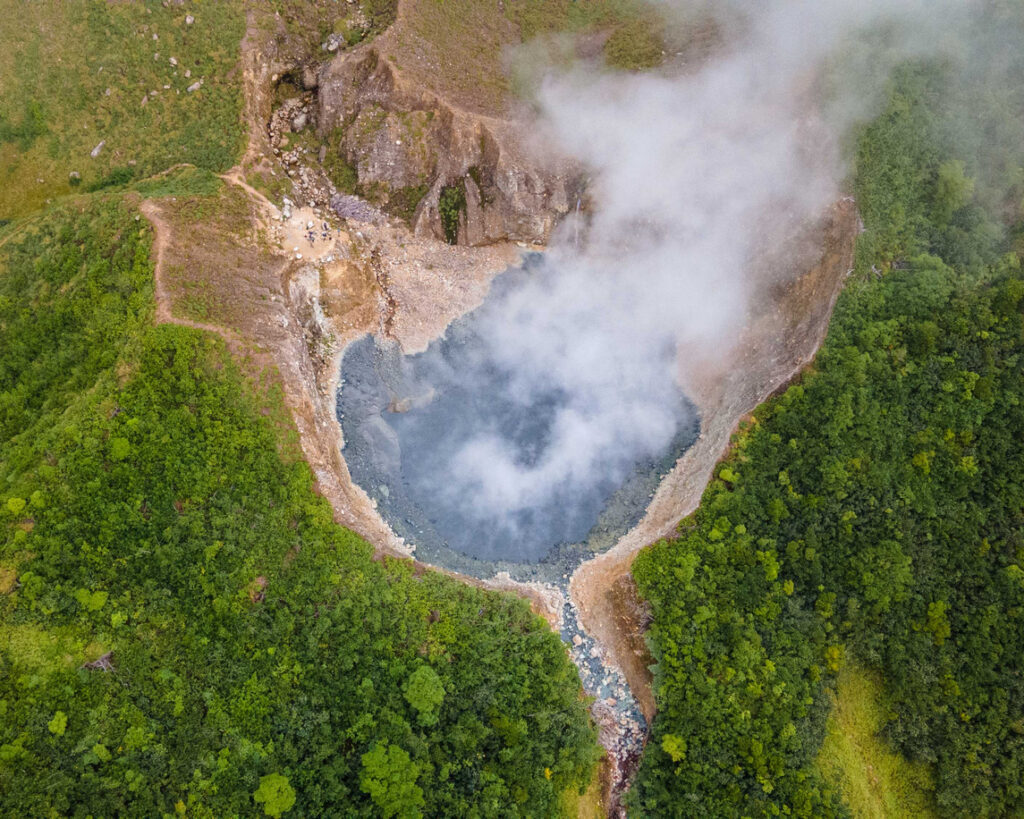
Boiling Lake sits inside Morne Trois Pitons National Park on the Caribbean island of Dominica. It’s usually described as the second-largest hot lake in the world, measuring roughly 60 to 75 metres across, although its size can change dramatically.
@realcuriobytefacts Imagine a lake so hot it boils its fish! 🔥🐟 Dive into the mystery of Dominica's boiling Lake. #natureiswild #didyouknow #hotspot #funfacts #knowledge #environment #scienceexplained ♬ Ready – Official Sound Studio
@realcuriobytefacts Imagine a lake so hot it boils its fish! 🔥🐟 Dive into the mystery of Dominica's boiling Lake. #natureiswild #didyouknow #hotspot #funfacts #knowledge #environment #scienceexplained ♬ Ready – Official Sound Studio
The lake isn’t stable in the way most lakes are. After earthquakes or increased volcanic activity, water levels have dropped suddenly or disappeared almost entirely, only to return months or years later. That instability is part of what makes it so unusual and unpredictable.
The water isn’t boiling evenly like a kettle.
Despite the name, the entire lake doesn’t boil at the same temperature. Instead, boiling is concentrated in areas where volcanic vents push superheated water and steam up from below. Near the centre, temperatures can exceed 90°C, while the edges may be far cooler at certain times. This uneven heating creates violent churning in some sections and deceptive calm in others, which is part of why the lake is so dangerous.
It’s powered by an active geothermal system.
Boiling Lake sits above a still-active volcanic system beneath Dominica. The island has multiple potentially active volcanoes, even though none are currently erupting. Heat rises constantly through cracks in the Earth’s crust, feeding the lake with steam, gases, and mineral-rich water. This geothermal activity is why the lake never settles into a predictable pattern for long.
The lake can drain almost overnight.
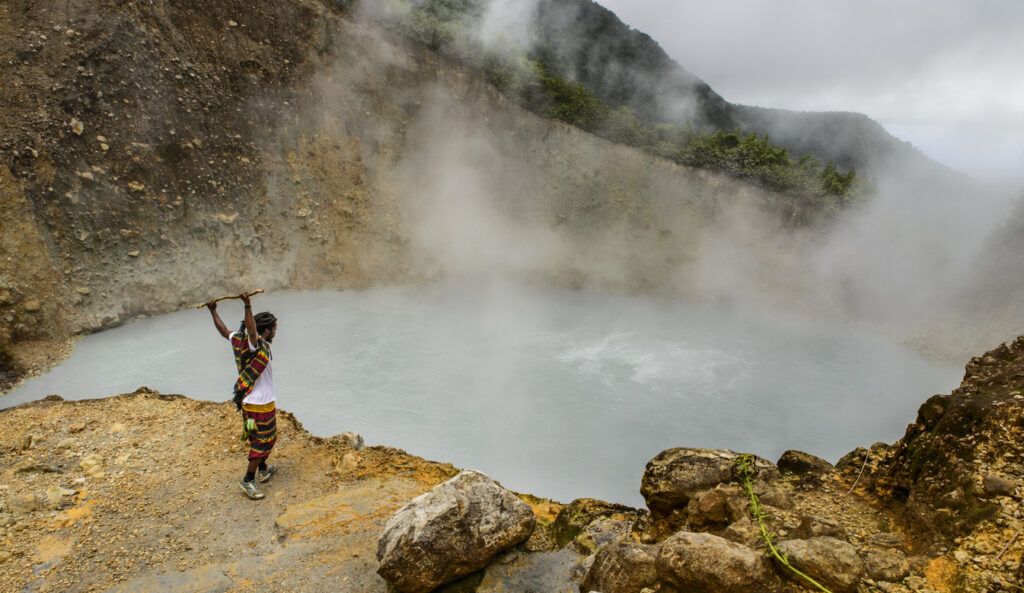
One of the most surprising things about Boiling Lake is that it has emptied itself before. In the past, sudden drops in water level have exposed steaming rock at the bottom. Scientists believe that changes underground can reroute water flow or release pressure in ways that temporarily empty the basin. When the lake refills, it can behave very differently than before, with new vents forming or temperatures changing.
The colour changes depending on volcanic activity.
At different times, the lake appears steel grey, milky blue, or greenish. These colours come from suspended minerals, sulphur compounds, and gases rising from below. When volcanic gases increase, the water often darkens and becomes more opaque. These colour changes are a visual reminder that the lake is being shaped by forces far beneath the surface, not weather or seasons alone.
Almost nothing can survive in the lake itself.
The lake’s extreme heat, acidity, and constant turbulence make it nearly impossible for complex life to survive. Fish, plants, and insects simply cannot tolerate the conditions. Even organisms that live in other hot springs struggle here because Boiling Lake is too unstable. Sudden temperature spikes and gas releases can wipe out anything attempting to gain a foothold.
Microbial life may cling to the edges.
While the centre is deadly, the outer margins sometimes cool enough to allow extremophile microbes to exist briefly. These heat-loving bacteria are similar to those found near volcanic vents and deep-sea hydrothermal systems. They don’t form visible ecosystems, but their presence shows how adaptable life can be when conditions allow even a narrow window of survival.
Nearby streams are far more alive.
Water flowing away from Boiling Lake cools rapidly and feeds surrounding hot streams and sulphur springs. These areas support algae, insects, and specialised microorganisms. Because the water remains warm and mineral-rich, some species actually benefit from reduced competition. Predators that prefer cooler conditions tend to stay away, allowing unusual life forms to thrive.
The surrounding landscape is hostile but active.
Around the lake, the ground steams, vents hiss, and sulphur coats rocks in yellow crusts. The smell of hydrogen sulphide hangs constantly in the air. Vegetation near the lake is sparse and specialised. Mosses, hardy grasses, and resistant plants survive where soil chemistry and heat would kill most rainforest species.
@visit If you love unique natural wonders, visit 📍#BoilingLake in #Dominica, where steam rises from the bubbling waters of this geothermal marvel 🌋 #hiking #paradise #naturelovers #visitdominica ♬ original sound – Visit
The hike itself is part of the danger.
Reaching Boiling Lake requires a long, physically demanding hike through dense rainforest, steep ridges, and volcanic zones. Weather can change rapidly, turning paths slippery and visibility poor. Guides are strongly recommended because volcanic gases can accumulate quickly, and the ground near vents can collapse without warning. Injuries often happen not at the lake, but on the approach.
The lake is a natural laboratory for extreme environments.
Scientists study Boiling Lake to understand how geothermal systems work and where life’s limits lie. It offers clues about early Earth and even possible conditions on other planets. If life can adapt around environments like this, it expands ideas about where life might exist elsewhere in the universe, even if the lake itself is too extreme.
It shows how narrow the line between life and death can be.
Just metres from boiling, acidic water, plants and insects survive in warm streams and mineral soils. That contrast is one of the lake’s most striking features. Boiling Lake demonstrates that life doesn’t need comfort, but it does need boundaries. Cross the line into instability and heat, and nothing survives. Step back slightly, and nature quickly reclaims space.