When people picture the universe, they imagine everything still out there, sitting in space waiting to be discovered. The truth is far stranger. Most of the universe has already slipped out of view from our perspective on Earth. The expansion of space has pushed distant galaxies so far away that their light will never reach us again. From where we stand, it’s as if most of the cosmos has already disappeared. Here are the reasons why this happens and what it means for the universe we can still see.
Space is expanding faster than light can travel.
The universe isn’t just growing. It’s stretching faster and faster as time passes. This means some galaxies are moving away from us faster than their light can reach us. Even though nothing can move through space faster than light, space itself can expand at any speed. This creates a situation where entire regions of the universe slip away from our view forever.
As space keeps stretching, more galaxies pass this limit. Their light gets left behind, so they disappear from the part of the universe we can observe. From our point of view, it’s as if the universe is slowly dimming over time.
The cosmic speed limit doesn’t stop the universe from stretching.
Many people think nothing can go faster than light, so distant galaxies should always be visible. This rule applies to objects moving through space, not to space itself. Space can stretch quickly enough to make galaxies appear to retreat faster than light, which means their light never reaches us.
This stretching has been happening for billions of years. The faster it goes, the more of the universe slips out of view. Much of the universe is now beyond a point where its light can ever catch up to us.
Dark energy is pushing everything apart at an increasing rate.
Dark energy is a mysterious force that makes the universe expand faster instead of slowing down. Over time, this push grows stronger, sending distant galaxies farther away at accelerating speeds. Because of this, regions of the universe that were once visible are now unreachable. The more dark energy dominates, the faster the universe expands. This means more galaxies cross the boundary where their light can no longer reach Earth. From our perspective, the universe is fading at the edges.
The observable universe is only a small patch of the full universe.
The observable universe is the part we can see because light has had enough time to reach us. Anything beyond that is invisible, not because it doesn’t exist, but because its light hasn’t arrived yet. As the expansion speeds up, that visible patch stops growing. Instead, it becomes a shrinking window compared to the full universe outside it. Scientists think the entire universe is far larger than what we can observe. What we see is just the part close enough for light to have reached us. Everything beyond that might as well be gone from our viewpoint.
Galaxies that were once visible are now moving out of reach.
Billions of years ago, galaxies across the universe were much closer. Their light reached us easily. But as the universe expanded, space stretched between us and them. Many have now moved far beyond the horizon, where their light can still reach Earth. If you could look back a trillion years from now, most of the galaxies visible today would be gone from the sky. Only galaxies in our local group would remain. Everything else would have faded beyond view.
Light from distant galaxies gets stretched until it disappears.
As galaxies move away, the wavelengths of their light stretch. This effect is called redshift. When the light stretches too far, it shifts into wavelengths we can’t detect. Even powerful telescopes miss it because the signal becomes too faint. That means some galaxies haven’t vanished completely. Their light is still travelling, but it’s stretched so far that it’s impossible for us to detect. From a practical point of view, they’ve disappeared.
The cosmic horizon limits what we can ever see.
The cosmic horizon marks the limit of the visible universe. Anything beyond it is unreachable, no matter how long we wait. This horizon grows slowly, but the expansion of space causes galaxies to leave the horizon faster than new ones enter it. Because of this imbalance, the number of galaxies we can see keeps going down over cosmic time. The horizon acts like a boundary that gradually hides the universe piece by piece.
Gravity can only hold nearby galaxies together.
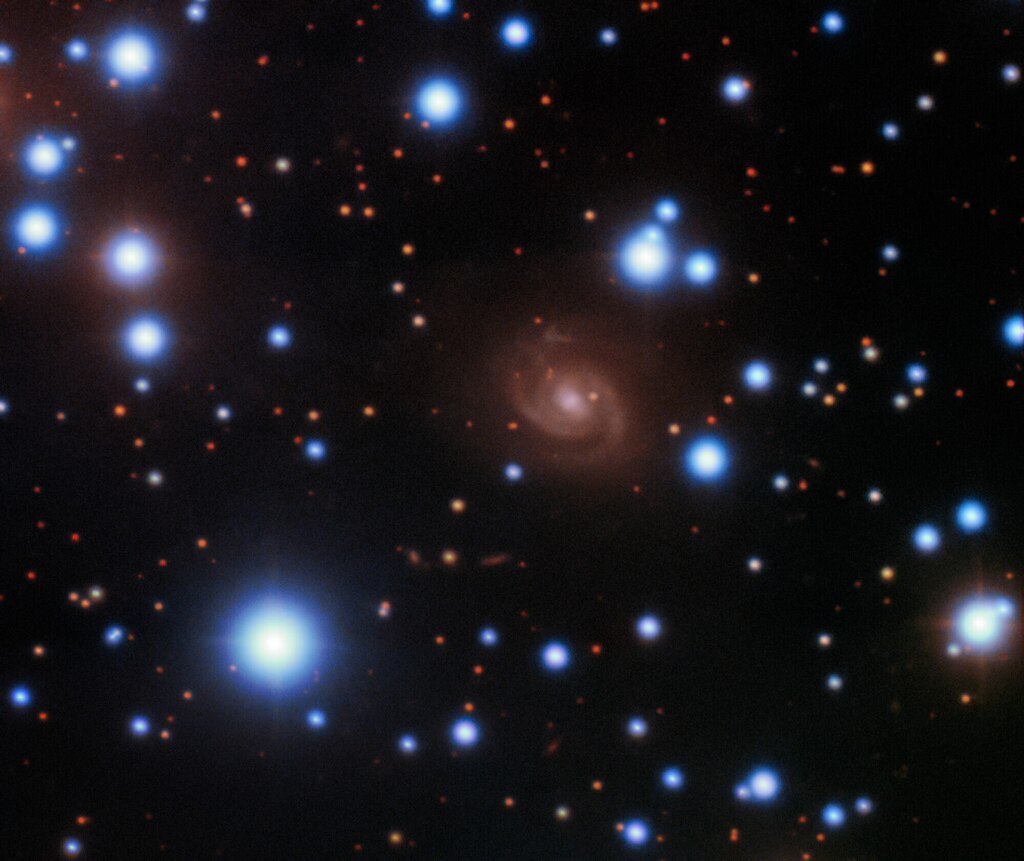
Gravity keeps our local group of galaxies bound, but beyond that, space expansion dominates. Galaxies that aren’t close enough to feel our gravitational pull drift away forever. The Milky Way, Andromeda and their small companions are part of a pocket of space that remains connected, but everything else slowly fades into the distance. In the far future, these local galaxies will be the only ones left visible. The rest of the universe will have disappeared from our perspective because expansion outruns gravity everywhere else.
The early universe was much more connected than today.
Right after the Big Bang, galaxies formed close to each other. Light travelled easily between them. Over billions of years, expansion pulled them apart so much that they’re now unreachable. What once felt like a connected universe has become a collection of isolated islands. Looking far into space is like looking back in time. The galaxies we still see are snapshots of a younger universe, not the universe as it exists today. In reality, many of those galaxies have already vanished beyond reach.
Telescopes show a universe that no longer exists.
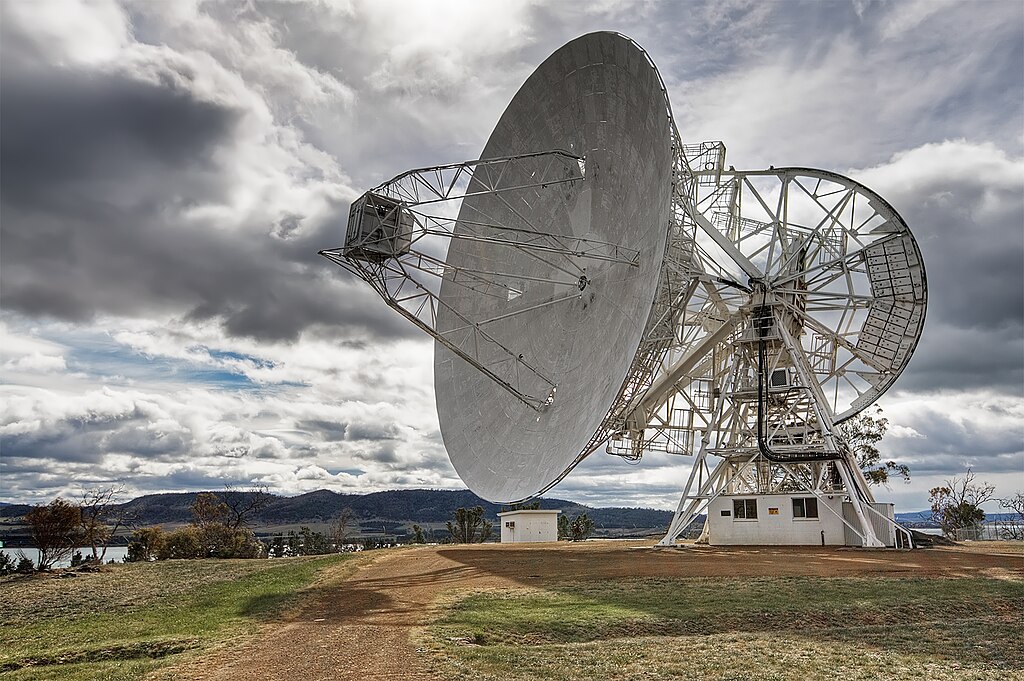
When we look through a telescope, we don’t see things as they are now. We see them as they were billions of years ago. Some galaxies we observe today have already slipped out of sight. Their current light will never reach us. We’re watching their past while their present has already disappeared. That delay creates the illusion of a fully visible universe. In truth, much of what we can observe is ancient history. The modern universe is far emptier from our viewpoint.
Future astronomers will see far less than we do.
If humans or future species look at the night sky trillions of years from now, they’ll see only a few nearby galaxies. They’ll never know that the universe once held trillions. Most of the cosmos will have vanished beyond their horizon long before they’re alive. This future sky will look calm, quiet and almost empty. Without records, future scientists would never guess how large the universe once appeared to us.
From our perspective, the universe is fading over time.
The universe isn’t disappearing in reality, but it’s disappearing from our view. Space is expanding faster than light can travel, which means more, and more galaxies slip beyond reach each year. From our point of view, the universe becomes smaller, dimmer and emptier as time goes on.
Even though this sounds dramatic, it helps scientists understand how the universe works. The shrinking view tells us about expansion, dark energy and the long term future of space. What we see now is the brightest and fullest the universe will ever look from Earth.