
Sloths look slow in a way that almost doesn’t feel real, but their sluggish movement isn’t a flaw or a weakness. Every part of their body is built around saving energy, avoiding danger, and surviving in a habitat where moving too fast would cause more harm than good. Their pace is the result of millions of years of evolution, and once you see how each part of their biology fits together, their slow rhythm makes complete sense.
Their muscles are designed for holding on, not moving fast.
Everyone assumes sloths are weak simply because they move slowly, but that’s not true at all. Their bodies are actually strong, but in a very specific way because their muscles are built to lock onto branches and hold their weight for long periods without using much energy. They lack the quick-twitch muscle fibres needed for sprinting or sudden movement, so speed is physically impossible for them to maintain.
Knowing how their muscles work helps explain why their pace stays the same, no matter what happens around them. When an animal is built to grip safely in high trees rather than jump or run, the safest and most efficient choice is slow, steady movement that protects them from falls and energy loss.
Their diet gives them very little energy to work with.
The problem shows when sloths rely on leaves that are low in nutrients and difficult to digest. Their stomach works more slowly than almost any other mammal’s, and it can take days for them to break down a single meal. With such limited energy available, they can’t afford to waste strength on fast movement or sudden bursts of activity. When the food you eat releases energy slowly and in small amounts, conserving that energy becomes essential for survival, so sloths move at a pace that matches the fuel their bodies can produce.
Slow movement helps them avoid predators in the treetops.
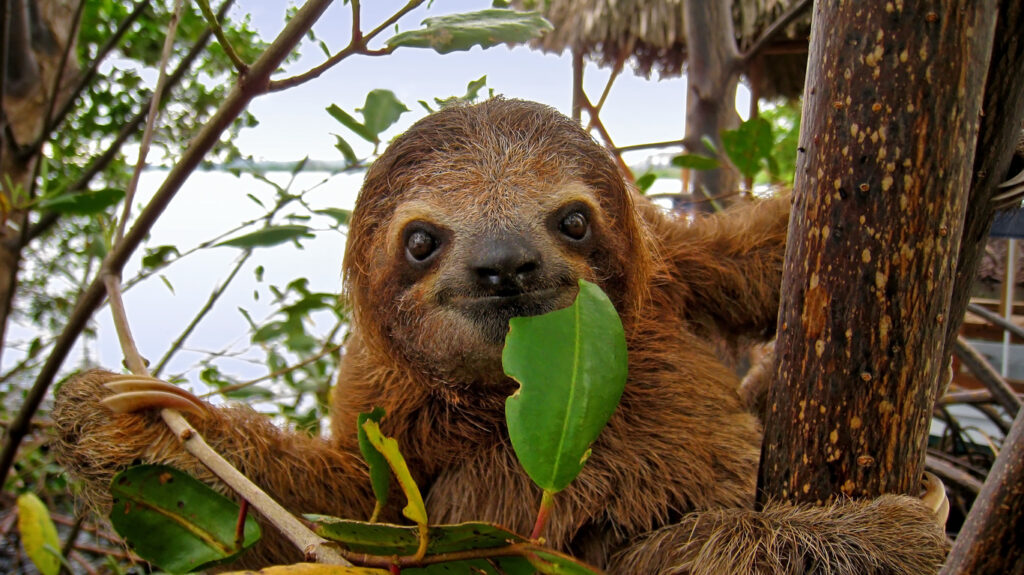
Fast movement creates noise or draws attention to them in the canopy, which is no good. Predators such as harpy eagles use sight to find their targets, and any sudden motion makes an animal easier to spot. Moving slowly keeps sloths hidden among the leaves and reduces the chance of being noticed. In other words, speed would actually place them in danger. When their survival depends on blending into the branches rather than escaping quickly, slow and quiet movement becomes their strongest natural defence.
Their metabolism runs at one of the slowest rates of any mammal.
People expect sloths to behave like other tree-dwelling animals. Their body temperature changes with the environment, and they burn calories extremely slowly, which limits how much activity their bodies can support in a single day. A faster lifestyle would drain their energy before they could replace it.
That slow metabolism helps explain their daily routine. When an animal’s internal systems only produce enough energy for careful, measured movement, every action must match that pace to keep the animal stable and safe in its habitat.
Their claws make quick movements risky and unsafe.
It’s easy to overlook how long and curved their claws are. These claws are perfect for anchoring onto branches, but they make rapid motion dangerous because a slip or misstep could send the sloth falling from a considerable height. Fast movement increases the chance of accidents they can’t recover from. Knowing this helps explain why they move with such care. When your safety depends on steady balance and firm gripping, slow movement becomes the most sensible and secure option for travelling through the treetops without injury.
They conserve energy because their environment is unpredictable.
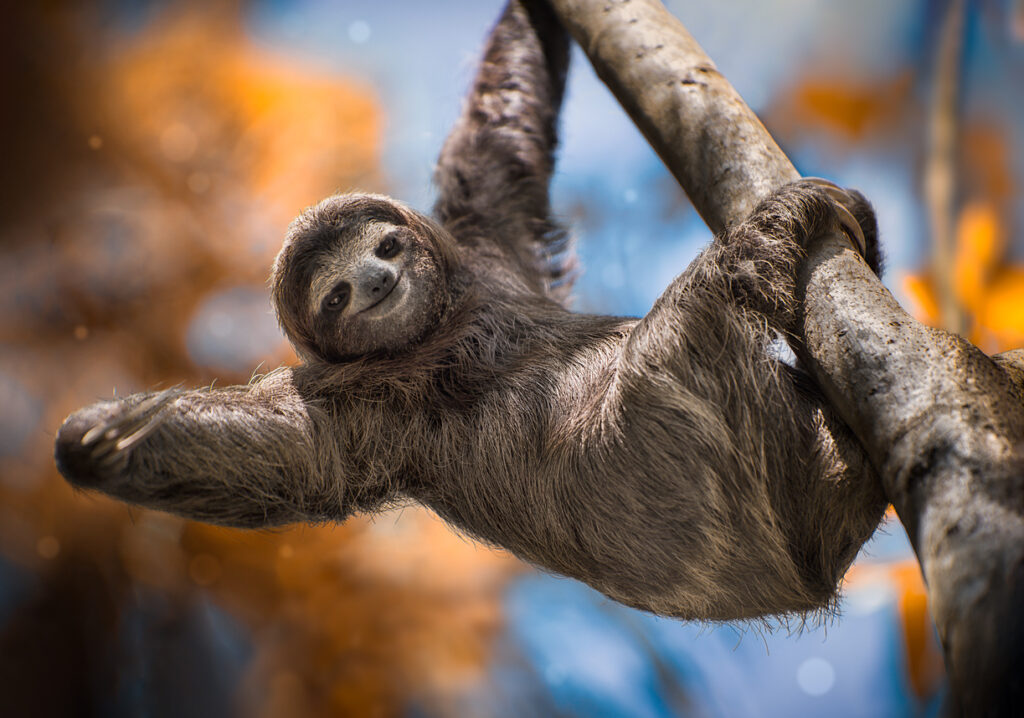
Weather changes quickly in the rainforest, leaving sloths with only limited chances to eat or warm themselves. If they moved quickly and wasted energy on unnecessary tasks, they would struggle to recover, especially during colder or wetter periods that slow their digestion further. It’s no wonder sloths stay cautious with every action. Their survival depends on stretching their energy reserves over long periods, and slow movement helps them stay stable even when conditions shift unexpectedly.
They don’t need speed for hunting or escaping.
People compare sloths to animals that must run, chase or leap to survive, which is pretty unfair. Sloths eat leaves they can reach without difficulty, and their main defence is staying unnoticed rather than outrunning threats. Speed simply doesn’t serve a purpose in their lifestyle. When your food doesn’t run away and your predators miss you by sight, slow movement becomes the most efficient way to save energy and avoid unnecessary risk.
Their body grows slowly, so rushing would damage their muscles.
It’s incorrect to assume that sloths develop like other mammals. Their tissues grow at a slower rate, which means their muscles and joints can’t support fast or repeated strain. Quick movement would put pressure on their bodies that they aren’t built to handle safely. That their pace as they mature. When a body is designed to move steadily and avoid strain, the safest long-term strategy is slow, controlled motion that protects the animal throughout its life.
Their breathing rate limits how fast they can move.
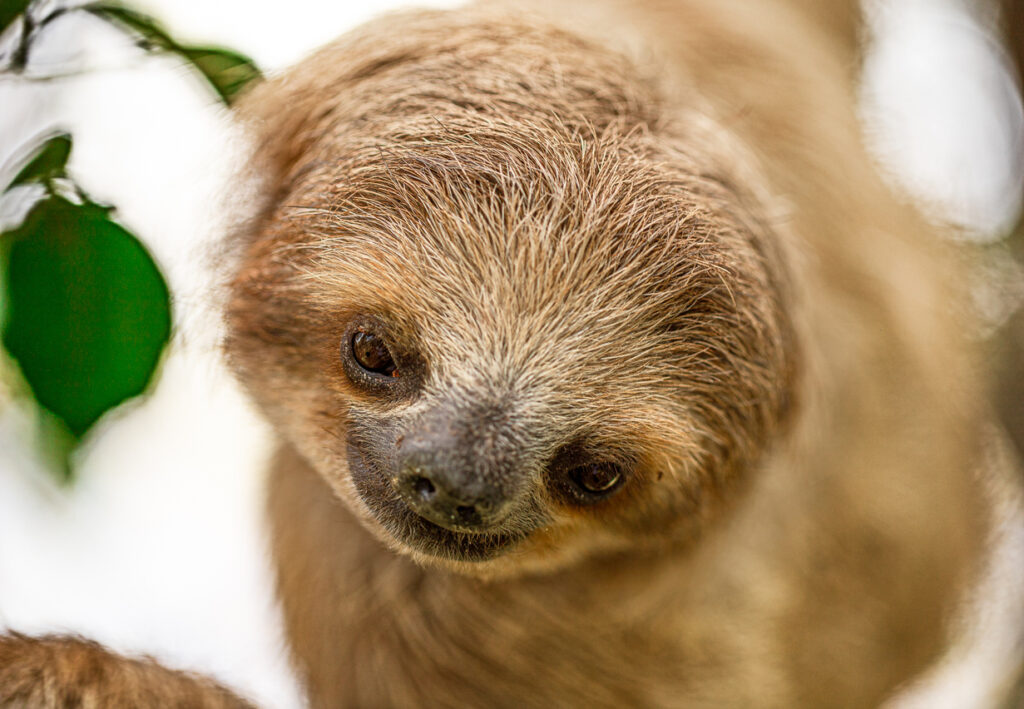
Sloths take in oxygen at a very slow rate. Their lungs and respiratory system work efficiently for their lifestyle, but they can’t supply enough oxygen to power fast or demanding movement. Their muscles wouldn’t receive the fuel they need for quick action, which is why their internal rhythm stays gentle. When your breathing is slow and your energy output matches it, movement must follow the same pace to avoid exhaustion or confusion in the treetops.
Slow movement protects them from falling in the canopy.
Everyone overlooks how dangerous the rainforest canopy can be. Branches move, bark breaks and footholds change suddenly, which can send fast-moving animals tumbling to the ground. Sloths avoid these dangers by taking small, deliberate steps that let them test each branch before trusting their weight to it. This survival technique helps explain why their pace never changes. Slow movement keeps them steady, balanced and safe in a challenging environment that rewards careful behaviour far more than speed or agility.