When someone tells you there are flying snakes, your first reaction is probably that they’re winding you up.
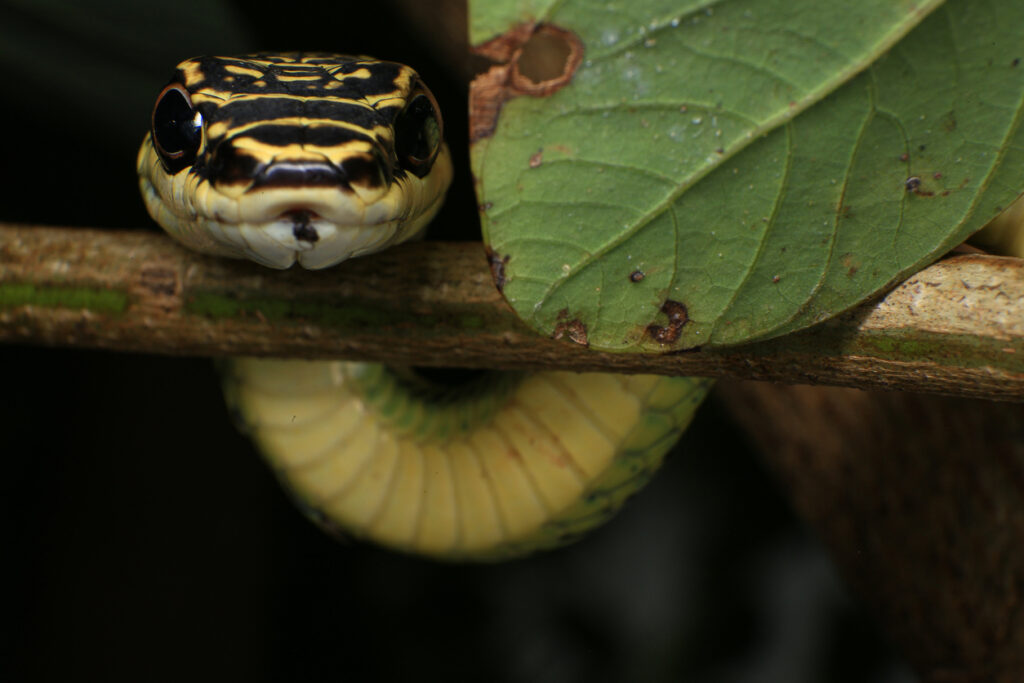
However, flying snakes are absolutely real, and they’re genuinely flying through the air in parts of Asia right now. Well, technically they’re gliding rather than flying, but when you see footage of a snake launching itself from a tree and sailing through the air for 100 metres, that distinction doesn’t feel particularly important. Here’s everything you need to know about Chrysopelea, the snakes that decided gravity was optional.
They flatten their bodies to create a wing shape.

When a flying snake launches itself into the air, it doesn’t just fall like a normal snake would. It flattens its entire body, spreading its ribs out to create a concave shape like a Frisbee or a wing. This completely changes how air flows around it and creates lift.
The flattened body can be up to twice as wide as the snake’s normal width. This transformation happens in mid-air as the snake jumps. One second it’s a normal cylindrical snake, the next it’s this weird flat ribbon gliding through the trees.
They can glide over 100 metres.
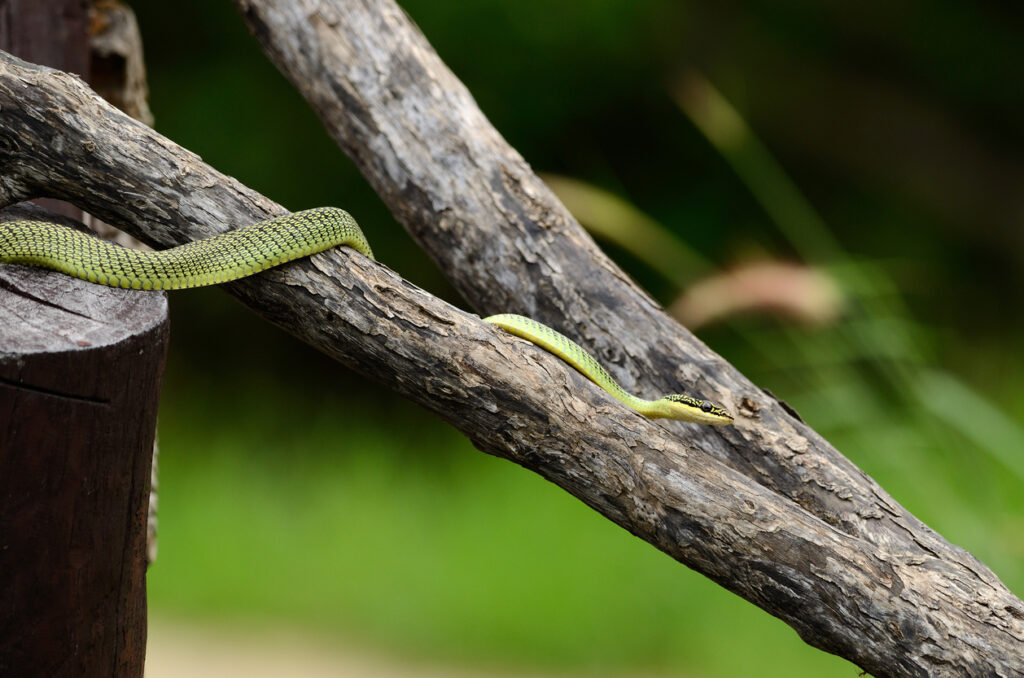
Flying snakes don’t just drop slightly less quickly than a normal snake would. They can glide horizontal distances of over 100 metres from a high enough starting point. That’s the length of a football pitch. They’re not just falling with style, they’re genuinely covering serious distance through the air.
The higher they launch from, the further they can go. From a 10-metre-high tree, they might glide 30 to 40 metres. But from really tall trees, 100 metres is achievable. That’s proper gliding, not just a controlled fall.
They do this weird wiggling motion in mid-air.
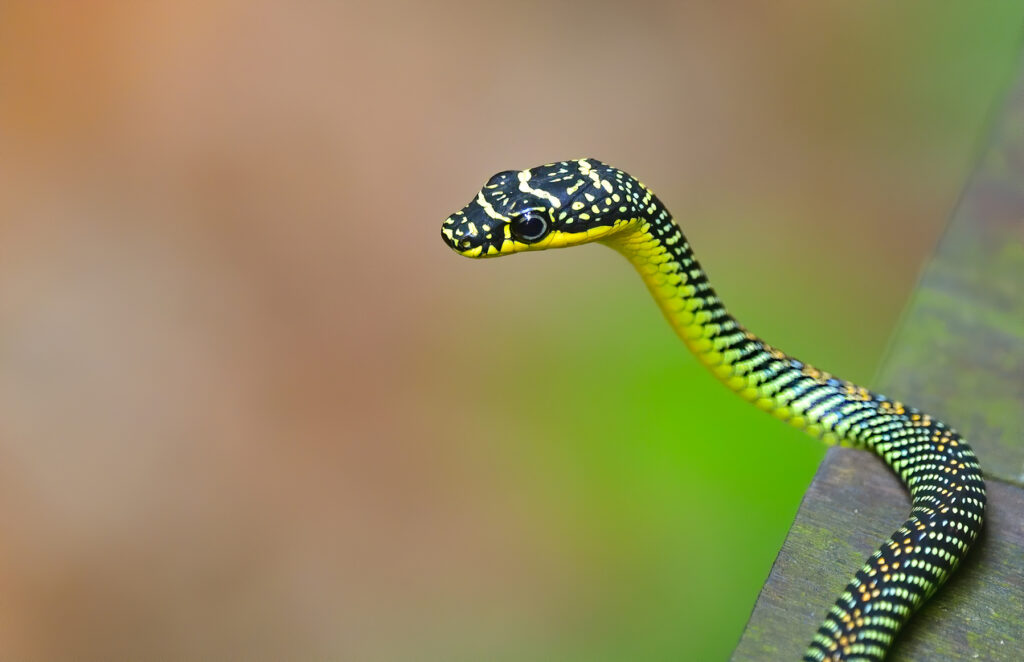
Whilst gliding, flying snakes move their bodies in a side-to-side wave motion, like they’re swimming through the air. Scientists think this movement helps them stay stable and steer. It’s absolutely bizarre to watch because it looks nothing like how you’d expect a gliding animal to behave.
This wiggling probably helps them control their flight path and avoid obstacles. They’re not just passively gliding on air currents, they’re actively manoeuvring. Videos of them gliding look almost fake because the movement seems so unlikely for a snake.
There are five different species.
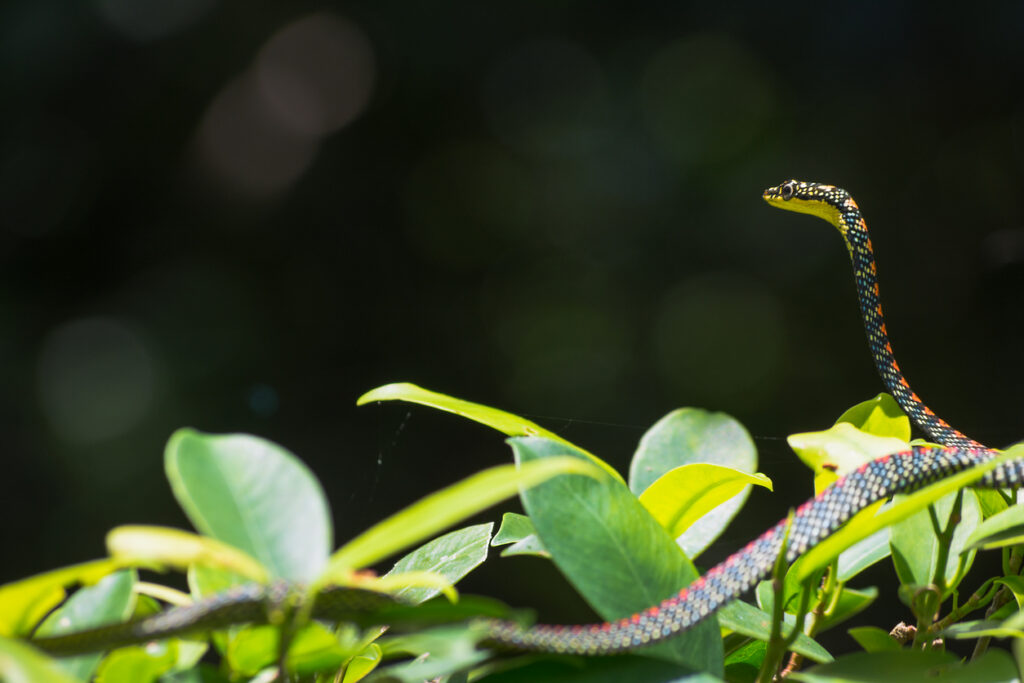
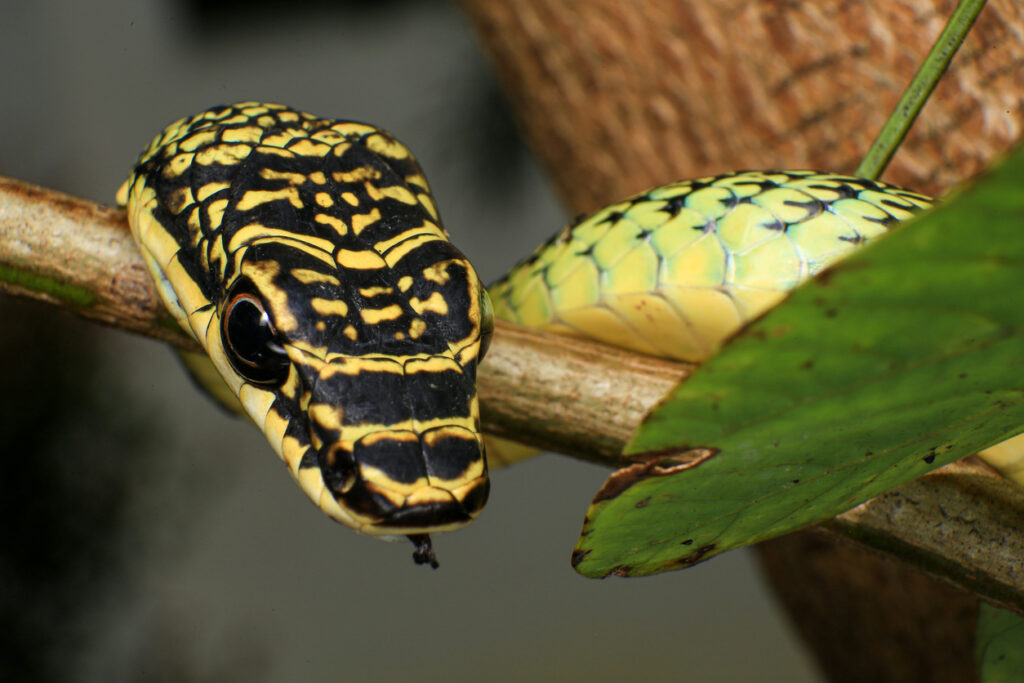
The Chrysopelea genus includes five species, all found in Southeast Asia and southern China. They’re commonly called flying snakes or gliding snakes. The paradise tree snake is probably the most studied because it’s the most accomplished glider of the group.
All five species can glide to some degree, but they vary in how good they are at it. Some can glide further and with more control than others. They all live in trees and use gliding to move between trees or escape predators.
They’re mildly venomous, but not dangerous to humans.
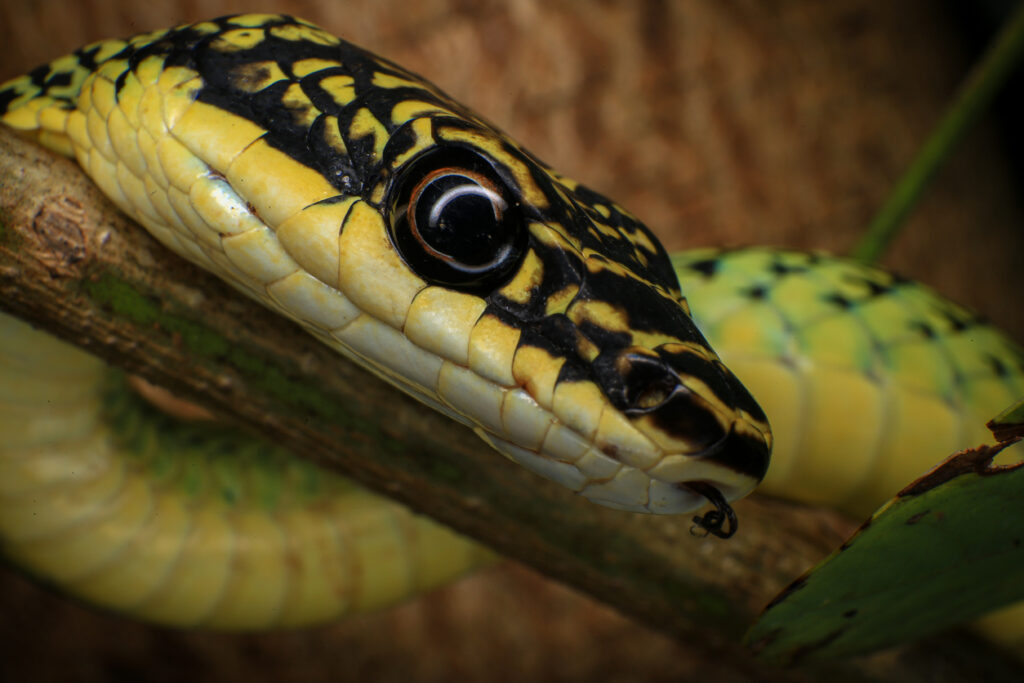
Flying snakes are rear-fanged and mildly venomous, meaning their venom-delivering teeth are at the back of their mouths rather than the front. Their venom is effective on their prey like lizards, frogs, and birds, but it’s not dangerous to humans.
Even if one bit you, which is unlikely because they’re not aggressive, you’d probably just get some swelling and discomfort. They’re not medically significant. You’re in more danger from falling out of a tree trying to get a closer look at one than from the snake itself.
They launch themselves by forming a J-shape.
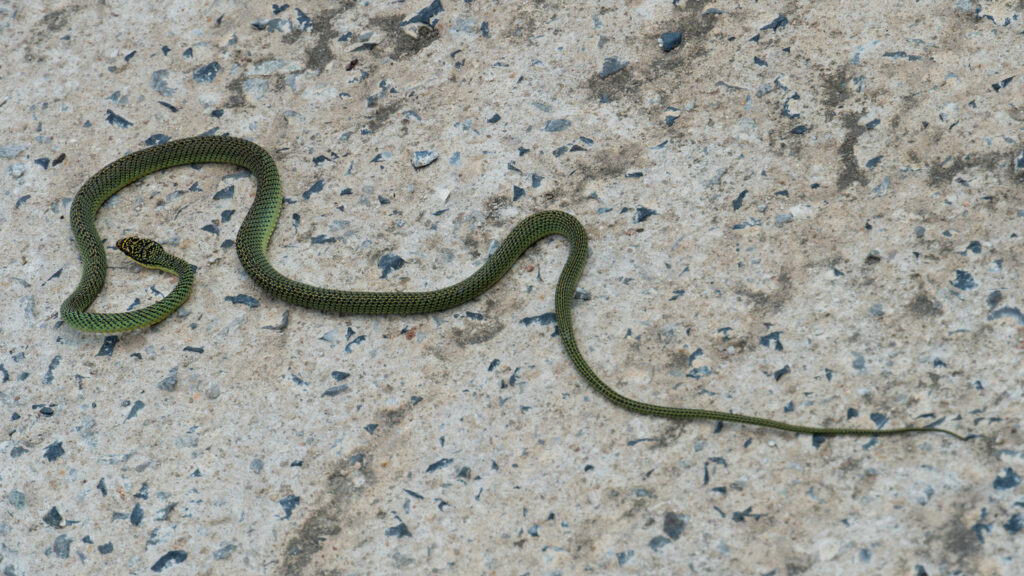
Before jumping, a flying snake hangs from a branch in a J-shape, with most of its body dangling down and just the front third gripping the branch. Then it violently swings upwards and forwards, launching itself into the air at an upward angle.
Their jumping technique gives them both height and forward momentum to start their glide. They’re not just dropping off branches, they’re actively jumping upwards and outwards. The launch is just as impressive as the glide itself.
Scientists still don’t fully understand how they do it.
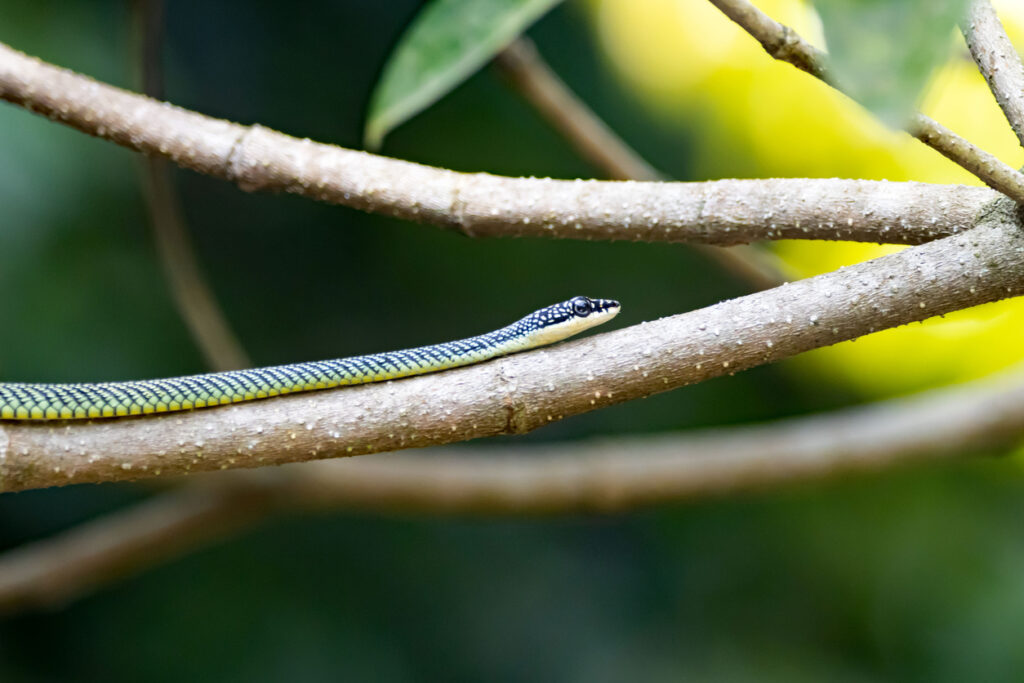
Despite decades of research, scientists are still figuring out exactly how flying snakes achieve such controlled glides. The combination of body shape, wiggling motion, and aerodynamics is incredibly complex. They’re better gliders than some animals specifically evolved for gliding.
Researchers use wind tunnels, high-speed cameras, and computational models to understand the physics. The fact that a limbless animal with no obvious flight adaptations can glide so well is genuinely puzzling. It challenges assumptions about what kind of body shapes can achieve controlled flight.
They can change direction mid-flight.
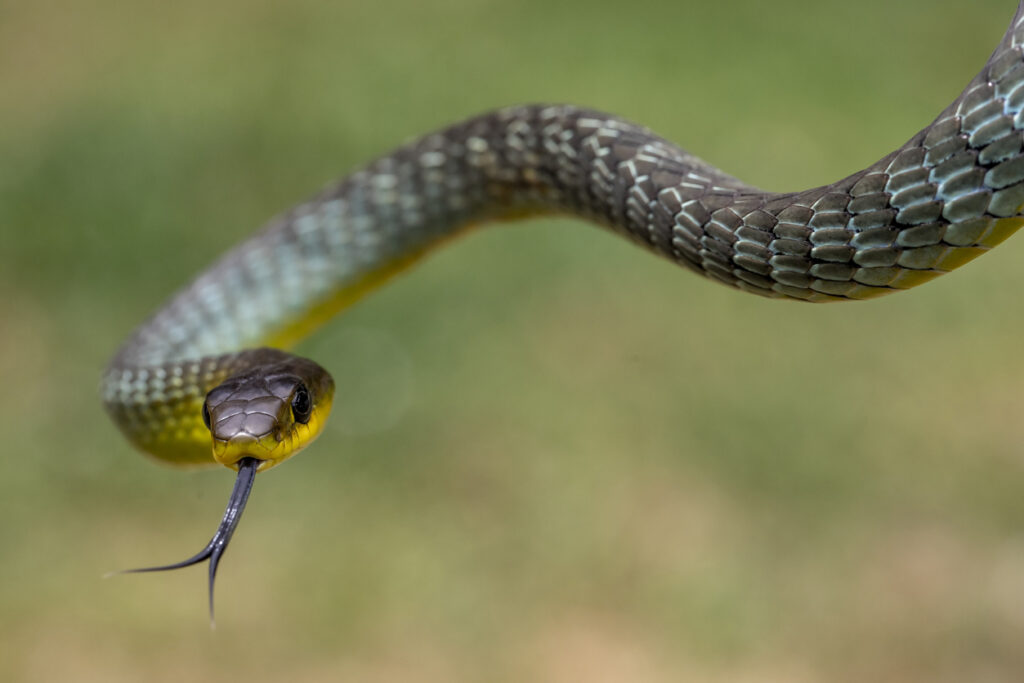
Flying snakes don’t just glide in a straight line. They can turn, adjusting their flight path to aim for specific landing spots or avoid obstacles. This requires pretty sophisticated control of their flattened body and that weird wiggling motion.
Being able to steer means they’re not just at the mercy of wherever their initial jump sends them. They can actively navigate through three-dimensional forest space. That level of control is what separates true gliding from just falling slowly.
They’re completely arboreal.
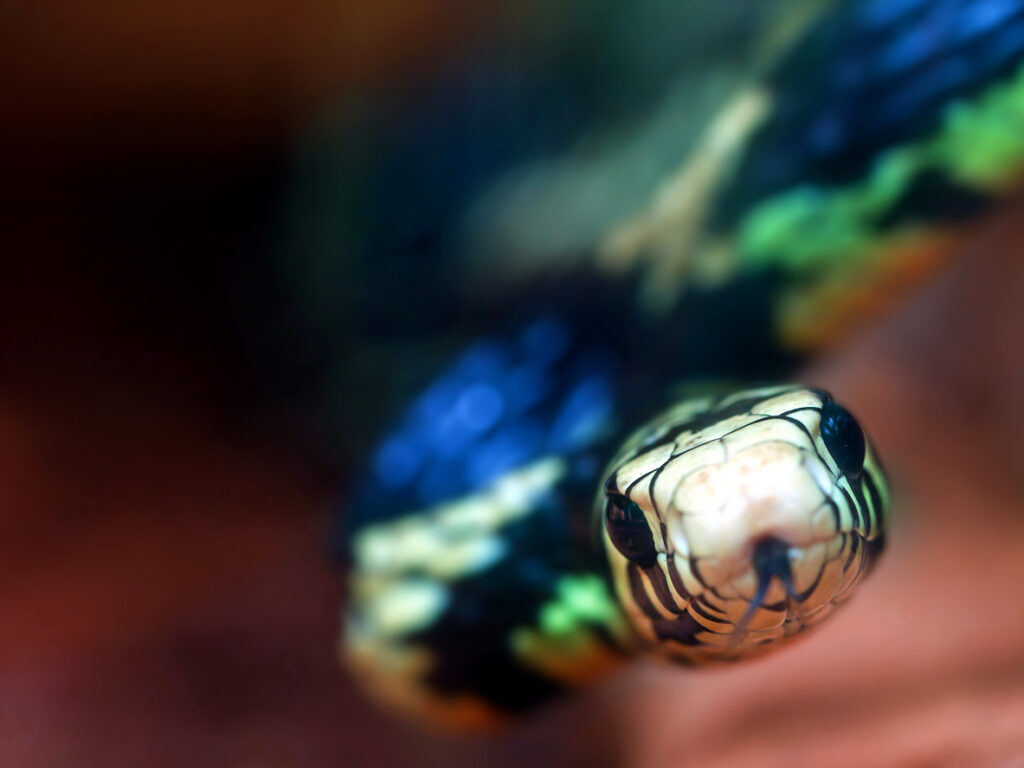
Flying snakes spend almost their entire lives in trees. They hunt in trees, sleep in trees, and obviously travel between trees by gliding. They rarely come down to the ground because they’re built for life in the canopy.
The animal’s tree-dwelling lifestyle is why gliding evolved in the first place. In dense forest, moving through the canopy by gliding from tree to tree is more efficient than climbing down, crossing the ground, and climbing back up. It’s an adaptation to their specific environment.
Other animals glide, but snakes do it differently.
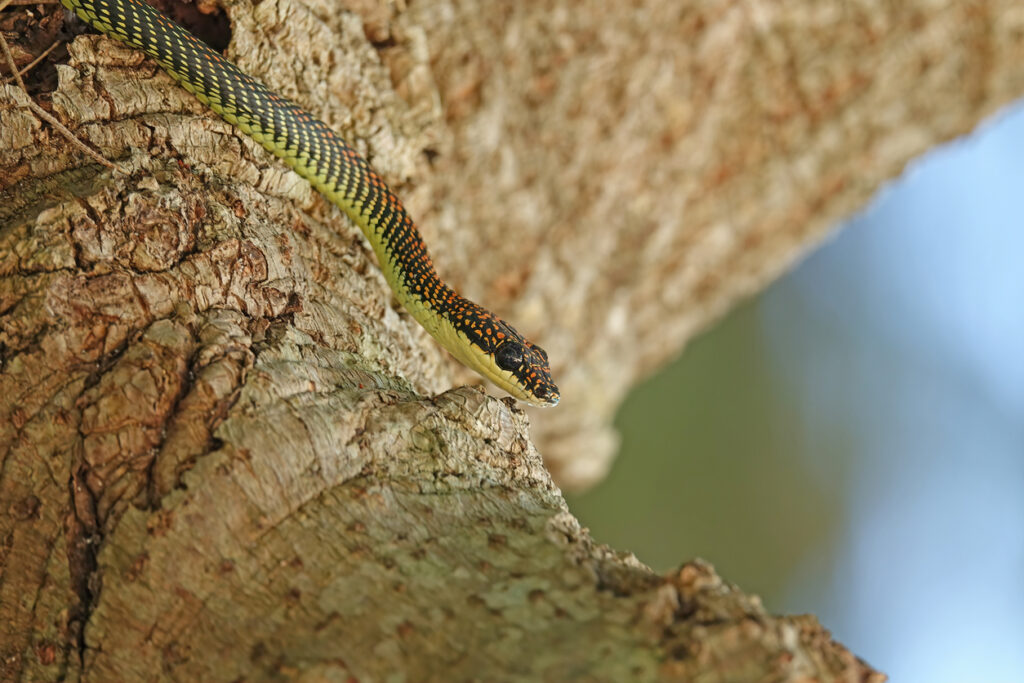
Flying squirrels, flying lizards, and other gliding animals have membranes or flaps of skin that create lift. Flying snakes have nothing extra, just their normal snake body reshaped. They’re using their entire body as a wing, which is unique in the animal kingdom.
This makes them particularly interesting to scientists studying flight and aerodynamics. They’ve achieved sophisticated gliding without evolving any specialised structures. It’s all about body shape manipulation and movement, not physical adaptations like membranes.
They’re not endangered, but habitat loss is a threat.
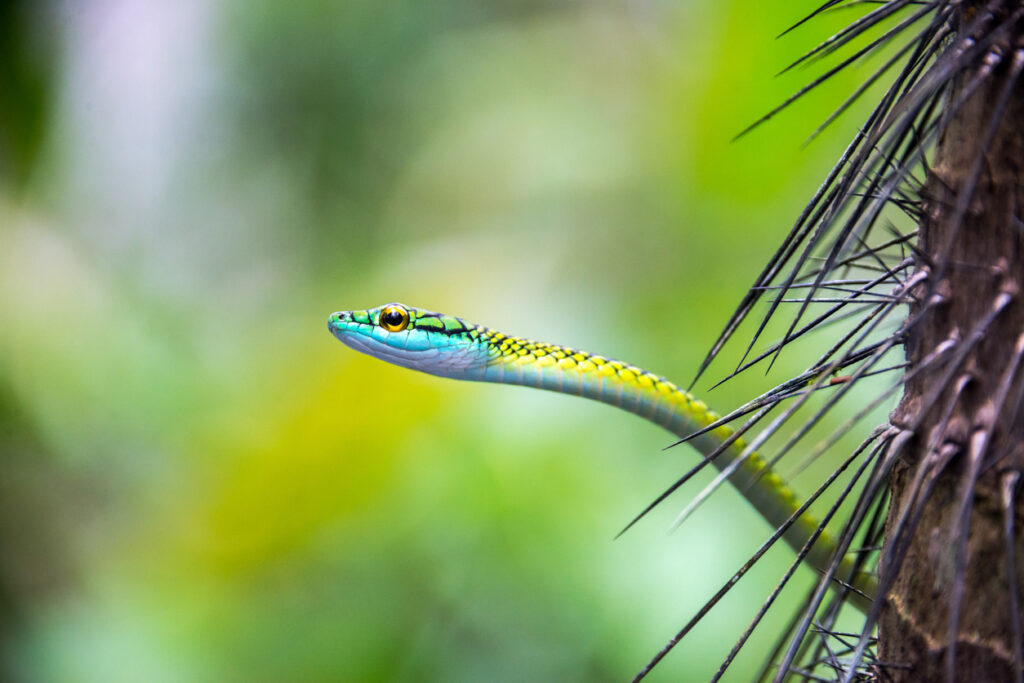
Currently, flying snakes aren’t considered threatened, but deforestation in Southeast Asia is reducing their habitat. They need tall trees and continuous forest canopy to glide effectively. As forests get cut down, their populations become more fragmented.
Like many tree-dwelling species, they’re vulnerable to habitat destruction. You can’t glide if there aren’t trees to glide between. Conservation of tropical forests benefits flying snakes along with countless other species that depend on intact canopy.
People in their range know about them, but most of the world doesn’t.
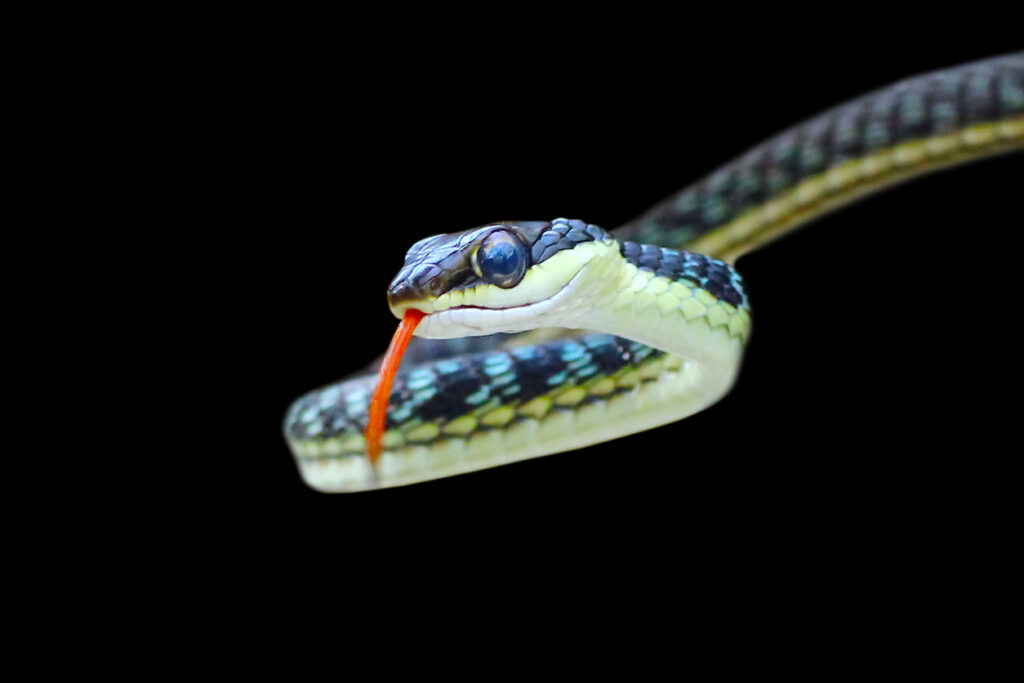
In countries like Thailand, Malaysia, and Singapore, flying snakes are common enough that locals are familiar with them. But most people outside Southeast Asia have no idea these snakes exist. They’re one of those animals that seems too weird to be real.
They’re not particularly secretive, you just need to be in the right place to see them. In areas where they live, you might spot one gliding if you’re paying attention to the tree canopy. But unless you’re specifically looking for wildlife, you’d probably miss them.
They might inspire future technology.
Engineers and roboticists study flying snakes to understand their gliding mechanics. The way they use their bodies for both propulsion and control could inspire designs for drones or other flying robots. Nature’s already solved problems that engineers are still working on.
A limbless robot that could glide and manoeuvre like a flying snake would be incredibly useful in rescue operations or exploring difficult terrain. Understanding how these snakes achieve such controlled flight could lead to practical applications.
The idea of flying snakes seems like something from mythology or science fiction, but they’re real animals doing genuinely remarkable things every day in the forests of Asia. Evolution has found countless ways to solve the problem of moving through three-dimensional space, and Chrysopelea’s solution is one of the most unexpected. They prove that you don’t need wings, legs, or membranes to fly. Sometimes all you need is the ability to flatten yourself into a wing shape and the confidence to launch yourself into the air.