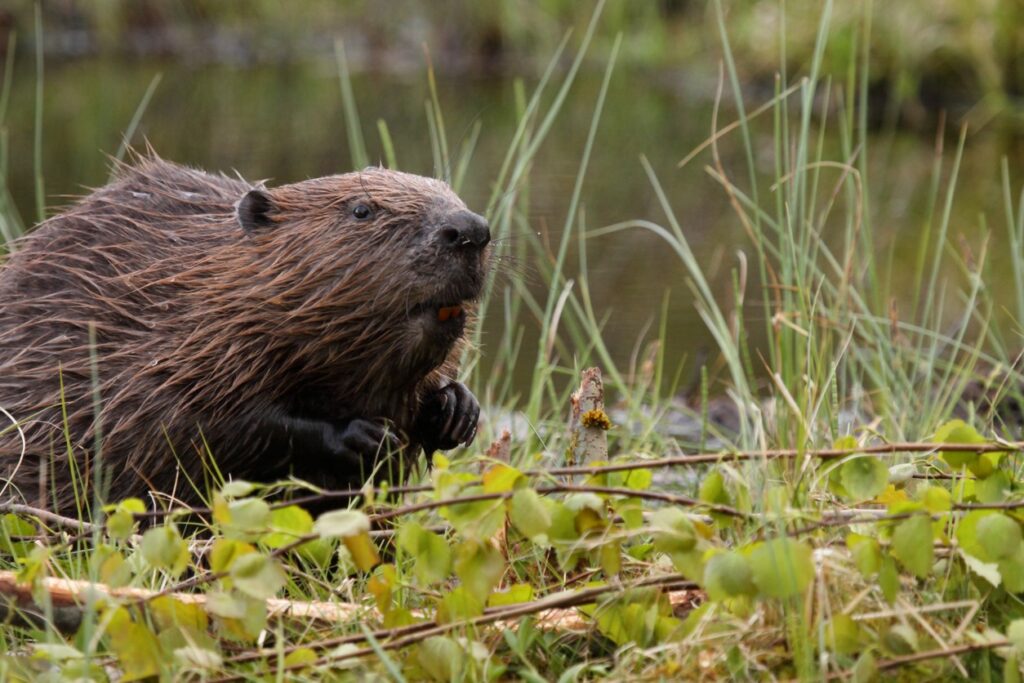
A landmark moment for Scotland’s wild landscapes took place in the Highlands this week when a small group of beavers were released into Glen Affric, marking what conservationists are calling a historic return of the species to this region after hundreds of years, per BBC News.
Beavers disappeared from much of Scotland around four centuries ago, largely due to extensive trapping and habitat loss. The animals aren’t just iconic; they act as ecosystem engineers, creating ponds, wetlands and new habitats for other species by felling trees, building dams and altering water flow. Releasing them into the Highlands is part of a national strategy to restore the species across suitable landscapes.
The release was approved by the wildlife regulator NatureScot in August, with the actual event taking place on the shores of Loch Beinn a’Mheadhoin in Glen Affric. Four family groups of beavers were introduced: first a male-female pair, followed by a family of five, making a total of seven individuals. The site was chosen because it offers ideal habitat: woodland, lochside banks, and watercourses that support the species’ natural behaviour. The location north of the Great Glen represents one of the last areas in mainland Scotland where the beaver is being formally reintroduced.
What made the project possible
Several factors came together. First, decades of groundwork in other regions of Scotland showed that beaver populations can thrive when managed properly. Second, the clearance of licences and agreements with land-owners, local communities and forestry bodies laid the foundation. And finally, the release followed detailed ecological studies of the site, assessing food availability, bank structure, flooding risk and human-wildlife conflict potential.
The return of beavers brings promise: improved wetland habitat, enhanced biodiversity, natural flood mitigation and greater resilience in the face of climate change. Their dam-building slows water, recharges groundwater and creates niches for fish, birds, and invertebrates. At the same time, concerns remain. Some farmers and land-owners worry about tree damage, bank erosion and flooding of grazing land. LBC mentions that while many locals backed the project, opposition exists and will need continuous monitoring and community engagement.
Monitoring will be key. Forestry and Land Scotland, along with NatureScot and partnering charities, will track the beavers’ movements, breeding success and impacts on the landscape. They’ll also engage land-owners and residents to address any emerging issues quickly. If all goes well, the beavers should start breeding and creating new territories, potentially establishing a self-sustaining population in the Highlands.
Of course, success isn’t automatically guaranteed.

Releases like this must be supported by long-term habitat management, clear protocols for conflict resolution and sustained funding. The Highlands present rugged terrain, and the beavers must adapt while humans continue to live and work around them.
This underlines a changing understanding of how wild landscapes can be restored, and how species that once vanished might return under the right conditions. For land-managers, conservationists and rural communities it offers a case study in collaboration, adaptation, and ecosystem recovery. It shows how nature can respond when the right mix of science, policy, and place align.
The beavers released into Glen Affric are more than animals being set free; they’re agents of change, living engineers resetting the flow of water, rebuilding habitat and offering something rare: a second chance. The releases may seem small in number, but large in meaning. As those first lodges form, trees are felled and water spreads across still-hidden channels, we’re seeing a process that rewrites what we imagine our wild places can be.
In the Highlands this week, nature took a new step forward: quietly, deliberately, and with hope.